
Are You Buying the Wrong Stainless Cup Holder for Your Boat or RV?
Saltwater eats cheap metal fast. If you source the wrong cup holder for marine or RV use, you will get returns, complaints, and a damaged brand. Here is what you need to know before you place your next order.
Boat and RV stainless cup holders need marine-grade 316 stainless steel, proper drainage holes, 316-grade screws, and a diameter wide enough to fit bottles up to 40oz. Standard 304 cup holders will corrode faster in saltwater.1 Always confirm these four specs with your supplier before buying.
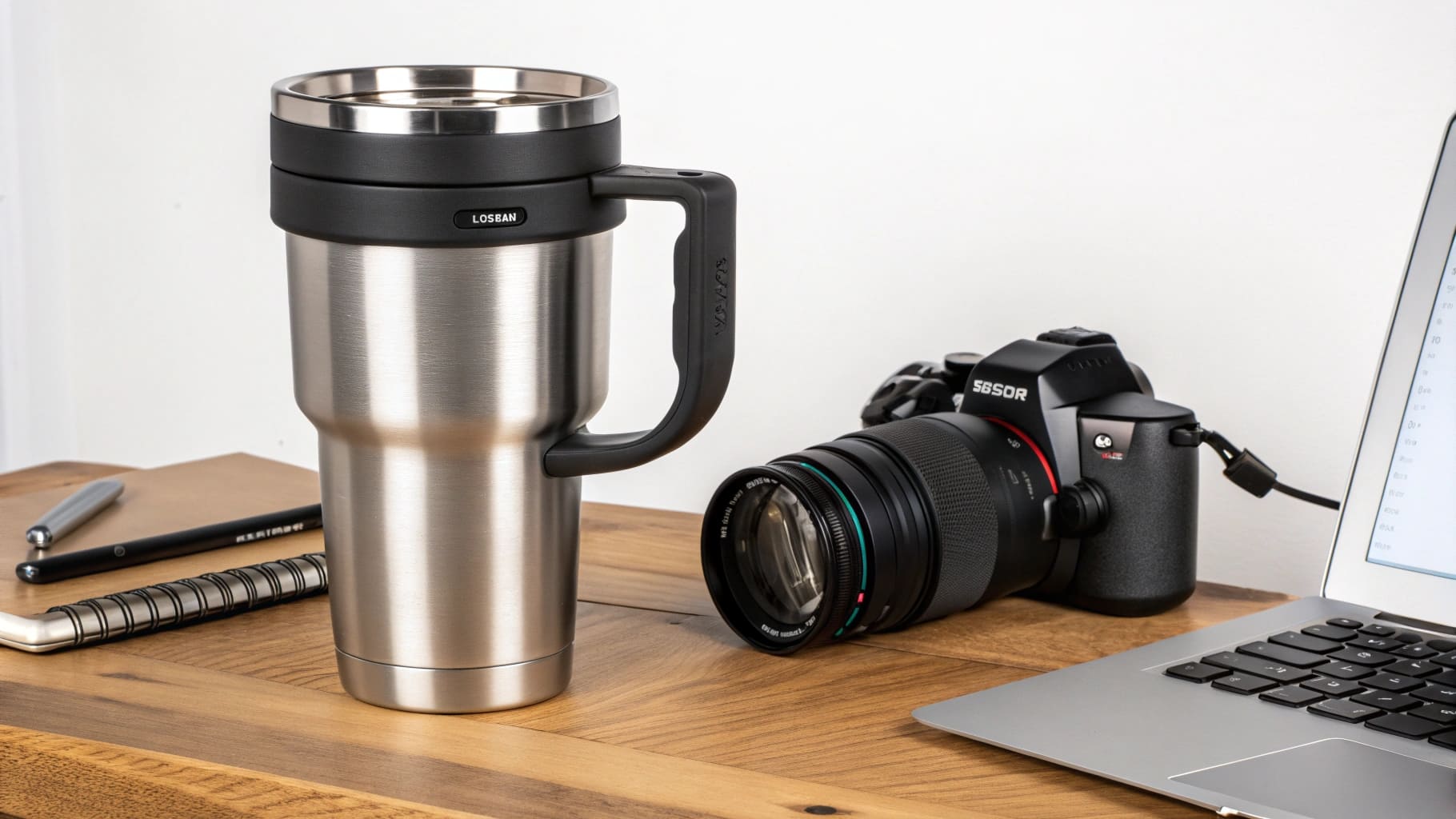
Most buyers I talk to focus on price first. That is understandable. But in the marine and RV segment, one wrong material choice can wipe out your profit margin in returns alone. I have seen it happen. The good news is that once you know the key specs, this market becomes much easier to navigate. Let me break it down for you.
What Is the Minimum Corrosion Allowance for Stainless Steel?
You ordered a batch of cup holders last season. Six months later, your customers are sending photos of rust spots. Sound familiar? Corrosion allowance is the spec most buyers skip, and it is the one that causes the most damage.
For stainless steel cup holders used in marine or outdoor RV settings, the minimum corrosion allowance is 1mm to 2mm. This means the wall thickness should be thick enough so that even after surface wear starts, the part still holds its structure. In heavy saltwater exposure, 2mm is the safer choice.
Why Wall Thickness and Grade Both Matter
Corrosion allowance is not just about how thick the metal is. It is about how much metal can be lost over time before the part fails. Two things control this: the grade of stainless steel and the starting wall thickness.
Here is how the two main grades compare in a marine setting:
| Spec | 304 Stainless | 316 Stainless |
|---|---|---|
| Chloride Resistance | Low | High |
| Suitable for Saltwater | No | Yes |
| Typical Wall Thickness | 0.8mm – 1.2mm | 1.0mm – 1.5mm |
| Recommended Corrosion Allowance | Not recommended for marine use | 1mm – 2mm |
| Cost | Lower | Higher |
304 stainless works fine for indoor or dry environments. But chloride, the main chemical in saltwater, attacks 304 quickly. Pitting starts at the surface, then spreads. Once pitting begins, it does not stop.
316 stainless has added molybdenum, which blocks chloride from getting into the metal structure.2 This is why it costs more. For marine cup holders, that extra cost is worth it. I always tell buyers: do not try to save money on grade when the end user is on a boat.
On wall thickness, a 1.0mm wall in 316 stainless with a 1mm corrosion allowance means you have acceptable performance for light marine exposure. For open-water or heavy spray environments, move to a 1.5mm wall with a 2mm allowance. Ask your supplier to confirm wall thickness in writing, not just the grade. Some factories will hit the grade but cut the thickness to save material cost.
Does a 40oz Hydro Flask Fit in a Car Cup Holder?
Your retail customers love big bottles. 40oz tumblers are everywhere right now. But here is the problem: most standard cup holders were not built for them. This is causing real friction in the RV and boat accessory market.
A standard car cup holder is designed for diameters between 3 inches and 3.5 inches.3 A 40oz Hydro Flask has a base diameter of about 3.58 inches.4 It does not fit in a standard holder. This is why more buyers are now asking specifically for adjustable or large-diameter cup holders.
How to Match Cup Holder Size to Your Product Line
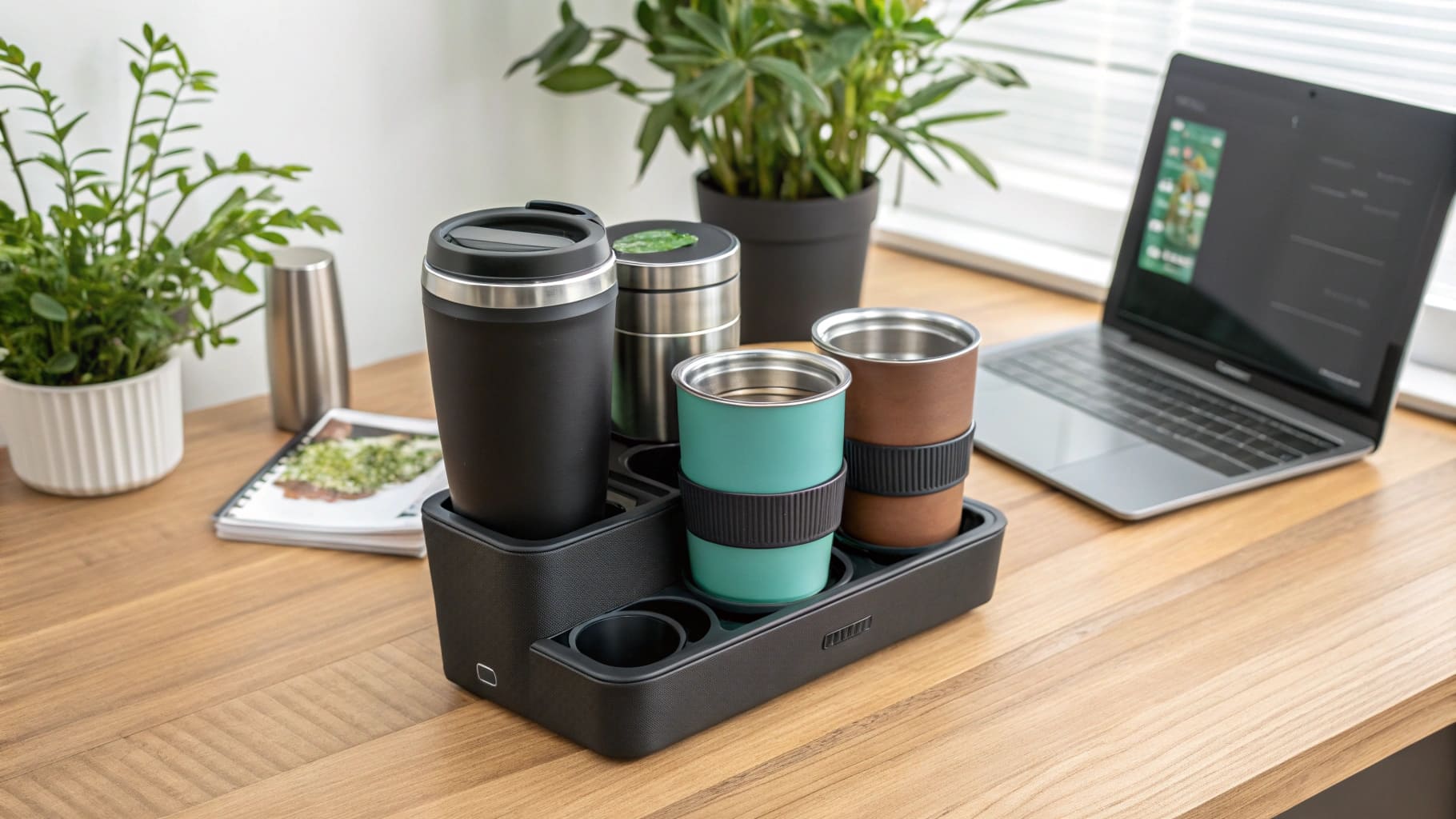
If you are sourcing cup holders for a mixed product bundle, you need to think about the full size range your customers will use. A fixed-diameter holder that only fits a 20oz bottle will disappoint buyers who also carry 30oz or 40oz bottles.
Here is a quick reference for common bottle sizes and their base diameters:
| Bottle Size | Approximate Base Diameter | Fits Standard Holder? |
|---|---|---|
| 12oz – 20oz | 2.6" – 2.9" | Yes |
| 24oz – 30oz | 2.9" – 3.3" | Yes |
| 32oz | 3.3" – 3.5" | Tight fit |
| 40oz | 3.5" – 3.6" | No |
| 64oz | 3.8" – 4.0" | No |
For RV and boat use, I recommend sourcing cup holders with an adjustable inner ring or a spring-loaded grip. These designs can handle diameters from 2.5 inches up to 3.8 inches in some models. They cost a bit more to produce, but they reduce your return rate because they fit the most popular bottle sizes on the market.
Also check the cup holder depth. A shallow holder that only goes 2 inches deep will not keep a tall 40oz bottle stable on a moving boat. Look for a depth of at least 3 inches for heavy-use marine applications.
When I talk to procurement buyers, I always suggest ordering a sample set and physically testing it with the top three bottle sizes in their product line before committing to a bulk order. This one step catches most sizing problems before they become expensive problems.
What Is the Best Marine Grade Stainless Steel?
You want the product to last. Your customers want the product to last. But not all stainless is the same, and the difference matters most when water, salt, and UV exposure are involved.
The best marine grade stainless steel for cup holders is 316L. The "L" stands for low carbon, which makes it more resistant to a process called sensitization. This matters most when the metal is welded, which is exactly what happens when a cup holder is manufactured.
316 vs 316L: What the Difference Means for Buyers
Most suppliers will quote you "316 stainless" as a standard term. But if your cup holder is welded, and almost all of them are, you should ask specifically for 316L. Here is why.
When stainless steel is welded, the heat changes the structure of the metal near the weld. In regular 316, this can reduce corrosion resistance right at the weld line. This is called sensitization. In 316L, the lower carbon content means this process does not happen as easily. The weld line stays as resistant as the rest of the part.
Here is a comparison of the main marine grades:
| Grade | Key Benefit | Best Use Case | Weakness |
|---|---|---|---|
| 304 | Low cost | Indoor, dry environments | Fails in saltwater |
| 316 | Chloride resistance | General marine use | Weld areas can sensitize |
| 316L | Weld-safe, chloride resistant | Welded marine parts | Slightly higher cost |
| 2205 Duplex | Extremely strong corrosion resistance | Offshore or heavy marine | High cost, hard to source |
For most B2B buyers sourcing boat and RV cup holders, 316L hits the right balance. It is widely available, it handles saltwater well, and it holds up at weld points.
One more thing I always bring up with buyers: the fasteners. A 316L cup holder mounted with 304 screws will still fail.5 The screws will rust first, and the rust will stain the holder and the surface around it. Always specify 316 or 316L screws to match the holder. It seems like a small detail, but I have seen it cause serious product complaints.
Ask your supplier to provide material certs for both the cup holder body and the fasteners. Any reputable factory will have these documents ready. If they push back on providing certs, that is a red flag worth paying attention to.
Conclusion
For marine and RV cup holders, use 316L stainless, confirm a 1–2mm corrosion allowance, match your holder diameter to 40oz bottles, and never mix grades on fasteners.
-
"Study of the Corrosion Resistance of Type 304L and 316 Austenitic ...", https://www.academia.edu/33778701/Study_of_the_Corrosion_Resistance_of_Type_304L_and_316_Austenitic_Stainless_Steels_in_Acid_Chloride_Solution. A comparative stainless-steel reference showing that Type 304 is more susceptible to chloride pitting than Type 316 supports the claim that 304 performs worse in saltwater exposure; it does not provide corrosion-rate data for the specific cup-holder geometry. Evidence role: expert_consensus; source type: education. Supports: 304 stainless steel generally has lower chloride resistance than 316 stainless steel in saltwater environments.. Scope note: Supports relative material behavior, not exact failure timing for cup holders. ↩
-
"Influence of molybdenum on passivation of polarised stainless ...", https://www.academia.edu/26212784/Influence_of_molybdenum_on_passivation_of_polarised_stainless_steels_in_a_chloride_environment. A materials-science source can verify that Type 316 stainless steel contains molybdenum and that molybdenum improves resistance to chloride-induced pitting; the wording should be treated as a simplified mechanism rather than a literal barrier preventing chloride entry. Evidence role: mechanism; source type: research. Supports: Molybdenum in 316 stainless steel improves resistance to chloride-induced pitting corrosion.. Scope note: Supports the role of molybdenum in pitting resistance, but the article’s phrasing is simplified. ↩
-
"What cup holder fits 3.5-inch diameter cups?", https://www.facebook.com/groups/217075899131375/posts/1523527341819551/. An automotive ergonomics or design reference giving common cup-holder dimensions would support the stated 3–3.5 inch range; if based on surveyed products rather than a standard, it should be treated as an approximate market norm. Evidence role: statistic; source type: research. Supports: Typical automotive cup holders commonly accommodate containers with diameters around 3 to 3.5 inches.. Scope note: Cup-holder dimensions vary by vehicle and may not be governed by one universal standard. ↩
-
"40 oz Wide Mouth: 40 oz Insulated Water Bottle - Hydro Flask", https://www.hydroflask.com/40-oz-wide-mouth?srsltid=AfmBOopFn5joPe1D4iZChDaUBD26IITPegWw4CpAS6VwvLMPkGTcOqr3. The manufacturer’s published specifications for the 40 oz Hydro Flask model can verify the stated base diameter, directly supporting the dimensional claim; because it is a brand source, it is appropriate only for factual product specifications. Evidence role: statistic; source type: other. Supports: A 40 oz Hydro Flask has a base diameter of approximately 3.58 inches.. Scope note: Vendor source is acceptable for the brand’s own dimensions but is not independent evidence of broader market sizing. ↩
-
"Stainless Steel: How Problems Arise and How to Avoid Them", https://www.academia.edu/150253979/Stainless_Steel_How_Problems_Arise_and_How_to_Avoid_Them. A marine fastener or corrosion reference showing that Type 304 stainless fasteners are less resistant to chloride exposure than 316/316L supports the warning that lower-grade screws can become the corrosion weak point; it does not prove inevitable failure in every installation. Evidence role: general_support; source type: institution. Supports: Using 304 stainless screws with a 316L marine component can create a corrosion-prone weak point in saltwater exposure.. Scope note: Supports increased risk from mismatched lower-grade fasteners, not guaranteed failure in all environments. ↩