
Are Tumblers Suitable For Hot And Cold, And Which Thermal Metrics Should Buyers Demand?
Cheap claims sound safe until a shipment arrives with weak insulation. I have seen one bad batch turn hot coffee cold and buyer trust colder.
Yes, I consider stainless steel tumblers suitable for hot and cold drinks when they use stable double-wall vacuum insulation1, food-grade steel, and tested lids. I ask for cold retention, hot retention, leak control, and temperature curves before I approve mass production.
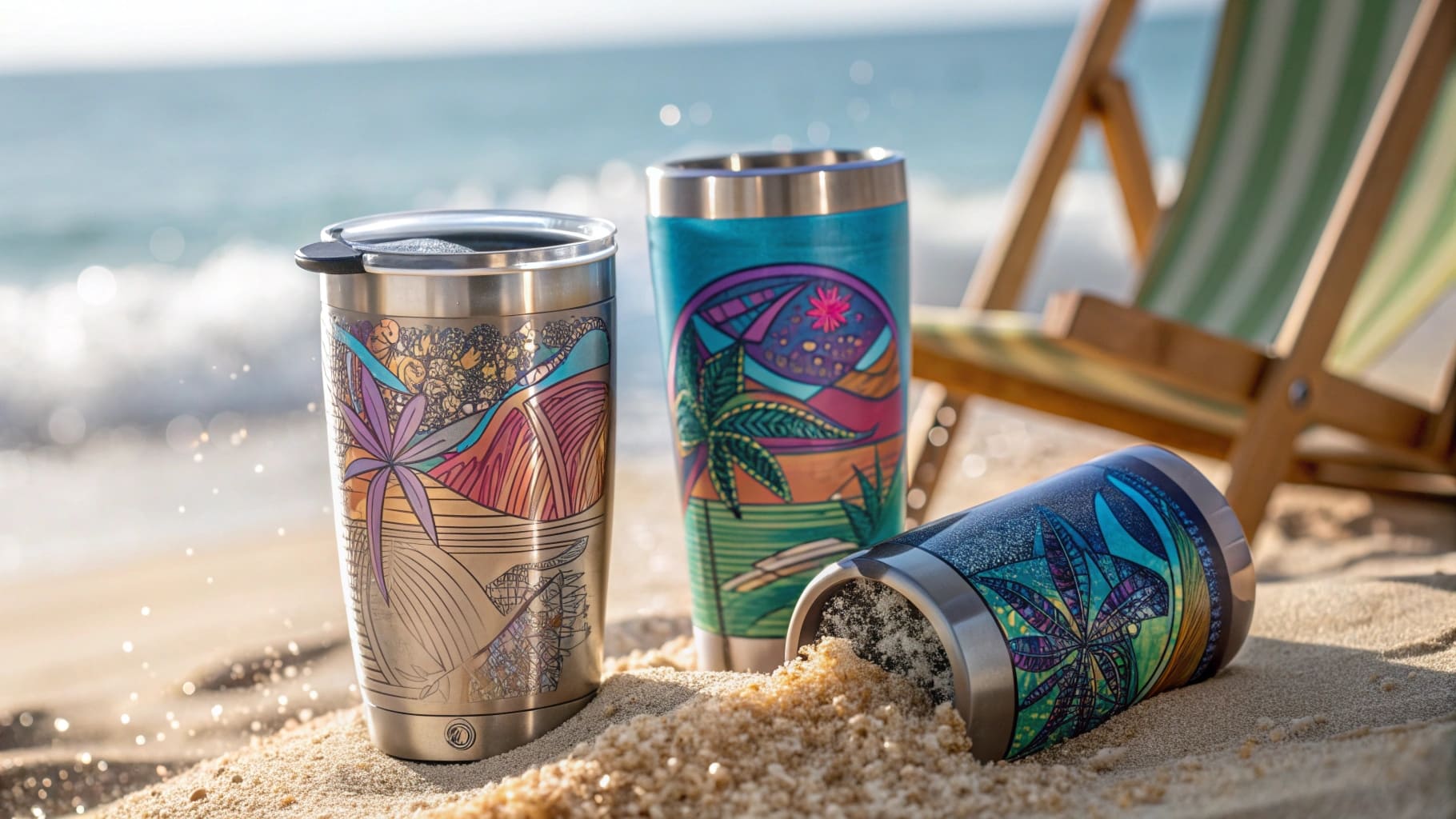
I sell stainless steel drinkware to wholesale buyers, so I treat a tumbler as a performance product, not only a logo carrier. When a buyer asks me if a tumbler can handle hot and cold, I do not answer with a sales phrase. I ask about the end user first. I ask if the product goes into an office, a car cup holder, a gym bag, a retail shelf, or a corporate gift box. Each use case changes the lid, coating, capacity, and test method. I also ask about the peak sales season, because late inspection or slow freight can turn a good product into a bad purchase. If I were buying from overseas for the Canadian market, I would demand clear thermal metrics before I compared only price.
What are tumblers good for?
A tumbler looks simple, but misuse creates complaints. I have seen buyers sell it as a thermos, then face returns.
I use tumblers for daily hydration, coffee, iced drinks, commuting, office desks, and branded gifts. A good stainless steel tumbler keeps cold drinks cool for about nine to twelve hours and hot drinks warm for about three to six hours2, if the vacuum seal3 and lid are stable.
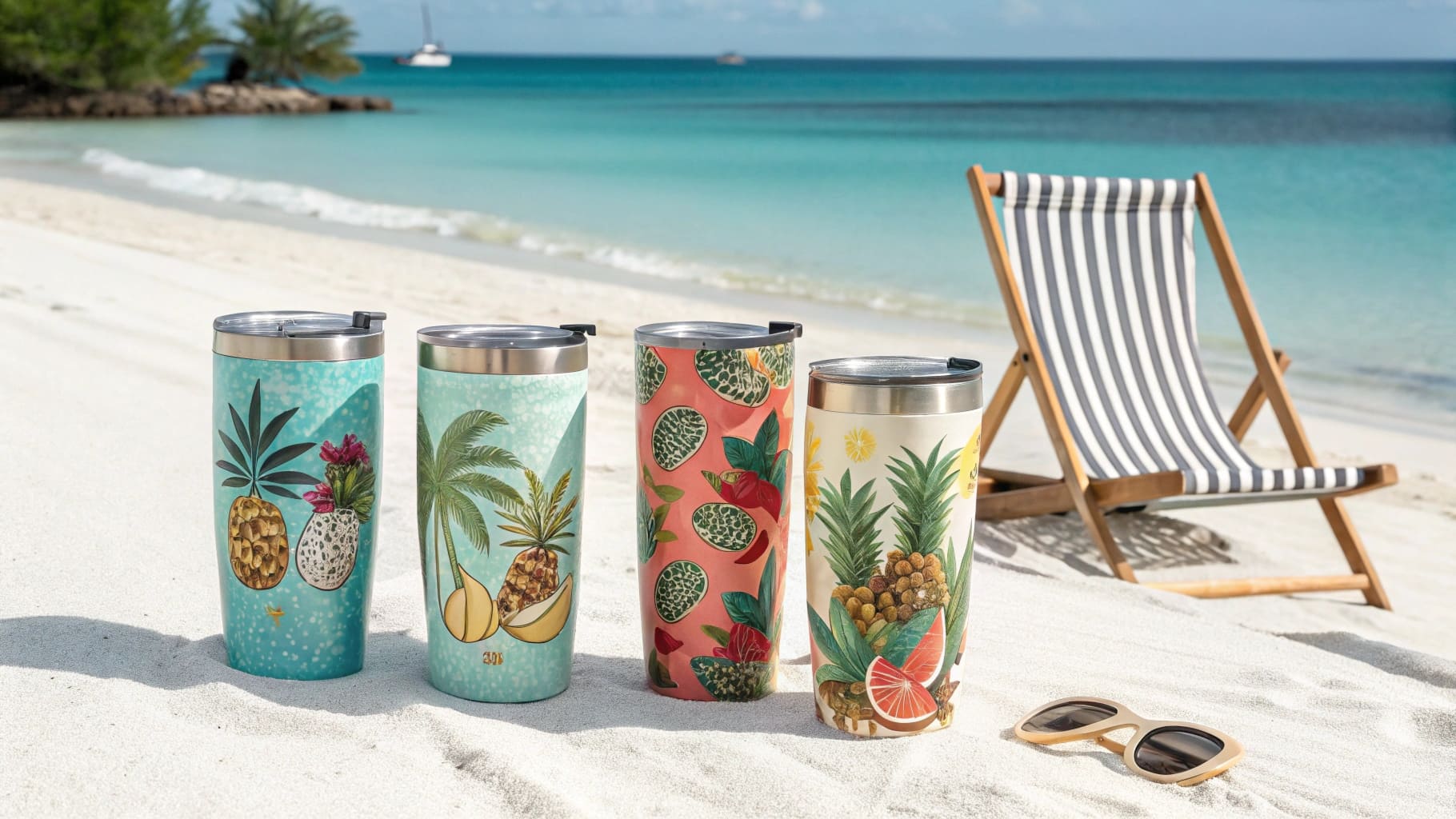
How I define a useful tumbler
I define a useful tumbler by the daily job it can finish without trouble. I do not start with color or logo. I start with how a person drinks. A commuter needs one-hand opening and car cup holder fit. An office worker needs a clean lid and steady heat control for coffee. A gym user needs cold water and a grip that does not feel slippery. A gift buyer needs a surface that can carry a logo without peeling or looking cheap.
I usually check the steel grade, vacuum quality, lid design, coating strength, and packing method together. A beautiful tumbler with weak insulation still becomes a complaint. A strong tumbler with poor coating still looks low value on a retail shelf.
| What I check | Why I check it | What I ask the factory to show |
|---|---|---|
| Cold retention | I want proof that iced drinks stay useful through a workday | A temperature curve after several time points |
| Hot retention | I want coffee and tea performance that matches the promise | A test report for warm liquid over several hours |
| Lid fit | I want fewer leak and spill complaints | A pressure or inversion test |
| Steel grade | I want food safety and stable structure | Material records for SUS three hundred four or SUS three hundred sixteen |
| Coating finish | I want the product to survive daily handling | Adhesion, scratch, and color control samples |
I learned to check these points after I saw buyers focus too much on the outside look. The market can accept a simple design when the product works well. The market does not forgive a premium-looking tumbler that performs like a cheap cup.
Why do people buy tumblers?
Many buyers think consumers only want a cup. I see a deeper reason. People buy routine, identity, and fewer disposable cups.
I believe people buy tumblers because they solve daily problems. They reduce single-use cups, fit modern life, protect drink temperature, and show personal style. For wholesale buyers, quality, coating finish, color control, and logo work affect repeat sales as much as price.
What the purchase decision really means
I see three strong reasons behind most tumbler purchases. The buyer wants convenience, the user wants a better daily habit, and the brand wants visible value. A tumbler sits on a desk, rides in a car, appears in meetings, and shows up in social photos. This makes it different from a product that stays hidden in a cabinet.
Many consumers also care about waste. They may not explain it in technical words, but they feel better when they carry a reusable cup. I have seen brand owners use this point well in Canada, America, and Europe. They do not sell only stainless steel. They sell a cleaner daily routine.
| Purchase reason | What the user expects | What I suggest the buyer should control |
|---|---|---|
| Less waste | The user wants fewer paper or plastic cups | I suggest a clear reusable product story |
| Better daily routine | The user wants water or coffee nearby all day | I suggest a lid that is easy to open and clean |
| Personal style | The user wants a color and shape that feels right | I suggest strong color matching and smooth coating |
| Brand value | The user wants the item to feel worth the price | I suggest clean logo work and neat packaging |
| Gift use | The user wants a practical item that does not look cheap | I suggest stable quality and low defect rates |
I also watch customization very closely. A tumbler often becomes a brand product after printing, laser engraving, powder coating, or special packaging. If the color is not stable, the whole order looks mixed. If the logo is not sharp, the brand looks weak. I prefer suppliers who can control custom color, surface finish, and packing details under real mass production pressure. A sample can look perfect. A full order must look the same.
Why price is not the only buying point
I understand why buyers push for competitive pricing. I also negotiate hard when I source materials or plan production. But I do not treat the lowest price as the safest price. A tumbler with a bad vacuum seal may fail after the first shipment reaches stores. A lid with poor sealing may create warranty claims. A coating with poor adhesion may damage the brand after a few weeks of use.
For this reason, I prefer to compare price after I compare risk. I ask if the supplier has stable workers, proper inspection steps, clear production records, and real test reports. I also ask how they handle a failed inspection. This tells me more than a nice catalog. A buyer can always bargain. A buyer cannot easily repair trust after customers complain.
What is the difference between a tumbler & thermos?
Confusing these two products causes wrong orders. I have watched buyers request a tumbler price while expecting thermos performance.
I separate tumblers and thermoses by use. A thermos favors long heat retention with a narrow mouth and tight screw lid. A tumbler favors easy drinking, car cup holder fit, quick cleaning, and daily carry, so it often gives up some thermal time for convenience.
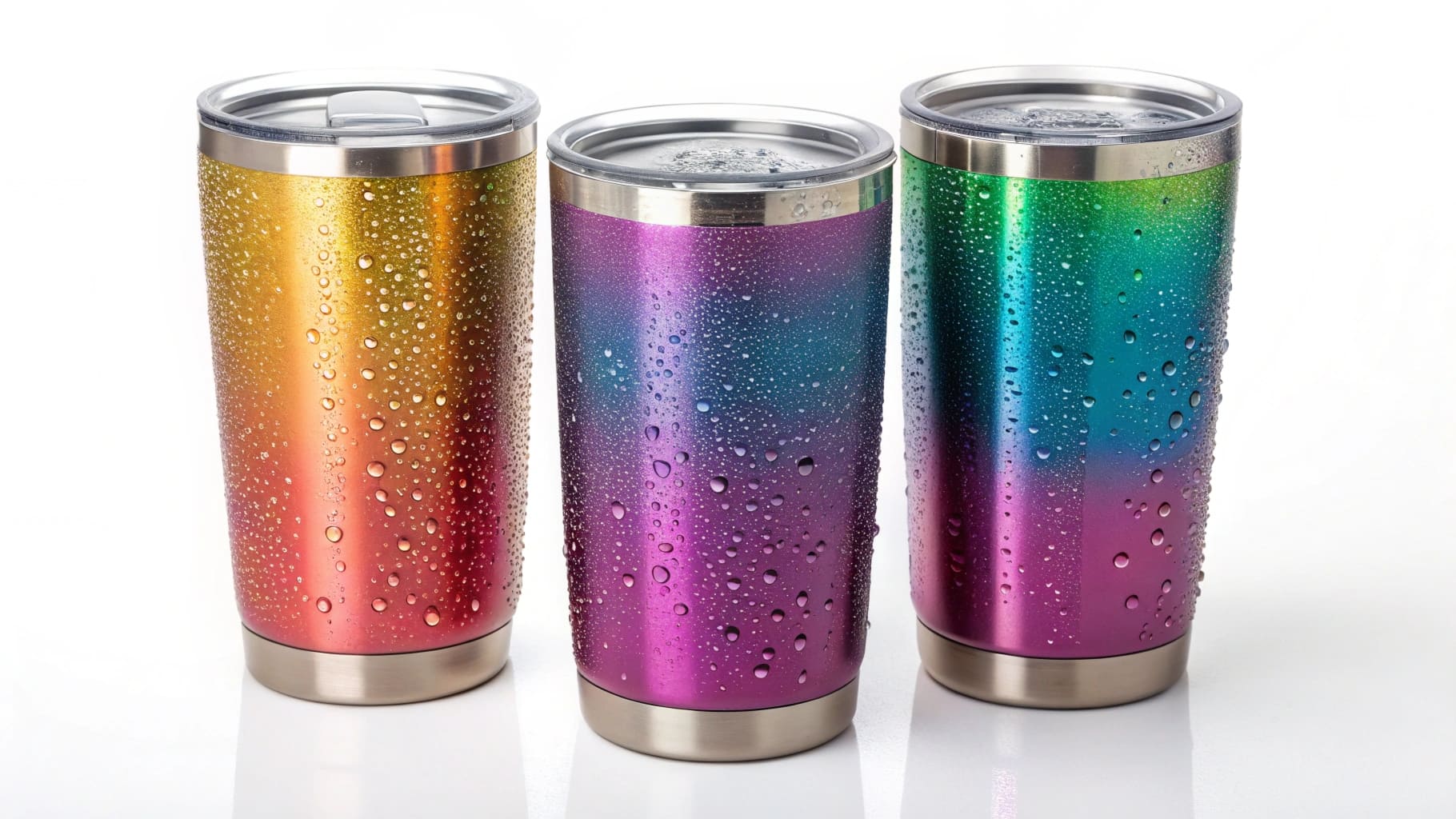
How I explain the difference to buyers
I explain the difference by starting with the drinking moment. A thermos is usually built for storage. A tumbler is usually built for access.4 This simple idea helps buyers choose the right product and write the right purchase request.
A thermos often has a narrow mouth, a tight screw cap, and a structure made for longer heat retention. It works well for camping, outdoor work, long travel, and industrial use. The user may open it less often, so the product can focus on holding temperature for a longer time.
A tumbler often has a wide mouth, a sliding lid, a flip lid, or a straw lid. It works well in cars, offices, gyms, and retail gift programs. The user drinks from it often, so comfort matters more. Easy cleaning also matters more.
| Product type | Main purpose | Common design | Main buyer concern |
|---|---|---|---|
| Tumbler | I use it for daily drinking and quick access | Wide mouth, easy lid, cup holder shape | I check lid quality, coating, and practical heat control |
| Thermos | I use it for longer storage of hot or cold liquid | Narrow mouth, screw cap, stronger seal | I check long heat retention and sealing strength |
| Travel bottle | I use it for water carry and outdoor movement | Bottle shape, leak-resistant cap | I check leak test, handle design, and weight |
| Coffee mug | I use it for desk or café-style drinking | Handle or sip lid | I check comfort, coating, and hot drink safety |
I do not say one product is better than the other. I say each product must match the use case. A corporate gift tumbler should feel modern and easy to use. A construction worker’s thermos should protect hot liquid for a long shift. A retail water bottle should not leak in a bag. If the buyer gives me the wrong target use, I may quote the wrong structure, and the order may disappoint the final customer.
Which thermal metrics I demand before mass production
I ask for thermal data because words like “keeps hot” and “keeps cold” are not enough. I want a clear starting temperature, room temperature, liquid volume, lid condition, and testing time. I also want the factory to test samples from normal production, not only hand-picked samples from a showroom.
| Metric I request | Why I request it | What a weak result may mean |
|---|---|---|
| Starting liquid temperature | I need a fair test condition | The report may be hard to compare |
| Room temperature | I need to understand the test environment | The result may look better than normal use |
| Hot retention curve | I need to see how fast heat drops | The vacuum layer may be weak |
| Cold retention curve | I need to see how long cold drinks stay pleasant | The insulation or lid may not be stable |
| Lid leak test | I need to reduce claims after sale | The lid tooling or gasket may be poor |
| Vacuum failure check | I need to catch hidden defects | The welding or vacuum process may be unstable |
| Coating adhesion5 test | I need the surface to survive handling | The finish may chip or peel too soon |
I also ask for certificates, but I do not stop there. Certificate fraud happens in the market6, so I prefer to check if the company name, product type, material, and test scope match the order. I ask for inspection before shipment, and I ask the inspector to check random cartons. I also want production photos and packing details during the order, not only at the end. This habit helps me avoid delayed shipments and bad surprises before peak sales seasons.
Conclusion
I source tumblers by tested performance, not slogans. I ask for thermal curves, lid tests, certificates, and production discipline before I trust any price.
-
"Vacuum insulation panel core materials and modelling the ...", https://dr.lib.iastate.edu/bitstreams/f77c7126-f49f-4b7f-b58d-7f1c941b1f20/download. Vacuum insulation minimizes heat transfer by eliminating conduction and convection in the evacuated space between walls, leaving only radiative heat transfer, which can be further reduced through reflective coatings. Evidence role: mechanism; source type: encyclopedia. Supports: how vacuum insulation reduces heat transfer between inner and outer walls. ↩
-
"Thermal Conductivity Performance and Insulation Benefits of Steel and ...", https://pangea.stanford.edu/ERE/pdf/IGAstandard/SGW/2026/Walz.pdf. Thermal retention performance varies by construction quality, but standardized testing protocols provide benchmarks for evaluating vacuum-insulated containers across different timeframes and temperature conditions. Evidence role: statistic; source type: research. Supports: typical thermal retention duration ranges for vacuum-insulated stainless steel drinkware. Scope note: Actual retention times depend on initial temperature, ambient conditions, liquid volume, and seal quality ↩
-
"Vacuum insulation panel core materials and modelling the thermal ...", https://dr.lib.iastate.edu/bitstreams/f77c7126-f49f-4b7f-b58d-7f1c941b1f20/download. The effectiveness of vacuum insulation decreases as residual gas pressure increases, with thermal conductivity rising when the mean free path of gas molecules becomes comparable to the gap width. Evidence role: mechanism; source type: research. Supports: how vacuum pressure level affects heat transfer in double-wall insulation. ↩
-
"The tariff classification of insulated stainless steel beverage tumblers ...", https://rulings.cbp.gov/ruling/N297166. Industry classifications distinguish vacuum-insulated drinkware by opening size, lid mechanism, and intended use pattern, though terminology varies across markets and manufacturers. Evidence role: definition; source type: other. Supports: how industry sources distinguish between thermos and tumbler product categories. Scope note: Product category boundaries are not formally standardized and overlap in some designs ↩
-
"Quality assurance tests for adhesion of paint on tactical rigid wall shelters", https://nvlpubs.nist.gov/nistpubs/Legacy/IR/nistir90-4276.pdf. Standardized adhesion testing methods, including cross-cut and pull-off tests, provide quantitative measures of coating bond strength to substrates under controlled conditions. Evidence role: general_support; source type: institution. Supports: standardized methods for evaluating coating adhesion on metal substrates. ↩
-
"A Supply Chain Management Perspective on Mitigating the Risks ...", https://a-capp.msu.edu/article/a-supply-chain-management-perspective-on-mitigating-the-risks-of-product-counterfeiting/. Trade organizations and regulatory agencies have documented instances of fraudulent compliance documentation in global supply chains, prompting recommendations for independent verification and supplier audits. Evidence role: general_support; source type: institution. Supports: documented concerns about certification authenticity in international manufacturing. ↩