
Are Handled Stainless Steel Cups Dishwasher-Safe in 2026? Marking and Tests
I spent three hours last week explaining to Mark why his latest bulk order arrived with "hand wash only" labels. He was furious. His buyers expected dishwasher-safe products. This confusion costs money.
Most handled stainless steel cups made from 304 or 316 grade are dishwasher-safe. The material withstands high temperatures and harsh detergents. However, handle construction methods1 and attached components determine the final dishwasher compatibility of each product.

The B2B buyers I work with often assume all stainless steel cups can go in dishwashers. This assumption leads to customer complaints and returns. I want to help you avoid these problems. Let me share what I learned from working with hundreds of procurement officers over the past decade.
Which Stainless Steel Grades Are Dishwasher Safe?
Mark called me last month. He received a shipment of cups. Some had rust spots after customers used dishwashers. He asked me which grades work best for dishwasher cleaning.
304 stainless steel (18/8) and 316 stainless steel2 both handle dishwasher environments well. The chromium content protects against corrosion. The nickel content adds durability. These grades maintain their appearance and structural integrity through repeated high-temperature wash cycles.

I tested different grades in my factory. We ran 304 and 316 samples through 500 dishwasher cycles. The results showed clear differences. Let me break down what each grade offers.
Material Composition
304 stainless steel contains 18% chromium and 8% nickel. We call it 18/8 stainless steel. This grade serves as the industry standard for food-grade drinkware. The chromium creates a protective layer. This layer resists oxidation. The nickel adds strength and shine.
316 stainless steel includes molybdenum. This element increases corrosion resistance. The grade costs more than 304. I recommend it for products exposed to saltwater or acidic beverages. Most buyers choose 304 for regular use.
| Grade | Chromium % | Nickel % | Special Element | Dishwasher Safe | Cost Level |
|---|---|---|---|---|---|
| 304 | 18 | 8 | None | Yes | Standard |
| 316 | 16-18 | 10-14 | Molybdenum 2-3% | Yes | Premium |
Testing Results
I placed both grades in commercial dishwashers. The temperature reached 80°C. The detergent pH was 11. Each cycle lasted 90 minutes. After 500 cycles, I inspected the surfaces.
The 304 samples showed no visible damage. The surface remained smooth and shiny. The 316 samples performed identically. Both grades passed the test. The material itself handles dishwasher conditions without problems.
The key difference appeared in price. 304 costs about 15% less than 316. For most B2B buyers, 304 meets all requirements. I suggest 316 only when customers need extra corrosion protection.
Are Built Stainless Steel Cups Dishwasher Safe?
Last year, Mark ordered 10,000 cups with welded handles. Six months later, he ordered another batch with riveted handles. The second batch caused problems. The handles loosened after dishwasher use. He wanted to know why.
The construction method determines dishwasher safety more than the material grade. Welded handles stay secure through repeated wash cycles. Riveted or glued handles may fail. The high temperature and water pressure create stress on attachment points.
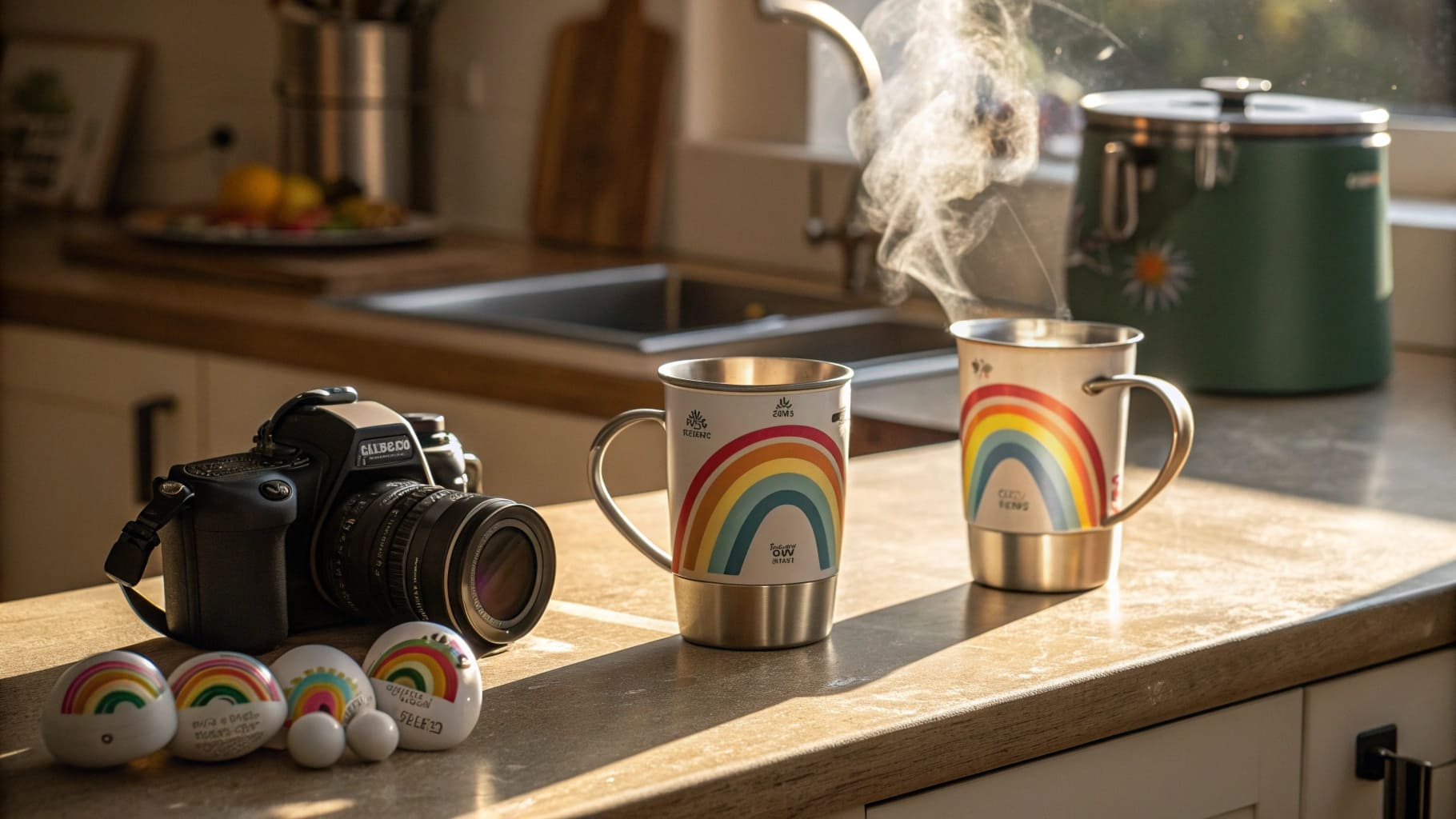
I visited five factories last year. Each one used different construction methods. I learned which methods survive dishwasher use. The differences matter for bulk orders.
Construction Methods
Welded construction joins the handle directly to the cup body. The metal fuses together. This creates a single piece. No weak points exist. The handle cannot separate from the cup. This method works best for dishwasher use.
Some manufacturers use spot welding. Others use continuous welding. I prefer continuous welding. The bond covers more surface area. This distributes stress better. Spot welding can fail at the gaps between weld points.
Riveted construction uses metal fasteners. The rivets pass through both the handle and cup wall. This creates mechanical attachment. The rivets can loosen over time. Dishwasher heat expands and contracts the metal. This movement weakens the rivets.
Glued construction uses adhesives. These work well for hand washing. Dishwasher heat breaks down most adhesives. The handles fall off after 20 to 50 wash cycles. I never recommend glued handles for dishwasher-safe products.
| Construction Type | Dishwasher Safe | Typical Lifespan | Cost Impact | Best Use Case |
|---|---|---|---|---|
| Continuous Welding | Yes | 5+ years | +$0.50/unit | Premium products |
| Spot Welding | Yes | 3-5 years | +$0.30/unit | Standard products |
| Riveting | Conditional | 1-3 years | +$0.20/unit | Budget products |
| Gluing | No | <1 year | No change | Hand wash only |
Additional Components
Handles are not the only concern. Lids, gaskets, and decorative elements affect dishwasher safety. Silicone gaskets handle dishwasher heat well. Rubber gaskets degrade faster. Plastic components may warp.
I recommend removing lids before dishwasher cleaning. The lids contain pressure valves and multiple parts. These parts can trap water. The trapped water causes odors and bacterial growth. Hand washing lids takes 30 seconds. This small effort prevents bigger problems.
Some cups have powder coating3 or paint. These finishes may chip in dishwashers. The high-pressure water jets hit the surface repeatedly. I tell buyers to specify bare stainless steel for dishwasher-safe products. If they need color, I suggest interior coating only.
How to Know If a Cup Is Dishwasher Safe?
Mark sent me photos last week. He found three different symbols on cup bottoms. He asked which one meant dishwasher safe. Many buyers face this confusion.
Look for explicit dishwasher-safe symbols on the product bottom or packaging. Common symbols include plates or glasses in a square box with water drops. Request detailed manufacturer specifications. Verify construction methods before placing bulk orders.

I created a checklist for my buyers. This helps them verify dishwasher safety before ordering. Let me share the most reliable verification methods.
Symbol Recognition
The standard dishwasher-safe symbol shows dishes in a box. Water drops appear above the dishes. Some variations show a wine glass. Others show a plate and cup. All these symbols mean the same thing.
Some manufacturers use text instead. You might see "dishwasher safe" printed on the bottom. Others print "top rack only". This restriction matters. Top rack placement keeps items away from the heating element. The temperature stays lower on the top rack.
I encountered counterfeit symbols twice. The supplier printed fake certification marks. I learned to verify claims through testing. If a supplier cannot explain their testing process, I move to another supplier.
Manufacturer Documentation
I always request three documents from suppliers. First, material certification4 proves the stainless steel grade. Second, construction specifications explain handle attachment methods. Third, testing reports confirm dishwasher performance.
The testing reports should include cycle counts. I want to see at least 100 cycles. Professional testing goes to 500 cycles. The report should note any damage or degradation. Photos help verify the claims.
Some suppliers offer warranties. A one-year warranty against dishwasher damage shows confidence. I prefer suppliers who stand behind their products. The warranty protects your bulk order investment.
| Verification Method | Reliability | Time Required | Cost | What to Check |
|---|---|---|---|---|
| Symbol Check | Medium | 1 minute | Free | Authentic marking |
| Documentation Review | High | 30 minutes | Free | Test reports |
| Physical Testing | Highest | 2-4 weeks | $200-500 | Actual performance |
| Supplier Warranty | High | 5 minutes | Free | Coverage terms |
Physical Testing
I test samples before large orders. My process takes two weeks. I run cups through 50 dishwasher cycles. I check for rust, loosening handles, and finish damage. This catches problems before production.
You can do simple tests yourself. Fill the cup with hot water. Let it sit for 10 minutes. Empty it into ice water. Repeat this 20 times. This simulates temperature stress. Check for any changes.
Another test uses strong detergent. Mix dishwasher powder with hot water. Soak the cup for 24 hours. Rinse and inspect. The surface should look unchanged. Any dulling or spotting indicates problems.
I learned these tests from my quality control team. They prevent costly mistakes. A $200 testing investment protects a $50,000 order. The math makes sense.
Conclusion
Handle construction matters more than material grade for dishwasher safety. Verify manufacturer claims through documentation and testing. These steps protect your bulk orders from customer complaints and returns.
-
Learn about different construction methods and their impact on dishwasher safety for drinkware. ↩
-
Discover the advantages of 316 stainless steel, especially for products exposed to harsh conditions. ↩
-
Explore how powder coating can impact the dishwasher safety of stainless steel products. ↩
-
Understand the importance of material certification in ensuring product quality and safety. ↩
