
Do handled stainless cups collide with holders?
I see buyers lose orders when a good cup cannot sit in a car holder. The handle hits, the cup tilts, and complaints start.
Yes, handled stainless cups can collide with holders when the handle makes the full width too large. I target a cup body that fits common holders and a handle path that keeps the total width near or under four inches.
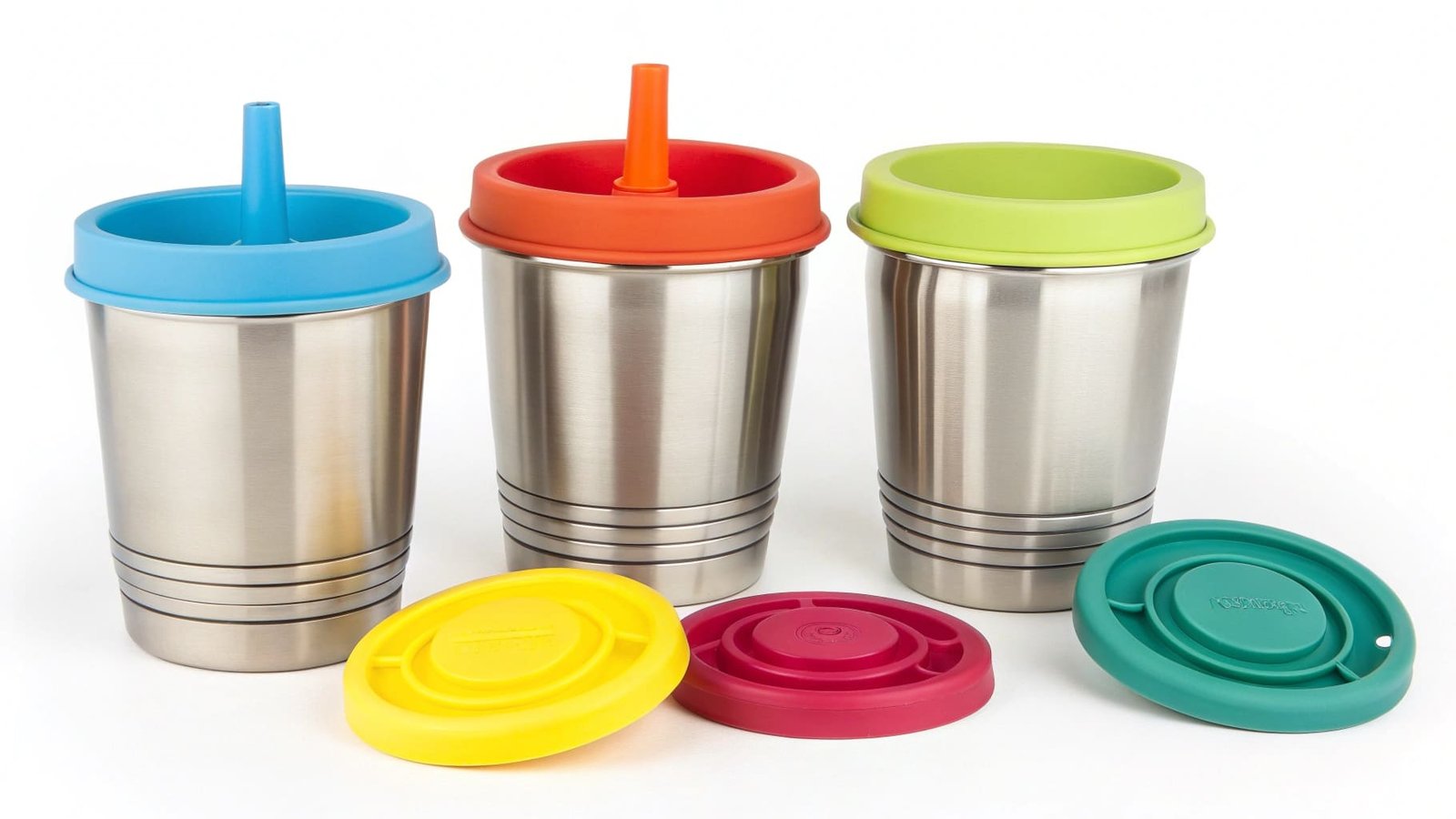
I treat handle clearance as a sales problem before I treat it as a design problem. A buyer may approve the color, the logo, the lid, and the price. But the user still places the cup in a car, stroller, gym machine, or office chair holder. If the handle catches the holder wall, the product feels poorly made. I usually ask my team to check the cup body diameter, the handle height, and the grip space at the same time. I also ask for drawings before bulk production. A low-profile handle, a foldable handle, or a slim side grip can save a whole order from returns. I do not see this as a small detail. I see it as the point where product design meets real daily use, and that is why I check the holder fit before I check the box design.
Are stainless steel cups safe?
I know safety worries become urgent when one failed report blocks a whole shipment. A cheap coating or weak weld can turn profit into trouble.
I treat stainless steel cups as safe only when material, coating, welding, and insulation tests all pass. I ask for food-grade steel proof, lead-free coating results, heavy metal migration data, and pressure or drop testing for vacuum cups.

What do I check before I approve a safe cup?
I do not judge safety by the words “food grade” alone. I have seen buyers accept a simple material paper and then face questions from customs or retail partners. I check the full safety path. I start with the inner steel. I prefer grade three zero four stainless steel for most cups. I also discuss grade three one six when the buyer needs stronger corrosion resistance. I then check the outside coating. A cup can have a safe inner wall and still fail because the paint or logo ink has lead or other heavy metals. I also pay attention to the weld area. Poor welding can create weak points. These points may fail when the cup moves between hot and cold use.1 For vacuum cups, I ask for pressure and drop tests because insulation adds more risk if the seal is weak.
| Safety layer I check | What I ask the factory to show | Why I care as a wholesale supplier |
|---|---|---|
| Inner steel | I ask for grade proof and composition data | I need the drinking surface to be safe and stable |
| Coating and print | I ask for lead-free and heavy metal test results | I do not want a logo area to create a safety problem |
| Welding points | I ask for weld inspection and leak testing | I want the cup to survive daily use and heat change |
| Vacuum structure | I ask for pressure and drop test data | I need proof that the cup will not fail after shipment |
| Market documents | I ask for the right papers for the buyer’s market | I want customs and retail checks to move smoothly |
I also match documents to the buyer’s selling country. For Europe, I often prepare LFGB-related papers2 when the order needs them. For the United States, I focus on FDA-related proof3 when the buyer asks for it. I do not send fake or reused reports. I also do not like unclear test files with missing model names. If a buyer is like many owners I work with, he knows sales well, but he may not know the technical side. So I keep the check simple. I ask what market he sells in, what liquid the cup will hold, what coating he wants, and what claim he wants to print on the box. Then I match the test plan to those points.
How do stainless steel cups work?
I meet buyers who compare prices first. But if they do not understand insulation, they may pay for a bottle that loses heat fast.
A stainless steel cup works by using stainless steel walls to hold liquid safely. Vacuum insulated cups add an airless gap between two walls, so heat moves slowly. Better vacuum seals, smooth welds, and optional copper coating improve temperature holding4.
Why does one cup keep temperature better than another?
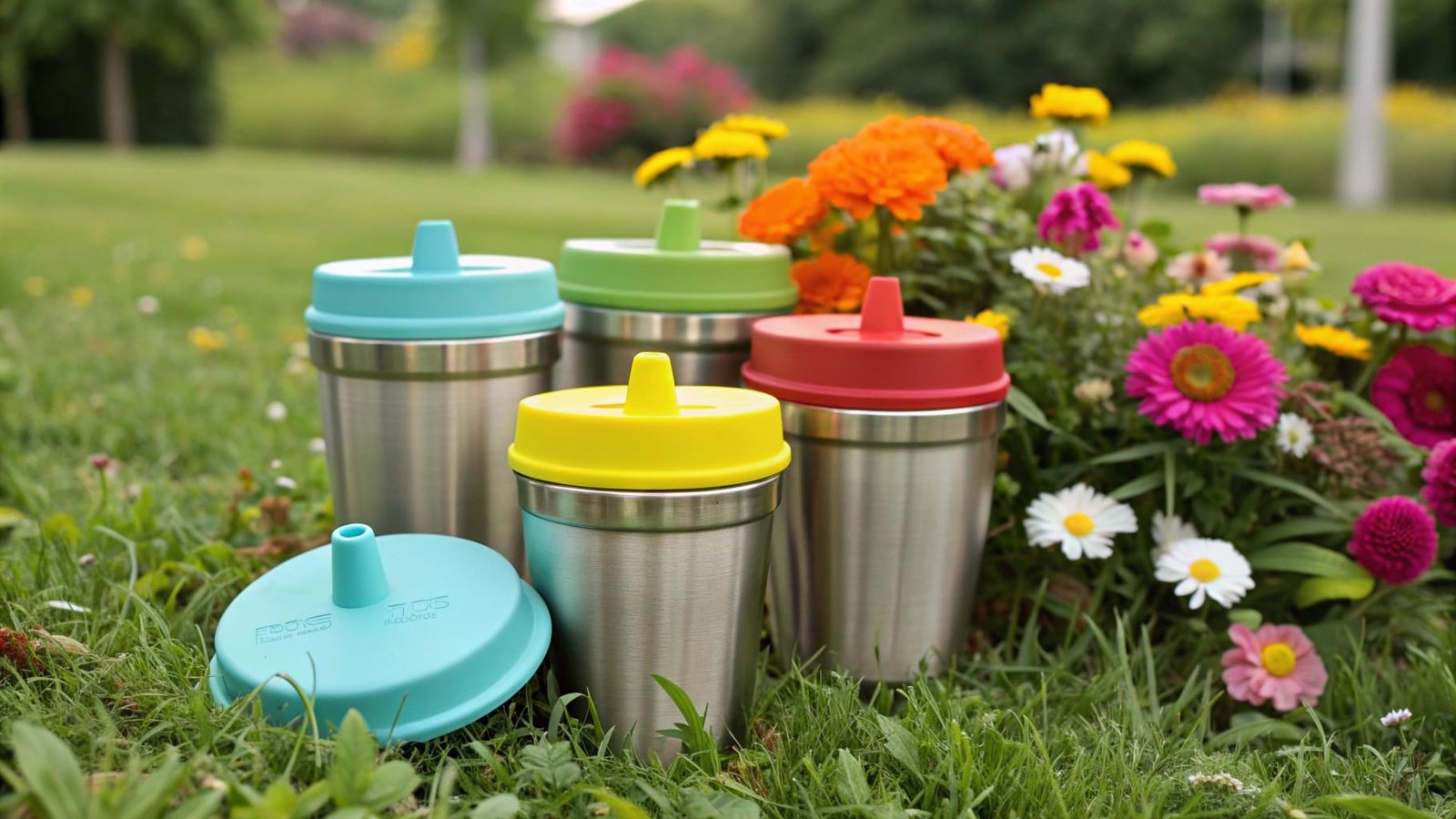
I explain stainless steel cups in simple terms when I speak with buyers. A single-wall cup works like a strong metal container. It is durable, easy to clean, and good for many cold drinks. But it transfers heat through the metal wall. A double-wall vacuum cup works in a different way. It has an inner wall and an outer wall. The space between the two walls has most air removed5. Because air is missing, heat has a harder time moving across that space. This is the core of vacuum insulation. A better cup also has a cleaner seal at the bottom or upper weld area. If that seal fails, the insulation drops. Some premium cups also use a copper coating on the inner wall surface. I use it when the buyer wants stronger temperature performance and is willing to pay for it.
| Part of the cup | My simple explanation | My buying target |
|---|---|---|
| Inner wall | I use it as the food contact surface | I want safe steel and a smooth finish |
| Outer wall | I use it as the protective body | I want good strength and clean polishing |
| Vacuum gap | I use it to slow heat movement | I want stable vacuum performance after testing |
| Seal area | I use it to keep the vacuum alive | I want strong welding and no hidden leak |
| Copper coating | I use it to reduce heat loss | I add it for premium product lines |
I do not trust a claim like “keeps hot all day” without data. I ask for a time and temperature curve. I want to see the starting water temperature, the room temperature, the test time, and the final result. If the product is for a premium market, I ask for a stronger vacuum level. Industrial-grade vacuum performance can reach below zero point zero zero one Pa6. Lower-grade products may not hold that level. They may look the same at first, but the temperature result can drop after months of use. This matters to buyers who sell under their own brand. A weak cup does not just create one complaint. It hurts repeat orders. So I connect the insulation promise to real test data before I discuss the logo and carton.
How to separate two stainless steel cups stuck together?
I have seen nested cups lock together during packing. The buyer sees damage risk, the warehouse slows down, and customer service gets noisy.
I separate stuck stainless steel cups by warming the outer cup and cooling the inner cup. I run warm water over the outside, put ice water inside, wait, and twist gently without hard force.
Why do stainless steel cups get stuck, and how do I prevent it?
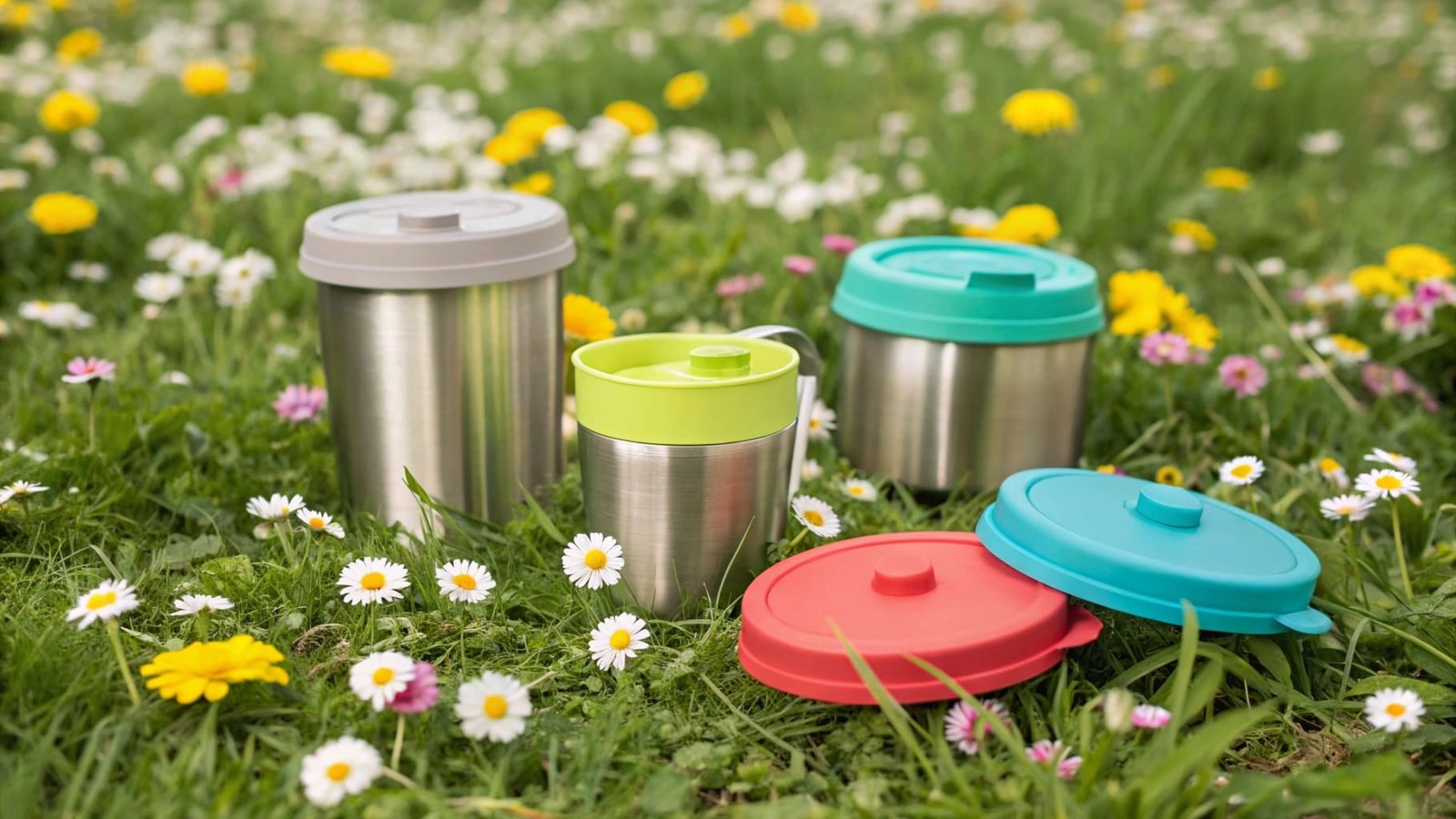
I see stuck cups most often when products are nested too tightly. The cause is usually simple. The outer cup can shrink slightly when it is cold. The inner cup can press against it. A small vacuum effect can also form between smooth metal walls. Surface friction then makes the two cups feel locked. I do not tell warehouse staff to pull with force. Hard pulling can bend the rim, scratch the coating, or deform the body. I use temperature difference instead. I warm the outside cup because metal expands with heat. I cool the inside cup because metal contracts with cold. This small movement can break the grip between the two cups. Then I twist gently and pull straight.
| Cause I look for | What I see in real orders | How I prevent the problem |
|---|---|---|
| Tight nesting | I see cups packed with almost no gap | I ask for enough radial clearance between cups |
| Straight side wall | I see large contact between two smooth walls | I prefer a slight taper angle in the design |
| Smooth metal friction | I see the cups grip each other during movement | I add paper, cloth, or soft dividers when needed |
| Cold storage | I see tighter locking after temperature change | I warn the warehouse not to force separation |
| Bulk packing pressure | I see cups pushed together in cartons | I use better inner packing for premium orders |
I also try to stop the issue at the design stage. For nested cups, I like at least zero point five millimeter radial clearance between units. I also like a small taper angle of one to two degrees when the design allows it. This makes separation much easier. If the cup has a silicone boot, I can use it as a soft separation layer. If the order is premium, I may suggest individual bags or paper sleeves. This adds cost, but it protects the coating and reduces warehouse trouble. I also train inspection staff not to force-fit cups just to save carton space. Tight packing can look efficient at the factory. But it can create a cost later when a buyer’s customer cannot separate the cups at home.
Conclusion
I prevent holder clashes by checking width, grip shape, safety proof, insulation data, and nesting clearance before I approve any handled stainless cup.
-
"Thermal Fatigue Failure of Micro-Solder Joints in ... - PMC - NIH", https://pmc.ncbi.nlm.nih.gov/articles/PMC11123225/. Repeated thermal cycling induces cyclical thermal expansion and contraction in welded assemblies, potentially leading to fatigue failure at heat-affected zones where microstructural changes during welding create stress concentrations, particularly in vacuum-sealed structures where differential expansion between inner and outer walls cannot be relieved by intermediate material. Evidence role: mechanism; source type: research. Supports: how thermal cycling creates stress at welded joints. ↩
-
"Food Contact Materials Regulations in the European Union", https://www.compliancegate.com/food-contact-material-regulations-european-union/. LFGB (Lebensmittel- und Futtermittelgesetzbuch) is the German Food and Feed Code that establishes requirements for materials in contact with food, often used as a reference standard for European markets alongside broader EU Regulation 1935/2004. Evidence role: definition; source type: government. Supports: the definition and regulatory status of LFGB in European food safety. Scope note: LFGB is specifically German legislation rather than an EU-wide requirement, though it is frequently referenced as meeting European food contact standards. ↩
-
"Inventory of Effective Food Contact Substance (FCS) Notifications", https://www.fda.gov/food/packaging-food-contact-substances-fcs/inventory-effective-food-contact-substance-fcs-notifications. The FDA regulates food contact substances under 21 CFR Parts 170-189, requiring that materials be generally recognized as safe or approved through a Food Contact Notification; however, the FDA does not issue certificates or approvals for individual products, placing compliance responsibility on manufacturers. Evidence role: general_support; source type: government. Supports: FDA regulatory framework for food contact materials. Scope note: The FDA does not provide product-specific certifications, so 'FDA-related proof' typically refers to manufacturer documentation of compliance with applicable regulations rather than official FDA approval documents. ↩
-
"Metal Layer to Reduce Heat Transfer - Physics Van - University of Illinois", https://van.physics.illinois.edu/ask/listing/42930. Copper coatings on vacuum chamber surfaces reduce radiative heat transfer by exploiting copper's low emissivity (approximately 0.02-0.05 for polished copper), which reflects infrared radiation and minimizes thermal energy transmission across the vacuum gap, a principle documented in thermal engineering studies. Evidence role: mechanism; source type: research. Supports: the physical mechanism by which copper coating reduces heat transfer. ↩
-
"Heat transfer", https://en.wikipedia.org/wiki/Heat_transfer. A vacuum gap eliminates conductive and convective heat transfer by removing the air molecules that would otherwise carry thermal energy, leaving only radiative transfer as the remaining mechanism, a principle established in thermodynamics and utilized in Dewar flask designs since the 1890s. Evidence role: mechanism; source type: encyclopedia. Supports: the physical principles of how vacuum prevents heat transfer. ↩
-
"A Primary Standard for Measuring Vacuum | NIST", https://www.nist.gov/news-events/news/2022/07/primary-standard-measuring-vacuum. Vacuum quality is classified in ranges, with high vacuum spanning 10⁻³ to 10⁻⁷ Pa; consumer-grade vacuum insulated containers typically achieve pressures in the range of 0.001 to 0.1 Pa, while industrial laboratory equipment can reach significantly lower pressures. Evidence role: statistic; source type: education. Supports: vacuum pressure classifications and achievable levels in consumer products. Scope note: The 0.001 Pa threshold represents an upper bound for quality consumer vacuum insulation rather than a standard industrial specification, as industrial vacuum applications in other contexts achieve much lower pressures. ↩