
Which tumbler finishes resist fingerprints: powder coat, PVD, or brushed?
Fingerprints look small at first. They become returns when buyers see smudged samples. I solve this by matching finish, use case, and price before production.
In my sourcing work, I usually rank matte textured powder coat as the best for hiding fingerprints, satin PVD as the premium middle choice, and brushed stainless as the weakest choice. Glossy PVD and polished brushed surfaces show hand oil more clearly.
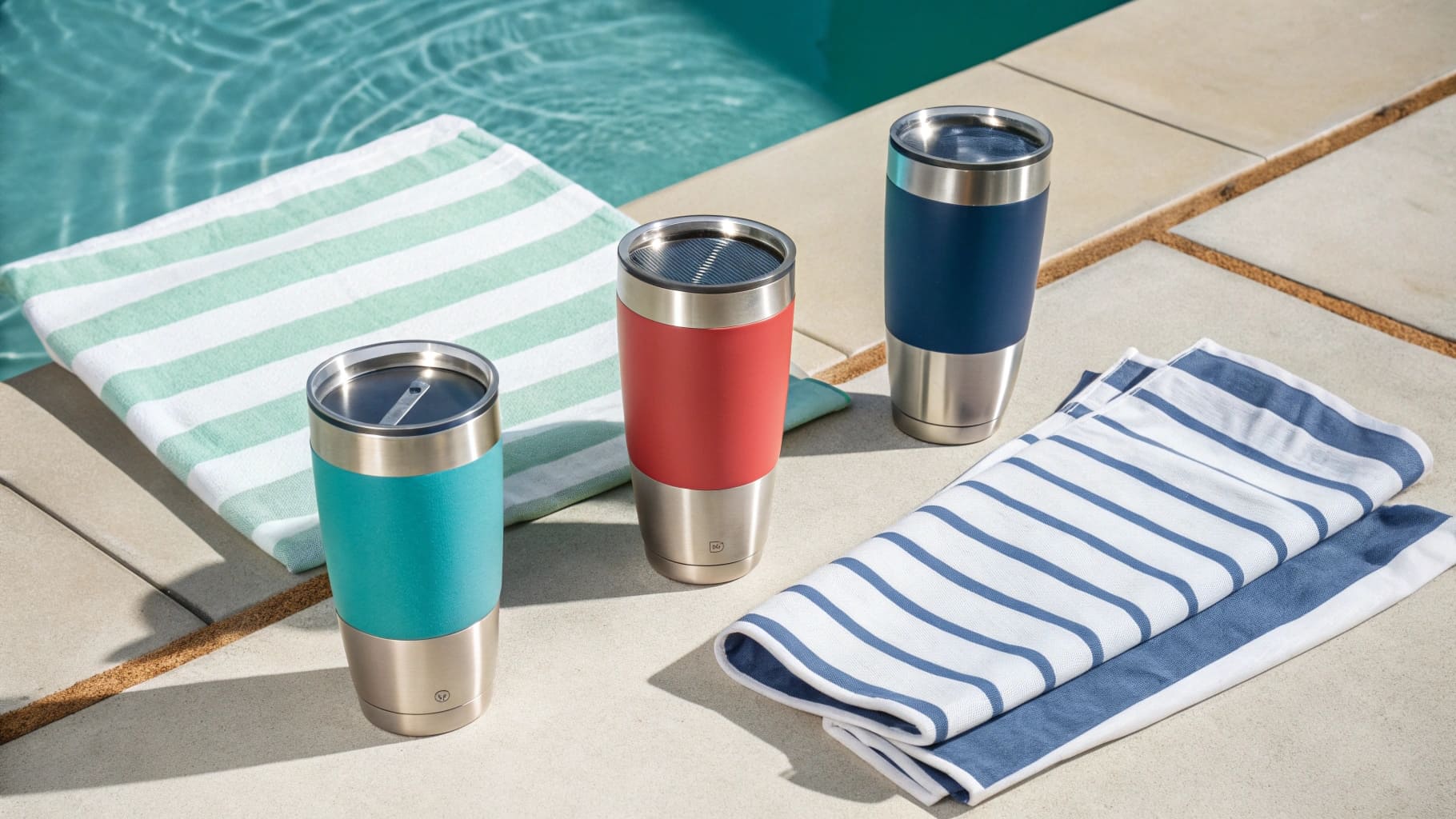
I learned this lesson when I checked a dark tumbler sample under strong office light. The body looked clean in the supplier photo, but my hand marks appeared as soon as I picked it up. I now treat fingerprint resistance as a surface design question, not only a coating question. I look at texture, gloss, color, and the way the tumbler will sit in a car cup holder, a gym bag, or a retail display. I also ask how the customer will clean it. A surface that looks perfect in a catalog can look tired after daily use. This is why I do not choose a finish by name alone. I choose it by real handling.
What is PVD coating vs. powder coating?
Coating words sound simple. They become costly when I compare samples with different bonding methods. A wrong choice can make a premium tumbler look cheap.
I define PVD as a vacuum process that lays metal vapor onto stainless steel in a very thin bonded layer. I define powder coating as charged powder sprayed onto the surface and cured with heat1. I use PVD for durable shine and powder coating for color and fingerprint hiding.
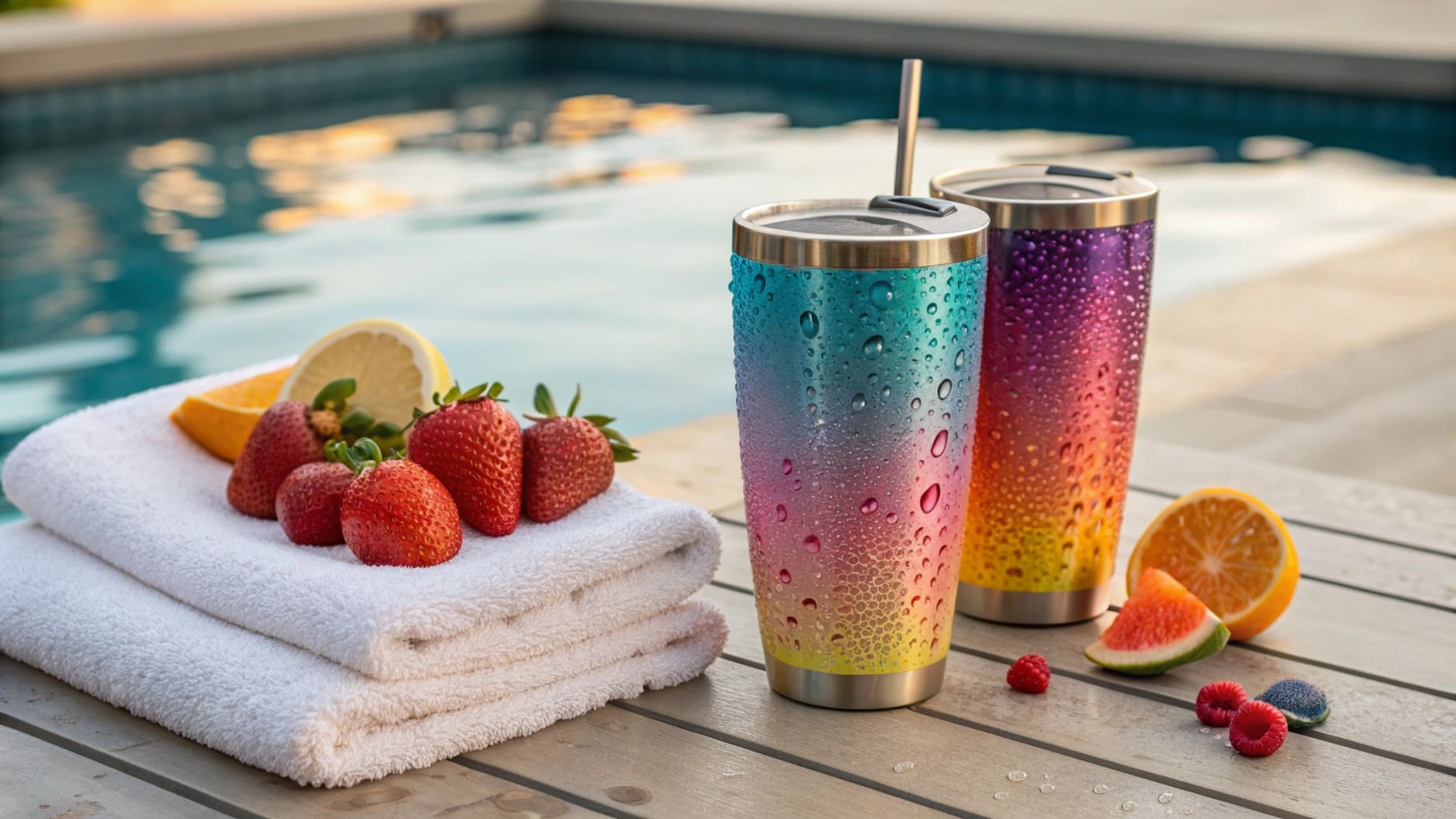
How I compare the two in daily sourcing
I treat PVD and powder coating as two different answers to two different buyer problems. PVD gives me a hard, thin surface. It can look premium, especially in gold, black, copper, rainbow, and gunmetal tones. I like PVD when a buyer wants a higher retail price and wants the tumbler to keep its finish after regular rubbing. But I also check the gloss level. A mirror PVD finish can show fingerprints quickly. A satin PVD finish performs better because it scatters light and hides oil marks more softly.
Powder coating gives me a thicker outer layer. I like matte or fine-texture powder coating when the main question is fingerprint resistance. The tiny texture breaks up hand oil and makes marks less visible. It also gives better grip, which helps active lifestyle products. The tradeoff is impact resistance. Powder coating can chip if the tumbler hits a hard floor or if the bottom rim has weak protection2.
| Finish type | How I read the surface | What I tell wholesale buyers |
|---|---|---|
| Matte powder coat | I see it as the strongest choice for hiding hand marks. | I recommend it when clean daily appearance matters more than metallic shine. |
| Satin PVD | I see it as a premium choice with good wear resistance. | I recommend it when the brand wants a higher-end look and better scratch resistance. |
| Glossy PVD | I see it as beautiful but easy to smudge. | I recommend it only when the buyer accepts more wiping and more visible fingerprints. |
| Brushed stainless | I see it as practical but not always clean-looking. | I recommend it when the buyer wants a classic metal feel and accepts light oil marks. |
I also consider the logo method. Laser engraving on PVD can look sharp, but it must be tested for contrast3. Screen printing on powder coat can look clear, but it needs adhesion testing. I prefer to check real samples with wet hands, dry hands, and hand cream because retail customers do not handle tumblers in a laboratory. They handle them in cars, offices, gyms, and kitchens. That simple test often tells me more than a long coating description.
What are the downsides of powder coating?
Powder coat can look perfect in a photo. It can fail fast at the rim, base, or logo edge if I ignore real use.
The main downsides of powder coating are chipping, edge wear, batch color shift, limited chemical resistance, and peeling after impact. I reduce these risks by checking surface preparation, coating thickness, curing control, packaging, and high-wear points before shipment.
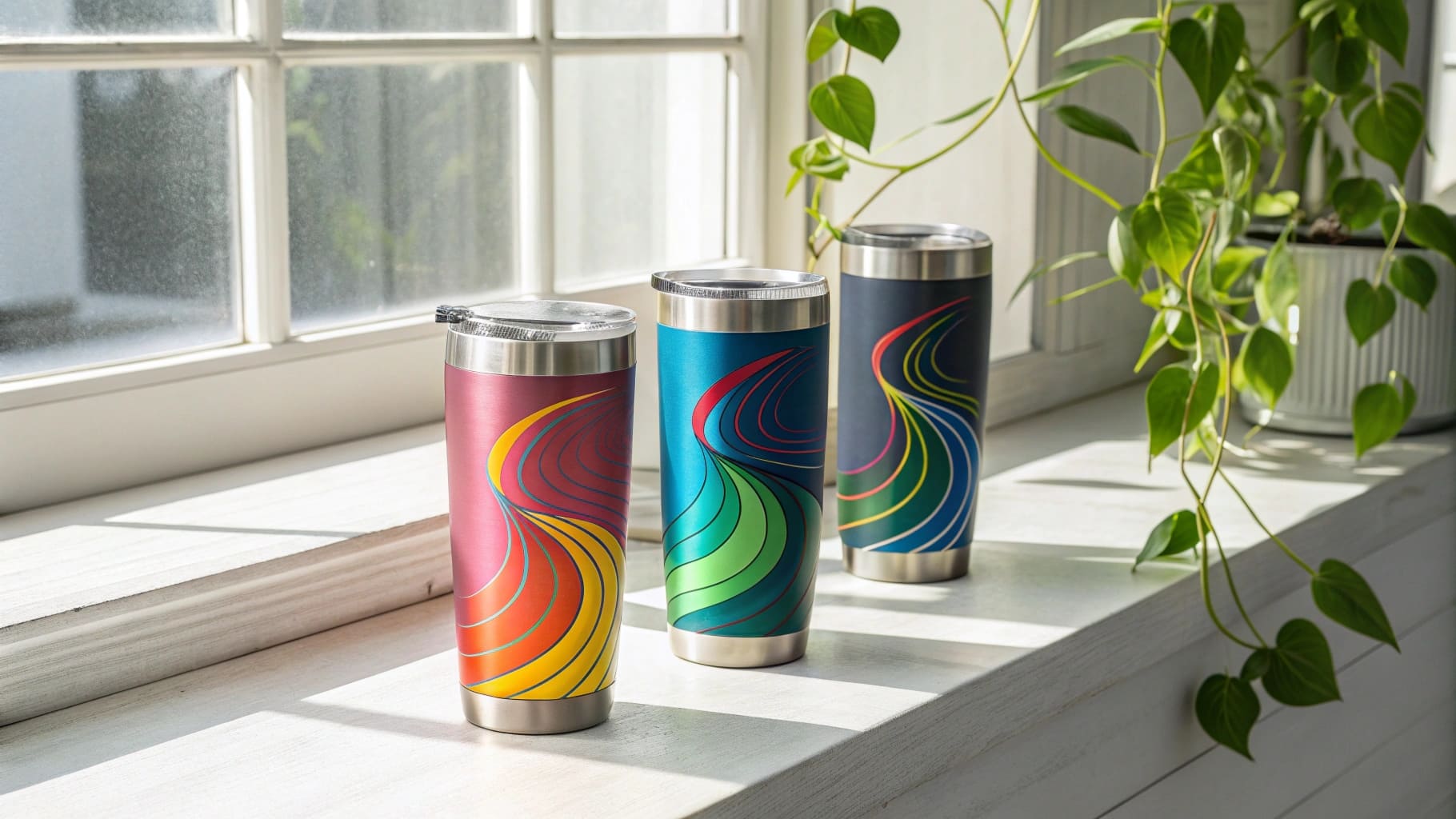
Where powder coating creates sourcing risk
I like powder coating because it gives me strong color choices and good fingerprint hiding. I also respect its limits. Powder coating sits on top of stainless steel. It does not become part of the metal in the same way as a thin vacuum-deposited layer4. This means the coating can separate if the surface was not cleaned well before spraying, if the curing heat was not controlled, or if the product takes a hard hit.
I see the biggest risk at the bottom rim. A tumbler touches desks, shelves, cup holders, and packing tables many times before the end customer even uses it. I also watch the mouth rim, the lid thread area, and any handle or grip zone. These areas receive constant contact. If the coating is too thin, it wears. If it is too thick, it can look uneven or crack at sharp edges. I prefer smooth rounded edges because they help the coating cover the metal more evenly.
| Risk area | What I check | Why I care |
|---|---|---|
| Bottom rim | I check for chips after drop and rub tests. | I know this area creates many visible complaints. |
| Mouth rim | I check smoothness and coating coverage. | I do not want the user to feel rough coating near the lips. |
| Lid thread | I check wear after repeated opening and closing. | I know friction can remove coating faster here. |
| Logo area | I check printing or engraving adhesion. | I want the brand mark to stay clean after daily handling. |
| Batch color | I compare samples under the same light. | I want repeat orders to look consistent on retail shelves. |
I also pay attention to color. Dark matte colors hide fingerprints well, but they may show dust or scuffs. Light colors hide oil better in some cases, but they can show dirt. Very bright colors depend heavily on powder quality and curing control. When I prepare a wholesale order, I do not rely only on a color chip. I ask for finished samples from the same process that will be used in mass production.
I also explain one point to buyers who focus on certificates. Food contact certificates and material reports are important, but they do not prove coating strength. I still need handling tests, adhesion tests, packing checks, and clear photos before shipment. I would rather find a small coating issue in the factory than hear about it after a selling season has already started.
What is the most common problem with powder coating?
Most complaints do not start on the flat body. They start where hands, lids, desks, and cup holders keep rubbing the tumbler.
The most common powder coating problem is chipping or peeling at high-contact areas, especially the bottom rim, mouth rim, handle area, and lid threading. I treat these zones as inspection points because small coating breaks can spread and create visible quality complaints.
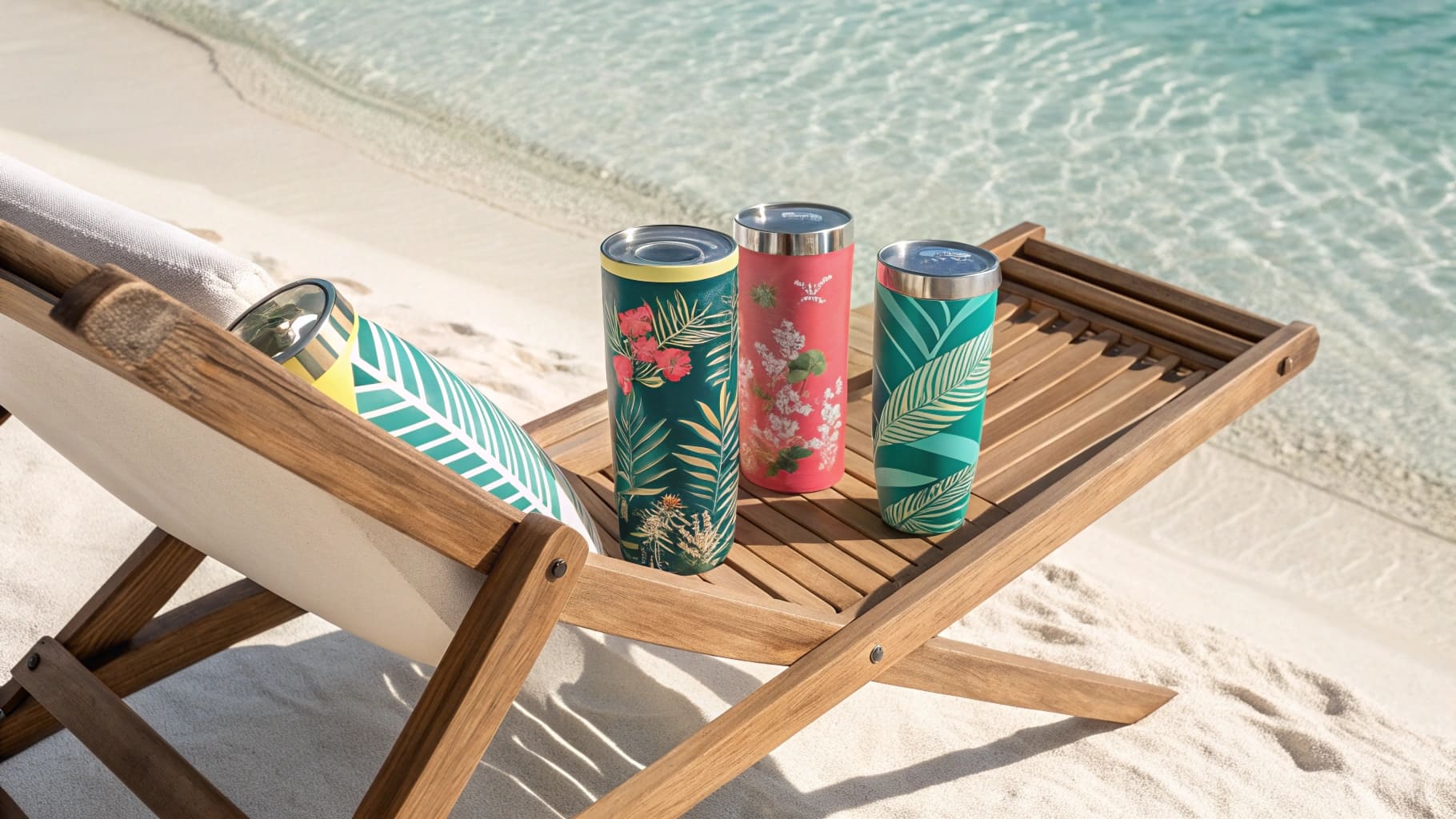
How I inspect the failure points before shipping
I see premature chipping as the most common powder coating problem because it is easy for customers to notice. A small chip on a tumbler can make the whole product feel cheap, even if the stainless steel body is still safe. This problem often starts when the coating loses grip at an edge. Once that edge lifts, more coating can peel away through daily contact, washing, or rubbing.
I do not inspect only the front body. The front body usually looks good because it is the easiest area to spray. I inspect the stress points. I rub the bottom rim against a hard surface. I open and close the lid many times. I check the base after packing simulation. I also look at the tumbler under side light because side light reveals uneven coating, dust points, and small cracks better than normal room light.
| Inspection point | My simple test | My decision rule |
|---|---|---|
| Bottom rim | I rub and tap the base on a hard surface. | I reject samples if coating breaks too easily. |
| Lid area | I open, close, and twist the lid repeatedly. | I ask for adjustment if coating wears at the thread. |
| Body surface | I handle it with clean hands and oily hands. | I compare visible marks under bright light. |
| Packing contact | I shake packed samples and check rubbing marks. | I improve inserts if tumblers touch each other. |
| Logo area | I rub the logo with a dry cloth and a damp cloth. | I change the logo method if the mark weakens. |
I also manage this problem through design. I can keep the bottom as bare stainless steel. I can use a silicone boot to protect the base. I can ask for a thicker coating in high-wear areas, but I still need to avoid an orange-peel look. I can also choose satin PVD for parts that receive more friction and use powder coating on the body for color. This hybrid idea works well when a buyer wants both a strong retail look and better daily durability.
I always connect this issue with communication. A buyer may ask for “good powder coating,” but that phrase is too broad. I prefer to define the exact finish, gloss level, texture, logo method, packing method, and inspection standard. Clear words reduce arguments later. They also help me protect delivery time because coating rework can delay shipment and damage the buyer’s peak sales plan.
Conclusion
I choose matte powder coat for clean handling, satin PVD for premium wear, and brushed stainless only when the buyer accepts visible oil marks.
-
"Powder coating", https://en.wikipedia.org/wiki/Powder_coating. Powder coating is a dry finishing process in which electrostatically charged powder particles are applied to a grounded workpiece and subsequently cured in an oven, typically at temperatures between 160°C and 210°C, causing the powder to flow and chemically cross-link into a uniform coating layer. Evidence role: definition; source type: encyclopedia. Supports: Powder coating is an electrostatic dry finishing process in which charged powder particles are sprayed onto a grounded substrate and then cured under heat to form a continuous film. Scope note: Specific curing parameters vary by powder chemistry and manufacturer formulation ↩
-
"Generic Testing and Quality Assurance", https://archive.epa.gov/nrmrl/archive-etv/web/pdf/06_vp_powder.pdf. Impact resistance of powder coatings is governed by film thickness, substrate surface preparation, and cross-link density; edge coverage is a recognized weak point because electrostatic powder deposition produces thinner films at sharp geometries, increasing susceptibility to chipping under mechanical stress. Evidence role: mechanism; source type: research. Supports: Powder coatings, while offering good corrosion resistance, can exhibit brittle fracture and delamination at edges and impact zones, particularly when coating adhesion to the substrate is compromised. Scope note: Performance varies significantly by powder formulation, substrate preparation quality, and curing conditions ↩
-
"Stainless Steel Laser Marking", https://www.videojet.com/us/homepage/applications/printing-on-metal-parts/stainless-steel-laser-marking.html. Laser marking of PVD-coated surfaces operates through selective ablation of the deposited film, revealing the substrate beneath; the resulting contrast is a function of the optical and color properties of both the coating and the exposed base material. Evidence role: mechanism; source type: research. Supports: Laser engraving on PVD-coated metals works by ablating the thin coating layer to expose the underlying substrate, with contrast depending on the color difference between the coating and the base metal. Scope note: Published studies focus primarily on industrial and medical laser marking rather than consumer drinkware applications ↩
-
"Surface Treat Method to Improve the Adhesion between ...", https://pmc.ncbi.nlm.nih.gov/articles/PMC10620901/. Powder coating adhesion to metallic substrates relies on mechanical interlocking with surface roughness features and interfacial chemical interactions, whereas PVD coatings achieve adhesion through atomic-level bonding formed during vapor condensation, resulting in fundamentally different interfacial bond strengths and failure modes. Evidence role: mechanism; source type: research. Supports: Powder coatings adhere to metal substrates primarily through mechanical interlocking and chemical bonding at the interface, while PVD coatings form atomic-scale bonds with the substrate through condensation of vaporized material. Scope note: Adhesion quality for both processes is highly dependent on substrate surface preparation and process control ↩