
Which tests validate leak-proof tumbler lids across families in QA twenty twenty-six?
I see buyers lose peak-season sales when one lid family leaks. I also see trust fall fast, because one wet carton can question a whole shipment.
I validate leak-proof tumbler lids with pressure decay, vacuum bubble testing, water immersion, cycle checks, heat and cold checks, and documented pass-fail records for every lid family. I use the same test logic across straw lids, slider lids, screw lids, and flip lids.
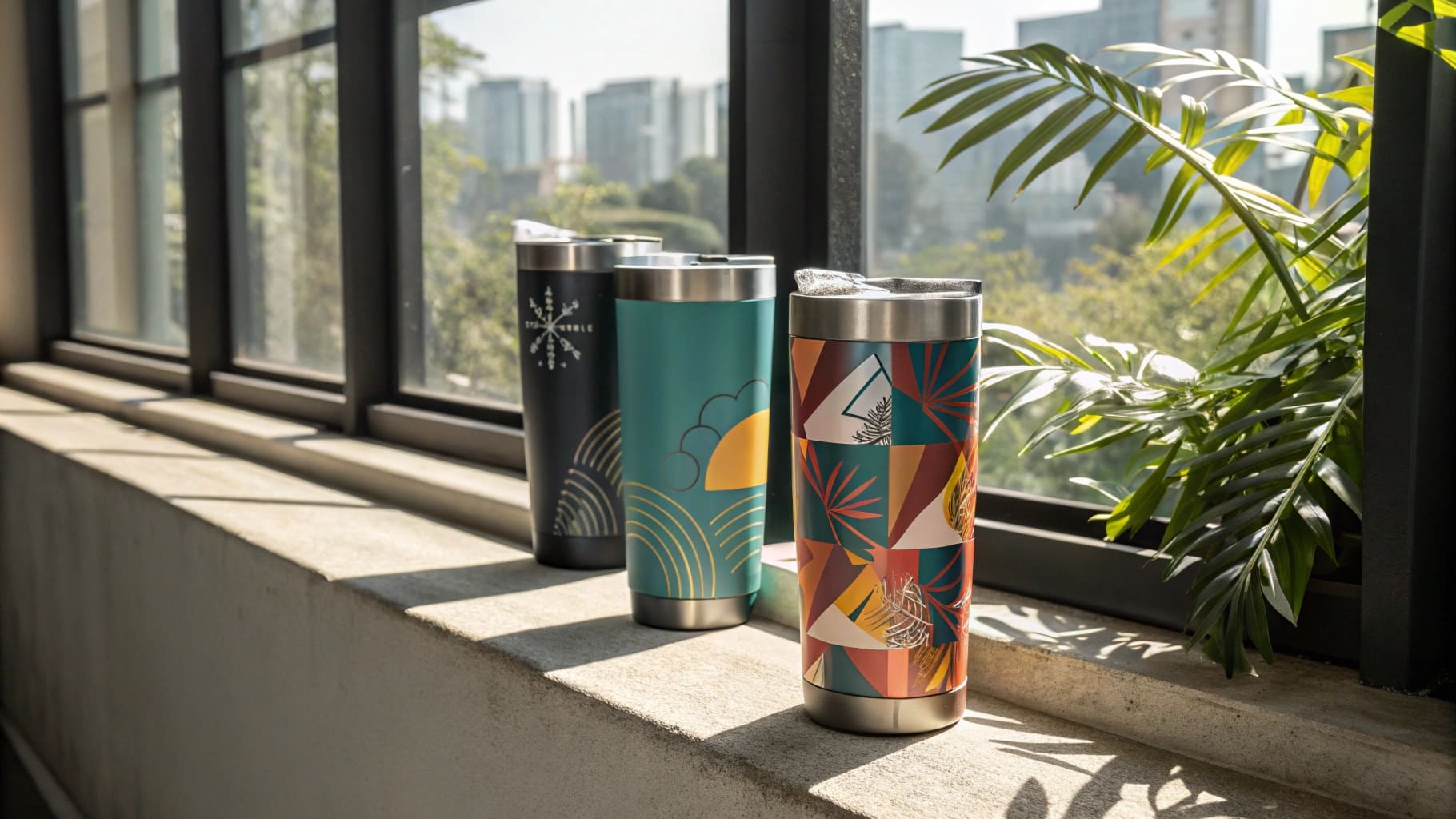
I write this from my factory-side view as Aries at Icobottle. I often speak with buyers who know sales very well, but they do not always know the technical details behind a leak-proof lid. I understand that. A tumbler lid looks simple from the outside. The real work sits inside the gasket, thread, vent hole, straw hole, and sealing surface.1 I keep reading test records before I trust a lid family, and I believe buyers should ask for the same records before they place a bulk order.
What are the methods of sealing testing?
I worry when a supplier only turns a tumbler upside down once. I know slow leaks hide under pressure, heat, movement, and weak gaskets.
I use pressure decay testing, vacuum bubble testing, and water immersion testing as my core sealing methods. I add lid torque checks, gasket compression checks, and open-close cycle checks when I compare different lid families in one order.

How I use sealing tests in real tumbler QA
I treat sealing testing as the first wall in quality control. I do not use one quick check and call the lid safe. I test the lid under different stresses, because a customer will put a tumbler in a bag, a car seat, a backpack, or a child’s lunch box. Each use case creates a different leak risk. A screw lid may pass water immersion, but it may fail after the gasket loses shape2. A slider lid may look tight, but a small gap can appear when hot liquid pushes vapor through the drinking port.
| Sealing method | What I check | What a buyer learns |
|---|---|---|
| Pressure decay testing | I seal the tumbler and watch pressure loss over time | I can find small air leaks before water appears |
| Vacuum bubble testing | I pull air pressure down and look for bubbles under water | I can see the exact leak point on the lid |
| Water immersion testing | I fill, close, place, and hold the tumbler in set positions | I can confirm real liquid leak behavior |
| Gasket compression check3 | I inspect how the gasket sits after closing | I can see if the seal has enough contact |
| Open-close cycle check | I repeat normal lid use many times | I can see if the lid stays reliable after use |
I often use pressure decay first when I need fast screening. It gives me a clean reading. I use vacuum bubble testing when I want to locate the weak point. I use water immersion when I want a simple pass-fail result that a buyer can understand. I like this mix because it gives both data and real-world proof.
What are the three main methods of testing?
I see problems when factories test only leakage. A lid can pass today, then fail later because the material, structure, or temperature behavior was ignored.
I group tumbler lid QA into physical integrity testing, performance validation testing, and compliance testing. This structure helps me check the lid body, the sealing result, and the safety documents before I approve mass production.
How I separate lid testing into clear QA groups
I use three main testing categories because each one answers a different buyer concern. Physical integrity testing answers, “Will this lid stay strong?” Performance validation answers, “Will this lid stay leak-proof during real use?” Compliance testing answers, “Can this product enter my market without risk?” I do not mix these questions together, because that creates confusion in production and inspection.
| Testing category | What I inspect | Why I care |
|---|---|---|
| Physical integrity testing | I check threads, hinges, sliders, straws, vents, gasket fit, and closing force | I need the lid to keep its shape and function |
| Performance validation testing | I test leakage under hot liquid, cold liquid, shaking, tilting, and long holding time | I need the lid to perform during daily use |
| Compliance testing | I check food-contact materials, stainless steel grade, coating safety, and document traceability4 | I need the buyer to pass customs and retail checks |
I have seen a sample pass a simple upside-down test, then fail after hot coffee was added. Heat can soften plastic parts. Heat can also change gasket pressure.5 Cold liquid can make some parts shrink. A family tumbler may be used by adults, teenagers, and children, so the lid may face rougher use than a basic office mug. I test screw lids for thread engagement. I test flip lids for hinge life. I test straw lids for straw port sealing. I test slider lids for movement gaps.
I also keep the inspection report easy to read. A buyer like Mark in Canada may not want a long technical file at first. He wants to know if the lid passed, how it was tested, and what happens if the result is not stable. I believe a good supplier should answer these points before price discussion becomes final.
What is the ASTM standard for leak test?
I get cautious when a supplier claims one magic standard covers every tumbler lid. I know rigid drinkware often needs adapted test methods.
There is no single ASTM standard made only for stainless steel tumbler lid leak testing. I usually reference ASTM D three zero seven eight and ASTM F two zero nine six as guide methods, then adapt them for rigid tumblers with clear pass-fail rules.
How I use ASTM logic without hiding behind vague claims
I respect standards, but I do not use standard names as decoration. I see this problem in the market. Some suppliers show a certificate, but the certificate may not match the product, the material, or the production batch. That creates risk for buyers who import into America or Europe. I prefer to explain what the standard can guide, what it cannot cover, and how I apply the test in the factory.
| Standard reference | How I understand it | How I adapt it for tumbler lids |
|---|---|---|
| ASTM D three zero seven eight | I use it as a reference for gross leak detection under vacuum logic | I apply vacuum bubble checks to assembled rigid tumblers |
| ASTM F two zero nine six | I use it as a reference for seal leak detection in flexible barrier style testing | I borrow the seal-focused thinking for lid ports and gasket areas |
| Internal factory method | I build a written method for each lid family | I define liquid type, time, angle, temperature, and pass-fail result |
| Buyer inspection plan | I match the test plan with order size and risk level | I make the report useful for procurement approval |
I do not tell buyers that an ASTM reference alone proves everything. I tell them that the test setup, sample size, test time, and result record matter. A tumbler lid is not a soft pouch. A straw lid has different risk points from a screw lid. A flip lid has a hinge and latch. A slider lid has a moving drink port. Each family needs its own test focus.
I also use traceability as part of the leak test system. I record the lid family, mold version, gasket material, color batch, test date, and inspector name. This record helps when a buyer reorders. It also helps when a shipment delay creates pressure. If I already have stable test records, I can move faster without guessing. I believe this is important for buyers who sell seasonal products. A delayed shipment can miss a sales window, and a leaked shipment can damage a brand faster than a higher unit cost.
How do I compare leak-proof results across different lid families?
I do not trust one standard result for all lid styles. I know each lid family has its own weak points and customer use habits.
I compare lid families by using the same baseline tests and adding special checks for each design. I focus on screw thread sealing, straw hole sealing, slider gap control, flip latch strength, and gasket recovery after repeated use.

How I make family-to-family testing fair
I like to keep a common base test across all lids. This lets me compare performance in a fair way. I then add design-specific tests, because one lid family may fail in a way another family cannot. For example, a screw lid may leak because the thread is too loose. A straw lid may leak through the straw port. A slider lid may leak through the moving cover. A flip lid may leak when the latch loses closing force.
| Lid family | Main leak risk I watch | Extra check I add |
|---|---|---|
| Screw lid | I watch thread engagement and gasket pressure | I test closing torque and repeated tightening |
| Straw lid | I watch straw hole and air vent sealing | I test tilt leakage and straw plug fit |
| Slider lid | I watch the drink opening and sliding plate gap | I test movement wear and hot liquid vapor pressure |
| Flip lid | I watch latch force and hinge alignment | I test latch fatigue and impact after closing |
| Handle lid | I watch stress near the handle and lid joint | I test pull force and shaking leakage |
I often explain this to buyers before sample approval. A buyer may ask for one color, one logo, and several lid choices. That looks easy in a catalog. It is not always easy in QA. Each lid family has its own tooling, gasket, assembly process, and failure mode. I need to test them separately, even when they fit the same bottle body.
I also ask my team to test production samples, not only golden samples. A golden sample can look perfect because it was made with extra care. A real order depends on stable mass production. I check random units from the line. I compare the result with the approved sample. I then decide if production can continue, if adjustment is needed, or if the batch must stop.
For wholesale buyers, this step protects money. It also protects timing. I know many Canadian and American buyers rebrand bottles and sell them at a premium. They cannot afford reviews that mention leaking lids. They also cannot afford to discover the problem after ocean freight. I believe good QA must find the leak before the carton is sealed.
Conclusion
I validate leak-proof lids with real sealing tests, clear records, and honest standards, so I can protect buyers before cartons leave my factory.
-
"Closure (container)", https://en.wikipedia.org/wiki/Closure_(container). Threaded closure systems create leak-proof seals through coordinated mechanisms: thread engagement provides closure force, compressible gaskets conform to surface irregularities, and precision-machined sealing surfaces create contact barriers against fluid migration. Evidence role: mechanism; source type: research. Supports: that threaded closures achieve sealing through multiple mechanisms including gasket compression, thread engagement, and mating surface contact. ↩
-
"Cyclic Compression Testing of Three Elastomer Types—A Thermoplastic ...", https://pmc.ncbi.nlm.nih.gov/articles/PMC9002981/. Elastomeric sealing materials undergo compression set, a permanent deformation resulting from sustained compressive stress, which diminishes the material's ability to maintain contact pressure and creates potential leakage paths. Evidence role: mechanism; source type: research. Supports: that elastomeric materials experience compression set—permanent deformation under sustained load—which reduces sealing effectiveness over time. ↩
-
"An Overview of Advanced Elastomeric Seal Development and Testing ...", https://ntrs.nasa.gov/api/citations/20140017051/downloads/20140017051.pdf. Effective elastomeric sealing requires gaskets to achieve compression typically between 15-30% of original thickness, generating contact stress that exceeds internal fluid pressure to prevent leakage paths. Evidence role: mechanism; source type: research. Supports: that elastomeric gasket sealing performance depends on achieving specified compression percentages to generate adequate contact stress. ↩
-
"Regulatory Status of Components of a Food Contact Material", https://www.fda.gov/food/packaging-food-contact-substances-fcs/determining-regulatory-status-components-food-contact-material. Regulatory agencies including the FDA and EU authorities require food-contact articles to demonstrate material safety through composition declarations and migration testing documentation for market entry. Evidence role: general_support; source type: government. Supports: that food-contact materials require documentation of material composition and safety for import compliance. Scope note: Specific requirements vary by jurisdiction and product category ↩
-
"Thermal Expansion of Plastics Used for 3D Printing - PMC - NIH", https://pmc.ncbi.nlm.nih.gov/articles/PMC9370745/. Thermoplastic materials undergo thermal expansion and contraction with temperature changes, while elastomeric sealing materials experience reduced compression force at elevated temperatures, affecting seal integrity. Evidence role: mechanism; source type: research. Supports: that thermoplastics exhibit dimensional changes with temperature and that elastomeric gaskets experience altered compression under thermal stress. ↩