
Kids' metal water bottles for schools: are eight to twelve ounce sizes, CPSIA, and dishwasher claims enough?
I see buyers lose margin when a simple dishwasher claim turns into returns, faded logos, and angry school parents after one busy season.
For school sourcing, I treat eight to twelve ounce metal bottles as a full system: body, lid, gasket, straw, coating, print, CPSIA files, and wash testing. I accept dishwasher claims only when the supplier proves the full bottle can survive real cleaning conditions.
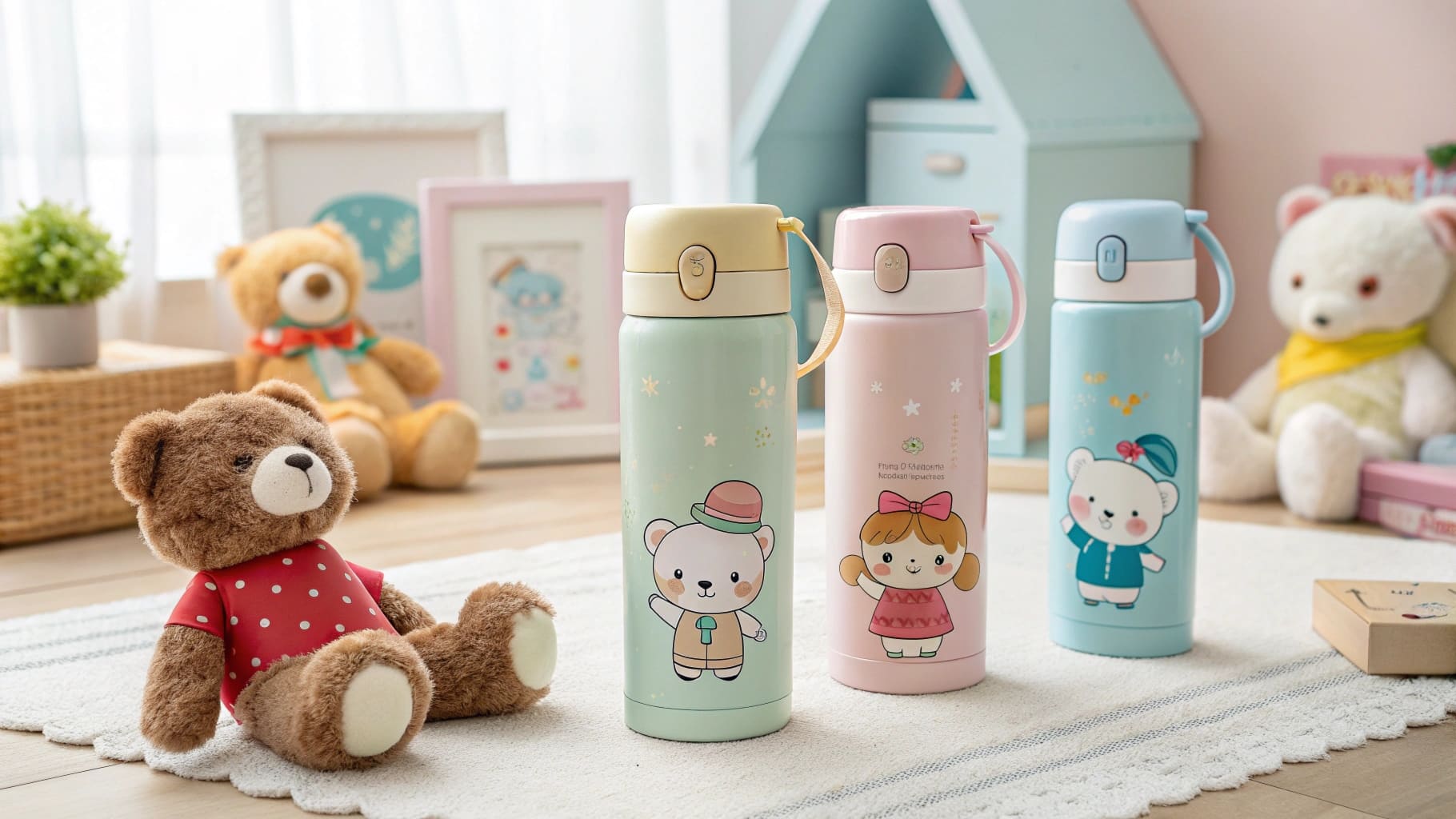
I learned this the hard way when a buyer only checked the stainless steel body and ignored the lid parts. The bottle looked strong on paper. The sample also looked fine on the desk. But the real product was used by children, washed by parents, dropped in bags, and sold under a school program with a tight season. I now slow down before I approve any dishwasher safe wording. I check the bottle type, the logo process, the lid design, and the test report. I also separate legal safety from daily use strength. CPSIA can support child safety claims, but it does not prove that a bottle will survive many dishwasher cycles. That small gap can become a big return problem, and the safe answer sits in the details below.
Is a metal water bottle dishwasher safe?
I often hear a fast yes on dishwasher safety, and I get nervous because a fast yes can hide weak testing.
A metal water bottle is dishwasher safe only when its steel body, coating, logo, lid, and seals are tested together. Single wall stainless bottles usually handle dishwashers better1. Vacuum bottles, printed finishes, and plastic parts need stricter checks2.
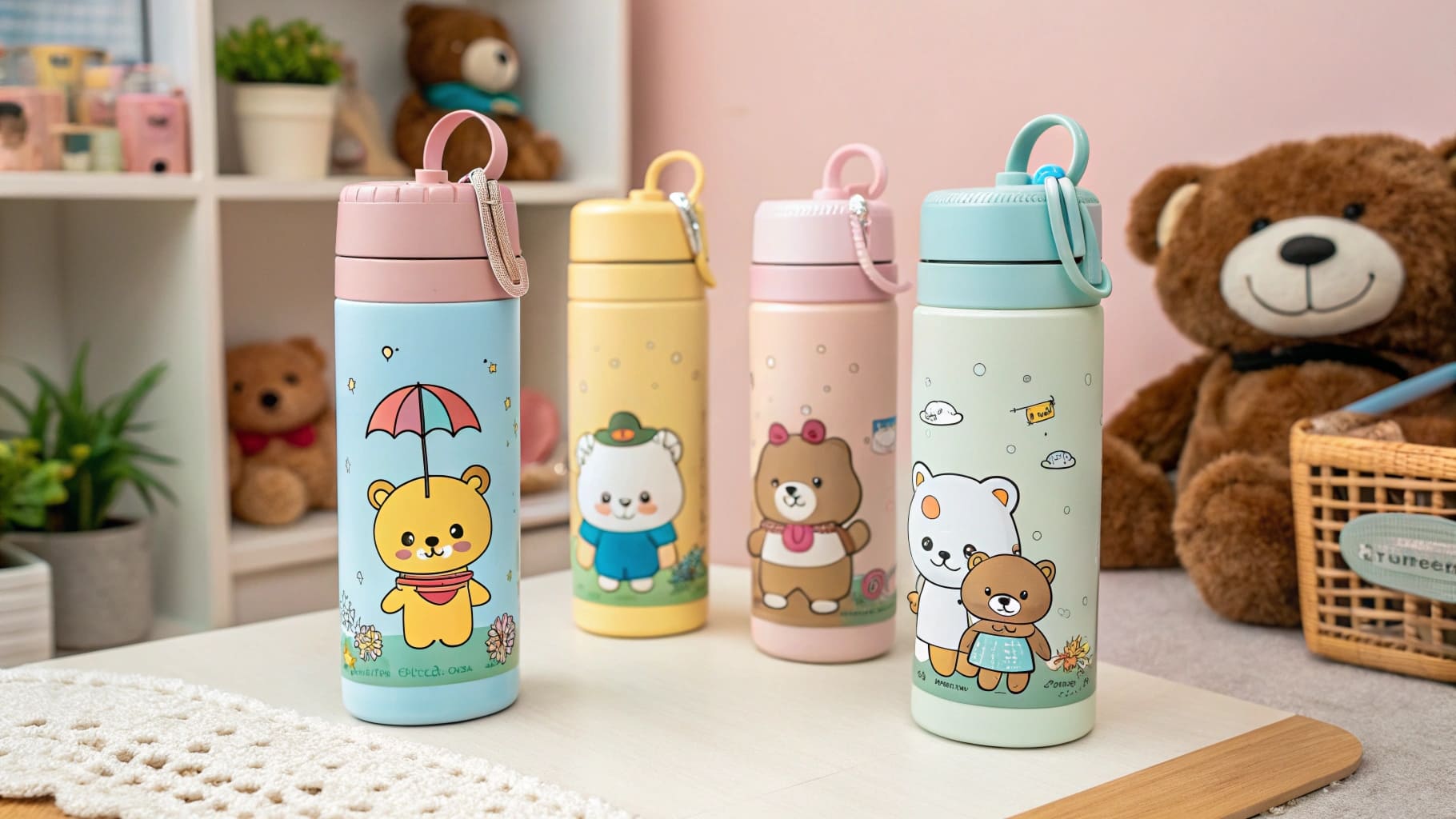
How I judge the dishwasher safe claim
I never treat “metal” as the full answer. I treat the bottle as a mixed product. The stainless steel body may handle heat well3, but the coating, logo, lid, gasket, straw, and handle may not behave the same way. For school bottles, I pay close attention to eight to twelve ounce sizes because they are small, light, and often designed with colorful prints. Parents also expect easy cleaning. That expectation can push a seller to print “dishwasher safe” too quickly. I prefer a safer split. I position single wall bottles as more dishwasher friendly when the coating and print pass wash tests. I position vacuum insulated bottles as hand wash recommended unless the supplier gives full assembly proof.
| Part I check | Risk I look for | My buying action |
|---|---|---|
| Stainless steel body | Rust marks, weld stains, inner smell | I ask for material and finish checks |
| Powder coating | Fading, peeling, dull surface | I ask for wash cycle testing |
| Printed logo | Cracking, color loss, weak adhesion | I test the real print method |
| Plastic lid | Warping, odor, loose fit | I check heat resistance |
| Silicone gasket | Deformation, leakage, dirt trapping | I request spare gasket plans |
I also ask a direct question. I ask whether the supplier tested the complete bottle or only the body. This one question saves time. If the supplier only says “the steel is dishwasher safe,” I know the claim is not enough for school retail. I want the real assembly tested, packed, washed, opened, closed, and checked for leakage. I also want the wording on the carton, manual, and product page to match the test result.
Are thermos kids water bottles dishwasher safe?
I see the biggest risk when a buyer sells insulation first and cleaning ease second. A dishwasher can turn that promise into a complaint.
Most thermos style kids water bottles should be hand washed unless the maker has full assembly dishwasher test reports. Heat, detergent, and water pressure can damage lids, straws, coatings, and vacuum performance, even when the stainless body looks fine.
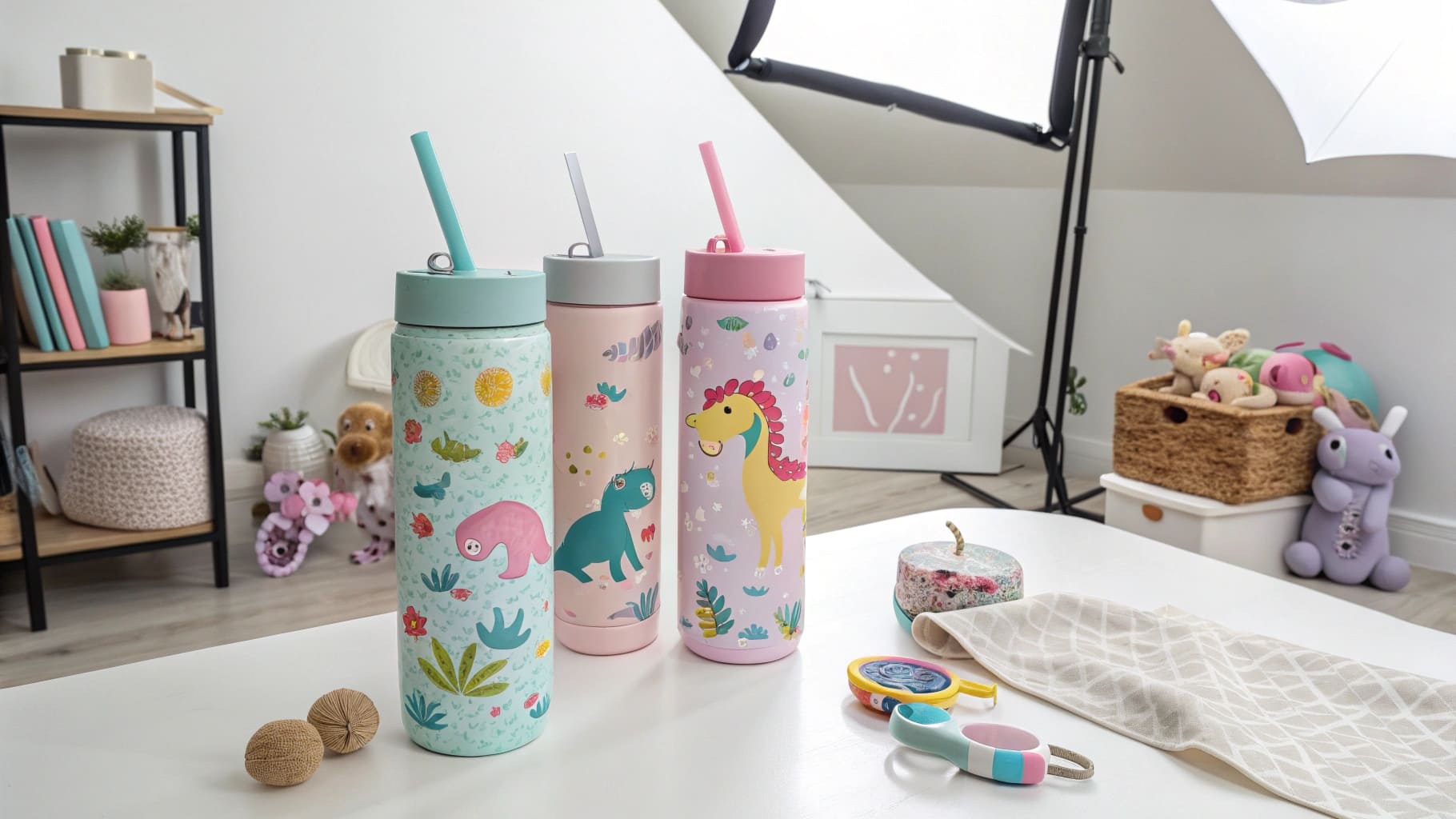
Why I separate thermos style bottles from simple bottles
I use the term thermos style to describe double wall vacuum insulated kids bottles. These bottles are popular because parents want cold drinks to stay cold during school hours. The problem is that the same structure that helps insulation can also create risk in a dishwasher. High heat and harsh detergent may not destroy the bottle at once. But repeated washing can weaken the vacuum seal, reduce insulation, and damage the outside finish. A parent may not see the issue on the first day. A buyer may only see the issue after the school season starts.
| Claim I hear | What I ask next | Why I ask it |
|---|---|---|
| Top rack dishwasher safe | Is the full bottle or only the lid tested? | I need clear claim limits |
| CPSIA compliant | Does the file include lead and coating checks? | I need child safety proof |
| Keeps drinks cold | Was insulation tested after washing? | I need long term performance proof |
| Logo will not fade | Which print method was used? | I need brand protection |
| Leak proof lid | Was it tested after heat exposure? | I need fewer complaints |
I see many buyers mix up CPSIA and dishwasher strength. I do not mix them. CPSIA matters for the United States school market because it supports children’s product safety. It helps show that the bottle is free from unsafe lead levels and other restricted risks. But CPSIA does not answer whether a lid will warp after many dishwasher cycles. It also does not answer whether a printed mascot will peel off after parents wash the bottle every night. So I request both sides of proof. I ask for CPSIA documents for legal safety. I also ask for dishwasher cycle testing for use strength. When a supplier cannot give both, I change the claim. I use “hand wash recommended” for vacuum insulated kids bottles. I keep the promise clear, and I protect the buyer’s brand.
Why shouldn't you put stainless steel water bottles in the dishwasher?
I know parents want speed, but one rough wash habit can shorten the life of a bottle and weaken a school program.
You should avoid dishwashing stainless steel water bottles when the bottle has vacuum insulation, powder coating4, printed artwork, plastic lids, silicone seals, or flip straws. Dishwasher heat and detergent can reduce insulation5, fade designs, loosen parts, and create leaks.
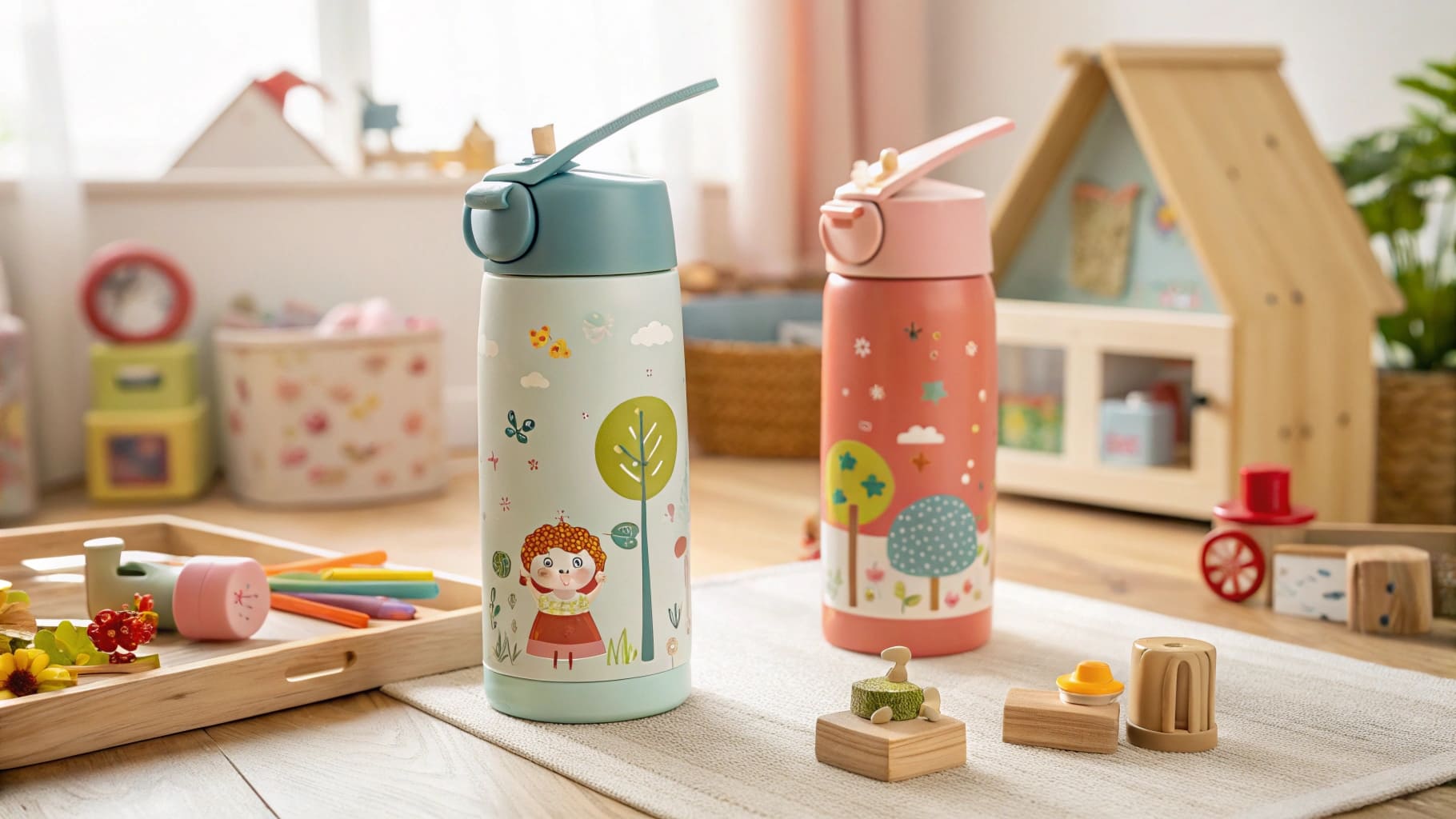
What I tell buyers before they print cleaning claims
I do not say every stainless steel water bottle must avoid the dishwasher. That answer is too simple. I say the real risk depends on construction. A plain single wall stainless bottle has fewer weak points. It has no vacuum layer, and it can be easier to clean. But many kids’ school bottles are not plain. They have cute colors, small straws, flip lids, silicone boots, name labels, and printed artwork. These parts make the bottle more useful for children, but they also create more failure points during high heat cleaning.
| Bottle feature | Dishwasher risk | Safer claim I prefer |
|---|---|---|
| Single wall body | Lower risk if coating passes testing | Dishwasher friendly after test proof |
| Vacuum insulation | Loss of heat or cold holding power | Hand wash recommended |
| Powder coated color | Surface dullness or peeling | Hand wash recommended unless tested |
| Printed school logo | Fading or cracking | Gentle hand wash preferred |
| Flip straw lid | Warping or trapped residue | Lid top rack only if tested |
| Silicone boot | Shape change or loose fit | Remove before washing if needed |
I also think about the buyer’s sales model. If a Canadian importer buys from China or Vietnam and rebrands the product, the cleaning claim becomes part of the brand promise. A delayed shipment is already painful during back to school season. A false dishwasher claim makes the problem worse because returns arrive after the products are already in stores or school programs. I prefer to solve this before production. I ask the supplier to confirm the exact cleaning claim in writing. I also ask for samples made with the final color, final logo, final lid, and final gasket. I do not approve a claim based on a blank bottle sample because a blank sample does not show how the real school design will survive. I also keep the instruction simple for parents. If the bottle is vacuum insulated, I write hand wash recommended. If the bottle is single wall and tested, I allow a dishwasher friendly claim with clear limits.
Conclusion
I source kids’ metal bottles by checking the full product, not one claim. Clear testing, honest wording, and CPSIA files protect every school order.
-
"Double-Wall Vacuum Insulation: Worth the Hype?", https://greenssteel.com/blogs/news/double-wall-vacuum-insulation-worth-the-hype?srsltid=AfmBOoo6zx8cucKPl6la0fQ45-OW7ius_KYMhzX7fFRKsDZ7z1BgIAlg. Single wall stainless steel construction lacks the air gap and sealed joints present in vacuum insulation, reducing structural points vulnerable to thermal stress and pressure differentials during high-temperature washing cycles. Evidence role: mechanism; source type: research. Supports: Single wall construction exhibits greater thermal stability in dishwasher conditions compared to vacuum-sealed assemblies. Scope note: Comparative durability also depends on coating type, gasket materials, and specific dishwasher conditions ↩
-
"Lead in Paint | CPSC.gov", https://www.cpsc.gov/Business--Manufacturing/Business-Education/Lead/Lead-in-Paint. Consumer product testing protocols for dishwasher safety claims typically require evaluation of all product components under conditions simulating the intended cleaning method, including thermal stress testing for multi-material assemblies where component materials have different thermal expansion coefficients. Evidence role: general_support; source type: institution. Supports: Multi-material products require testing of each component and assembly under intended use conditions. Scope note: No single mandatory standard governs dishwasher safety claims for drinkware; testing rigor varies by manufacturer ↩
-
"Measurements of thermophysical properties of solid and liquid NIST ...", https://tsapps.nist.gov/publication/get_pdf.cfm?pub_id=928362. Austenitic stainless steels commonly used in food contact applications, such as 304 and 316 grades, maintain excellent corrosion resistance and structural stability at dishwasher temperatures typically ranging from 120°F to 160°F (49°C to 71°C), well below temperatures that would affect material properties. Evidence role: mechanism; source type: research. Supports: Austenitic stainless steels maintain structural integrity at typical dishwasher temperatures. ↩
-
"Reactive airways dysfunction syndrome from acute inhalation of ...", https://pmc.ncbi.nlm.nih.gov/articles/PMC3418100/. Powder coatings are thermosetting finishes that, when properly cured, exhibit chemical resistance; however, repeated exposure to high-pH dishwasher detergents and thermal cycling can cause surface degradation, color fading, and reduced gloss in coatings with incomplete cure or inadequate formulation. Evidence role: mechanism; source type: research. Supports: Powder coating durability depends on cure quality and exposure to alkaline detergents. ↩
-
"Degradation Mechanisms in Metallized Barrier Films for Vacuum ...", https://pmc.ncbi.nlm.nih.gov/articles/PMC12388147/. The insulating properties of vacuum-sealed double-wall containers depend on maintaining near-zero pressure in the interstitial space; any breach allowing air infiltration dramatically increases thermal conductivity through convection and conduction, measurably reducing temperature retention capacity. Evidence role: mechanism; source type: research. Supports: Vacuum integrity loss leads to measurable reduction in thermal insulation performance. Scope note: The claim links dishwasher exposure to seal failure, but direct causation requires product-specific testing ↩