
Which Travel Coffee Mug Stays Hottest, And What Vacuum Metrics Should Buyers Require?
I see buyers lose margin when a mug cools too fast. The buyer trusts a claim, the user complains, and I fix the risk with testing.
I recommend double-wall vacuum insulated stainless steel travel mugs1 when heat retention is the main goal. I ask suppliers for temperature test reports, vacuum pressure data in Pa, copper coating details, and base seal checks before I trust any keeps-hot claim.
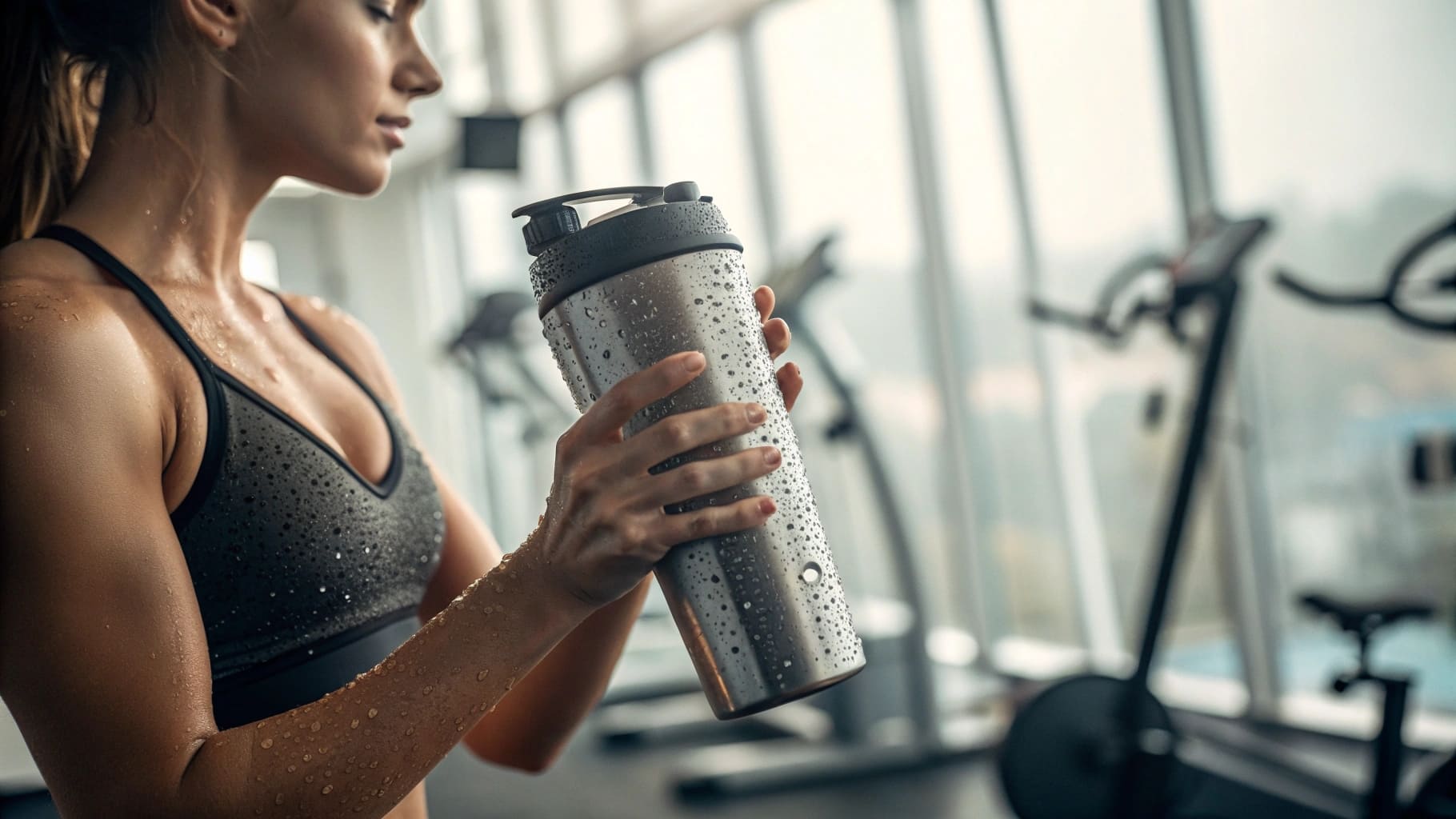
I learned this issue through daily sourcing talks with wholesale buyers. I also saw it in my own sample room, where two mugs looked almost the same but performed very differently. I do not stop at stainless steel grade, lid shape, or glossy product photos. I look inside the vacuum structure, because that hidden part decides whether the user drinks hot coffee after a long drive or gets a weak warm drink before lunch.
What Type Of Cup Holds Heat Longest?
I see many cups called thermal, but users feel the truth at the first cold sip. I protect my buyer by separating material from structure.
I find double-wall vacuum insulated stainless steel cups hold heat the longest. I see quality vacuum mugs keep drinks hot for six to twelve hours2, while ceramic, glass, and single-wall metal cups often lose useful heat within one to two hours.

How I Compare Cup Structures
I do not judge a cup only by weight or shine. I judge the path of heat loss. Heat leaves through the wall, the lid, the mouth opening, and the base. A ceramic cup feels solid, but I know it stores heat and then gives it away. A glass cup looks clean, but I see it cool fast unless it has a strong insulated build. A single-wall stainless steel cup is tough, but I see metal move heat quickly. A double-wall vacuum mug performs better because the empty space between the walls slows heat transfer3.
| Cup type | What I see in real use | My buyer risk |
|---|---|---|
| Ceramic cup | I see good table use and poor travel heat retention | I risk weak outdoor reviews |
| Glass cup | I see clean appearance and fast cooling | I risk breakage and short heat time |
| Single-wall metal cup | I see low cost and strong body feel | I risk fast heat loss |
| Double-wall vacuum stainless steel mug | I see the best passive heat retention | I risk bad results only if the vacuum is poor |
Vacuum Metrics I Require
I ask for a temperature retention report with starting water temperature, room temperature, fill level, lid position, and time points. I also ask for vacuum pressure data in Pa. I do not treat one Pa value as a magic answer. I ask how the factory measures it, how often the factory checks it, and what range the factory accepts for bulk production. I ask about the copper coating on the inner wall because it helps reduce radiant heat loss4. I check if the coating is even, clean, and controlled. I also ask about the base seal. I have seen a good-looking mug fail because the base seal was weak. I would rather reject a pretty sample than ship a mug that loses heat before the user reaches the office.
What Is The Best Heated Coffee Mug?
I see buyers mix up heated mugs and heat-retention mugs. That mistake creates returns, dead batteries, and wrong packaging promises.
I see the best heated mug as the one that fits the place of use. I choose electric heated mugs for desks5, but I choose vacuum travel mugs for commuting, travel, outdoor use, and wholesale programs that need simple after-sales service.

I Separate Power-Based Heat From Passive Insulation
I ask one simple question before I recommend a product. I ask where the user will drink the coffee. If the user sits at a desk all morning, an electric heated mug can make sense. It may use a heating plate, a battery, or a power cable. It can hold a set temperature, but it also brings electrical parts, charging issues, safety checks, and higher after-sales work. If the user drives, walks, camps, or commutes, I usually choose a vacuum travel coffee mug. It does not need a cord. It does not need a battery. It works by structure, not by power.
| Use case | What I choose | Why I choose it |
|---|---|---|
| Office desk | I choose an electric heated mug when power is stable | I can support long sitting use |
| Daily commute | I choose a vacuum travel mug | I avoid charging and cable problems |
| Outdoor use | I choose a strong vacuum mug with a sealed lid | I reduce failure points |
| Corporate gifting | I choose a vacuum mug with logo and color options | I protect brand image and user trust |
I Watch The Hidden Cost Of Electric Claims
I do not call an electric heated mug better only because it sounds more advanced. I look at the full cost. I check electrical safety documents. I check battery rules if the mug uses a battery. I check packaging labels and import requirements. I check how the buyer will handle returns if the heating part stops working. I also check if the mug is still useful when the battery dies. Many travel users do not want one more device to charge. They want hot coffee in a reliable cup.
When I talk with procurement buyers, I explain this in plain terms. A heated mug adds heat. A vacuum mug keeps heat. These are different promises. If a brand sells to commuters, drivers, outdoor users, or trade show gift buyers, I see vacuum insulation as the safer main product. I can still develop electric mugs for the right channel, but I do not use them as a direct replacement for a true travel coffee mug.
Are Vacuum Mugs Worth The Investment?
I know cheap mugs look attractive on a quote sheet. But a weak vacuum turns the saving into complaints, refunds, and lost shelf trust.
I believe vacuum mugs are worth the investment when the buyer sells quality, gifts under a brand, or targets repeat users. I pay more per unit, but I get better reviews, fewer complaints, stronger pricing, and a cleaner brand position.
I Connect Unit Cost To Brand Value
I do not see a vacuum mug as only a higher factory cost. I see it as a promise that the brand puts into the user’s hand. If the user opens the mug after a morning meeting and the coffee is still hot, the brand earns trust. If the drink is lukewarm, the brand loses trust. That loss is hard to measure on the first order, but I see it later in repeat orders, reviews, and distributor feedback.
| Decision area | What I require | What I avoid |
|---|---|---|
| Heat retention | I require a third-party temperature test report | I avoid vague keeps-hot claims |
| Vacuum quality | I require Pa data and batch control records | I avoid samples with no process proof |
| Copper coating | I require stable coating control | I avoid uneven or missing coating |
| Base seal | I require leak and seal integrity checks | I avoid bodies with weak bottom sealing |
| Certification | I require matching factory and product documents | I avoid certificates from another source |
I Protect The Order Before I Protect The Price
I have seen buyers focus too much on the lowest unit price. I understand why they do it. Competitive pricing matters in wholesale. But I also see the bigger danger. A late shipment can miss the peak season. A false certificate can stop a shipment. A weak inspection plan can let bad mugs enter the market. These problems cost more than a small price difference.
I ask for production samples from the same process that will be used for bulk goods. I ask for inspection before shipment. I match the certificate name, factory name, product model, and test scope. I ask the supplier to explain logistics timing in clear steps. I also keep payment tied to inspection and shipping documents when the order size needs extra control. This approach may feel slower at the start, but it makes the order cleaner. I want the buyer to sell a product with confidence, not spend the season answering complaints.
Conclusion
I choose vacuum mugs by measured heat, stable seals, real reports, and clear logistics. I protect the brand before I chase the lowest price.
-
"Vacuum flask", https://en.wikipedia.org/wiki/Vacuum_flask. Austenitic stainless steels (304, 316) are widely used for vacuum-insulated containers due to their low thermal conductivity (16 W/m·K), corrosion resistance, formability for seamless construction, and ability to maintain vacuum integrity over extended periods. Evidence role: general_support; source type: research. Supports: why stainless steel is commonly used in vacuum-insulated containers. ↩
-
"The Science of the Perfect Cup for Coffee", https://spinoff.nasa.gov/The-Science-of-the-Perfect-Cup-for-Coffee. Laboratory testing of vacuum-insulated containers shows heat retention times vary with initial temperature, fill volume, and seal quality, with high-quality designs maintaining temperatures above 60°C for 6-10 hours under controlled conditions. Evidence role: statistic; source type: research. Supports: typical heat retention duration for vacuum-insulated containers. Scope note: Performance depends on testing protocol and ambient conditions ↩
-
"Heat transfer", https://en.wikipedia.org/wiki/Heat_transfer. Vacuum insulation reduces heat transfer by eliminating air molecules that would otherwise conduct heat through collisions; in a sufficient vacuum, conduction and convection become negligible, leaving only radiation as a significant heat transfer mode. Evidence role: mechanism; source type: encyclopedia. Supports: basic physics of heat transfer reduction in vacuum. ↩
-
"Thermal Radiative Copper Oxide Layer for Enhancing Heat ... - PMC", https://pmc.ncbi.nlm.nih.gov/articles/PMC8624854/. Low-emissivity metallic coatings such as copper or silver reflect 95-98% of infrared radiation, significantly reducing radiative heat transfer across vacuum gaps where conduction and convection are already minimized. Evidence role: mechanism; source type: research. Supports: how reflective metallic coatings reduce radiative heat transfer. ↩
-
"Electric Mug Warmer Market Research Report 2034", https://dataintelo.com/report/electric-mug-warmer-market. Electric beverage warmers typically maintain temperatures of 50-60°C and are designed for continuous stationary use with accessible power, while vacuum-insulated containers are preferred for portable applications where active heating is impractical. Evidence role: general_support; source type: other. Supports: typical use cases for electrically heated versus passively insulated mugs. Scope note: Optimal choice depends on individual usage patterns and priorities ↩