
Can a 40oz Bottle Hold 60–65°C for 2 Hours Under Drop and Thermal Tests?
A weak bottle can look strong before testing. Then one drop breaks the vacuum, heat escapes fast, and the buyer loses trust.
Yes, a well-built 40oz stainless steel bottle can hold water at 60–65°C for 2 hours after drop and thermal tests. I would specify double-wall vacuum insulation1, copper plating2, 304 or 316 stainless steel3, strong base welding, and a tested silicone lid seal.
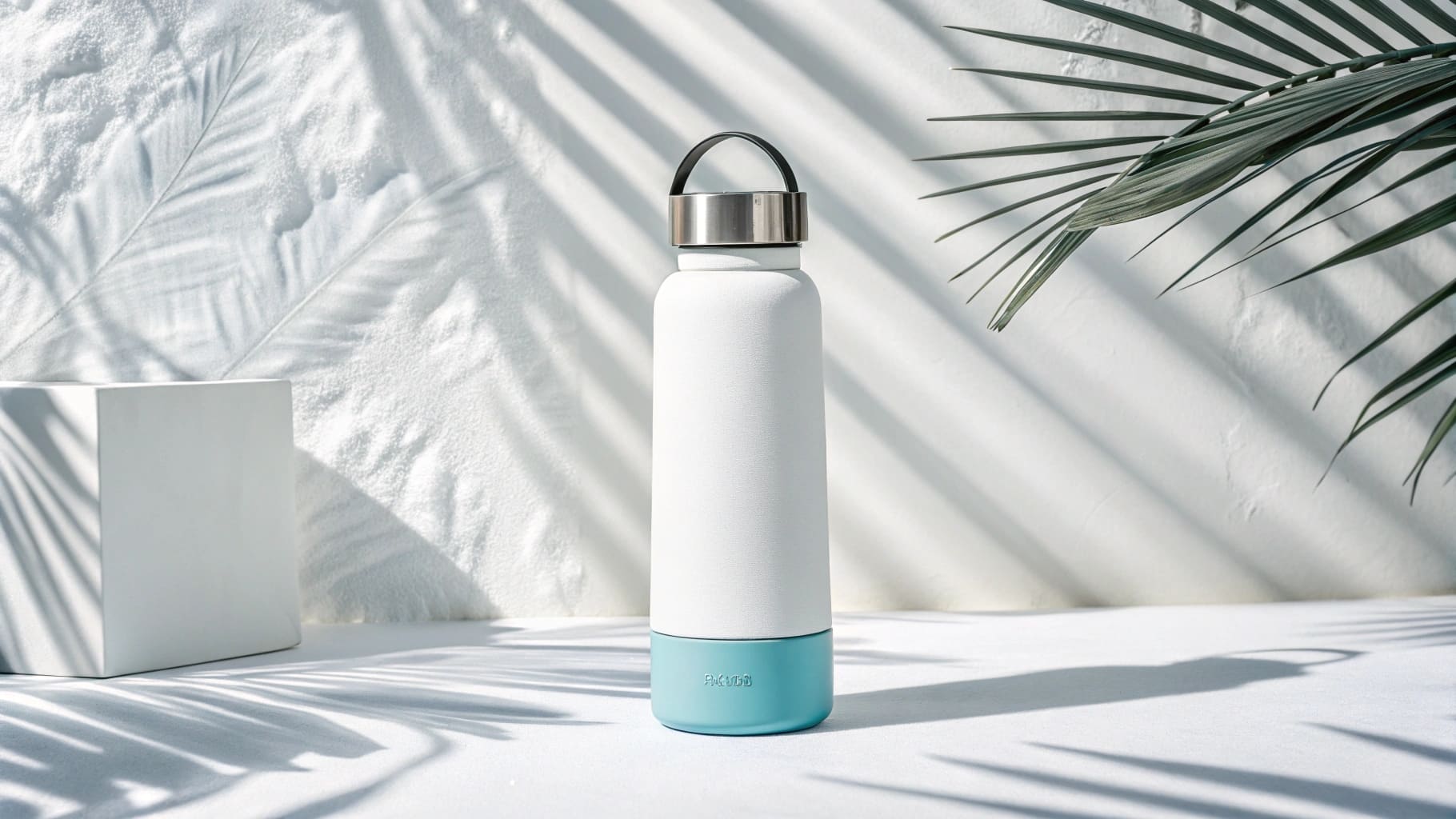
I treat this question as a real sourcing question, not only a lab question. I have seen buyers ask for strong insulation, low defect rates, safe materials, and fast delivery at the same time. That is normal in wholesale. The problem is that many bottles can pass one test but fail another. A bottle may hold heat well on a table. It may also look fine after a drop. But the key point is whether the vacuum layer still works after impact. I would always connect the thermal test with the drop test, because the final customer will use the bottle in real life. I need to look at the wall structure, steel grade, welding, lid design, and test report together.
How Long Does a Thermos Keep Water Hot?
A buyer may ask this simple question, but a wrong answer can lead to the wrong product, wrong claim, and wrong after-sales cost.
A good stainless steel thermos can keep water hot for several hours. For a 40oz vacuum bottle, water can often stay above 60°C for 4 to 6 hours in normal use, if the bottle has strong vacuum insulation, a tight lid, and stable welding.
What Controls Hot Water Retention?
I look at hot retention from the inside to the outside. Heat leaves the bottle through the wall, the lid, the mouth, and small weak points near the weld. A 40oz bottle has a larger body, so it can hold more heat energy. But the lid opening can also be larger, so the lid design matters a lot. I do not judge a bottle only by its size. I judge it by the whole structure.
| Part I Check | Why It Matters | What I Prefer |
|---|---|---|
| Inner steel | It touches hot water and affects safety | 304 or 316 stainless steel |
| Vacuum layer | It slows heat transfer | Stable double-wall vacuum |
| Copper plating | It reduces heat radiation | Even copper coating between walls |
| Lid gasket | It stops steam and heat loss | Food-grade silicone with firm fit4 |
| Base welding | It protects vacuum strength | Clean and consistent welding |
I usually ask the factory to test with a clear starting temperature, room temperature, and time points. I also ask them to test again after drop testing. This part is important. A thermos may keep water hot before impact, but the vacuum may weaken after impact. If I source for a Canadian distributor or an outdoor brand, I cannot accept only a nice catalog claim. I need a thermal curve, and I need to know if the same sample passed the drop test first.
What Material Keeps Drinks Cold the Longest?
Cold retention sounds easy, but poor material choice can still create sweat, weak insulation, and customer complaints after the bottle reaches the shelf.
I use stainless steel vacuum insulation for the longest cold retention in reusable bottles. The best common structure is double-wall 304 or 316 stainless steel with vacuum insulation and copper plating. The material must support both insulation and impact strength.
Why Do I Prefer Stainless Steel Over Plastic or Aluminum?
I prefer stainless steel for B2B bottle projects because it gives a better balance of food safety, strength, and brand value. Plastic can be light and cheap, but it does not hold cold as long5 without thick insulation. Aluminum can be light, but it usually needs a liner because direct contact with drinks is not ideal. Glass feels clean, but it breaks too easily for outdoor, corporate, and retail use. Stainless steel is not perfect, but it fits most wholesale needs when the buyer wants quality and custom logo work.
| Material | Cold Retention | Drop Strength | Food Contact Use | B2B Brand Feel |
|---|---|---|---|---|
| 304 stainless steel | Very strong with vacuum | Strong | Good | Premium |
| 316 stainless steel | Very strong with vacuum | Strong | Very good | Higher premium |
| Plastic | Medium to weak | Medium | Depends on grade | Basic |
| Aluminum | Medium | Medium | Needs coating | Mid-range |
| Glass | Weak to medium | Weak | Good | Fragile premium |
I also care about the lid material. A stainless steel body cannot perform well if the lid leaks air. I check the gasket hardness, lid thread match, and cap thickness. For cold drinks, a wide mouth may be useful for ice cubes, but it also creates a larger thermal bridge. So I need to balance function and performance. When a buyer asks for the longest cold retention, I do not only say “use stainless steel.” I ask about usage, target price, lid type, packaging, and expected claim on the label.
What Bottle Keeps Drinks Cold for 24 Hours?
A 24-hour cold claim can sell well, but it can also create risk if the bottle cannot pass a fair test in real conditions.
A double-wall vacuum stainless steel bottle can keep drinks cold for 24 hours when it has a strong vacuum gap, copper plating, quality welding, and a tight lid seal. I would verify this with a lab test before using the claim on packaging.
How Do I Judge a Real 24-Hour Cold Claim?
I judge a 24-hour cold claim by test method, not by marketing text. A bottle can perform well if it starts with ice water, stays closed, and sits at a normal room temperature. But performance drops when users open the lid often, leave the bottle in a hot car, or choose a cap with a straw opening. This is why I always separate lab performance from real user performance.
| Test Item | My Check Point | Risk If Ignored |
|---|---|---|
| Starting temperature | I need a clear starting point | The result cannot be compared |
| Room temperature | I need stable test conditions | The claim may look better than real use |
| Lid opening | I need the lid closed during test | Heat enters too often |
| Ice content | I need to know if ice was used | The result may be misleading |
| Post-drop test | I need cold test after impact | Vacuum damage may be missed |
For a 40oz bottle, I normally expect strong cold retention because the volume is large. More liquid changes temperature more slowly. But the bottle still needs correct build quality. I like a vacuum space of at least about 2mm when the design allows it. I also care about base strength because many vacuum failures happen near the bottom after impact. If the buyer wants a custom color, I also check coating adhesion after drop tests. A strong bottle should not only keep water cold. It should also keep the logo, paint, lid, and seal in good condition after normal shipping and daily use.
Can the Same 40oz Bottle Pass Drop and Thermal Tests?
A bottle can pass a heat test in the lab and still fail in the market if the drop test damages the vacuum or lid seal.
Yes, the same 40oz bottle can pass both drop and thermal tests, but only when the body, weld, vacuum layer, and lid are designed as one system. I would test thermal retention before and after drops to confirm real durability.

What Test Order Do I Trust More?
I trust a test order that reflects real use. I do not want a sample that is tested only in perfect condition. I want to know what happens after shipping, handling, and daily drops. For this reason, I prefer to test appearance, leakage, vacuum integrity, and temperature retention after impact. A drop height around 1.5 meters is common in many buyer discussions, but the exact standard should match the buyer’s market and product use.
| Test Step | What I Look For | Pass Sign |
|---|---|---|
| Visual check | Dents, cracks, coating damage | No sharp damage or serious deformation |
| Leak test | Lid seal and thread fit | No water leakage |
| Vacuum check | Insulation still works | No fast outer wall warming |
| Hot retention test | Water stays above target range | 60–65°C can be held for 2 hours |
| Lid function test | Open and close after impact | Smooth use and firm seal |
I also ask for mass production control, not only sample success. A golden sample can be very good. Bulk goods can be different if welding, vacuum pumping, or lid assembly is not stable. I have learned to ask for inspection at several stages. I check raw steel certificates, vacuum process records, random thermal testing, and carton drop protection. This matters for buyers who sell in peak seasons. A delayed shipment is painful, but a shipment with hidden vacuum failure is worse. It creates returns, weak reviews, and lost shelf trust.
What Should I Ask a Supplier Before Placing a Wholesale Order?
A low price can look attractive, but missing test proof can turn a good deal into a costly problem after the goods arrive.
I ask for material certificates, thermal retention curves, drop test results, vacuum integrity checks, coating test results, lead time, payment terms, and shipment plan. I also ask whether the test report matches the exact model, lid, color, and capacity I will buy.
How Do I Reduce Risk Before Production?
I reduce risk by making the specification clear before the order starts. I do not only say “high quality bottle.” That sentence is too broad. I write the capacity, steel grade, wall structure, lid type, color, logo method, packaging, test method, and acceptable defect level. I also ask who will pay for replacement if the product fails the agreed tests. This may feel direct, but it prevents a hard conversation later.
| Supplier Question | Why I Ask It | Good Answer Looks Like |
|---|---|---|
| What steel grade is used? | I need food safety and strength | 304 or 316 with certificate |
| Is there copper plating? | I need stronger insulation | Yes, with stable process |
| Can I see thermal curves? | I need real performance data | Clear report with time and temperature |
| Was the bottle drop tested? | I need vacuum durability | Report shows post-drop condition |
| Can I inspect before shipment? | I need bulk control | Yes, third-party inspection accepted |
I also pay attention to communication speed. Many buyers in Canada, America, and Europe do not have time to chase small details every day. I believe a good supplier should answer technical questions in simple language. If a supplier avoids test details or sends a certificate that does not match the product, I treat it as a warning sign. Certificate fraud is real in this market. I prefer to verify documents, sample the exact product, and compare test data before I commit to a large order.
Conclusion
A 40oz bottle can meet this target if I control structure, material, lid seal, testing, and supplier proof before production.
-
"Vacuum flask", https://en.wikipedia.org/wiki/Vacuum_flask. Vacuum insulation minimizes heat transfer by eliminating air molecules between walls, thereby preventing conduction and convection, leaving only radiative heat transfer which is further reduced by reflective coatings. Evidence role: mechanism; source type: encyclopedia. Supports: the principle by which vacuum insulation reduces heat transfer through prevention of convection and conduction. Scope note: General thermodynamic principle, not specific to 40oz bottles or the exact temperature ranges discussed ↩
-
"Metal Layer to Reduce Heat Transfer - Physics Van - University of Illinois", https://van.physics.illinois.edu/ask/listing/42930. Metallic coatings with high reflectivity, such as copper, reduce radiative heat transfer across vacuum spaces by reflecting infrared radiation back toward the source, thereby improving overall thermal insulation performance. Evidence role: mechanism; source type: research. Supports: the effectiveness of reflective metallic coatings in reducing radiative heat transfer across vacuum gaps. Scope note: Applies to reflective coatings generally; specific performance gains depend on coating thickness, uniformity, and vacuum quality ↩
-
"Stainless Steel (SS) Safety Profile", https://www.fda.gov/media/165146/download. Both 304 and 316 stainless steel are recognized as food-grade materials by regulatory agencies due to their corrosion resistance and stable composition, with 316 offering enhanced resistance to chlorides and acidic environments. Evidence role: general_support; source type: government. Supports: the suitability of 304 and 316 stainless steel grades for food contact applications. ↩
-
"Recognized Consensus Standards: Medical Devices - FDA", https://www.accessdata.fda.gov/scripts/cdrh/cfdocs/cfstandards/detail.cfm?standard__identification_no=40175. Food-grade silicone meeting FDA or equivalent standards is approved for direct food contact, offering temperature resistance, chemical stability, and flexibility suitable for sealing applications in beverage containers. Evidence role: definition; source type: government. Supports: the regulatory status and safety of food-grade silicone for direct contact with food and beverages. ↩
-
"Thermal Conductivity of Common Materials", https://www.samaterials.com/blog/thermal-conductivity-of-common-materials.html. Vacuum insulation provides significantly better thermal resistance than foam or solid plastic insulation due to the near-elimination of conductive and convective heat transfer, though high-quality foam insulation can approach vacuum performance in some applications. Evidence role: general_support; source type: research. Supports: the superior insulating properties of vacuum-based insulation systems compared to solid plastic walls. Scope note: Performance comparison depends on plastic type, wall thickness, and whether foam insulation is used; single-wall plastic performs poorly but insulated plastic designs vary widely ↩