
What Carton Tests Protect 40oz Bottles for FBA: Drop, Edge Crush, Vibration?
Heavy bottles look safe until one weak carton ruins a shipment. I have seen good products fail because the box was not tested.
For 40oz bottles, I use drop testing, edge crush testing, box compression testing, vibration testing, and moisture checks. These tests protect the bottle, the carton, and the FBA receiving process during storage, trucking, ocean freight, and warehouse handling.
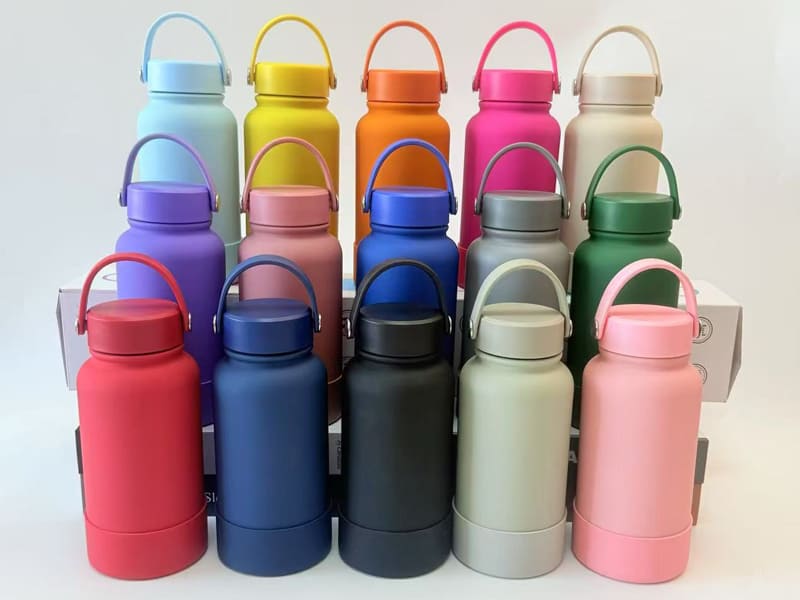
I treat packaging as part of the product, not as an extra cost. A stainless steel bottle can be strong, but a carton can still fail under pressure, shock, or humidity. When I prepare bottles for FBA or international wholesale orders, I want the carton to pass real transport risks before the buyer pays for a full container.
What Is the Difference Between Box Compression Test and Edge Crush Test?
Many buyers ask for a strong carton, but they may not know which strength matters. That small gap can create crushed cartons and rejected goods.
Box compression test measures how much vertical load a complete carton can hold. Edge crush test measures how much force the corrugated board edge can resist. I use both because ECT predicts board strength, while BCT confirms real carton stacking strength.

Why I Do Not Treat BCT and ECT as the Same Test
I see many factories talk about ECT as if it fully replaces BCT. I do not agree with that view. ECT is useful, but it tests the board, not the finished carton. BCT is closer to real warehouse pressure because it tests the carton as a full box. For 40oz stainless steel bottles, this difference matters because one carton can carry heavy units, and many cartons may sit on one pallet.
| Test | What I Check | Why It Matters for 40oz Bottles |
|---|---|---|
| Edge crush test | Board edge strength | I use it to judge the base strength of corrugated material |
| Box compression test | Finished carton stacking load | I use it to check pallet and warehouse stacking safety |
| Drop test | Impact resistance | I use it to check corner, edge, and face damage |
| Vibration test | Long transport movement | I use it to check rubbing, shifting, and insert failure |
| Moisture check | Cardboard water content | I use it to avoid carton weakening during sea freight |
How I Read ECT for Bottle Cartons
For most single-wall corrugated cartons for 40oz bottles, I prefer at least 32 ECT. This does not mean every 32 ECT box is safe. The carton size, flute type, paper quality, bottle weight, and inner packing all change the result. If the carton is too tall, too loose, or too wet, the same ECT can perform badly. I also check bursting strength. A common minimum target is 200 pounds per square inch for many export cartons1. I do not use this number alone. I use it as one sign that the carton has enough resistance against puncture and rough handling.
Why BCT Is Closer to the FBA Problem
FBA receiving and storage are not gentle2. A carton may sit under other cartons, move on conveyors, or face pressure during pallet wrapping. BCT helps me know the maximum load a carton can take when stacked upright. If I know the carton weight and stacking plan, I can estimate whether the bottom carton will survive. I also test under realistic humidity because moisture can reduce box strength fast. I usually keep cardboard moisture below 14 percent. If moisture is higher, I slow down and ask the carton supplier to improve storage or material control.
How to Check Carton Box Quality?
A carton can look clean on the outside and still fail in transit. I do not trust appearance alone because shipping damage often starts inside the paper.
I check carton quality through material grade, ECT, BCT, drop test, vibration test, bursting strength, size accuracy, inner support, sealing strength, and moisture content. For FBA bottles, I also check whether the carton can survive handling before mass shipment.
My Practical Carton Inspection Method
When I inspect carton quality, I start with the product first. A 40oz stainless steel bottle is larger and heavier than a normal small bottle. It often weighs around 400 to 500 grams before packaging. If the bottle has a straw lid, handle, powder coating, or retail box, the risk increases. The bottle can rub against the carton wall. The lid can press against another bottle. A loose insert can collapse. So I do not only ask whether the outer carton is strong. I ask whether the whole packing system works together.
| Checkpoint | What I Look For | My Action If It Fails |
|---|---|---|
| Carton dimensions | Bottle and inner box fit without wasted space | I adjust the carton size or insert design |
| Board grade | ECT and paper quality meet the order need | I request stronger board or double-wall carton |
| Inner cushioning | Inserts hold bottles apart | I add corrugated dividers, foam, or paper support |
| Moisture content | Cardboard stays below 14 percent | I delay packing or change storage conditions |
| Sealing method | Tape or glue holds under stress | I improve tape width, glue area, or carton flap design |
| Drop result | Bottle and carton survive impact | I redesign corner and bottom protection |
| Vibration result | Bottles do not shift or rub | I tighten the internal structure |
How I Use Drop Testing for 40oz Bottles
I use drop testing to copy common handling damage. Workers may drop a carton from a truck, conveyor, or warehouse table. For 40oz bottles, I often test from 30 to 36 inches, depending on carton weight and buyer requirement. I do not only drop the box on the flat face. I also drop it on edges and corners because these are the weak points. After the test, I check the outer carton, the retail box, the bottle body, the lid, the coating, and the sealing parts. A carton may look acceptable outside, but the bottle cap can crack inside. That is why I open the carton after the test.
How I Use Vibration Testing for Long Freight
Vibration testing matters when goods move from China to Canada, America, or Europe. A carton can shake for days during truck and ocean freight. If the carton has empty space, each bottle becomes a small hammer inside the box. The bottle can scratch another bottle. The lid can loosen. The inner retail box can wear through. I like vibration testing because it shows problems that a simple drop test may miss. If I see powder coating rub marks, crushed retail boxes, or loose inserts, I know the design is not ready for FBA. I prefer to solve this before production, not after a buyer receives a damaged pallet.
What Is the Quality Control Test for Glass Containers?
Glass containers break more easily than stainless steel bottles, but the packaging logic is similar. I still test shock, pressure, vibration, spacing, and humidity.
Quality control tests for glass containers include drop testing, vibration testing, carton compression testing, partition strength checks, visual inspection, leak checks, thermal shock checks3, and packaging moisture checks. These tests reduce breakage during freight and warehouse handling.

Why Glass Testing Helps Me Improve Stainless Steel Bottle Packaging
I sell stainless steel bottles, but I still learn from glass packaging. Glass forces me to respect impact, separation, and carton strength. Stainless steel bottles do not usually shatter, but they can dent, scratch, leak, or arrive with damaged lids. The customer still sees this as a packaging failure. When I design cartons for 40oz bottles, I borrow the strict mindset used for glass containers. I make sure each unit has its own space. I avoid bottle-to-bottle contact. I check whether the lid area has pressure protection. I also confirm whether the carton bottom can hold weight after vibration and humidity exposure.
| Test Area | Glass Container Focus | Stainless Steel Bottle Focus |
|---|---|---|
| Visual check | Chips, cracks, surface marks | Dents, coating scratches, logo damage |
| Leak check | Seal and closure fit | Lid seal, straw lid, gasket position |
| Drop test | Breakage and carton failure | Dent, lid damage, retail box crush |
| Vibration test | Glass-to-glass impact | Bottle movement and coating rub |
| Compression test | Stacking and crush risk | FBA storage and pallet stacking |
| Moisture test | Carton weakening | Export carton strength loss |
What I Check Before a Mass Shipment
Before a mass shipment, I check samples from the real production packing method. I do not test a perfect sample that workers made only for inspection. I want the same carton, same insert, same tape, same pallet method, and same product weight. If the order will ship to FBA, I also check label position and carton condition. A damaged label can cause receiving trouble. A weak carton can cause repacking cost. A wrong carton size can waste space and raise freight cost. I also ask for carton photos before loading. I want to see pallet stacking, stretch film, corner boards, and container loading method4.
Why Certification and Test Reports Need Care
I have met buyers who worry about fake certificates. I understand that concern. A report is only useful when it matches the real product, real carton, and real shipment condition. I check the company name, product description, test standard, sample photos, test date, and carton specifications. If a supplier sends a report that looks too general, I ask more questions. For FBA, I see value in testing under an FBA-related packaging standard because failed packaging can create returns, delays, and extra fees. The test cost is small compared with a missed sales season5. I prefer to be strict at the sample stage because the cost of correction is still low.
How I Make the Final Packaging Decision
I do not choose the carton only by price. I compare carton cost with risk cost. A cheaper carton may save a little money per box, but one failed pallet can remove that saving very fast. I look at the bottle weight, carton quantity, pallet height, freight route, warehouse time, humidity, and FBA rules. If the carton will carry many 40oz bottles, I may use stronger corrugated board, better inserts, or double-wall cartons. If the bottle has a premium finish, I add more internal protection. My goal is simple. I want the buyer to receive sellable goods, not excuses.
Conclusion
I protect 40oz FBA bottles by testing the carton, the inner packing, and the real freight risk before mass shipment.
-
"ECT vs Mullen Test for Box Strength", https://www.nelsoncontainer.com/AddedServices/ECTvsMullenTest. TAPPI T 810 specifies the Mullen burst test method for corrugated fiberboard; carrier tariff rules historically referenced 200 lb/in² as a threshold for certain weight classes, though modern regulations have increasingly shifted toward ECT-based specifications. Evidence role: definition; source type: institution. Supports: Standard methods and common thresholds for measuring bursting strength of corrugated fiberboard used in export shipping. Scope note: The 200 PSI figure originates from older carrier classification rules and may not reflect current regulatory requirements for all export destinations ↩
-
"41 Percent of Amazon Workers Have Been Injured On the Job, New ...", https://cued.uic.edu/pain-points/. Amazon's FBA Packaging and Prep Requirements documentation specifies that shipment boxes must be capable of withstanding normal warehouse handling, including conveyor transport, stacking, and automated processing, and recommends that cartons meet minimum burst or ECT thresholds consistent with content weight. Evidence role: general_support; source type: institution. Supports: Amazon's published packaging and preparation requirements for FBA shipments, including carton strength and labeling specifications. Scope note: Amazon's published guidelines describe minimum requirements rather than detailed mechanical stress data, and specific handling conditions within fulfillment centers are not publicly disclosed by Amazon ↩
-
"Thermal Shock Resistance Testing for Glass Containers | ASTM C149 Guide", https://infinitalab.com/blog/thermal-shock-resistance-glass-containers-guide/?srsltid=AfmBOorL59DxtWZnrhsd65KOljAY4oZ6J2ySQSW575PU5P442WLSVYOI. ISO 7459 specifies a thermal shock test method for glass containers in which specimens are subjected to defined temperature differentials to assess resistance to sudden temperature change; failure typically manifests as cracking due to thermally induced stress gradients within the glass wall. Evidence role: definition; source type: institution. Supports: Standardized thermal shock test methods applicable to glass containers used in commercial packaging. Scope note: ISO 7459 applies primarily to glass containers for beverages and foodstuffs; applicability to other container types depends on the specific product and regulatory context ↩
-
"Pilot Study of Stretch Film for Securing Palletized Loads - PMC", https://pmc.ncbi.nlm.nih.gov/articles/PMC12656129/. Studies on unit load performance have shown that stretch film tension and corner board reinforcement measurably improve pallet stacking strength and reduce carton deformation during transport; ASTM D4169 provides a distribution simulation cycle framework within which such unitization elements can be evaluated. Evidence role: mechanism; source type: research. Supports: The role of stretch film wrapping and corner boards in maintaining pallet unit load integrity and reducing compressive damage during transport. Scope note: The magnitude of improvement attributable to corner boards and stretch film varies with wrap tension, board material, pallet configuration, and the specific distribution environment simulated ↩
-
"FBA Customer Returns report (overview)", https://sellercentral.amazon.com/help/hub/reference/external/200453320?locale=en-US. Supply chain research has documented that packaging-related damage accounts for a significant proportion of product returns in e-commerce fulfillment, with some estimates suggesting that prevention-oriented quality controls yield cost savings that substantially exceed testing expenditures when transit damage rates are considered across full shipment volumes. Evidence role: statistic; source type: research. Supports: Economic relationship between preventive packaging testing expenditure and costs associated with transit damage, returns, and lost sales. Scope note: Specific cost ratios vary widely depending on product category, shipment volume, destination market, and platform-specific return policies, so general figures may not apply directly to FBA bottle shipments ↩