
Which hip flask capacities suit gifting in 2026: 6oz vs 8oz wholesale?
I see many buyers choose flask size too late. The order looks simple. Then gifts feel cheap, bulky, or wrong for the sales channel.
I recommend 6oz hip flasks for formal corporate gifting and 8oz hip flasks for casual, outdoor, and value-led gifting in 2026. I use 6oz when the buyer needs elegance and pocket comfort. I use 8oz when the buyer needs more capacity and stronger shelf value.
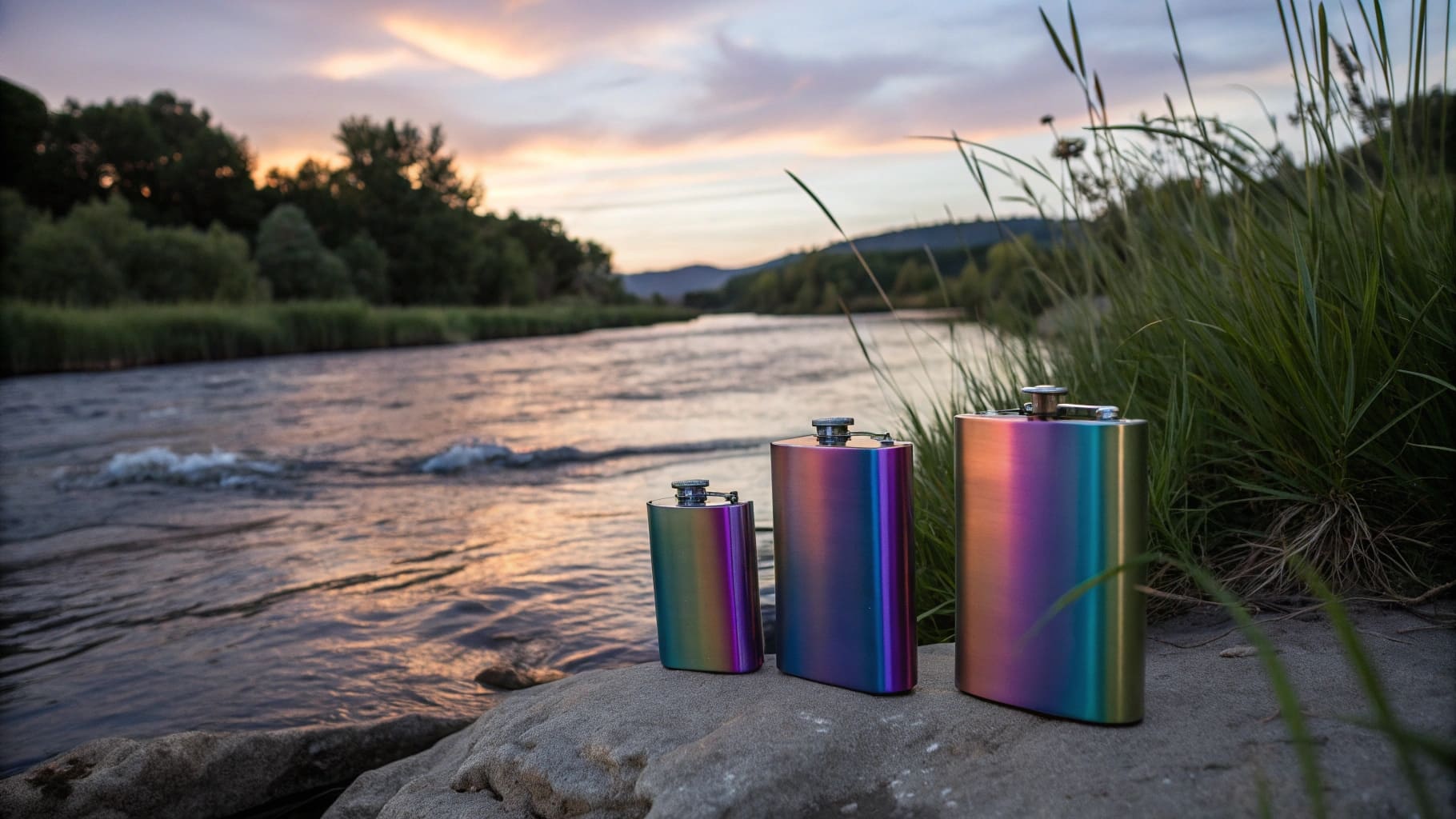
I have seen this choice decide the whole feel of a gift set. A 6oz flask can look slim, clean, and executive. An 8oz flask can feel more useful and more generous. I do not treat the extra 2oz as a small detail. I treat it as a 33% capacity change, and that change affects the box size, shipping weight, perceived value, and end-user habit. If I were helping a Canadian distributor prepare a 2026 wholesale program, I would first ask where the flask will be used, who will receive it, and how the buyer will explain the value after rebranding.
How many shots fit in a 6 oz flask?
I often hear buyers guess the shot count. That guess can hurt product pages, gift cards, and sales scripts when the market uses another measure.
I count a 6oz flask as about four U.S. standard shots when one shot is 1.5oz. I count an 8oz flask as a little over five U.S. standard shots, or five to six shots in normal selling language.
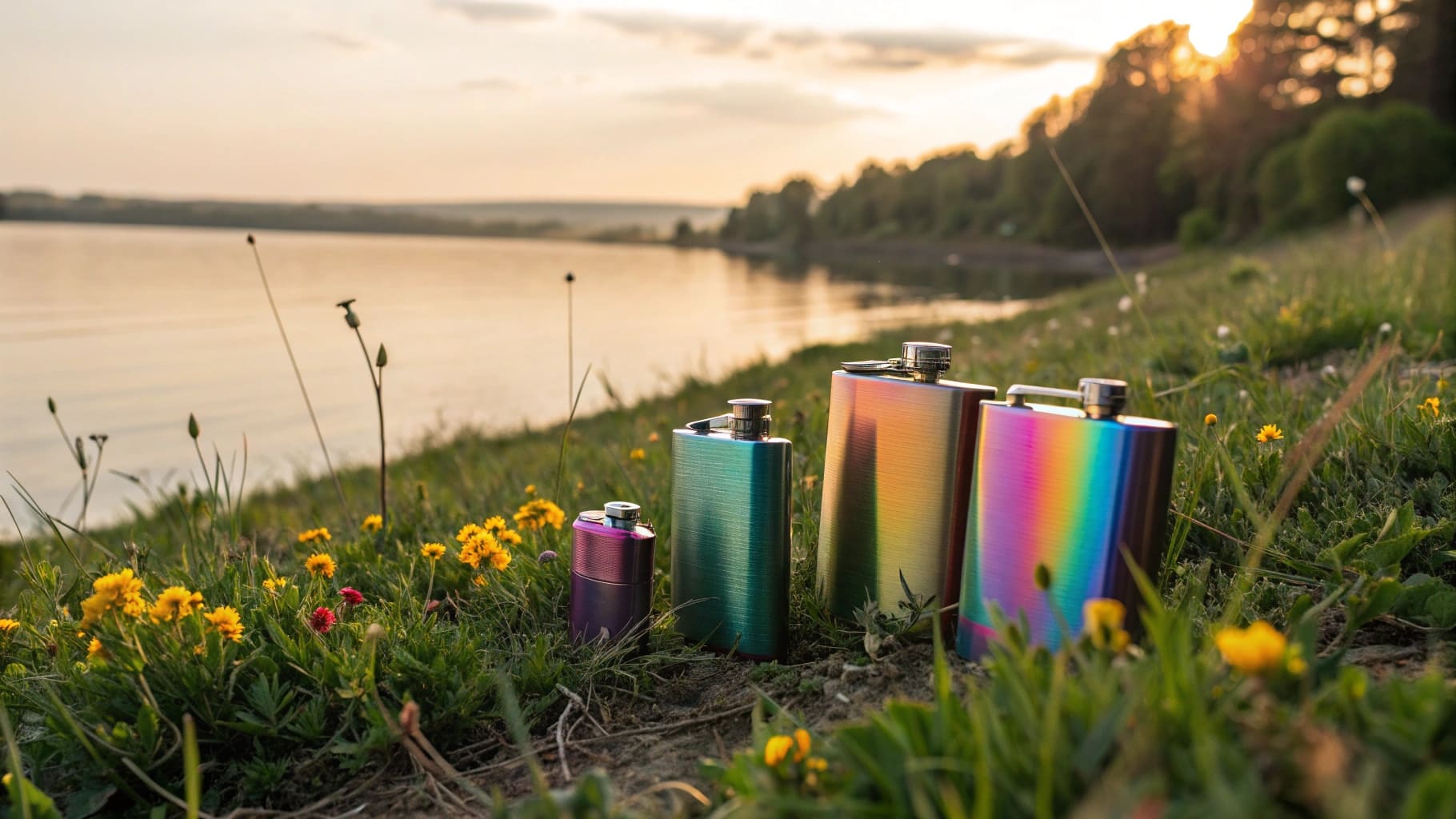
I always confirm the shot measure before I write a product description. A flask capacity sounds simple, but the word “shot” changes by market and by bar habit. In the U.S. market, many buyers use 1.5oz as the common shot size. With that rule, a 6oz hip flask holds four shots. This is easy for a procurement officer to explain to a client. It also feels practical for gifting because the flask is useful without looking oversized. In Canada, I still ask the buyer how their sales team explains pours. I do this because a rebranded product needs clear language on packaging and online listings. A wrong claim can make the product look careless.
| My capacity check | My common calculation | My simple sales wording | My buyer note |
|---|---|---|---|
| 6oz flask | About four shots at 1.5oz each | Holds around four standard shots | I use this for formal gifting and pocket carry |
| 8oz flask | About five full shots plus extra space | Holds about five to six standard shots | I use this for outdoor, casual, and value-focused gifts |
| Smaller shot markets | More pours by count | Shot count depends on local measure | I confirm the local meaning before printing claims |
| Product packaging | Capacity plus shot count | Clear and short wording | I avoid unclear promises on gift boxes |
I also think about headspace and filling behavior. A user does not always fill a flask to the rim. A supplier should not build the sales claim around a perfect lab fill. I prefer safe wording because it reduces complaints. If I print “four shots” for a 6oz flask, the message is simple and believable. If I print “six shots” for an 8oz flask, I may add softer wording such as “up to” only when the buyer accepts that style. I treat capacity language as part of quality control. It is not only a marketing line.
What is the capacity of a standard hip flask?
I see buyers ask for a “standard flask” as if one global size exists. That can lead to samples that miss the final gift purpose.
I treat 6oz to 8oz as the normal wholesale range for hip flask gifting.1 I see 6oz as the classic standard for corporate gifts. I see 8oz as the stronger choice for casual retail and lifestyle gifting.

I do not believe one capacity can serve every gifting program. In my work, the “standard” depends on the channel. For formal gifts, I usually see 6oz as the safest standard. It fits jacket pockets better.2 It looks discreet. It pairs well with slim boxes, funnels, and gift sets. It also helps reduce carton size and freight cost on large wholesale orders. These details matter when the buyer imports from China or Vietnam and sells in America or Europe. A small weight change can affect landed cost when the quantity is high.
| My wholesale situation | My best-fit capacity | My reason | My risk if I choose wrong |
|---|---|---|---|
| Executive gift set | 6oz | Slim shape and premium feel | 8oz may feel too bulky |
| Groomsmen gift set | 6oz | Classic size and easy pocket carry | Larger size may not fit formal wear |
| Outdoor event gift | 8oz | More liquid and stronger utility | 6oz may feel too limited |
| Tailgating or sports theme | 8oz | Better value story | 6oz may seem less generous |
| Luxury branded box | 6oz | Elegant look and lower bulk | Oversized box may raise cost |
| Retail shelf promotion | 8oz | Higher perceived value | Lower portability may bother some users |
I also use capacity to control price position. A 6oz flask can support a clean premium story when the finish, logo, and packaging are strong. A buyer can sell it as refined and practical. An 8oz flask can support a stronger “more for the money” story. This matters for younger buyers who compare size quickly. I have seen buyers choose 8oz because the retail display feels more convincing. I have also seen buyers return to 6oz because shipping, box size, and pocket comfort mattered more than capacity. My simple rule is clear. I use 6oz when the gift must feel polished. I use 8oz when the gift must feel useful and generous. I also ask the buyer to test a filled sample in a real pocket or bag before mass production. That small test can prevent a large reorder problem.
What makes a good hip flask?
I see buyers focus only on capacity and logo. Then leaks, rust, poor finish, or false certificates damage the whole gifting program.
I define a good hip flask by food-grade stainless steel, safe inner surface, reliable cap seal, clean welding, strong finish, accurate capacity, and honest inspection records. I never judge quality by weight or shine alone.

I start with material because a hip flask touches beverage directly. I prefer 304 stainless steel, also called 18/8 stainless steel3, for premium wholesale flasks. It resists corrosion well. It also helps avoid strange taste transfer when the inner surface is clean and properly processed. I do not like vague material claims. I ask for material reports, and I also support third-party inspection when the order value justifies it. This is important because some buyers have seen certificate fraud. I do not treat a certificate as decoration. I treat it as one part of a larger proof chain.
| My quality point | My preferred standard | My inspection method | My reason |
|---|---|---|---|
| Material | 304 stainless steel | Material report and spot check | I want safe contact and better corrosion resistance |
| Body construction | Seamless or clean welded body | Visual check and leak test | I want fewer weak points |
| Cap system | Captive screw cap with gasket | Fill, shake, and invert test | I want leak control during transport |
| Welding | Laser or TIG weld where suitable4 | Seam check under good light | I want neat joints and stronger structure |
| Finish | Brushed, polished, or powder coated | Rub test and fingerprint check | I want the gift to stay attractive |
| Logo | Laser, screen print, or custom color | Sample approval before bulk | I want the brand to look sharp |
| Packaging | Gift box or set package | Drop-style handling check | I want fewer damage claims |
| Documents | Honest and traceable reports | Supplier and inspector review | I want lower compliance risk |
I also look at communication quality as part of product quality. A factory can make a good flask, but a slow or unclear sales process can still hurt the buyer. I have learned to confirm capacity, finish, logo position, packing method, carton data, and shipment date in writing. I do this before production starts. I also ask the buyer to approve one final sample. This habit helps avoid delayed shipments before peak seasons. It also reduces arguments about color, logo size, and cap style. For 2026 gifting, I expect buyers to ask for both quality and competitive price. I think that is fair. But I do not cut the gasket, steel grade, welding, or inspection steps to save a little cost. Those small savings can become expensive after the goods arrive.
Conclusion
I choose 6oz for formal gifts and 8oz for value-led lifestyle gifts. I protect the order with clear specs, samples, and inspection.
-
"Hip flask", https://en.wikipedia.org/wiki/Hip_flask. Hip flasks have historically been produced in sizes ranging from 4 to 12 ounces, with 6 and 8 ounce capacities representing common mid-range options for portability and practical use. Evidence role: historical_context; source type: encyclopedia. Supports: typical hip flask capacity ranges. Scope note: Market preferences vary by region and era; this represents general historical patterns rather than universal standards ↩
-
"What Size Hip Flask Should You Choose? The Ultimate ...", https://sayerslondon.com/blogs/sayers-london/what-size-hip-flask-should-you-choose. Men's jacket inside pockets typically measure 5-7 inches in depth, and smaller-capacity flasks generally offer better portability due to reduced thickness and weight. Evidence role: general_support; source type: other. Supports: pocket sizing considerations for portable items. Scope note: Actual fit depends on specific flask design, pocket construction, and garment style ↩
-
"SAE 304 stainless steel", https://en.wikipedia.org/wiki/SAE_304_stainless_steel. Grade 304 stainless steel contains approximately 18% chromium and 8% nickel, hence the designation 18/8, and is widely used in food-contact applications. Evidence role: definition; source type: education. Supports: the material designation equivalence. ↩
-
"Stainless welding in food industry - MIG or TIG", https://www.reddit.com/r/IndustrialMaintenance/comments/1ni2amq/stainless_welding_in_food_industry_mig_or_tig/. TIG (Tungsten Inert Gas) and laser welding both provide clean, precise joins for stainless steel fabrication, with controlled heat input that minimizes distortion and maintains corrosion resistance in thin-walled vessels. Evidence role: general_support; source type: education. Supports: welding methods for stainless steel vessels. Scope note: Method selection depends on production volume, joint design, and material thickness; each has distinct advantages ↩