
40oz water bottles for OEM: cup-holder fit, lid torque, and leak AQL targets?
A big forty ounce tumbler can look perfect, but one wrong base, loose lid, or weak seal can turn a clean OEM order into returns.
For OEM forty ounce water bottles, I treat cup-holder fit, lid torque, and leak AQL as linked checks. I target a base near 2.95 inches, stable screw torque near eight to twelve inch-pounds, and leak AQL at 0.65 or lower.

I have learned this through many wholesale projects. A buyer may first ask me about price, logo, color, and carton size. I still bring the talk back to fit, lid feel, and leakage. I do this because these three points decide whether the product can sell through a full season without trouble. If I miss them, a lower price cannot save the order. If I control them, I can help the buyer protect margin, brand trust, and delivery timing.
How many water bottles fit in a 40oz tumbler?
I often see buyers focus on capacity first, but the real pain starts when the base is too wide for daily car use.
I count a forty ounce tumbler as about two standard 16.9 ounce water bottles, with a small amount left over. In OEM design, I use that volume target while keeping the base close to 2.95 inches so it can fit common car cup holders.
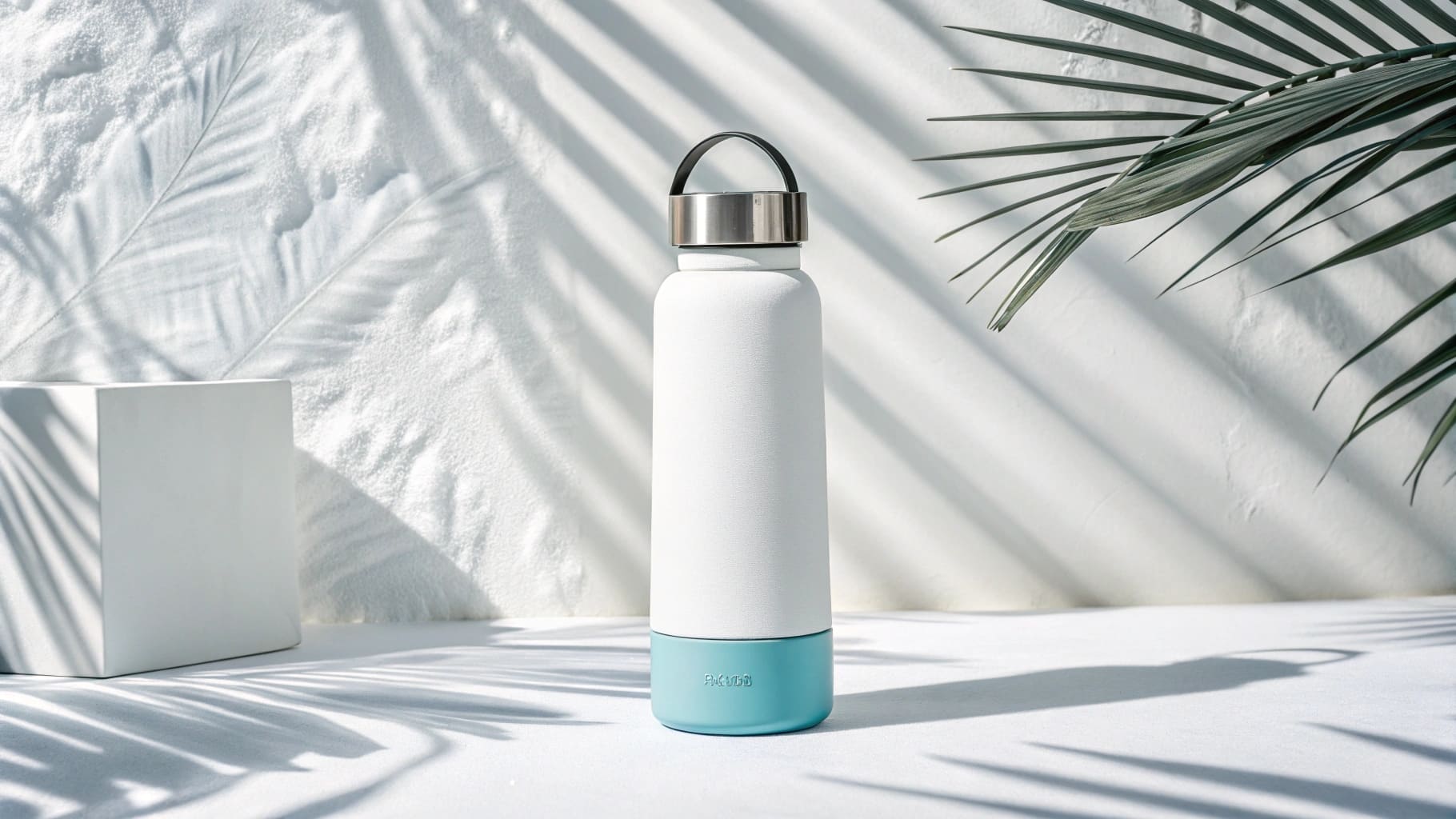
Capacity is only one side of the design
I do not design a forty ounce tumbler by chasing volume alone. I start with the buyer’s use case. In Canada and the United States, many end users carry a tumbler in a car, truck, or office bag. I see many automotive cup holders fall between 2.75 and 3.15 inches in diameter. Because of this, I prefer a base near 2.95 inches when the buyer wants broad cup-holder fit. I then add height to reach the forty ounce volume. This choice looks simple, but it changes the factory work. A taller body needs more stable deep drawing, better wall control, and cleaner welding for double-wall vacuum construction.1 I also need to check whether the bottle becomes too tall for one-hand use or retail shelf display.
| Design point | My OEM target | Why I care |
|---|---|---|
| Base diameter | Near 2.95 inches | I want better car cup-holder fit |
| Total height | Usually around ten to twelve inches | I need enough volume without a wide base |
| Body shape | Narrow lower body with wider upper body | I want capacity and user comfort |
| Wall build | Double-wall stainless steel | I want insulation and stronger value |
| Cost impact | Higher than simple wide-body design | I need tighter forming and welding control |
Cup-holder fit changes the cost
I explain to buyers that cup-holder fit is not only a drawing detail. It is a cost and risk detail. When I keep the base narrow and the capacity high, I ask the mold and production line to do more work. The body must stay round. The inner and outer walls must align. The vacuum area must stay stable after welding. If the factory rushes this part, the tumbler may wobble in a cup holder or fail insulation checks. I also ask my team to test actual sample fit with common cup-holder gauges, not only with digital drawings. I do this because a small difference on paper can become a real complaint in daily use. For an OEM buyer, this is where a cheap quote can hide a future return problem.
What water bottles do not leak?
A small leak is not small in wholesale. It creates claims, bad reviews, and lost trust before the buyer tests the second carton.
I see water bottles stay leak-free when the lid thread, gasket hardness, lid torque, and pressure test all match. For forty ounce OEM tumblers, I prefer screw lids with food-grade silicone around Shore A forty to fifty, tested by pressure, inversion, and heat change.
I check the lid as a system
I do not treat the lid as a single plastic part. I treat it as a system that includes thread shape, gasket size, silicone hardness, lid torque, straw hole design, vent control, and user opening force. In many leak cases, the stainless steel body is not the problem. The lid assembly is the problem. I ask for screw-on lid torque near eight to twelve inch-pounds because this range usually gives a firm seal without crushing the silicone gasket. If the torque is too high, the gasket may deform and lose its shape. If the torque is too low, the lid may feel closed but still leak under pressure or movement. I also prefer thread tolerance under 0.05 mm when the design allows it, because loose thread control creates uneven sealing pressure.
| Leak control item | My usual check | Failure I want to avoid |
|---|---|---|
| Screw lid torque | Eight to twelve inch-pounds | Loose lid or damaged gasket |
| Thread tolerance | Under 0.05 mm when possible | Uneven sealing and poor lid feel |
| Silicone hardness | Shore A forty to fifty | Weak seal in hot or cold use |
| Pressure test | 15 PSI for three minutes | Hidden leak under stress |
| Inversion test | Twenty four hours | Slow leak during transport |
| Thermal shock | From minus 20°C to 80°C | Seal failure after temperature change |
AQL targets make the leak risk clear
I use leak AQL as a purchase language because it turns a vague promise into a clear target. For serious OEM work, I prefer a leak AQL of 0.65 or lower. In plain buying terms, I explain this as a target near 6.5 defective units per 1,000 pieces. I still remind buyers that AQL is a sampling system, so the real value comes from the testing method behind it. I ask whether the supplier tests by batch or only by a few samples. I prefer batch testing because lid assembly is often the highest risk point in forty ounce tumbler production. I also ask whether the factory uses automated torque equipment or manual assembly. Manual work can be fine for small orders, but it can drift during large production. I want torque data sheets, leak test records, and clear photos from the production line. I do not want a sales reply that only says “no leak.” That sentence is too easy to write and too hard to trust.
What brand of water is the best?
Buyers sometimes ask about water brands, but their real risk is the drinking experience they attach to their own label.
I call the best water brand the one with clear testing, stable taste, and trusted local supply. For OEM stainless steel bottles, I focus more on the bottle brand promise: safe material, clean coating, leak control, and on-time delivery.
I connect the bottle to the buyer’s brand
I know the question sounds like it is about drinking water, but in OEM bottle sourcing, I hear a deeper question. The buyer wants to know what kind of product end users will trust. If my customer is rebranding stainless steel water bottles in Canada, the bottle becomes part of that trust. The customer may not care about the factory name in China, but the customer will care if the bottle smells strange, leaks in a car, scratches too fast, or arrives after the peak season. Because of this, I tell buyers that the “best brand” is not only a famous name. It is a stable promise that the product can keep every day. I build that promise with material control, coating tests, packing checks, and honest delivery planning.
| Buyer concern | My OEM answer | Proof I prefer to show |
|---|---|---|
| Safe drinking use | I use food-contact stainless steel and silicone2 | Material test report and batch record |
| Better brand feel | I control coating, color, and logo position | Pre-production sample and color approval |
| Fewer complaints | I test lid torque and leakage | Torque sheet and leak test record |
| Clean retail image | I check packing and surface finish | Carton drop test and inspection photos |
| Stable launch timing | I confirm production and shipping schedule | Written timeline and loading plan |
I do not let certificates become a weak point
I have seen buyers worry about certificate fraud, and I think that worry is fair. A certificate can look official but still belong to another product, another factory, or an expired test. I ask my team to match the certificate name, factory name, product type, material, test item, and report date. I also ask whether the same certificate covers the actual lid, gasket, coating, and straw parts. A stainless steel body report does not prove the silicone gasket is safe. A coating report does not prove the lid will not leak. I keep these details simple when I talk with a busy procurement owner. I say, “I will show you what was tested, when it was tested, and which part it covers.” This direct answer saves time. It also reduces the weak back-and-forth communication that often hurts overseas buying. When payment, inspection, and logistics are clear at the same time, the order has a much better chance to reach the buyer before the selling season.
Conclusion
I control forty ounce OEM risk by treating fit, torque, leak testing, certificates, and delivery as one system, not separate purchase details.
-
"Deep drawing: Key design principles & tips for successful draws", https://www.thefabricator.com/thefabricator/article/bending/deep-drawing-key-design-principles-tips-for-successful-draws. Deep drawing of stainless steel becomes progressively more difficult as the ratio of depth to diameter increases, requiring staged forming operations, specialized tooling, and careful blank holder pressure control to prevent wrinkling, tearing, or thickness variation. Evidence role: mechanism; source type: research. Supports: manufacturing challenges in forming high-aspect-ratio stainless steel containers. ↩
-
"21 CFR 177.2600 -- Rubber articles intended for repeated ...", https://www.ecfr.gov/current/title-21/chapter-I/subchapter-B/part-177/subpart-C/section-177.2600. Regulatory agencies including the FDA recognize certain grades of stainless steel and silicone elastomers as acceptable for repeated food contact applications when they meet specified composition and migration requirements. Evidence role: general_support; source type: government. Supports: regulatory status of stainless steel and silicone for food contact. Scope note: Compliance requires specific material grades and adherence to compositional limits ↩