
Are double wall vacuum insulated tumblers dishwasher-safe under lab methods?
I see importers trust a dishwasher-safe claim, then face cloudy walls, weak heat retention, and angry retailers. I test the claim before it hurts my margin.
Double wall vacuum insulated tumblers can be dishwasher-safe only when lab testing proves the vacuum seal, coating, logo, and insulation survive repeated dishwasher cycles. I treat “top-rack safe” as a limited claim, not a full approval for hot bottom-rack washing.
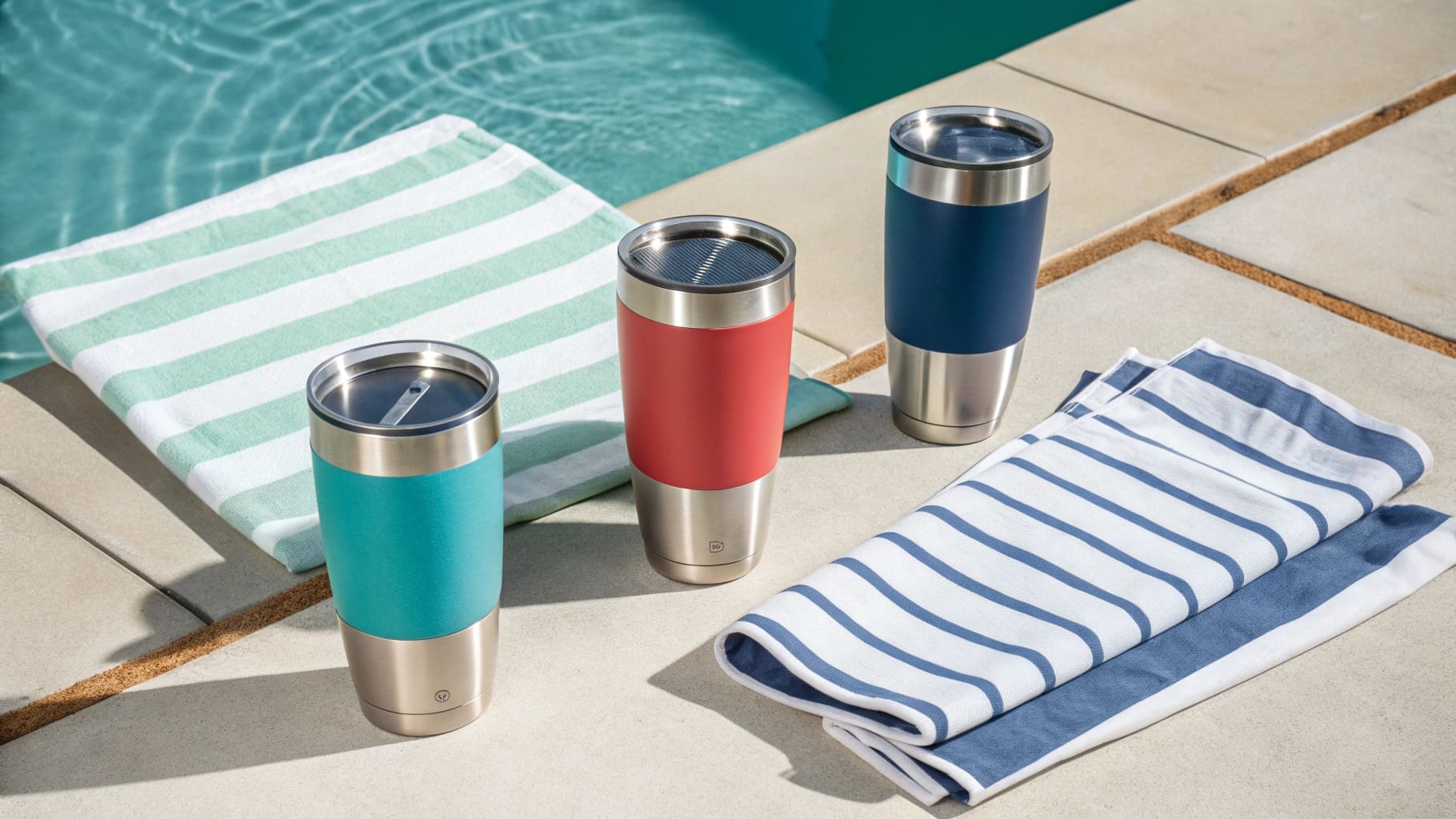
I learned this lesson through many sourcing projects. I saw the same product pass a simple home wash, then fail after repeated high-heat cycles in a stricter test. I also saw some suppliers use “dishwasher-safe” as a sales word, not as a tested fact. I do not reject dishwasher use in every case. I reject unclear claims. I want to know how the tumbler was tested, where it was placed in the machine, what detergent was used, and how the vacuum performance changed after washing.
Can double walled cups go in the dishwasher?
I see one simple mistake turn a good cup into a return. Heat enters the wrong place, and the vacuum space loses its value.
Double walled cups can go in the dishwasher only when the maker proves dishwasher resistance. I separate normal double wall cups from vacuum insulated cups, because a vacuum seal can fail under heat, detergent, and water pressure.
How I separate cup types before I accept the claim
I first ask what “double walled” means, because this phrase can hide different structures. I may see a plastic double wall cup, a stainless steel air-gap cup, or a stainless steel vacuum insulated tumbler. I do not treat these products the same. A basic air-gap cup may handle dishwasher heat better than a vacuum tumbler, because it does not depend on a sealed vacuum chamber1. A vacuum tumbler depends on a very small sealed area between the inner wall and the outer wall2. When that seal gets weak, the cup can still look fine, but it cannot keep drinks hot or cold as promised.
| Cup type | My dishwasher view | My main risk check |
|---|---|---|
| Plastic double wall cup | I ask for resin and heat data | I check warping and odor |
| Stainless air-gap cup | I ask for coating and weld data | I check water entry |
| Vacuum insulated tumbler | I ask for vacuum retention data | I check seal failure and heat loss |
| Powder coated tumbler | I ask for coating adhesion data | I check peeling and color fade |
| Logo printed tumbler | I ask for print durability data | I check rubbing, fading, and bubbling |
What I ask suppliers to show me
I ask for real testing, not a product photo inside a dishwasher. I want a test report that describes the wash cycle, the drying cycle, the rack position, the detergent, and the number of repeat cycles. I also ask for thermal performance before and after washing. If the tumbler keeps ice or hot water for a much shorter time after the test, I treat the claim as weak. I also look at the lid, because many lids contain silicone rings, sliders, and plastic parts. A stainless body may survive, but a lid may deform or leak. I prefer simple care wording when the test data is limited. I would rather write “hand wash recommended” than promise too much and create returns later.
Can you put vacuum-insulated cups in the dishwasher?
I hear this question when buyers want easy care labels. I also hear the hidden fear behind it, because a failed vacuum claim can damage a brand.
I put vacuum-insulated cups in the dishwasher only after lab proof. I want evidence that the vacuum seal, coating, printed logo, lid fit, and insulation result stay stable after repeated wash and dry cycles.
How I read a lab report for dishwasher safety
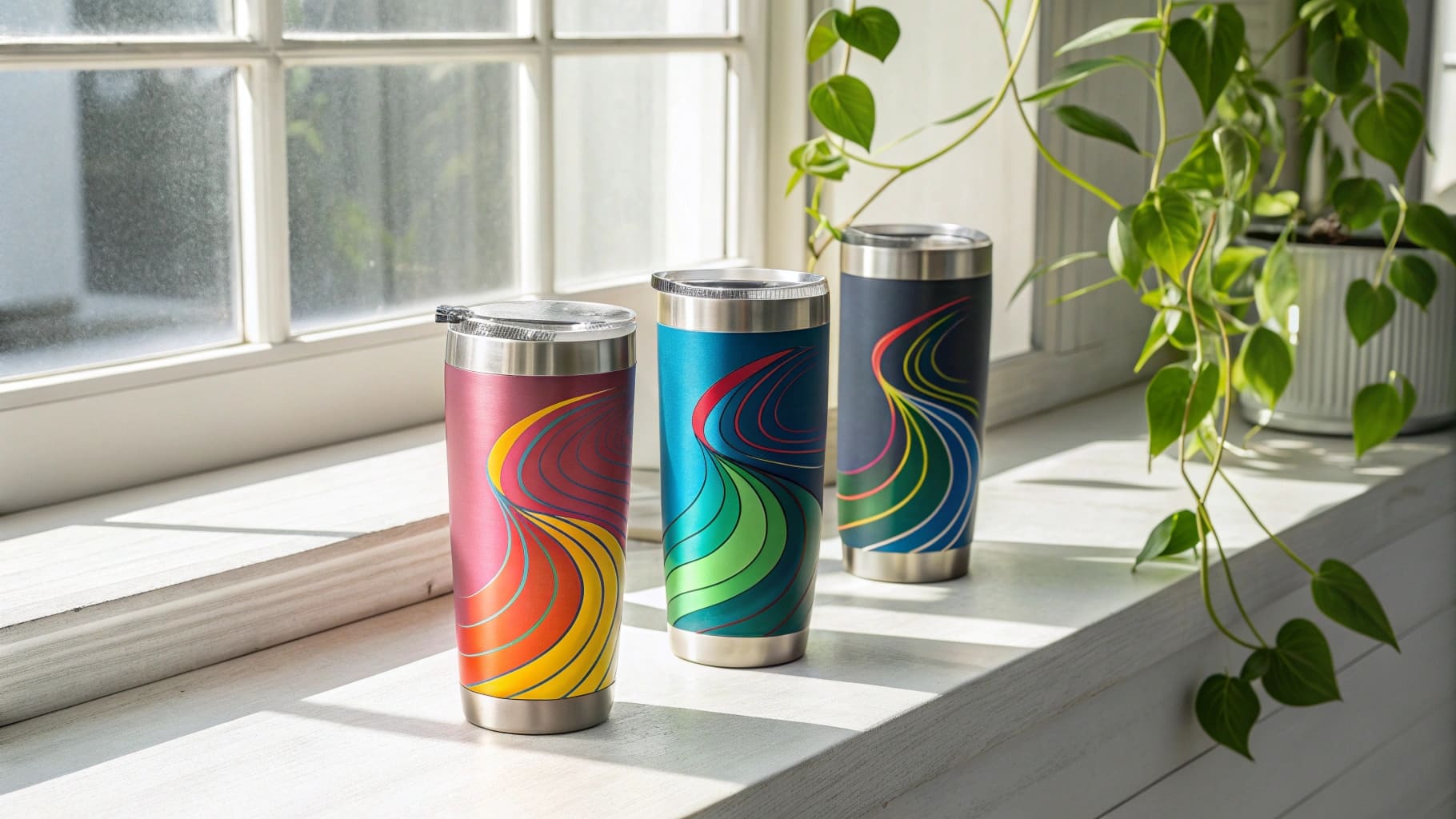
I read the report like a risk map. I do not stop at the result line. I check what the lab actually did. A weak test may use mild water, a short cycle, and no strong detergent. That test may look good, but it may not match real consumer use. I prefer a test that repeats the wash cycle many times. I also prefer a test that checks the tumbler after drying, because the drying stage can create strong heat stress. I pay close attention to the vacuum test after washing. If a tumbler shows condensation between walls, warm outer walls, or reduced holding time, I see a vacuum problem.
| Lab item I check | Why I care | What I do with the result |
|---|---|---|
| Rack position | Heat changes by position | I separate top-rack and bottom-rack claims |
| Water temperature | Heat can weaken the seal | I compare it with real use |
| Detergent type | Strong detergent attacks coating | I check color and logo damage |
| Repeat cycles | One wash proves little | I ask for repeated cycle data |
| Thermal retention | Vacuum failure shows here | I compare before and after data |
| Visual inspection | Returns often start with appearance | I check spots, rust, peeling, and fading |
| Lid fit | A leaking lid damages user trust | I test open, close, and seal action |
Why vacuum failure is not always visible at first
I know many buyers focus on scratches and color change. I still focus on the vacuum seal first. A tumbler can pass a visual check and fail the real function later3. The vacuum chamber sits between the inner and outer stainless walls. The seal area may be welded, brazed, or joined by a process that must stay stable under heat. High-pressure water jets can push water into weak points. Aggressive detergent can attack coatings and printed layers. The drying stage can heat the bottom area and create stress. When the vacuum space loses integrity, the tumbler may sweat, feel warm outside with hot drinks, or stop holding ice for long periods.
How I set my buying standard
I ask my supplier to state the care claim in writing. I also ask the supplier to connect that claim to a test method. I do not accept a vague sentence like “our tumbler is dishwasher-safe.” I ask whether it means top-rack only, household dishwasher only, no heated dry, or full cycle with heated dry. I also ask whether the claim covers the body only or the lid and accessories too. In my own sourcing work, I prefer a conservative claim for premium tumblers. If the brand sells at a higher price, I protect the brand with clear care wording. A clear limit is better than a broad promise that later becomes a refund issue.
What should not go in the bottom rack of a dishwasher?
I see the bottom rack cause the worst damage. Heat rises from the bottom, and one wrong placement can ruin a premium tumbler.
I keep vacuum insulated tumblers, plastic lids, silicone parts, printed cups, coated bottles, and light accessories away from the bottom rack. I use top-rack placement only when lab testing supports dishwasher use.
Why I treat the bottom rack as a high-risk zone
I treat the bottom rack as the stress zone of the dishwasher. It sits closer to the heating element in many machines. It also receives stronger water spray in many designs. The heat near the bottom can exceed the level that coatings, adhesives, seals, and plastic parts like for long periods. I have seen powder coating lose gloss after repeated hot drying. I have seen printed logos fade faster when the cup sits near direct heat. I have also seen lids become loose after the silicone ring changes shape4. The bottom rack may be fine for ceramic plates and steel cutlery, but I do not treat it as safe for every drinkware item.
| Item | My bottom-rack rule | My reason |
|---|---|---|
| Vacuum insulated tumbler body | I avoid bottom-rack use | I protect the vacuum seal |
| Powder coated bottle | I avoid bottom-rack use | I protect color and surface feel |
| Custom printed cup | I avoid bottom-rack use | I protect the logo and artwork |
| Plastic lid | I avoid bottom-rack use | I prevent warping and loose fit |
| Silicone boot | I avoid bottom-rack use | I prevent shape change |
| Straw and small parts | I use a basket or hand wash | I prevent loss and heat damage |
| Paracord handle or cloth bag | I hand wash only | I protect fabric and attachment points |
How I write care instructions for buyers
I write care instructions in a way that a normal user can follow. I do not use soft words that create doubt. If the tumbler has not passed strong dishwasher testing, I write “hand wash recommended.” If it passed only a top-rack test, I write “top-rack dishwasher safe” and I add “avoid heated dry” when the lab result supports that limit. If the lid has not passed the same test as the body, I separate the instructions. I may say the stainless body is top-rack safe, but the lid should be hand washed. This detail matters in wholesale orders, because one unclear care label can create thousands of complaints.
What I check before shipment
I check the final goods, not only the sample. I ask for the same coating system, same print method, same lid material, and same seal structure as the tested sample. A supplier may pass a test with one sample, then change paint, logo ink, or lid material during mass production. I do not accept that risk. I ask the factory to keep the tested construction fixed. I also ask for inspection photos and basic performance checks before shipment. For large wholesale orders, I prefer a third-party inspection. I want the inspector to check appearance, coating adhesion, lid fit, leakage, packing, and random thermal performance. This step helps me protect the importer from late returns and missed sales seasons.
Conclusion
I trust dishwasher-safe claims only after lab proof. I protect my buyers by testing the vacuum seal, coating, logo, and rack placement before shipment.
-
"How Do Insulated Tumblers Work? A Complete Guide", https://greenssteel.com/blogs/news/how-do-insulated-tumblers-work-a-complete-guide?srsltid=AfmBOordTs4oLGWoqIaRiR_XqOOao4fO7xi_S_oddz-wZ01fJVvX3OX7. Air-gap double wall vessels rely on the low thermal conductivity of the trapped air layer rather than a pressure-sealed vacuum; unlike vacuum insulated vessels, they do not depend on hermetic seal integrity for their insulating function, making seal failure under thermal and mechanical stress a risk specific to vacuum-type constructions. Evidence role: general_support; source type: research. Supports: That air-gap double wall cups and vacuum insulated cups have structurally different insulation mechanisms, with vacuum insulated cups uniquely vulnerable to seal failure under thermal stress. Scope note: Direct comparative dishwasher durability studies between air-gap and vacuum insulated consumer drinkware are not widely available in published literature ↩
-
"Thermal conductivity and resistivity", https://en.wikipedia.org/wiki/Thermal_conductivity_and_resistivity. The vacuum flask operates by evacuating the space between two walls to eliminate conductive and convective heat transfer; the effectiveness of insulation depends directly on the integrity of this vacuum seal (see, e.g., the thermodynamic principles described in standard references on heat transfer and vacuum vessel design). Evidence role: mechanism; source type: encyclopedia. Supports: That a vacuum between two walls reduces thermal conduction and convection, forming the basis of insulation in double-wall vacuum vessels. Scope note: General physics references describe the principle but do not address commercial tumbler construction specifically ↩
-
"Industry Standards for Thermal Retention Testing in Insulated ...", https://www.linkedin.com/pulse/industry-standards-thermal-retention-testing-insulated-2vahc. Quality assurance guidelines for vacuum insulated vessels note that loss of vacuum integrity may not produce visible external indicators; thermal retention testing—measuring the temperature of contents over time—is the accepted functional method for detecting seal failure (cf. ASTM or ISO standards on insulated drinkware performance). Evidence role: expert_consensus; source type: institution. Supports: That visual inspection alone is insufficient to detect vacuum seal failure in insulated vessels and that thermal performance testing is required. Scope note: Specific published standards for consumer tumbler vacuum integrity testing are not uniformly mandated across all markets ↩
-
"Mechanism of Accelerated Deterioration of High-Temperature ...", https://pmc.ncbi.nlm.nih.gov/articles/PMC10420937/. Silicone rubber exhibits compression set—a permanent deformation under sustained load—that is accelerated by elevated temperatures; repeated thermal cycling in dishwasher conditions can therefore reduce the recovery of silicone sealing rings and compromise lid fit (cf. ASTM D395 and related elastomer standards). Evidence role: mechanism; source type: research. Supports: That silicone elastomers can experience compression set and dimensional change under repeated thermal cycling, affecting sealing performance. Scope note: Compression set data from standardized tests may not directly predict deformation magnitude under the specific temperature-time profile of consumer dishwasher cycles ↩