
How Do I Calculate 40oz Insulated Bottle Pricing From EXW to DDP?
I see buyers chase a low EXW price, then freight, duty, and port bills crush their margin. The bottle did not change. The cost picture did.
I calculate 40oz insulated bottle landed cost by starting with EXW, adding China local charges to reach FOB, adding ocean or air freight, adding duty, tariffs, customs fees, destination charges, inland delivery, testing, and bank costs. I compare that total with a supplier DDP quote before I approve production.
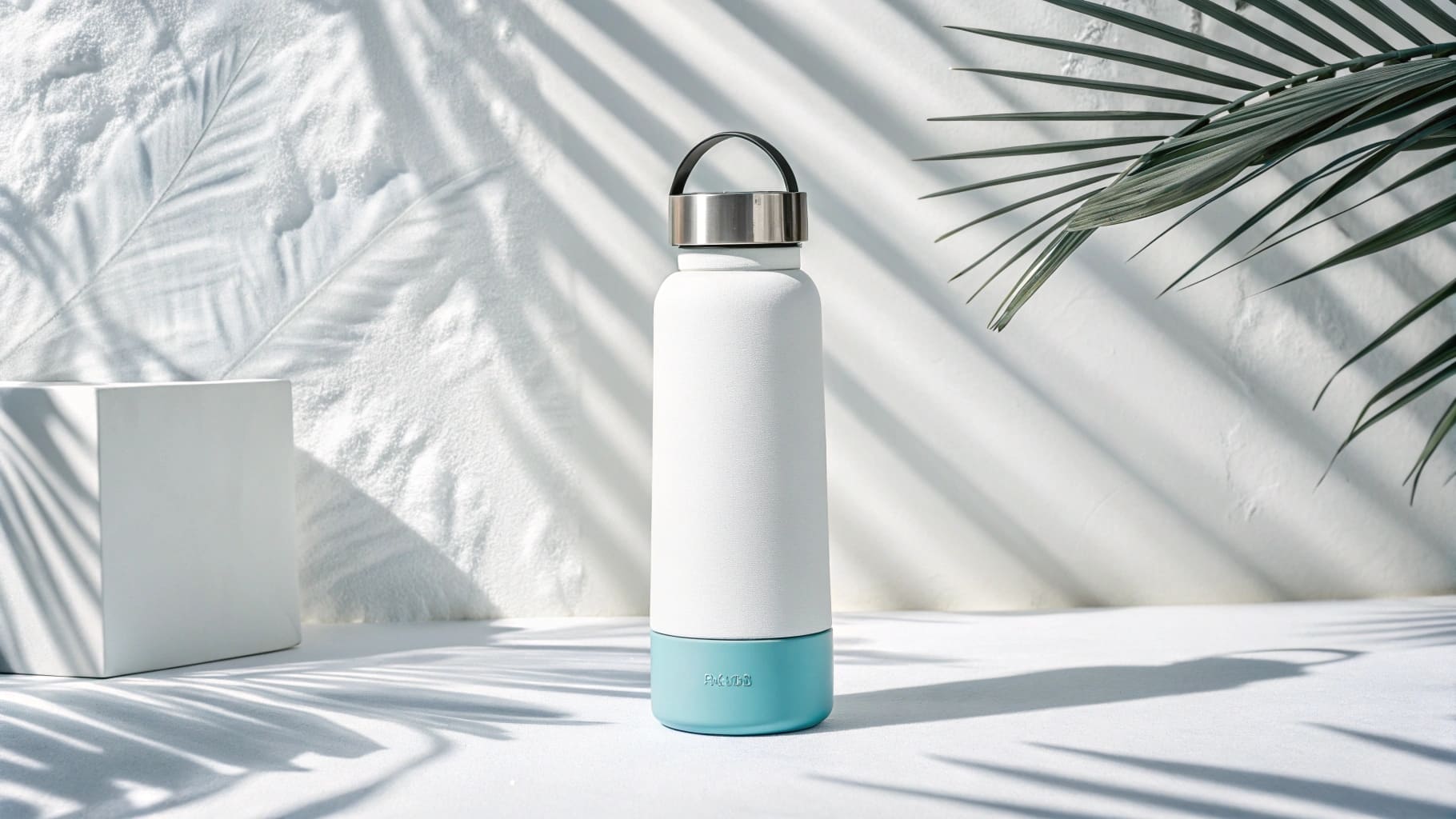
In my own stainless steel bottle work, I often see the same pattern. A buyer gets a $4.50 EXW quote for a 40oz double-wall bottle1 and feels the sourcing job is almost done. I do not see it that way. I see EXW as the first line of the worksheet, not the final answer2. I will use a normal 40oz insulated bottle example and show where the extra money comes from. I will also show why the cheapest factory price can become the most expensive import plan.
How Do I Calculate DDP Cost?
I like DDP when my schedule is tight, but I also know blind trust is dangerous. A clean DDP number can hide weak routing.
I calculate DDP cost as the all-in price delivered to my warehouse, with product cost, export charges, freight, insurance, customs entry, duty, tariffs, destination charges, and final truck delivery included. I still ask the supplier to show each cost block, even when one final unit price is quoted.

My DDP Formula
I treat DDP as a convenience price and a risk transfer price. The supplier, freight forwarder, or trading partner takes charge of export, freight, import, duty, and delivery. I receive one delivered price, but I still need to know what is inside it. If I do not ask, I may compare a strong DDP quote with a weak DDP quote and think they are the same.
For a 40oz insulated bottle, I often see DDP quotes to a U.S. warehouse around $7.50 to $8.50 per unit when the order volume is healthy. That does not mean every shipment fits this range. The final number changes with carton size, order quantity, port congestion, warehouse distance, tariff rate, and delivery address.
| Cost Block | What I Check | Why I Check It |
|---|---|---|
| Product cost | Bottle, cap, coating, logo, packing | I need to know if the factory quality is stable |
| China export cost | Inland truck, customs, port handling | I need to know if the supplier has real export control |
| Freight | Ocean, air, or rail option | I need to protect the sales season |
| Import charges | Duty, tariffs, entry, broker | I need to avoid surprise tax bills |
| Destination delivery | Port fees, drayage, warehouse delivery | I need to know the real delivered cost |
| Compliance | FDA, Prop 65, other testing if needed | I need to protect my customer and my brand |
My DDP Check
I ask one simple question before I accept DDP. I ask, “Is this price delivered to my exact warehouse address, with duty and tariffs paid?” I also ask who acts as importer, who owns the customs entry, and what documents I will receive. I do this because a low DDP quote can be a warning sign. Some suppliers may use unclear channels, weak declarations, or slow routes. That may save money on paper, but it can create trouble later.
I prefer a slightly higher DDP quote if it includes clear lead time, real tracking, correct product description, and clean paperwork. I have seen buyers miss peak sales seasons because they only looked at the unit price. I would rather pay for a route that arrives on time than explain empty shelves to a customer.
How Do I Calculate Ex Works Price?
I never treat EXW as the true buying cost. It is only the factory door number, and that number can make a bad decision look good.
I calculate EXW price as the cost of finished goods at the supplier’s factory before China inland transport, export clearance, port handling, international freight, import duty, tariffs, and local delivery. I use EXW to compare production cost, not to predict my final landed cost.
What I Include in EXW
When I quote or review EXW for a 40oz insulated bottle, I first check what the factory includes in that price. A basic EXW price should include the finished bottle at the factory. But the details matter. The bottle may have powder coating, laser logo, silk screen logo3, color box, master carton, straw lid, handle lid, or extra accessories. Each detail changes the cost.
I also check the stainless steel grade, wall thickness, vacuum performance4, lid material, gasket quality, and carton strength. A buyer may compare two EXW prices and think one factory is cheaper. But one quote may include stronger cartons and better lids, while another quote may use thin cartons and lower-grade parts. The cheaper EXW price may lead to higher damage, claims, and replacements.
| EXW Item | My Question | Cost Impact |
|---|---|---|
| Bottle body | Is the steel grade clear? | It affects quality and trust |
| Vacuum insulation | Is the heat retention tested? | It affects product claims |
| Coating | Is the color stable and scratch resistant? | It affects return rate |
| Logo | Is the logo method included? | It affects brand value |
| Lid | Is the lid leakproof and safe? | It affects customer complaints |
| Packing | Is the carton export quality? | It affects damage during shipping |
My EXW to FOB Step
After I understand the EXW price, I add China local costs to estimate FOB. For a normal 40oz bottle, I often add about $0.30 to $0.50 per unit from EXW to FOB when the order volume is reasonable. This amount may cover inland transportation to the port, export customs, port handling, and related local charges. The exact cost depends on the factory location, order size, port, and carton volume.
If the EXW price is $4.50, I may estimate FOB at about $4.80 to $5.00. This small increase is important because many import calculations start from FOB, not EXW. I also use this step to judge the supplier. If a factory gives me a very low EXW price but cannot explain the FOB cost, I slow down. I need a supplier who understands export work, not only production.
What Is the FOB Landed Cost?
I see FOB quotes confuse even strong buyers. The port name looks final, but the import side has not started yet.
I treat FOB landed cost as the total cost after I start from FOB and add international freight, insurance, import duty, tariffs, customs broker fees, destination port charges, inland trucking, testing, and finance costs. FOB is the export handoff point; landed cost is my warehouse cost.
My FOB Landed Cost Worksheet
I use FOB as the point where the goods are ready at the China port and the international shipping part begins. This is useful because FOB gives me more control than DDP. I can choose my forwarder, review shipping routes, and manage import paperwork. But I must also accept more responsibility. If I forget one cost, my profit margin becomes fake.
For a simple example, I start with a $4.50 EXW 40oz insulated bottle. I add $0.40 for China local export costs. My estimated FOB value becomes $4.90. Then I add ocean freight. If I ship a full container to Los Angeles, I may estimate $0.40 to $0.80 per unit. If I ship LCL, I may estimate $1.50 to $2.00 per unit. The same bottle now has two very different cost paths.
| Cost Line | FCL Example | LCL Example |
|---|---|---|
| EXW bottle | $4.50 | $4.50 |
| China local cost to FOB | $0.40 | $0.40 |
| Estimated FOB value | $4.90 | $4.90 |
| Ocean freight | $0.60 | $1.80 |
| Tariff estimate | $1.23 to $1.38 | $1.23 to $1.38 |
| Broker and entry fees | $0.10 to $0.25 | $0.25 to $0.60 |
| Destination and port fees | $0.20 to $0.50 | $0.40 to $0.90 |
| Inland delivery | $0.20 to $0.60 | $0.30 to $0.80 |
| Testing allocation | $0.10 to $0.50 | $0.30 to $1.00 |
My Tariff and Hidden Cost View
For U.S. buyers, I pay close attention to stainless steel drinkware tariffs. Many Chinese stainless steel bottle shipments face a 25% Section 301 tariff under the related stainless steel household item category. I do not guess this part. I ask my customs broker to confirm the product description, material, lid type, and final code before shipment. A wrong code can create a false cost advantage and later become a serious problem.
I also add hidden costs that many first-time buyers miss. A customs broker may charge $150 to $300 per shipment. Destination port fees may add $200 to $400. Drayage to a warehouse may add $300 to $800 depending on distance. Compliance testing can add $2,000 to $5,000 at the start, then I divide that cost across the order quantity. If I buy only a small quantity, testing cost per unit becomes painful.
This is why I do not ask only, “What is the cheapest EXW price?” I ask, “What is my landed cost per sellable unit?” If the answer is close to my target margin, I continue. If the answer depends on perfect freight, perfect customs, and perfect timing, I see too much risk.
Conclusion
I do not buy 40oz bottles from a factory price alone. I buy after EXW, FOB, DDP, tariffs, timing, and risk all make sense.
-
"Vacuum flask", https://en.wikipedia.org/wiki/Vacuum_flask. Vacuum insulation in double-wall containers functions by removing air molecules between inner and outer walls, thereby minimizing heat transfer through conduction and convection, a principle established in vacuum flask design since the early 20th century. Evidence role: mechanism; source type: encyclopedia. Supports: the insulation mechanism of double-wall vacuum construction. ↩
-
"Know Your Incoterms", https://www.trade.gov/know-your-incoterms. EXW (Ex Works) under Incoterms 2020 represents the seller's minimum obligation, with goods made available at the seller's premises and all subsequent costs and risks borne by the buyer, making it only the starting point for total cost analysis. Evidence role: definition; source type: institution. Supports: the limited scope of EXW pricing in international trade. ↩
-
"What is Powder Coating & Why is it a Game Changer ...", https://greenssteel.com/blogs/news/what-is-powder-coating-and-why-is-it-a-game-changer-on-drinkware?srsltid=AfmBOoo1OYTrLiD7figpQbJ71gyrQx2PgLsyGrSW9mOQsUAqbh7hBySb. Stainless steel bottles can be decorated through powder coating (electrostatic application of polymer powder), laser engraving (material removal or marking via focused light), and silk screening (ink transfer through mesh stencils), each offering different durability, appearance, and cost characteristics. Evidence role: general_support; source type: other. Supports: decoration methods used for stainless steel drinkware. ↩
-
"Thermophysical Properties of Stainless Steels", https://www.osti.gov/servlets/purl/4152287. Thermal conductivity varies among stainless steel grades (304, 316, etc.), while wall thickness primarily affects structural integrity and heat bridging at seams rather than vacuum space performance; the vacuum gap itself provides the dominant insulation effect by eliminating conductive and convective heat transfer. Evidence role: mechanism; source type: research. Supports: material properties affecting thermal insulation in vacuum containers. Scope note: Wall thickness impacts durability and manufacturing quality but has limited direct effect on insulation once proper vacuum is achieved; vacuum integrity and seal quality are more critical factors. ↩