
Are Kids Water Bottles With Straw Lids Worth the Extra Quality Checks in 2026?
Buyers are getting burned by straw lid bottles that fail in the field. Returns go up. Parents complain. Your brand takes the hit. Here is what to check before you place that order.
Kids water bottles with straw lids need three quality checks above everything else: flow rate, pull force, and AQL tier. Get these right in your supplier agreement, and you cut returns, protect your brand, and keep children safe.
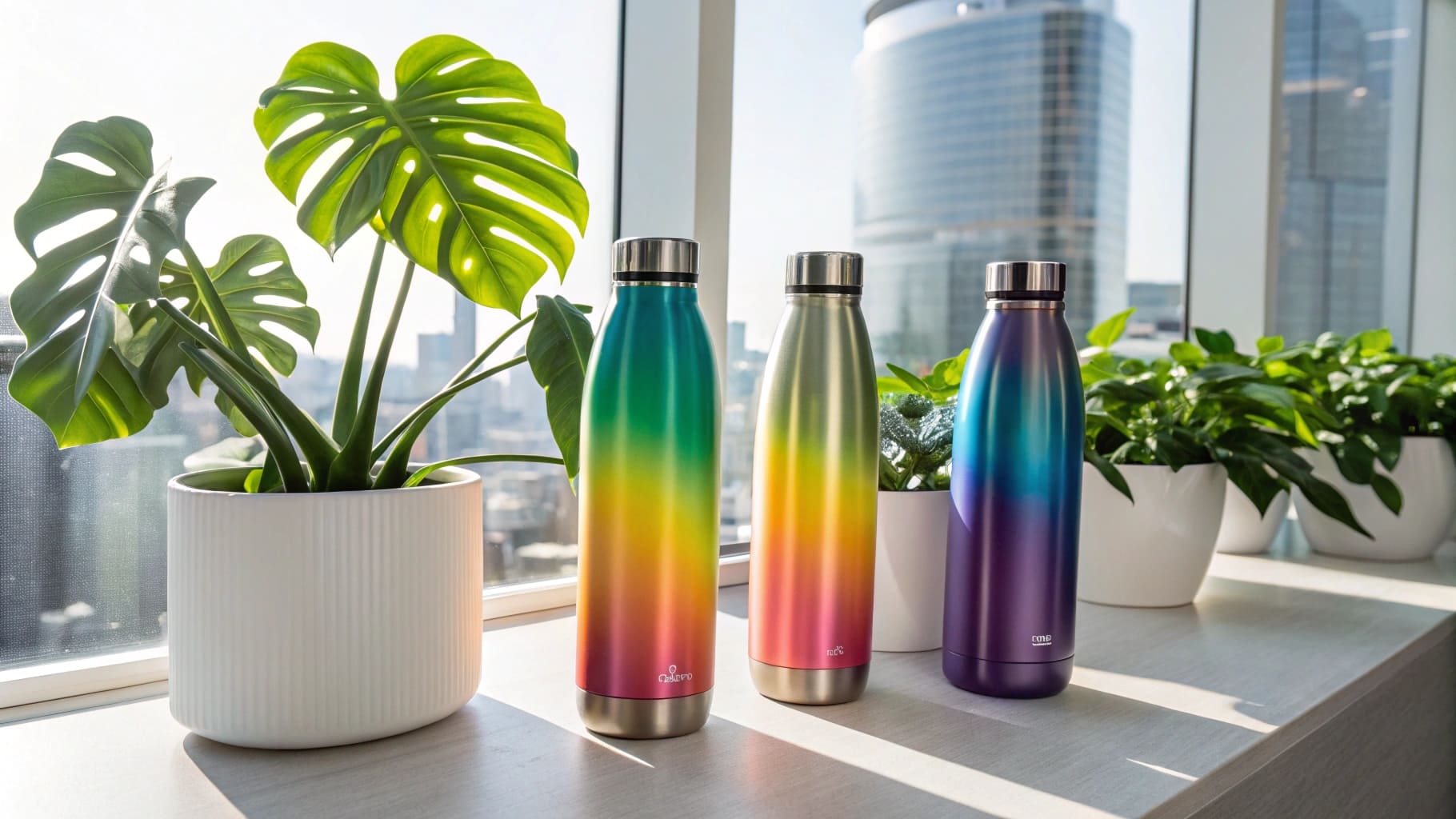
I have been sourcing stainless steel water bottles for years, and the kids category is the one that catches buyers off guard the most. The product looks simple. It is not. A straw lid has more failure points than a standard cap, and the end user is a child who will bite, pull, drop, and chew the product daily. If you are preparing for 2026 inventory, you need a clear testing protocol before production starts, not after the shipment lands.
How Do You Actually Test a Kids Water Bottle?
Most buyers only ask for a drop test and a leak test. That is not enough. Two tests leave too many failure points unchecked, and it only takes one bad batch to damage a product line you spent months building.
A proper test plan for a kids straw bottle covers at least five areas: flow rate, pull force on the straw assembly, thermal cycle performance, dishwasher durability, and material safety. Each one targets a different failure point, and skipping any one of them is a risk you are carrying quietly into your market.
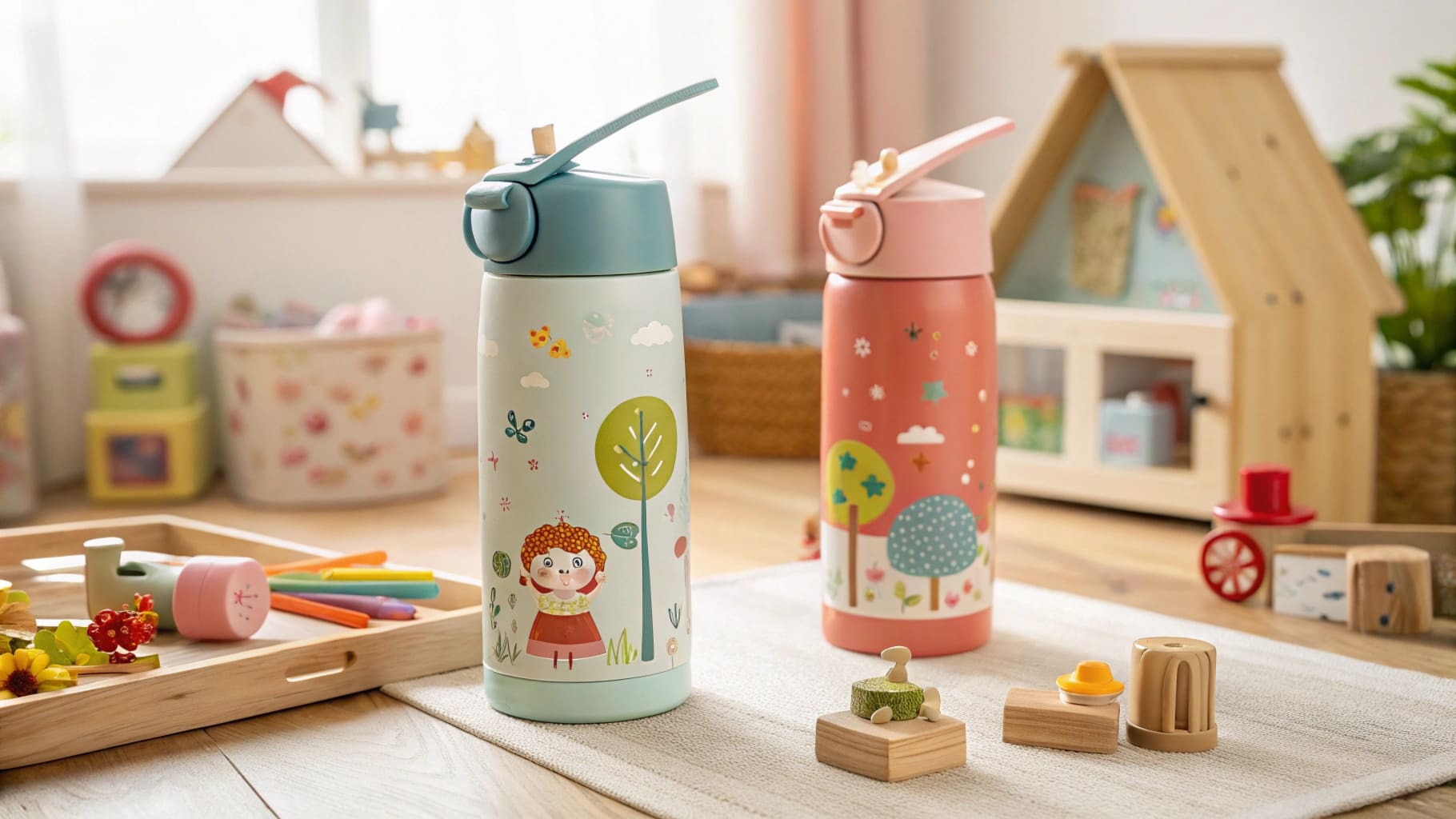
Let me break down what each test actually measures and why it matters for your 2026 sourcing decisions.
Flow Rate Testing
The straw needs to deliver water at a rate that works for a child. Too slow and the child has to work hard to drink. Too fast and there is a choking risk. The target range is 150 to 250 ml per minute under normal conditions.
The problem most buyers miss is temperature. Silicone straws stiffen in cold water1. A straw that flows at 220 ml per minute at room temperature can drop to 155 ml per minute after one hour in a cold bag. Some straws fall below 150 ml per minute, which is outside the safe and usable range.
| Test Condition | Acceptable Flow Rate | Common Failure Point |
|---|---|---|
| Room temperature (22°C) | 150–250 ml/min | Valve too tight |
| Cold water (4°C) | 150–250 ml/min | Silicone stiffening |
| After 30-day use simulation | 150–250 ml/min | Biofilm buildup narrowing channel |
Ask your supplier to run flow rate tests under all three conditions. Write the tolerance range into your Technical Data Package. Batch production runs long, and without a written spec, the factory has no fixed target to hit. Inconsistencies in silicone hardness between production runs are common, and they affect flow more than most buyers expect.
Pull Force Testing
The straw must stay in place when a child pulls it. A detached straw or a loose bite valve becomes a choking hazard for children aged three to eight2. The minimum pull force standard is 15 to 20 pounds before any component detaches from the lid assembly.
There are two joints that need pull testing. The first is where the straw connects to the lid body. The second is the bite valve, which children bite down on and pull with their teeth. Both joints need to hold at the minimum force threshold, not just one of them.
| Connection Point | Minimum Pull Force | Risk if it Fails |
|---|---|---|
| Straw-to-lid body | 15–20 lbs | Straw detaches, choking risk |
| Bite valve-to-straw | 15–20 lbs | Valve detaches, choking risk |
| Lid-to-bottle body | 20–25 lbs | Full lid detaches, spill and hazard |
Request test reports that show results from random sampling across a production batch, not just from pre-production prototypes. A supplier who can only show prototype data is telling you something important. Pre-production samples are always better than mass production parts. The only data that matters is from the actual run.
Thermal Cycle and Dishwasher Testing
A straw lid goes through temperature swings every day. Cold water in the morning, a warm car in the afternoon, a dishwasher cycle at night. Materials expand and contract with each cycle. Lid seals that hold on day one can start leaking by week four.
Thermal cycle testing runs the product through repeated hot and cold exposure, then checks the seal and the valve for leakage and dimensional change. Dishwasher testing runs the bottle through 100 wash cycles and then checks for warping, lid fit degradation, and print or label damage.
| Test Type | Cycle Count | Pass Criteria |
|---|---|---|
| Thermal cycle | 50 cycles (4°C to 60°C) | No leakage, no seal deformation |
| Dishwasher durability | 100 cycles | No warping, lid fits as original |
| Drop test | 1.5m onto concrete | No cracks, lid stays sealed |
These tests take time, which is why suppliers skip them unless you ask. Build them into your purchase order terms, and specify that test reports from a third-party lab are required before final inspection.
Are Water Bottles With Straws Actually Healthy for Kids?
Parents ask this question, and if you are reselling into the consumer market, your buyers will ask you too. A straw bottle that you cannot defend on health grounds is harder to sell at a premium, no matter how good the quality looks on paper.
The short answer is yes, with conditions. Straw bottles are better for dental health than tilt-and-sip designs because liquid is delivered further back in the mouth3, reducing direct contact with tooth enamel. But straw channels accumulate bacteria faster than open spouts, and that is where the real health risk sits.
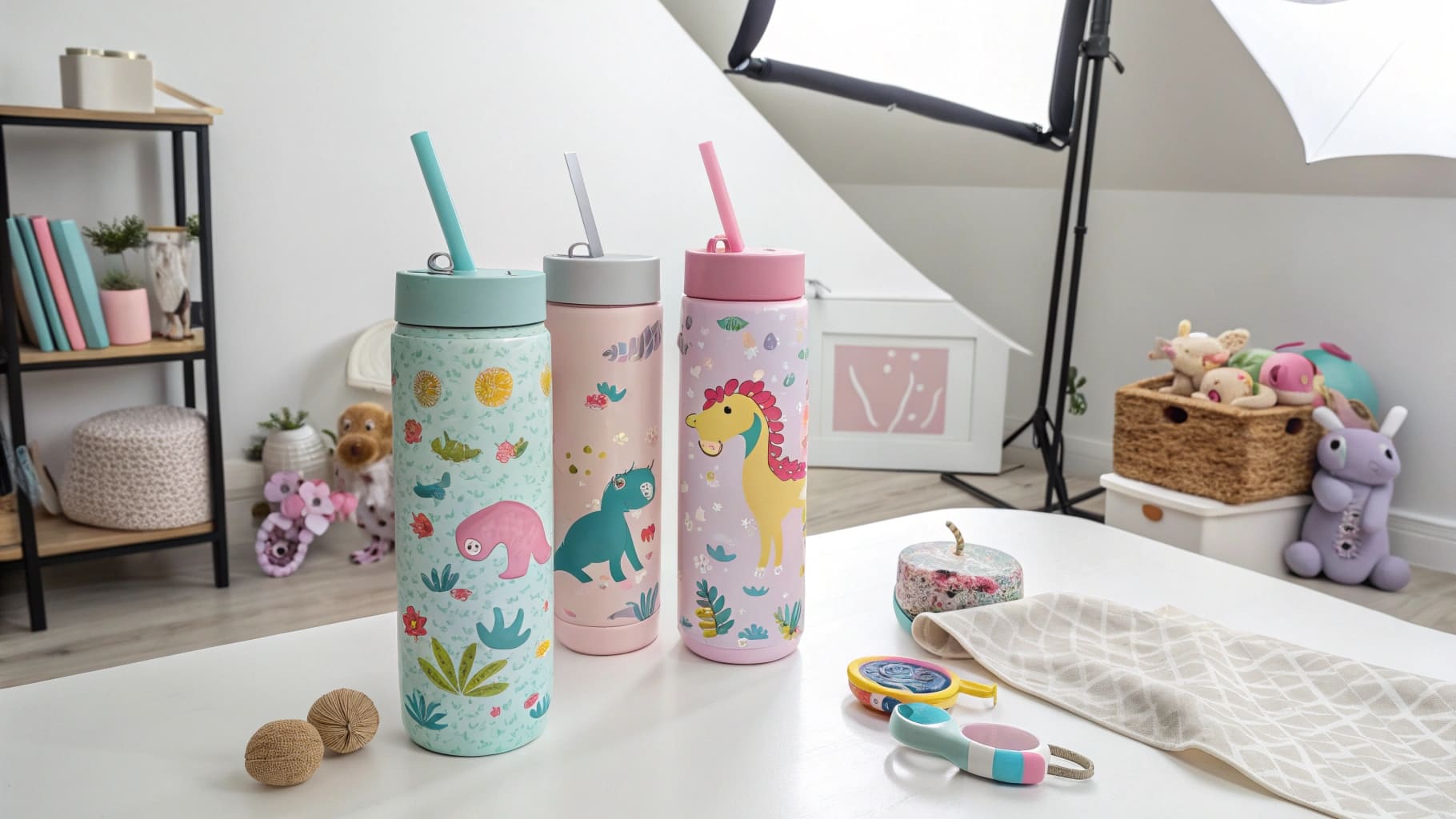
The dental benefit is real but often overstated in product marketing. The bacterial risk is real and almost never mentioned. Both facts belong in your supplier evaluation process.
Antimicrobial Testing for Straw Channels
A straw channel is a narrow, warm, and often wet space. That description fits bacterial biofilm growth well.4 After 30 days of regular use with water and even mild residue from fruit drinks, a straw that has not been properly cleaned can carry bacterial counts that would concern any parent or regulator.
Ask your supplier to run a 30-day use simulation. This means cycling the bottle through daily fill, use, and a standard clean with a brush, then testing the inner straw channel for bacterial colony counts. A clean result here is a selling point. A failed result here is a recall waiting to happen.
| Health Validation Test | What It Checks | Regulatory Relevance |
|---|---|---|
| 30-day bacterial growth simulation | Biofilm in straw channel | FDA food contact, EU food safety |
| BPA-free material verification | Bisphenol A in plastic parts | CPSC, EU REACH |
| FDA food-contact compliance | All beverage-contact materials | Required for US market entry |
| Microplastics release testing | Plastic particle migration into liquid | Emerging EU regulation 2025–2026 |
For 2026, I would add PFAS-free certification to this list. Regulatory bodies in Europe and North America are tightening restrictions on per- and polyfluoroalkyl substances in consumer products5. Getting ahead of this now saves a costly reformulation later and gives you a cleaner product story with premium retail buyers.
Material Safety Documentation
Every plastic part that contacts a beverage needs documentation6. That means the straw, the bite valve, the inner lid gasket, and any coating on the straw itself. A BPA-free claim on a product page is not documentation. A third-party test report from a certified lab is documentation.
| Component | Required Certificate | Accepted Testing Body |
|---|---|---|
| Silicone straw | FDA 21 CFR, EU 10/2011 | SGS, Intertek, BV |
| Bite valve | BPA-free, REACH compliance | SGS, Intertek, BV |
| Lid gasket | FDA food contact, LFGB (EU) | SGS, Intertek, BV |
| Stainless steel body | 18/8 grade verification, no nickel migration | SGS, Intertek, BV |
Ask for certificates that name your specific product model and your supplier's factory. Generic certificates that name a material type but not a product are not useful for your compliance file. I have seen buyers accept those documents and later find out they could not use them during a customs hold.
What Are the 5 Core Quality Tests Every B2B Buyer Should Require?
There are dozens of tests a factory can run. That creates a different problem. When a supplier shows you a long list of tests, it can feel thorough, but it can also hide the fact that the five most important ones were not done properly. Know which five matter most.
These five tests cover the highest-risk failure points for a straw-lid kids bottle in the 2026 market. Each one maps to either a safety risk, a compliance requirement, or a direct return driver. If a supplier cannot provide clear documentation on all five, that is a decision point.
Beyond pass or fail, you need to understand the AQL tier each test is tied to. Not all defects carry the same weight, and a tiered AQL approach lets you balance cost control with child safety without setting an impossibly strict standard for every single item.
AQL Standards and How to Apply Them for Kids Products
AQL stands for Acceptable Quality Limit. It defines the maximum number of defects you will accept in a sampled production batch before you reject the lot. The lower the AQL number, the stricter the standard.
The industry default is AQL 2.5 across all defect types. For a kids product, that default is not good enough on safety items. I recommend a tiered approach for 2026.
| Defect Type | Examples | Recommended AQL |
|---|---|---|
| Critical safety defects | Sharp edges, loose components, choking hazard parts | AQL 1.5 |
| Major functional defects | Leakage, lid misfit, valve failure, straw detachment | AQL 2.5 |
| Minor cosmetic defects | Surface scratches, slight color variation, minor print offset | AQL 4.0 |
This tiered structure means your factory has a stricter target for the things that can hurt a child and more room on things that only affect appearance. It also gives your QC inspector a clear rejection framework during final inspection, which removes the grey area arguments that slow down inspections and delay shipments.
The Five Tests and Their AQL Tier
| Test | What It Measures | Failure Category | AQL Tier |
|---|---|---|---|
| Pull force test | Straw and valve detachment resistance | Critical | 1.5 |
| Leak test | Lid seal integrity under pressure and tilt | Major | 2.5 |
| Flow rate test | Straw delivery rate at temp variation | Major | 2.5 |
| Material migration test | BPA, PFAS, microplastics in liquid contact parts | Critical | 1.5 |
| Dishwasher durability test | Seal and lid performance after 100 cycles | Major | 2.5 |
Write these five tests, their pass criteria, and their AQL tier directly into your purchase order or supplier quality agreement. A verbal agreement with a sales rep does not hold during inspection. A written spec does. Third-party inspection is worth the cost on a first order with any new supplier, because it removes the conflict of interest in self-reported results.
Conclusion
Flow rate, pull force, and tiered AQL are the three pillars of a solid kids straw bottle program. Get all five tests documented, and your 2026 sourcing is on solid ground.
-
"[PDF] Study on mechanical properties of silicone rubber materials used as ...", https://docs.lib.purdue.edu/cgi/viewcontent.cgi?filename=2&article=1137&context=icpns&type=additional. Polymer materials references report that elastomers, including silicone rubbers, change mechanical properties with temperature, with lower temperatures generally increasing stiffness; this supports the mechanism behind reduced straw flexibility in cold conditions. Evidence role: mechanism; source type: paper. Supports: Silicone straws can become stiffer when exposed to cold water, affecting bottle performance.. Scope note: Supports the material behavior generally, not the exact flow-rate change claimed for a specific straw formulation. ↩
-
"Small Parts and Choking Hazard Labeling FAQs | CPSC.gov", https://www.cpsc.gov/FAQ/Small-Parts-and-Choking-Hazard-Labeling-FAQs. The U.S. Consumer Product Safety Commission identifies small detachable parts in children’s products as choking hazards and regulates small parts for young children, supporting the safety concern about detachable bottle components. Evidence role: expert_consensus; source type: government. Supports: Detached straw or bite-valve components can create choking hazards for children.. Scope note: CPSC small-parts rules focus especially on children under three; the source may only contextually support the broader three-to-eight age range. ↩
-
"Wellness Wednesday: Sweet Tooth, Sweeter Smile", https://www.riosalado.edu/news/2024/wellness-wednesday-sweet-tooth-sweeter-smile. Dental health guidance often notes that sipping through a straw can reduce contact between sugary or acidic liquids and tooth surfaces when positioned properly, supporting the mechanism of reduced enamel exposure. Evidence role: mechanism; source type: institution. Supports: Straw use can reduce direct liquid contact with tooth enamel compared with some open-mouth drinking patterns.. Scope note: Applies most directly to sugary or acidic beverages and correct straw placement, not necessarily to plain water or every straw-bottle design. ↩
-
"Microbial Biofilm: A Review on Formation, Infection, Antibiotic ... - PMC", https://pmc.ncbi.nlm.nih.gov/articles/PMC10305407/. Biofilm literature describes moist surfaces and protected microenvironments as favorable for microbial attachment and biofilm development, supporting the biological rationale for testing straw channels. Evidence role: mechanism; source type: paper. Supports: The geometry and moisture conditions inside straw channels can favor bacterial biofilm growth.. Scope note: General biofilm mechanism; contamination levels depend on use, cleaning, beverage type, and material. ↩
-
"Authorized Uses of PFAS in Food Contact Applications", https://www.fda.gov/food/process-contaminants-food/authorized-uses-pfas-food-contact-applications. European Chemicals Agency documentation on the proposed broad PFAS restriction and North American regulatory actions on PFAS document increasing regulatory scrutiny of these substances in consumer and food-contact contexts. Evidence role: historical_context; source type: government. Supports: European and North American regulators are increasing restrictions and scrutiny on PFAS in consumer products.. Scope note: Regulatory scope and implementation timelines vary by jurisdiction and product category. ↩
-
"Food Packaging & Other Substances that Come in Contact with Food", https://www.fda.gov/food/food-ingredients-packaging/food-packaging-other-substances-come-contact-food-information-consumers. Food-contact regulations in the United States and European Union require materials intended to contact food or beverages to comply with applicable compositional, migration, and safety requirements, supporting the need for documentation for beverage-contact plastic components. Evidence role: expert_consensus; source type: government. Supports: Plastic parts that contact beverages should have compliance documentation for food-contact safety.. Scope note: The exact documents required depend on jurisdiction, material type, and supply-chain role. ↩