
Do Hip Flasks Change the Taste of Your Spirits?
You pour a good whiskey into your flask. Then you take a sip. Something tastes off. That metallic hint ruins the whole experience. Here is why that happens.
A high-quality stainless steel hip flask should not change the taste of your spirits at all. The key factors are passivation, interior weld polishing, and the grade of stainless steel used. Flasks made from properly treated 304 or 316 stainless steel are taste-neutral when stored for normal periods of time.1
I have spent years working with buyers who source stainless steel drinkware for retail and corporate markets. The taste question comes up almost every single time. And every single time, the answer leads back to one thing: how the flask was made. A flask is not just a container. It is a product that has to meet food safety standards, pass chemical resistance tests, and perform well in the hands of a real user. If any step in the manufacturing process is skipped or done poorly, the spirit inside will tell you. Let me break this down section by section.
Does the Way a Flask Is Made Affect How Your Drink Tastes?
You buy a flask that looks great on the outside. But after one use, your whiskey tastes like nickels. The problem is not the spirit. The problem is what is happening inside the flask.
Yes, the manufacturing process directly affects taste. Two steps matter most: passivation and interior weld polishing. Without both, even a flask made from real stainless steel can leave a metallic or off taste in your spirits. These are not optional finishing steps. They are the difference between a food-safe product and one that is not.
What Is Passivation and Why Does It Matter?
Passivation is a chemical treatment applied to stainless steel after forming and welding.2 The process removes free iron particles left on the surface during cutting and shaping. When those iron particles stay on the surface, they react with acidic spirits and oxygen. The result is a metallic taste in your drink.
The treatment works by exposing the steel surface to a mild acid solution, usually citric or nitric acid. This pulls the iron off the surface and allows chromium in the steel to form a thin, stable oxide layer. That chromium oxide layer is what makes the steel truly food-safe and taste-neutral.
Here is a simple breakdown of what passivation does:
| Without Passivation | With Passivation |
|---|---|
| Free iron on surface | Iron removed from surface |
| Metallic taste risk | Taste-neutral surface |
| Faster corrosion | Strong corrosion resistance |
| Fails food safety tests | Meets food safety standards |
| No certification available | Passivation certificate issued |
I work with buyers who import into the EU and North America regularly. Both markets have strict food contact material regulations. Buyers in those markets now ask for passivation certificates as a standard part of their import documentation.3 If a supplier cannot provide one, that is a red flag. I always recommend requesting this document upfront, before any order is placed.
Flavored spirits deserve a special note here. Plain vodka or whiskey is chemically stable in stainless steel. But flavored spirits, especially those with fruit-based or organic additives, are more reactive. The organic compounds in those additives interact more aggressively with an improperly passivated surface. This makes certified passivation even more important for buyers whose customers drink flavored products.
Does Weld Quality Inside the Flask Change the Taste?
Most people inspect the outside of a flask. They check the finish, the engraving, the cap. But the inside is where the real quality story is.
Yes, interior weld quality directly affects taste. Rough or unpolished weld seams create small gaps and ridges inside the flask.4 Spirits sit in those gaps. Residue builds up. Oxidation starts. Over time, the contamination from those unpolished areas transfers into the drink.
How Should the Interior of a Flask Be Finished?
A professional manufacturer uses multiple polishing stages on the inside of a flask. Mechanical polishing removes the roughest surface material first. Then electro-polishing is applied. Electro-polishing uses an electrical current in a chemical bath to remove a very thin, even layer of metal from the surface.5 This creates a smoother result than mechanical polishing alone.
Here is why that smoothness matters:
| Surface Type | Residue Risk | Cleanability | Taste Impact |
|---|---|---|---|
| Rough weld, no polish | High | Difficult | Strong metallic taste |
| Mechanical polish only | Medium | Moderate | Mild taste risk |
| Electro-polish finish | Low | Easy | Taste-neutral |
I have seen flask samples from factories that skip electro-polishing to cut costs. Under a magnifier, the interior weld seams look like a rough mountain range. That rough surface is a contamination trap. No amount of rinsing removes what is sitting in those microscopic gaps.
When I review product specifications with buyers, I always include interior finishing standards as a required item. It is one of those details that does not show up in a product photo but shows up immediately in a taste test. Buyers who are sourcing for premium retail or corporate gift markets cannot afford to skip this. One batch of flasks with a bad interior finish can damage a brand's reputation before the product even sells through.
Does Vodka Go Off in a Flask?
You fill a flask on Friday and forget about it until Monday. You wonder if the vodka inside is still good. This is a fair question, and it affects how buyers market and position their flask products.
Plain vodka does not go off inside a properly made stainless steel flask. High-proof spirits are chemically stable. They do not support bacterial growth, and they do not oxidize in the way that wine or beer does. A flask filled with plain vodka and stored at room temperature is safe to drink days later.

What Changes Over Time Inside a Flask?
The spirit itself does not spoil, but a few things do change depending on flask quality and what is inside.
| Spirit Type | Shelf Life in Flask | Risk Factor |
|---|---|---|
| Plain vodka | Several days | Very low |
| Whiskey or bourbon | Several days | Very low |
| Flavored vodka | 1 to 2 days recommended | Medium, due to organic additives |
| Citrus-based spirits | 1 day recommended | Higher acidity increases reactivity |
| Beer or wine | Not recommended | Carbonation and oxidation issues |
The risks go up when the flask is not properly passivated or when the spirit contains organic additives. Flavored vodkas with real fruit extracts carry compounds that react faster with metal surfaces. For those products, I recommend buyers advise their end customers to consume within one to two days and to rinse the flask promptly after use.
Temperature also matters. A flask left in a hot car or in direct sunlight will see faster off-taste development than one stored in a cool, dark environment.6 This is basic chemistry, not a product defect. But it is useful information for buyers who include care instructions in their packaging.
For B2B buyers sourcing flasks for premium markets, the practical answer is this: specify 304 or 316 stainless steel, require certified passivation, and confirm electro-polished interiors. Those three requirements cover the vast majority of taste and preservation concerns across all standard spirit types.
Can You Bring a Metal Flask Through TSA?
You are building a corporate gift program around a branded flask. Your client asks whether their customers can travel with it. This question comes up more often than most suppliers expect.
Yes, you can bring an empty metal flask through TSA airport security checkpoints. Metal flasks are not restricted items. They go through the X-ray machine the same way a metal water bottle does. The restriction applies to liquids, not to the flask itself.
What Do Buyers Need to Know About Flask Travel Rules?
The TSA liquid rule applies to any container carried in carry-on luggage. A flask filled with spirits is subject to the standard 100ml per container limit inside a one-liter clear bag. A flask that holds more than 100ml must either be emptied before the security checkpoint or placed in checked luggage.
Here is a quick reference table for travelers:
| Flask Status | Carry-On Allowed | Notes |
|---|---|---|
| Empty flask | Yes | No restrictions |
| Flask with liquid under 100ml | Yes | Must follow standard liquid rules |
| Flask with liquid over 100ml | No (carry-on) | Must go in checked luggage |
| Flask in checked luggage | Yes | No volume restriction |
I find that corporate gift buyers and promotional products buyers often include travel use as part of their product pitch. When I supply product documentation to those buyers, I include a simple FAQ that covers the TSA question. This adds real value without adding cost. Buyers appreciate it because it saves their marketing team time.
The rules I describe above apply to US domestic and international flights departing from the US under TSA guidelines. Rules in other countries vary. Buyers sourcing for international markets should confirm local aviation authority rules. But in most markets, an empty flask passes through security without any issue.
What Is the Best Tasting Liquor for a Flask?
You want to recommend the right spirit to your buyers' customers. Not every spirit performs the same way in a stainless steel flask. Some hold up better than others.
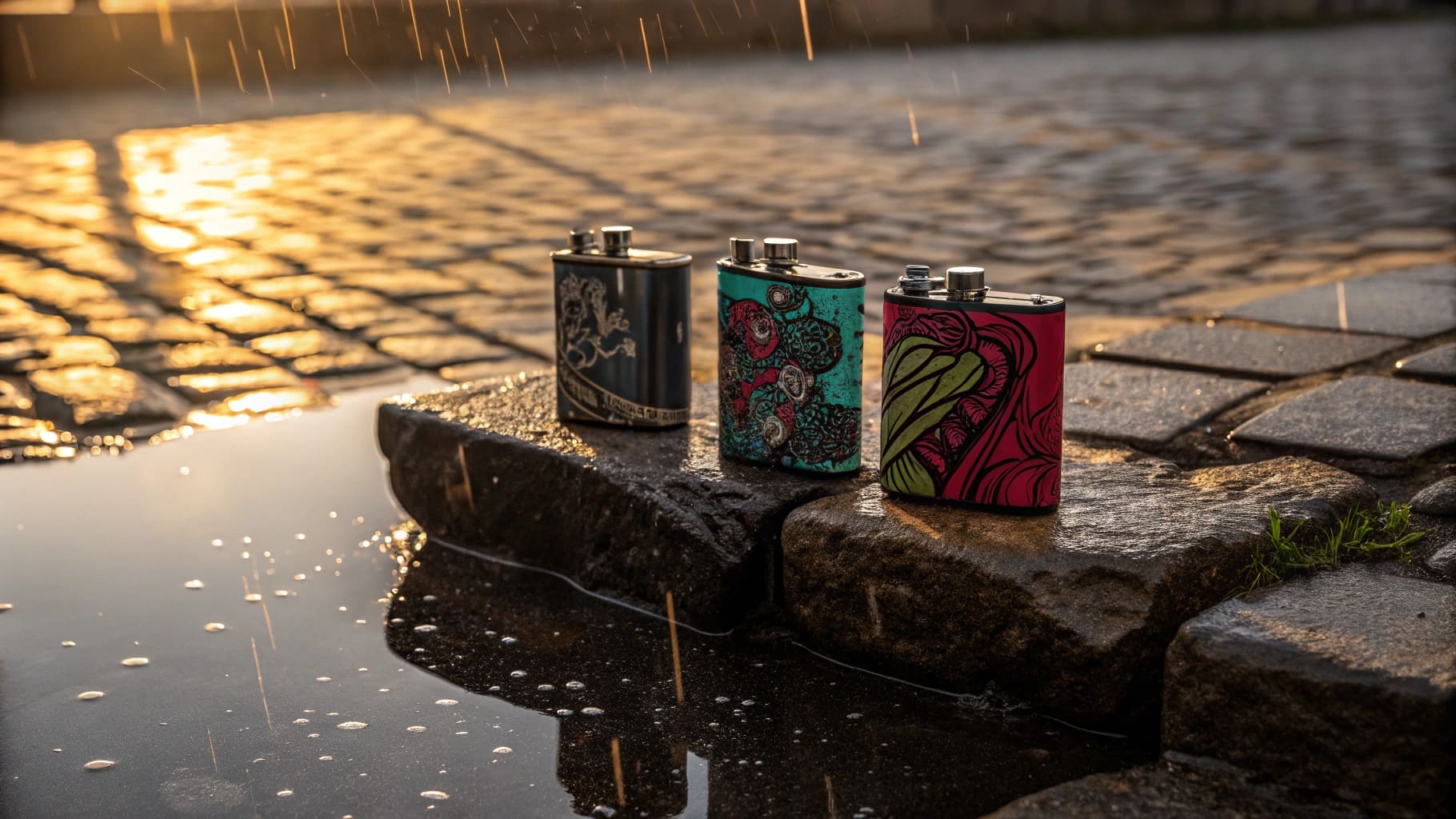
The best spirits for a stainless steel flask are plain high-proof liquors, especially whiskey, bourbon, rum, and plain vodka. These spirits are stable, non-reactive with properly passivated steel, and hold their character well over a short storage period.
Which Spirits Work Best and Which Should Be Avoided?
The main factor is acidity and the presence of organic additives. Plain distilled spirits have a simple chemical profile. They do not react aggressively with stainless steel. Spirits with added flavors, citrus components, or low alcohol content behave differently.
| Spirit | Flask Performance | Notes |
|---|---|---|
| Whiskey / Bourbon | Excellent | Stable, no taste change |
| Plain Vodka | Excellent | Neutral and stable |
| Dark Rum | Excellent | Rich flavor holds well |
| Gin | Good | Some botanical notes may soften |
| Flavored Vodka | Fair | Consume within one to two days |
| Citrus-based spirits | Fair | Higher acidity, use short-term |
| Wine | Not recommended | Oxidizes quickly, poor flavor |
| Beer / Cider | Not recommended | Carbonation lost, flat taste |
The 2026 market is moving toward more sophisticated buyers on both sides of the supply chain. End consumers are asking better questions about material safety and taste neutrality. B2B buyers are responding by requesting more detailed quality documentation from their suppliers. I now see buyers asking for taste-neutrality testing reports alongside standard certificates. Suppliers who can provide transparent documentation about passivation processes and interior finishing protocols have a clear advantage in premium segments.
For buyers in the corporate gifting space, pairing a high-quality branded flask with a short guide on the best spirits to use is a practical way to add perceived value to the product.
Conclusion
Flask taste issues come down to manufacturing quality. Proper passivation, polished interior welds, and the right stainless steel grade solve most problems before they start.
-
"[PDF] FDA Food Code 2022", https://www.fda.gov/media/164194/download?utm_source=chatgpt.com. Materials guidance for food-contact equipment describes austenitic stainless steels such as 304 and 316 as widely used for corrosion-resistant food and beverage contact surfaces; this supports their suitability for neutral short-term storage when surfaces are properly finished and cleaned. Evidence role: general_support; source type: government. Supports: Properly treated 304 or 316 stainless steel flasks should not alter spirits during normal short-term storage.. Scope note: Such sources support material suitability but may not directly test taste change in hip flasks specifically. ↩
-
"Passivation (chemistry) - Wikipedia", https://en.wikipedia.org/wiki/Passivation_(chemistry). ASTM passivation standards define passivation as a chemical treatment of stainless steel, commonly after fabrication, intended to remove exogenous iron and enhance the passive surface condition. Evidence role: definition; source type: institution. Supports: Passivation is a post-fabrication chemical treatment used on stainless steel.. Scope note: The standard defines industrial passivation generally rather than hip-flask manufacturing specifically. ↩
-
"Regulatory Status of Components of a Food Contact Material - FDA", https://www.fda.gov/food/packaging-food-contact-substances-fcs/determining-regulatory-status-components-food-contact-material. Import and food-contact compliance guidance commonly requires documentation demonstrating material conformity and manufacturing controls; this contextualizes why passivation certificates may be requested in commercial sourcing. Evidence role: general_support; source type: government. Supports: Commercial buyers may request passivation documentation as part of food-contact compliance records.. Scope note: Public regulatory sources may support the need for compliance documentation but may not show that passivation certificates are universally standard buyer practice. ↩
-
"[PDF] usda guidelines for the sanitary design and fabrication of dairy ...", https://www.ams.usda.gov/sites/default/files/media/DairyEquipmentReviewGuidelines.pdf. Hygienic design literature identifies rough welds, crevices, and surface irregularities as sites where residues and microorganisms can accumulate, supporting the concern about unpolished internal weld seams. Evidence role: mechanism; source type: institution. Supports: Rough or unpolished weld seams can create crevices and ridges that trap residues.. Scope note: The source would support hygienic and cleanability risks generally, not necessarily taste transfer in consumer hip flasks. ↩
-
"Electrochemical Polishing of Austenitic Stainless Steels - PMC - NIH", https://pmc.ncbi.nlm.nih.gov/articles/PMC7321480/. Materials-processing references define electropolishing as an electrochemical process that removes a thin surface layer from metal in an electrolyte, supporting the article’s description of the finishing method. Evidence role: definition; source type: education. Supports: Electropolishing removes a thin surface layer using electrical current in a chemical bath.. Scope note: This supports the process definition, not the comparative taste outcome of electropolished flasks. ↩
-
"Factors Affecting Rates of Reaction - Student Academic Success", https://www.monash.edu/student-academic-success/chemistry/rates-of-chemical-reactions/factors-affecting-rates-of-reaction. Chemical kinetics sources describe how higher temperatures generally increase reaction rates, offering contextual support for faster development of off-flavors or corrosion-related reactions under hot storage conditions. Evidence role: mechanism; source type: education. Supports: Higher temperatures can accelerate chemical reactions that may contribute to off-taste formation.. Scope note: This is general chemical-kinetics support and may not directly measure off-taste development in stainless steel flasks. ↩