
Can Personalized Insulated Tumblers Scale in 2026?
The personalized drinkware market is growing fast. But most B2B buyers are still guessing. If you miss the right supplier setup now, you will lose shelf space in 2026.
Personalized insulated tumblers can scale in 20261, but only if two systems work together: data merge technology that links customer design files to production lines, and a quality assurance plan with clear checkpoints at material, customization, and insulation stages.
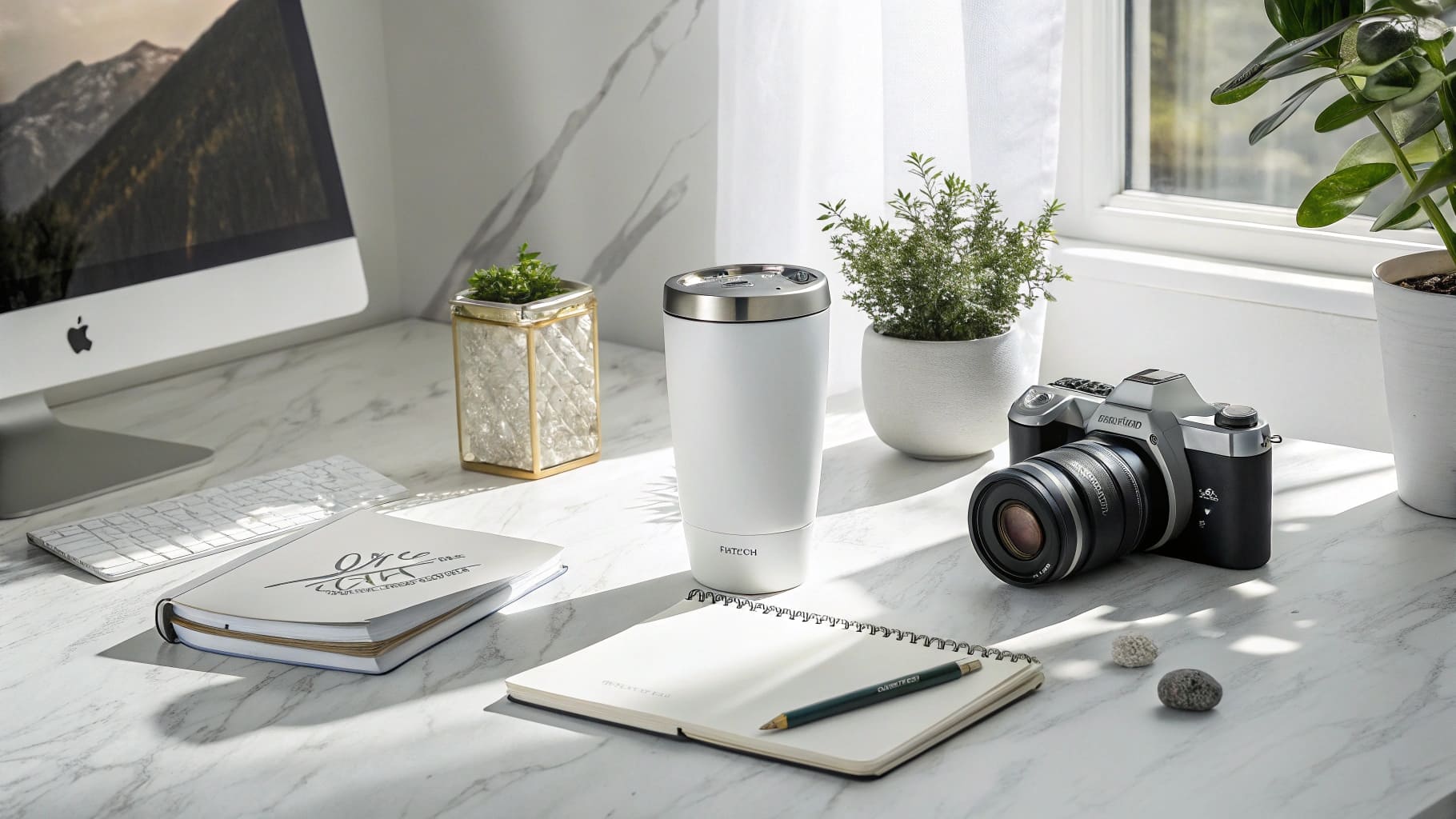
Scaling personalized tumblers is not just a production challenge. It is a system challenge. The buyers who get this right in 2026 will build a real advantage. The buyers who ignore it will face delays, returns, and lost customers. Let me break this down for you section by section, so you can walk away with a clear picture of what to look for and what to avoid.
What Category Would Tumblers Be Under?
You have sourced drinkware before. But you may have run into this problem: different suppliers list the same product under different categories, and that creates confusion in your procurement process.
Tumblers fall under the drinkware or beverage container category. More specifically, they sit within the insulated drinkware segment. This segment connects three markets: promotional products, lifestyle accessories, and functional kitchenware.2
Understanding which category tumblers belong to matters more than it sounds. When you are working with a new supplier, the category determines which certifications apply, which testing standards are relevant, and which compliance requirements you need to meet3 for your target market.
Here is how the category breakdown looks in practice:
| Category Level | Label |
|---|---|
| Top Category | Drinkware / Beverage Containers |
| Mid Category | Insulated Drinkware |
| Product Type | Stainless Steel Tumbler |
| Market Application | Promotional, Lifestyle, Kitchenware |
For a B2B buyer like you, operating in Canada and distributing under your own brand, knowing this structure helps you ask the right questions during supplier vetting. You should ask whether the supplier lists their tumblers under promotional goods or consumer goods, because that changes how they handle logo placement, packaging, and even quality inspection standards. Promotional-grade suppliers are used to variable data customization. Consumer goods suppliers are more focused on retail-ready finishing. The best suppliers in 2026 will be able to do both, and they will have separate production lines for each. At Icobottle, we work with buyers across both segments, and the category question comes up in almost every first conversation. Getting this clear early saves weeks of back-and-forth later.
What's the Difference Between a Cup and a Tumbler?
You have probably used both words to describe the same product in a supplier conversation. That small mix-up can lead to the wrong sample, the wrong spec sheet, and the wrong production run.
A cup typically has a handle and is designed for simple, short-term use. A tumbler is handleless, cylindrical, and built for temperature retention over a long period.4 The key engineering difference is the double-wall vacuum insulation inside the tumbler body.
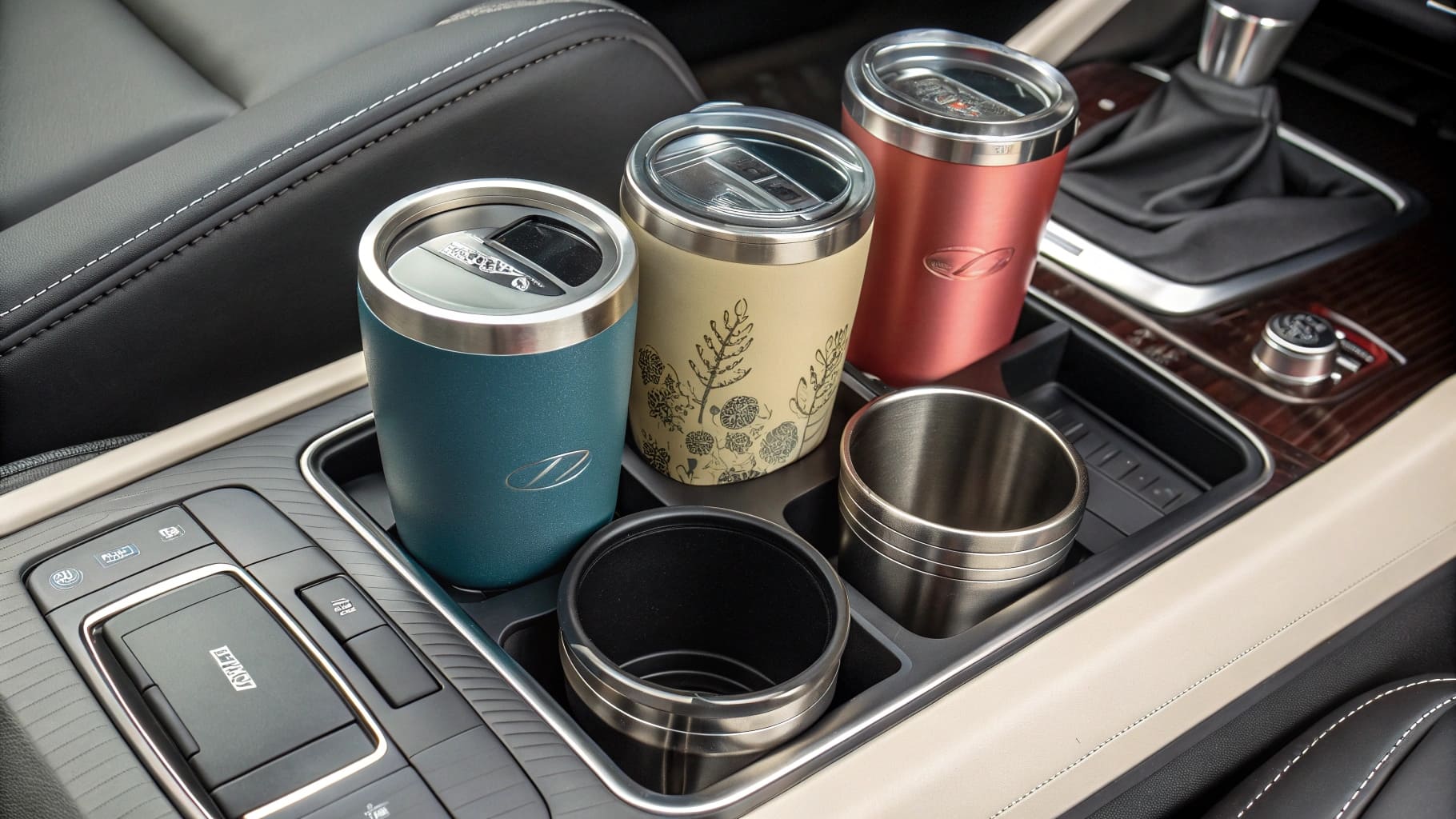
This difference is not just about shape. It affects material choice, production process, and the performance promises you can make to your customers.
Here is a side-by-side view:
| Feature | Cup | Tumbler |
|---|---|---|
| Handle | Yes | No |
| Wall Construction | Single wall | Double-wall vacuum |
| Temperature Retention | Low | High (6-12 hours typical) |
| Main Use Case | Short-term, stationary | On-the-go, extended use |
| Common Material | Ceramic, plastic, basic steel | 304 or 316 stainless steel |
| Customization Complexity | Lower | Higher |
For B2B buyers, the tumbler wins in almost every commercial scenario. Your end customers want a product they can carry to work, to the gym, and on a commute. A cup does not do that job. A well-made insulated tumbler does. When you are sourcing for your brand, you want to make sure your supplier is building tumblers with true vacuum insulation, not just double-walled construction without the vacuum seal. The vacuum seal is what drives performance. I have seen buyers receive samples that look identical but perform completely differently, because one had a proper vacuum seal and the other did not. Always ask for insulation performance test data before you confirm any bulk order.
Can You Put Hot Coffee in a Tumbler?
Some buyers hesitate to position tumblers as hot beverage products. They worry about safety, about leaks, about customer complaints. That hesitation is costing them sales.
Yes, you can put hot coffee in a quality insulated tumbler. A stainless steel tumbler with double-wall vacuum insulation keeps hot beverages at drinking temperature for 6 to 8 hours. The outer wall stays cool to the touch because the vacuum layer blocks heat transfer.5
Hot coffee performance is one of the strongest selling points for insulated tumblers in 2026. But the claim only holds up if the supplier is building to the right standard.
Here is what the performance data should look like from a compliant supplier:
| Performance Standard | Minimum Acceptable Result |
|---|---|
| Hot retention | 6 hours at or above 140°F / 60°C |
| Cold retention | 12 hours at or below 50°F / 10°C |
| Exterior surface temp (hot fill) | Should not exceed ambient +5°F |
| Vacuum seal integrity | Zero pressure loss over 24 hours |
| Material grade | 304 or 316 food-grade stainless steel |
These are not just marketing numbers. They are the checkpoints that your quality assurance plan should include before any shipment leaves the factory. I work with buyers who have received shipments that failed hot retention tests after arrival, because no one verified the vacuum seal at the production stage. By then, the damage is done. You are dealing with returns, customer complaints, and a damaged brand reputation. The fix is simple: build seal integrity testing into your supplier agreement as a required step before goods are packed. Any serious supplier will agree to this. If they push back, that is a signal to walk away.
How Do Data Merge and QA Plans Support Scaling in 2026?
You want to grow your personalized tumbler line. But the more SKUs you add and the more individual customization you offer, the harder it gets to keep quality consistent. This is where most scaling attempts fall apart.
Data merge systems connect customer design files directly to automated production lines. This removes manual steps, cuts errors, and speeds up order processing. Combined with a structured QA plan, this is how personalized production scales without quality dropping.
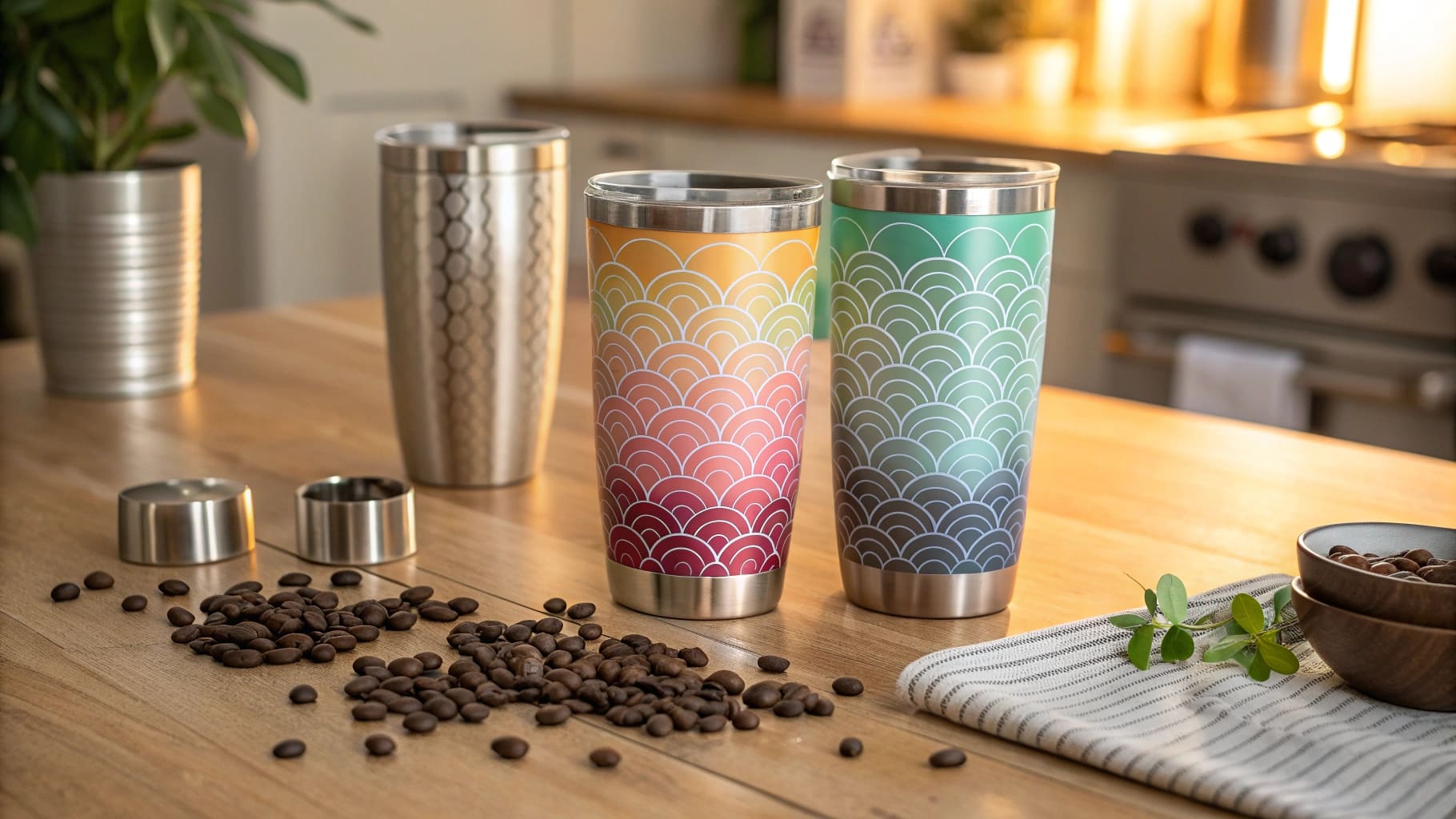
Let me walk through both systems in detail, because understanding how they connect is what separates suppliers who can grow with you from suppliers who will slow you down.
Data Merge Technology
Data merge is the process of taking individual customer data, logos, colors, and text, and feeding it directly into the production workflow. Instead of a team manually sorting files and matching them to orders, the system does it automatically. This is what makes it possible to run 500 personalized units in a single batch without mixing up designs.
In 2026, the suppliers who will win B2B partnerships are the ones running this kind of connected system. They can handle variable data printing and laser engraving across bulk orders without slowing down lead times.
QA Checkpoints for Personalized Tumblers
| QA Stage | What to Check |
|---|---|
| Material Verification | Confirm 304 or 316 stainless steel grade before production starts |
| Customization Precision | Laser engraving depth, powder coating adhesion, color match to approved proof |
| Vacuum Seal Integrity | Pressure test each batch before packing |
| Final Visual Inspection | Check for scratches, logo alignment, lid fit |
| Pre-Shipment Report | Full batch results shared with buyer before goods leave factory |
What B2B Buyers Should Evaluate
When you are comparing suppliers for personalized tumbler orders, here are the specific numbers and capabilities to ask about:
| Evaluation Point | What to Ask For |
|---|---|
| Minimum Order Quantity | 100 to 500 units for personalized orders is standard |
| Production Lead Time | 15 to 25 days for custom runs |
| Digital Proofing | Can they send a digital proof before production starts? |
| Real-Time Tracking | Can you monitor production status without chasing emails? |
| Variable Data Capacity | Can they handle individual customization within a bulk order? |
I have worked with buyers who tried to scale personalized orders with suppliers who had no data merge system. Every order required manual file handling. Every batch had a higher error rate. And every delay pushed them past their peak sales window. In 2026, that approach will not work. The market is moving too fast. You need a supplier who has built the infrastructure to match your growth pace, not one who is figuring it out as your order sits in a queue.
Conclusion
Personalized insulated tumblers can scale in 2026. The buyers who succeed will choose suppliers with data merge systems, clear QA checkpoints, and proven hot retention performance. Start your vetting process now.
-
"Implementation of mass customization for competitive advantage in ...", https://pmc.ncbi.nlm.nih.gov/articles/PMC9120808/. Research on mass customization and digitally connected manufacturing supports the proposition that personalized products can be scaled when order data, production workflows, and quality controls are integrated; the evidence is conceptual rather than specific to insulated tumblers in 2026. Evidence role: general_support; source type: paper. Supports: Personalized insulated tumblers can scale in 2026 if production data systems and QA controls are coordinated.. Scope note: The source is likely to support the manufacturing principle, not a direct forecast for tumblers in 2026. ↩
-
"Drinkware Promotional Products Guide - Graphic Solutions Group", https://www.gsghome.com/blog-post/drinkware-promotional-products-guide/. Industry classification and retail-category sources show that insulated tumblers are sold across promotional merchandise, personal lifestyle goods, and kitchen or housewares channels; the evidence supports overlap across markets, not a fixed three-part taxonomy. Evidence role: general_support; source type: institution. Supports: Insulated tumblers are positioned across promotional products, lifestyle accessories, and kitchenware markets.. Scope note: The three-market framework is an analytical grouping by the article and may not appear exactly in one source. ↩
-
"Regulatory Status of Components of a Food Contact Material - FDA", https://www.fda.gov/food/packaging-food-contact-substances-fcs/determining-regulatory-status-components-food-contact-material. Government product-safety and food-contact guidance explains that applicable testing and compliance obligations depend on product type, material, use, and target market; this supports the compliance logic but does not list all tumbler-specific requirements. Evidence role: general_support; source type: government. Supports: Product category and intended use affect applicable certifications, testing standards, and compliance requirements.. Scope note: Regulatory requirements vary by jurisdiction and product design. ↩
-
"Tumbler (glass) - Wikipedia", https://en.wikipedia.org/wiki/Tumbler_(glass). Standard dictionary or encyclopedic definitions describe a tumbler as a flat-bottomed drinking vessel, often without a handle; additional product-standard or thermos-vessel sources contextualize modern insulated tumblers as designed for beverage temperature retention. Evidence role: definition; source type: encyclopedia. Supports: A tumbler is generally a handleless drinking vessel, and insulated tumblers are designed for temperature retention.. Scope note: Traditional definitions may cover non-insulated tumblers and may not include modern thermal-performance claims. ↩
-
"Vacuum flask - Wikipedia", https://en.wikipedia.org/wiki/Vacuum_flask. Physics and engineering explanations of vacuum flasks state that the evacuated layer between walls reduces conductive and convective heat transfer, which helps limit heat reaching the exterior surface; the support is mechanistic and does not guarantee a specific surface temperature for all products. Evidence role: mechanism; source type: education. Supports: A vacuum layer reduces heat transfer to the outer wall of an insulated tumbler.. Scope note: Exterior temperature can still vary with lid design, wall thickness, ambient conditions, and fill temperature. ↩