
Are Flask Funnels and Set Configurations Worth the Attention for OEM Buyers?
If you have ever received a product return because of something as small as spilled whiskey, you know the real cost of small details. One overlooked component can ruin a customer's first impression and your brand's reputation.
A flask set that includes a properly sized funnel, a matching finish, and solid carton packaging is not just a nice bundle. It is a complete solution that reduces returns, builds brand trust, and gives you a stronger margin when selling into North American and European markets.
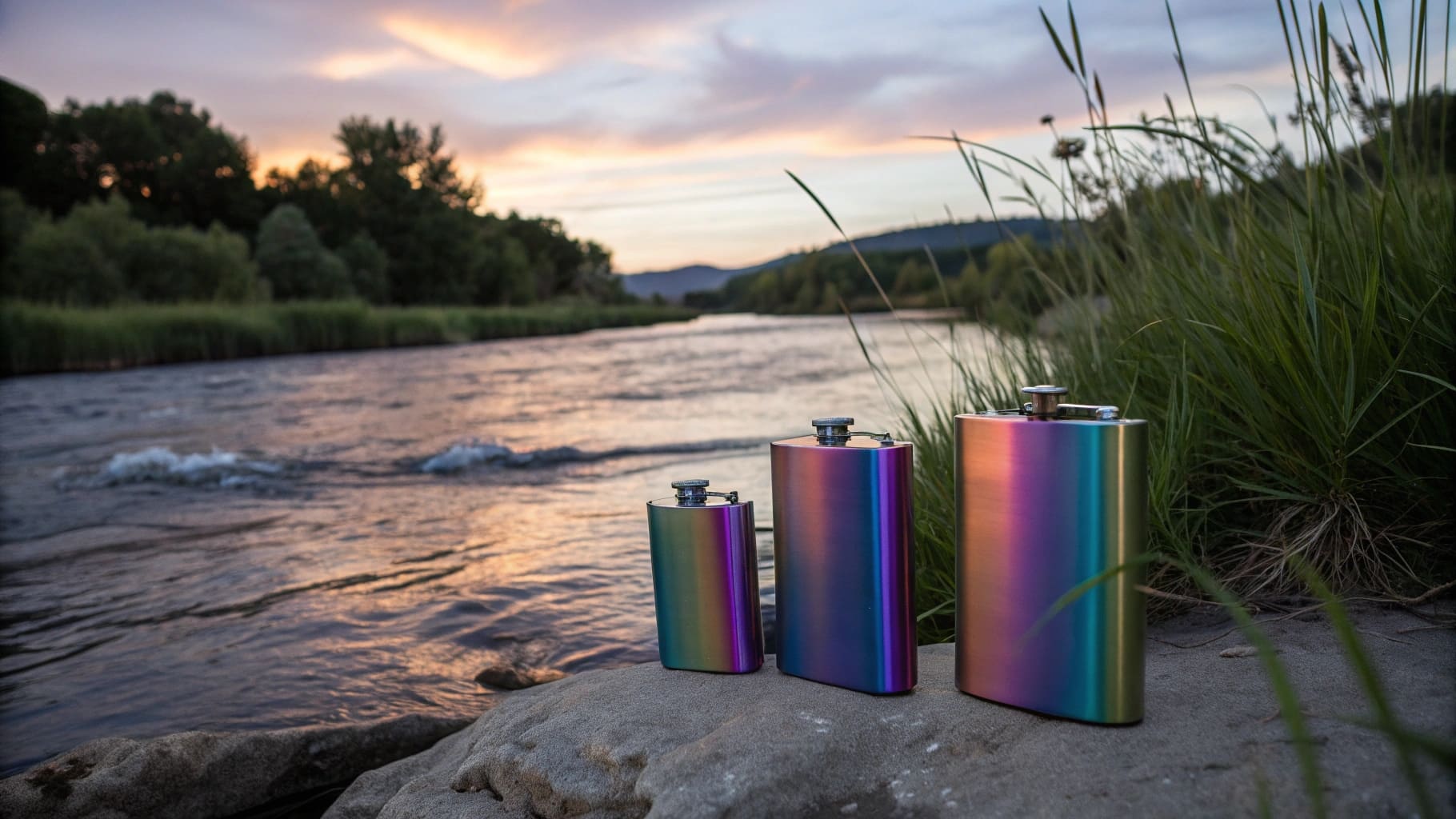
Most B2B buyers focus on the flask itself when placing OEM orders. That is understandable. But the buyers who come back to me with repeat orders are almost always the ones who paid attention to the full set — the funnel, the finish consistency, and how the whole thing arrives at the warehouse. I want to walk you through each of these areas so you can make smarter sourcing decisions.
Do You Need a Funnel for a Flask?
You have probably filled a flask without a funnel at least once. It is messy, it wastes product, and it makes a premium item feel cheap the moment someone uses it for the first time.
A funnel is not optional if you want your customers to have a clean experience. Standard flask apertures range from 15mm to 25mm in diameter.1 Without a funnel, most users will spill. With one that is properly sized, the fill process is simple and clean. A funnel turns a single-use test into a long-term habit.

Let me break down why this matters from a sourcing standpoint.
The flask mouth size drives everything. If your flask has a 20mm opening, the funnel's insertion diameter should sit between 18mm and 19mm. That range allows the funnel to sit inside the flask neck without falling in or popping out during use. Too loose and liquid bypasses the funnel. Too tight and the user struggles to insert it, which creates frustration and potential damage to the flask lip.
Here is a quick reference table for common flask and funnel pairings:
| Flask Mouth Diameter | Funnel Insertion Diameter | Fit Type |
|---|---|---|
| 15mm | 13–14mm | Narrow fit |
| 20mm | 18–19mm | Standard fit |
| 25mm | 22–23mm | Wide fit |
Beyond sizing, the funnel material matters. A stainless steel funnel that matches the flask body signals quality.2 A plastic funnel thrown into the same box as a brushed 304 stainless steel flask looks like an afterthought. Your end customers will notice. Your distributors will notice even faster.
When I work with OEM buyers on flask sets, I always ask them to confirm the aperture spec before we finalize any tooling or sample orders. Getting this wrong at the development stage costs far more than getting it right at the start.
What Is the Best Liquor to Carry in a Flask?
Your customers are going to fill their flasks with something. If your product cannot handle what they put inside, you will hear about it in reviews and returns. This is not a small concern for OEM buyers who are building a brand around their flask line.
Whiskey, bourbon, and vodka are the three most common choices for flask users.3 All three are high-proof spirits, and all three interact with the interior surface of the flask in different ways depending on the material. A food-grade stainless steel interior, specifically 304 or 316 grade, handles all three without any metallic taste transfer.4
Here is what I tell buyers who ask me about this:
The liquor does not damage a good stainless steel flask. What damages the experience is when the flask is made from lower-grade steel or has an interior weld that is not fully polished. Rough interior welds trap residue. Residue creates off-flavors. Off-flavors generate negative reviews, and negative reviews kill your reorder cycle.
Let me compare the two most common grades used in OEM flask production:
| Steel Grade | Corrosion Resistance | Taste Neutrality | Common Use Case |
|---|---|---|---|
| 304 | Good | Very good | Standard flask sets |
| 316 | Excellent | Excellent | Premium flask sets |
For most North American and European markets, 304 is the practical choice. It gives you a clean taste profile, strong corrosion resistance, and a cost structure that keeps your margins healthy. 316 is a better fit if you are positioning the product as a premium item and want to highlight the marine-grade specification5 in your marketing.
Beyond the steel grade, wall thickness plays a role in how long the flask maintains the temperature of what is inside. A 1.0mm wall is standard for most mid-range sets. A 1.2mm wall adds weight and perceived quality, which can support a higher retail price point.
One more thing worth noting: oils and cream-based liqueurs are not good for flask storage.6 They leave residue that is difficult to clean, especially in a narrow-neck design. Your product instructions and packaging should communicate this clearly to protect the customer experience and reduce support inquiries.
What's the Best Flask to Buy?
This is the question your end customer is typing into Google before they find your product. As a B2B buyer, your job is to make sure what lands in their hands answers that question with a clear yes.
The best flask is the one that holds up to daily use, looks consistent across the full set, and arrives in packaging that makes the product easy to understand and easy to trust. Finish quality and carton design are the two factors that separate a reliable OEM product from one that creates problems downstream.

I have seen buyers focus entirely on the flask spec and treat the funnel and carton as secondary items. That thinking costs them in three ways.
First, finish inconsistency between the flask and funnel signals poor quality control. If the flask has a brushed finish and the funnel has a slightly different grain direction or sheen, it looks like two parts from two different production runs. That signals to your buyer that you are not running a tight operation.
Second, carton packaging is a commercial tool, not just a protective shell. Here is what I mean:
| Packaging Element | Function | Impact on Buyer Decision |
|---|---|---|
| Individual compartments | Prevents scratching during shipping | Reduces returns |
| Foam inserts | Protects finish on both flask and funnel | Protects brand perception |
| Material grade label | Communicates 304 or 316 spec | Builds product confidence |
| Capacity callout | Displays volume (e.g., 6oz, 8oz) | Speeds up purchasing decision |
| Certification symbols | BPA-free, food-grade markers | Meets EU and North American expectations |
Third, a complete set with solid packaging commands a better price. A standalone flask with a loose funnel in a plain brown box is a commodity. A matched set in a presentation carton with clear spec labeling is a branded product. The price difference between the two can be significant, and the return rate on the second one is lower.
For European markets specifically, packaging that highlights recyclability and food-safe certification is not a bonus. It is an expectation.7 North American buyers, particularly in Canada and the United States, are also looking for BPA-free language and clean material disclosures. If your carton does not speak to these points, your distributors may hesitate even if the flask itself is excellent.
When I help OEM buyers finalize a flask set, I always review the carton design as part of the product sign-off. It is a step that most factories will not push you to take, but it is one that directly affects how fast your product moves once it reaches the shelf.
Conclusion
A good flask set is more than the flask. Funnel sizing, finish matching, and carton design together determine whether your OEM product earns repeat orders or generates returns.
-
"Quilted Funnel Neck Sweatshirt - Hillsdale College", https://shop.hillsdale.edu/products/women-quilted-funnel-neck-league-smoke. A neutral product-dimension or design reference should document typical hip-flask mouth diameters, supporting the stated dimensional range for common flask apertures. Evidence role: general_support; source type: institution. Supports: Common flask mouth apertures are typically between 15 mm and 25 mm in diameter.. Scope note: This would support typical market dimensions rather than establish a formal international standard for flask openings. ↩
-
"Effects of Design Aesthetics on the Perceived Value of a Product", https://pmc.ncbi.nlm.nih.gov/articles/PMC8359925/. Research on product aesthetics and perceived quality supports that visual-material consistency and finish coherence can influence consumer quality judgments. Evidence role: expert_consensus; source type: paper. Supports: Matching material and finish between flask and funnel can improve perceived product quality.. Scope note: The evidence would be contextual consumer-perception support, not flask-specific proof. ↩
-
"[PDF] Report Name:Distilled Spirits Market Brief - USDA/FAS", https://apps.fas.usda.gov/newgainapi/api/Report/DownloadReportByFileName?fileName=Distilled%20Spirits%20Market%20Brief_Sofia_Bulgaria_02-20-2021. A spirits-consumption dataset or industry-neutral survey can show the relative popularity of whiskey, bourbon, and vodka among distilled spirits consumers, providing contextual support for their prominence as flask contents. Evidence role: statistic; source type: institution. Supports: Whiskey, bourbon, and vodka are commonly consumed spirits and are plausible common choices for flask users.. Scope note: General spirits-consumption data may not directly measure what users put in hip flasks. ↩
-
"Stainless Steel Leaches Nickel and Chromium into Foods During ...", https://pmc.ncbi.nlm.nih.gov/articles/PMC4284091/. Materials and food-contact references document that AISI 304 and 316 stainless steels are widely used in food and beverage equipment because of their corrosion resistance and low reactivity, supporting their suitability for contact with distilled spirits. Evidence role: expert_consensus; source type: institution. Supports: Food-grade 304 or 316 stainless steel is suitable for contact with whiskey, bourbon, and vodka and is unlikely to affect taste when properly manufactured.. Scope note: This supports material suitability but may not directly prove absence of metallic taste in every flask construction. ↩
-
"Marine grade stainless - Wikipedia", https://en.wikipedia.org/wiki/Marine_grade_stainless. Materials references describe 316 stainless steel as containing molybdenum and having improved resistance to chloride corrosion, which explains its common association with marine environments. Evidence role: definition; source type: education. Supports: 316 stainless steel is commonly associated with marine-grade corrosion resistance.. Scope note: The evidence supports the marine-grade characterization, not the marketing conclusion that it is always the better premium choice. ↩
-
"[PDF] Missouri Food Code", https://health.mo.gov/safety/foodsafety/pdf/missourifoodcode.pdf. Food-safety and cleaning guidance on high-fat or dairy-based liquids can support that such products leave residues and may require more thorough cleaning than distilled spirits in narrow containers. Evidence role: general_support; source type: government. Supports: Oily and cream-based liquids are less suitable for storage in narrow-neck flasks because they can leave residues that are difficult to clean.. Scope note: The evidence would support cleaning and residue concerns generally, not necessarily a flask-specific prohibition. ↩
-
"EU - Labeling/Marking Requirements", https://www.trade.gov/country-commercial-guides/eu-labelingmarking-requirements. EU legislation on packaging waste and food-contact materials establishes regulatory expectations around packaging recyclability, material information, and food-contact compliance, supporting the importance of these disclosures in European markets. Evidence role: historical_context; source type: government. Supports: European markets place strong regulatory emphasis on recyclable packaging and food-safe material compliance.. Scope note: Regulatory sources establish compliance expectations but do not prove that every distributor requires these claims on retail cartons. ↩