
How to Price Insulated Tumblers in 2026: MOQ Tiers, EXW/FOB, and Margins
Pricing tumblers wrong kills your margins before you even start selling. Most buyers focus only on unit cost and miss the bigger picture completely.
Insulated tumbler pricing in 2026 depends on four main factors: MOQ tier, Incoterms (EXW vs. FOB), customization depth, and landed cost. At 500 pieces, a standard 20oz tumbler runs $6–$8 EXW. At 10,000+ pieces, that drops to $3.80–$5. Smart buyers calculate total landed cost first, then set their margins.
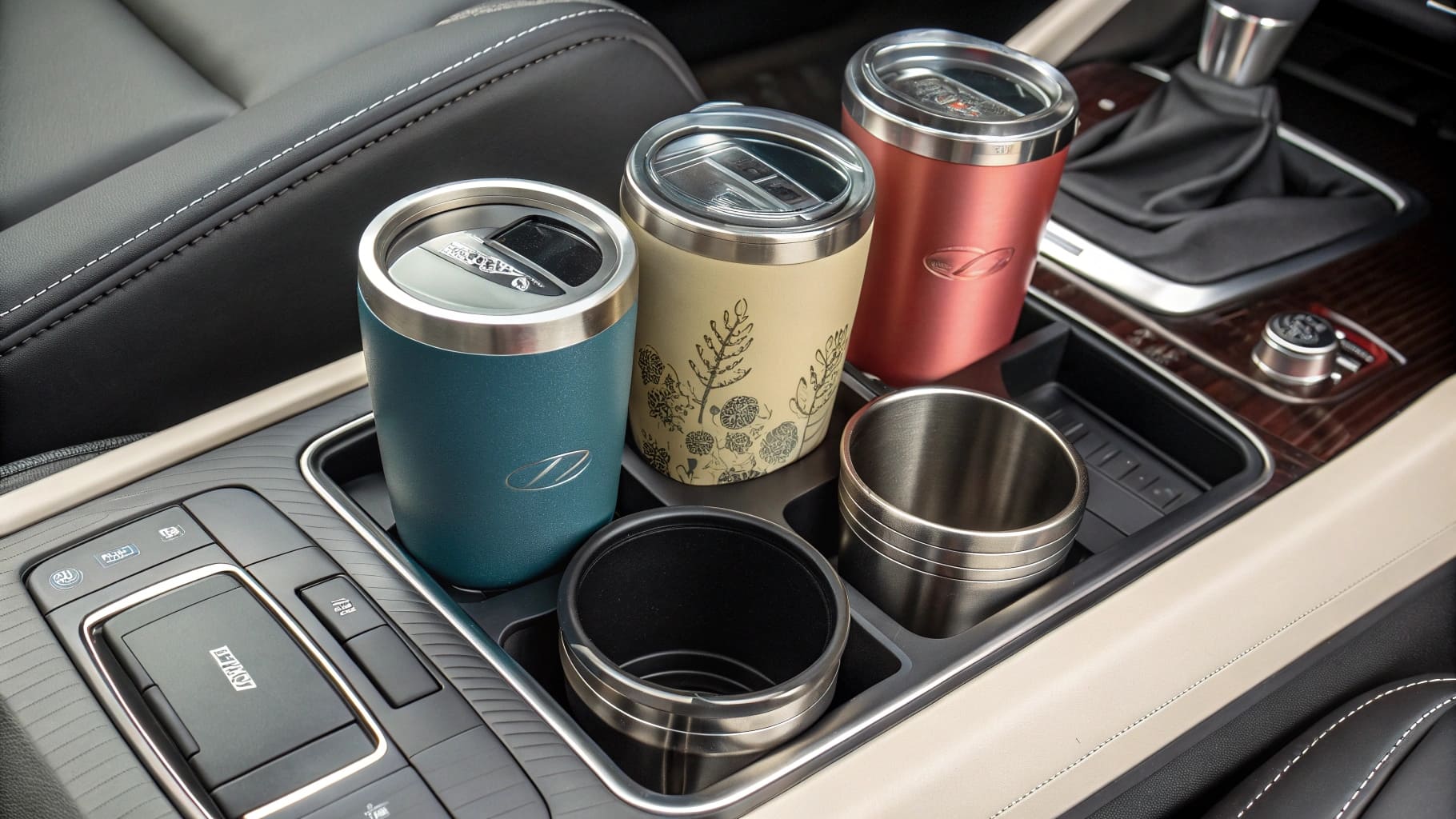
I have spent years working with buyers across North America and Europe. One thing I see again and again is this: buyers lock in a price from a supplier, feel good about the deal, then get hit with freight, duties, and compliance fees they never planned for. By then, the margin is gone. This article breaks down how tumbler pricing actually works in 2026, so you can build a real cost model before you commit to a purchase order.
How Many Ounces Do Tumblers Hold?
Walk into any product line meeting and someone will ask this question. The answer shapes your entire sourcing strategy.
Insulated tumblers typically range from 12oz to 40oz.1 The most common sizes in B2B sourcing are 12oz, 20oz, 30oz, and 40oz. Each size serves a different use case and carries a different price point, which directly affects your margin planning.
Size selection is not just a product decision. It is a commercial decision. The size you choose affects tooling costs, packaging dimensions, freight weight, and your target customer segment.2 Here is how each major size breaks down in the real world.
| Size | Common Use Case | Target Buyer | Relative Unit Cost |
|---|---|---|---|
| 12oz | Espresso, short commutes | Urban professionals | Low |
| 20oz | Daily office use, commuting | Broad consumer market | Medium |
| 30oz | All-day hydration, outdoor | Active users, gym-goers | Medium-High |
| 40oz | Hiking, full-day outdoor | Outdoor enthusiasts | High |
The 20oz size is the most balanced option for broad distribution. It fits most car cup holders, is light enough for daily carry, and keeps manufacturing costs manageable. The 30oz size is close behind in demand, driven heavily by the outdoor lifestyle trend that has not slowed down.
If you are building a product line for a retail channel, I recommend starting with 20oz and 30oz as your core SKUs. Add 12oz if your channel skews toward premium gifting or corporate kits. Only move to 40oz if you have a confirmed outdoor or sports retail placement. Stretching your SKU count too early spreads your MOQ budget thin and pushes your unit cost up on every size.
One more thing worth knowing: lid compatibility often runs across size families. A supplier who runs 20oz and 30oz on the same lid mold will give you a better price on both than one who treats every size as a separate tooling job. Always ask about lid sharing before you finalize your size mix.
Why Are Tumblers So Expensive?
This is the most common pushback I hear from new buyers. They see a $25–$35 retail price and assume someone is gouging them. The reality is more grounded than that.
Premium insulated tumblers cost what they cost because of real manufacturing inputs. Double-wall vacuum insulation, food-grade 304 or 316 stainless steel, powder-coat finishing, leak-proof lid mechanisms, and third-party certifications all carry a direct cost that shows up in the factory price.

Let me break down what actually drives the price so you can have a smarter conversation with any supplier.
Material costs are the biggest driver. Food-grade 304 stainless steel is the baseline. Some buyers spec 316 stainless for its higher corrosion resistance3, which adds roughly 8–12% to the body cost alone. Powder-coat finishing adds durability and visual quality but requires an extra processing step and curing time.
Vacuum insulation is not free. Creating and sealing a proper double-wall vacuum requires precision welding and controlled manufacturing conditions.4 A poorly sealed vacuum fails within months. Good factories test every unit. That testing takes time and equipment, and those costs roll into your unit price.
Lid mechanisms are underestimated. A simple twist lid is cheap. A push-button leak-proof lid with a silicone gasket, a locking tab, and a one-hand operation mechanism involves multiple components, assembly labor, and its own QC pass. High-end lids can add $0.50–$1.50 per unit to EXW cost.
Certifications are now non-negotiable for most North American and European import channels.
| Certification | Market Required | What It Covers |
|---|---|---|
| FDA | USA | Food contact safety |
| LFGB | Germany / EU | Food contact safety |
| Prop 65 | California, USA | Chemical exposure limits |
| REACH | EU | Chemical restrictions |
| ISO 9001 | Global | Manufacturing quality management |
Each certificate costs the factory money to obtain and maintain. Legitimate suppliers pass part of that cost to buyers. If a supplier offers certified products at a price that seems far too low compared to the market, ask to see the actual test reports. Certificate fraud is a real problem in this space, and I have seen buyers get burned badly at customs.
Sustainability audits are becoming a new cost layer in 2026. Buyers from major retail chains in North America and Europe are now asking for carbon footprint documentation and factory social compliance audits. These add 5–8% to traditional production costs. If your end customer is a large retailer or a brand with ESG commitments, factor this in before you finalize your cost model.
What Is the Most Popular Tumbler Size?
If you only have budget to run one SKU, this question matters a lot. Get it wrong and you are sitting on inventory that does not move.
The 20oz and 30oz sizes are currently the top two performers in North American and European B2B channels. The 20oz wins on versatility and broad appeal. The 30oz wins on the growing outdoor and fitness market.

Here is where it gets more specific. Market segment shapes size preference more than geography does. I source for buyers across both continents, and the pattern holds up consistently.
| Segment | Most Popular Size | Reason |
|---|---|---|
| Corporate gifting | 20oz | Fits standard gift boxes, professional look |
| Gym / fitness retail | 30oz | All-day hydration, large logo surface |
| Outdoor / hiking | 30oz or 40oz | Volume needed for trail use |
| Office supply / HR | 20oz | Practical, universally usable |
| Café / coffee brand | 12oz or 20oz | Matches standard drink sizes |
Now let us connect size preference directly to pricing tiers, because this is where margin planning gets real.
MOQ tiers are the biggest lever you have on unit cost. Most factories in China structure their pricing across three main bands.
| MOQ Tier | EXW Price (20oz Standard) | Notes |
|---|---|---|
| 500 pcs | $6.00 – $8.00 | Basic logo print, limited color options |
| 3,000 pcs | $4.50 – $6.00 | Full color range, custom packaging available |
| 10,000+ pcs | $3.80 – $5.00 | Deep customization, dedicated production run |
These are EXW prices, meaning they only cover getting the goods out of the factory gate. EXW is useful as a comparison baseline between factories, but it is not your actual cost.
FOB (Free On Board) adds domestic freight from the factory to the export port, plus export documentation and handling.5 In practice, FOB runs approximately 8–12% higher than EXW for orders shipped out of major Chinese ports. Use FOB as your real starting point for landed cost calculations.
From FOB, your landed cost model should include:
- Ocean or air freight to your destination port
- Import duties (check your HS code, rates vary by country and material spec)
- Customs brokerage fees
- Inland freight to your warehouse
- Compliance testing if your channel requires independent lab verification
Once you have a true landed cost per unit, margin planning becomes straightforward. For wholesale distribution in 2026, a minimum 2.5x markup from FOB is where I set my floor. For direct-to-retail pricing, 4–5x FOB is the target range. If sustainable materials or carbon-neutral shipping is part of your brand story, add 5–8% to your cost base before you set prices.
I use a simple landed cost sheet for every new product I source. If you do not have one yet, build it before you respond to any supplier quote. Reacting to a unit price without the full cost model is how margins disappear.
Conclusion
Tumbler pricing in 2026 is about more than unit cost. Know your MOQ tier, convert EXW to FOB, calculate your full landed cost, and set margins before you negotiate.
-
"What tumbler capacities sell fastest in 2026: 20 oz vs 30 oz vs 40 oz?", https://icobottle.com/what-tumbler-capacities-sell-fastest-in-2026/. A neutral product-standard, retail-assortment, or market-reference source should show that common insulated tumbler capacities include sizes from approximately 12 ounces through 40 ounces. Evidence role: general_support; source type: other. Supports: Insulated tumblers commonly range from 12oz to 40oz.. Scope note: Such evidence would support the common commercial range, not prove that every manufacturer uses only this range. ↩
-
"Market Segments - Doing Consumer Research: A Resource Guide", https://guides.loc.gov/consumer-research/market-segments. Packaging and logistics guidance can support that product dimensions and weight influence packaging design, freight calculations, and distribution costs, while product-management literature can contextualize size as a segmentation variable. Evidence role: mechanism; source type: institution. Supports: Tumbler size affects tooling, packaging, freight, and customer-segment decisions.. Scope note: The source would support the general cost mechanisms; it may not be specific to insulated tumblers unless paired with drinkware packaging data. ↩
-
"Corrosion Behavior of Sensitized AISI 304 Stainless Steel in Acid ...", https://pmc.ncbi.nlm.nih.gov/articles/PMC9740934/. Materials-science references comparing AISI 304 and AISI 316 stainless steels can support that molybdenum-bearing 316 stainless steel generally has greater resistance to pitting and chloride corrosion than 304 stainless steel. Evidence role: mechanism; source type: paper. Supports: 316 stainless steel has higher corrosion resistance than 304 stainless steel.. Scope note: The advantage is environment-dependent and most pronounced in chloride-rich or corrosive conditions. ↩
-
"Evacuated load-bearing high performance insulation study", https://ntrs.nasa.gov/citations/19780010308. Technical descriptions of vacuum-insulated vessels can support that thermal performance depends on a sealed evacuated space between walls and on manufacturing steps that maintain vacuum integrity. Evidence role: mechanism; source type: research. Supports: Double-wall vacuum insulation requires a sealed evacuated space and precise manufacturing to maintain performance.. Scope note: General vacuum-insulation sources may explain the principle without specifying the exact manufacturing controls used by tumbler factories. ↩
-
"Know Your Incoterms - International Trade Administration", https://www.trade.gov/know-your-incoterms. Incoterms references can support that under FOB the seller delivers goods on board the vessel at the named port of shipment, which typically requires arranging export clearance and movement to the port under the sales contract. Evidence role: definition; source type: institution. Supports: FOB shifts the quoted basis beyond factory-gate pricing to port-side export delivery obligations.. Scope note: Incoterms define risk and cost allocation, but actual domestic freight and handling charges depend on the contract, port, and forwarder arrangements. ↩