
Insulated Water Bottles: MOQ Tiers, FOB/DDP, and Landed Cost Math for 2026?
You placed the order. You agreed on the price. Then the landed cost came back and the margin was gone. Here is how to stop that from happening in 2026.
The best insulated water bottle for B2B buyers in 2026 is the one that fits your landed cost target. That means picking the right MOQ tier, knowing when FOB beats DDP, and understanding how small design choices directly affect what you actually pay per unit at your warehouse door.
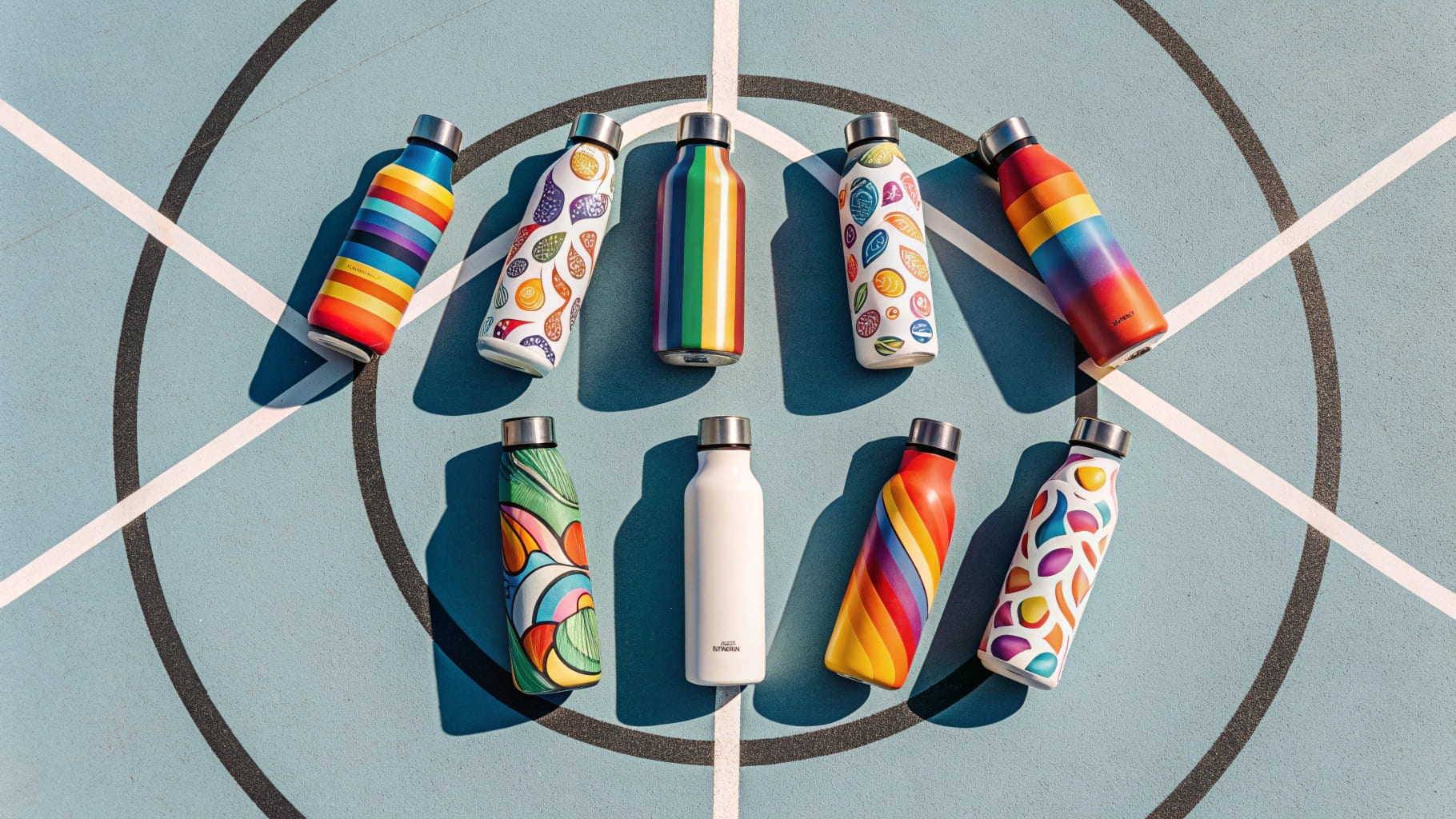
Most importers I talk to focus on the FOB price and stop there. That is a mistake. The FOB price is just the starting point.1 What kills margin is everything that happens after the factory gate. Cup holder sizing, mold investment, freight terms, customs compliance — each one adds or removes dollars from your final cost. This article breaks down each variable so you can run the math before you commit to an order, not after.
Which Insulated Water Bottle Is Best?
You asked your supplier for their best bottle. They sent you a sample that looked great. Then you found out three competing brands sell the exact same design. "Best" is not about the bottle. It is about what the bottle costs you to land.
For B2B buyers, the best insulated water bottle is the one where insulation performance, FOB cost, and your target retail margin all line up. In 2026, 24-hour cold retention and powder coat finishes are the baseline expectation2. The question is how much that baseline costs you.
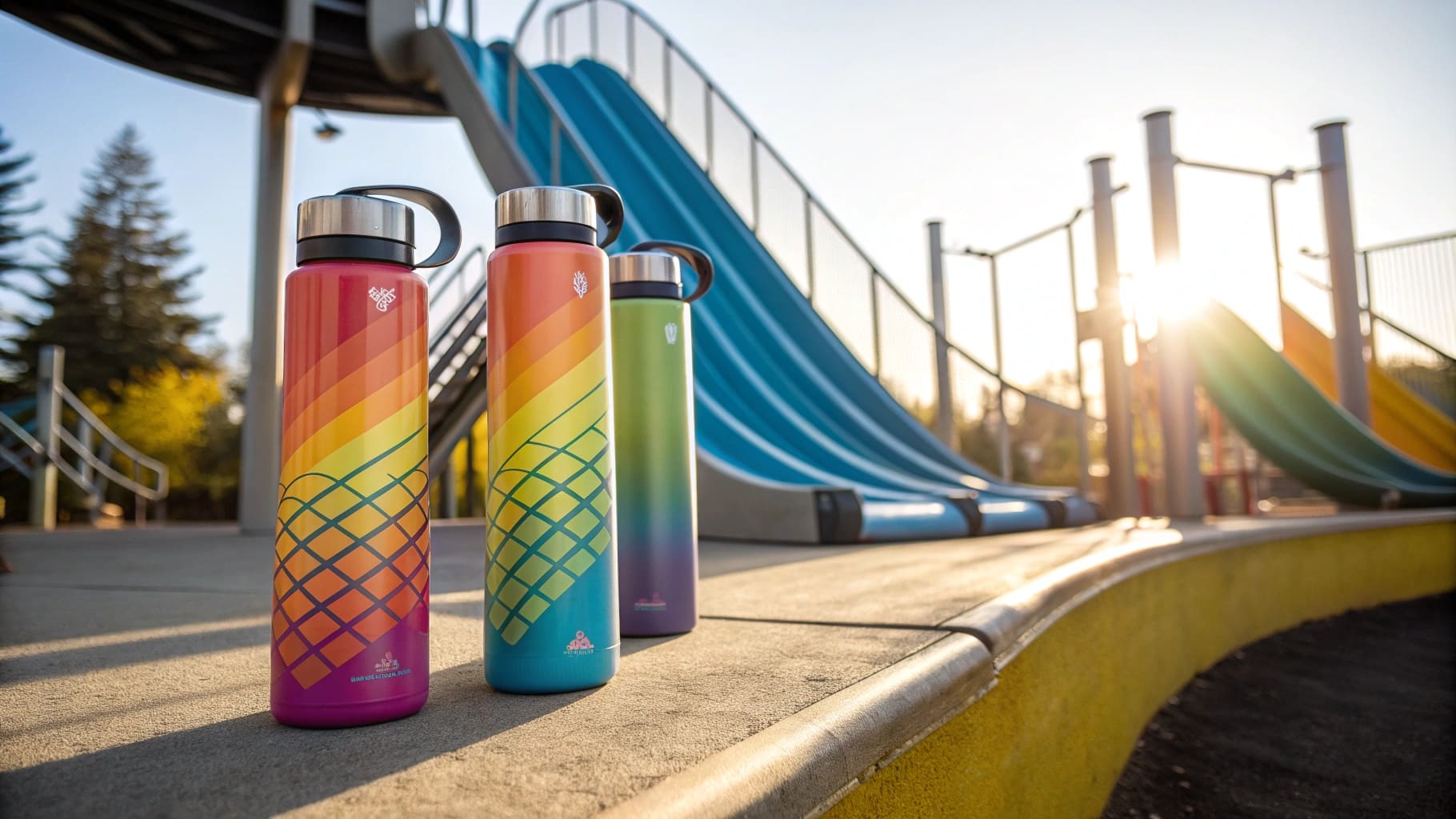
How "Best" Changes Based on Your Margin Target
Premium consumer brands like YETI, Hydro Flask, and Stanley have trained retail buyers to expect a specific performance level. That is good news for you as an importer. It means the market already accepts and expects quality. The bad news is that matching their spec from a Chinese manufacturer costs 30–40% more FOB than a basic double-wall bottle.
Here is how I think about it. There are three performance tiers, and each one sits at a different price band:
| Performance Tier | Cold Retention | Typical FOB Price (20oz) | Best For |
|---|---|---|---|
| Entry Level | 12 hours | $2.80 – $4.00 | Price-sensitive retail |
| Mid Range | 18–24 hours | $4.50 – $6.50 | Branded corporate gifting |
| Premium | 24+ hours, premium finish | $7.00 – $10.00+ | Premium retail, brand builders |
The entry tier uses thinner 18/8 stainless and basic vacuum sealing. The mid range is where most private label buyers land. The premium tier matches the factory output of the big consumer brands, because in many cases it literally is the same factory running a separate contract line.
I have visited factories in Yongkang that produce for well-known North American brands in one production hall and sell nearly identical bottles under private label terms in another. The specification is almost the same. The FOB price is 40–50% lower. The difference is your MOQ and your lead time. At 5,000 units, you access this tier. Below that, you are buying from a trading company with a markup built in.
So when someone asks me which insulated water bottle is best, my answer is always: best for what margin, at what volume, and for which end customer? Once you answer those three questions, the right bottle becomes obvious.
What Brand Is Known for Insulated Water Bottles and Drinkware?
Everyone in your market knows YETI, Hydro Flask, and Stanley. Your end customers trust these names. So when you launch a private label brand, you are not competing with them on brand equity. You are competing on price and availability. That changes your sourcing strategy completely.
Brand recognition in this category sets a pricing ceiling, not a floor. The dominant brands tell you what retail customers will pay at the top of the market. Your job as a B2B importer is to source below that ceiling with enough margin to make the business work.
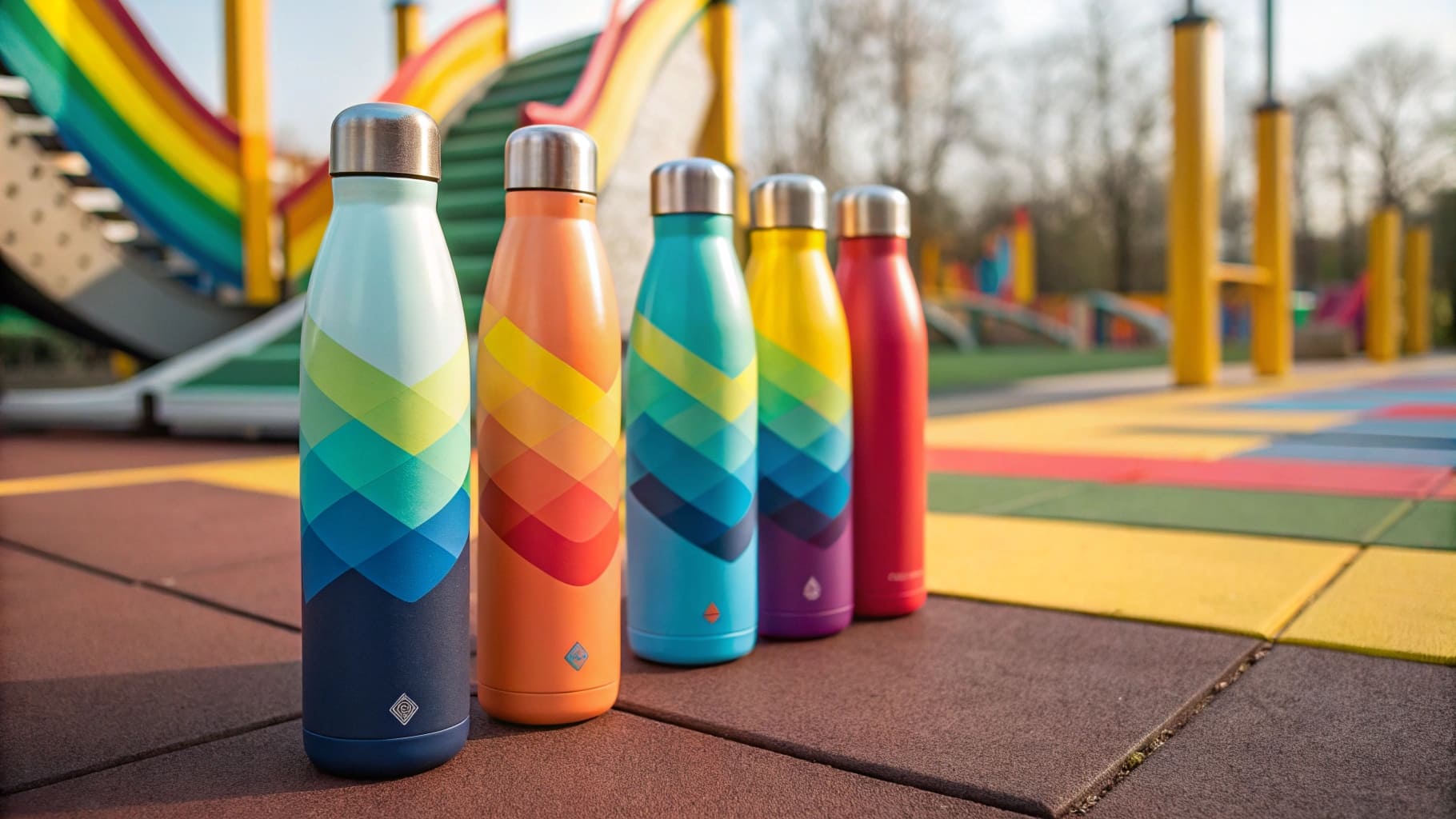
What Brand Dominance Actually Means for Your Sourcing
YETI, Hydro Flask, and Stanley have each built strong retail positions3, but they did it at different times and with different core customers. Understanding where each brand sits helps you find the white space your private label can occupy.
| Brand | Core Strength | Retail Price Range (20oz) | Key Consumer |
|---|---|---|---|
| YETI | Outdoor, durability positioning | $38 – $45 | Outdoor, sport, blue-collar |
| Hydro Flask | Lifestyle, color range | $35 – $45 | Younger, active lifestyle |
| Stanley | Heritage, viral growth | $30 – $40 | Broad mainstream |
Each of these brands sources from contract manufacturers in China.4 This is not a secret. It is standard practice in the drinkware category. The factories that produce for them are concentrated in Yongkang, Zhejiang Province. Many of these factories actively seek private label business to fill capacity outside their brand-name production runs.
What this means for you is straightforward. If you can meet the MOQ threshold — usually 3,000 to 5,000 units for a custom color or logo — you can access the same manufacturing quality. Your landed cost will be lower because you are not paying for brand marketing overhead. Your end customers get a product that performs at the same level. Your margin is the difference.
The risk is that brand equity takes years to build. Your private label bottle may perform identically to a Hydro Flask, but your customer does not know that yet. This is why most B2B buyers I work with focus on corporate gifting, promotional products, and wholesale distribution rather than direct retail. In those channels, performance and price matter more than the logo on the bottle.
One more thing worth noting: Stanley's viral growth between 2022 and 20245 created a surge in factory capacity for 40oz tumbler-style bottles. In 2026, that capacity surplus means better pricing and shorter lead times for buyers ordering tumbler formats. If your market can absorb that product shape, now is a good time to negotiate.
What Is the Best Insulated Water Bottle That Fits in a Cup Holder?
Your customer wants a bottle that fits in their car. That sounds simple. But this one design requirement changes your MOQ, your tooling cost, and your landed cost per unit in ways most buyers never calculate until it is too late.
A bottle that fits a standard cup holder must have a base diameter between 2.5 and 3.75 inches. Most wide-mouth 32oz bottles do not meet this spec without a slim body design. Getting to a slim profile means a different mold, and a different mold means a higher minimum order.
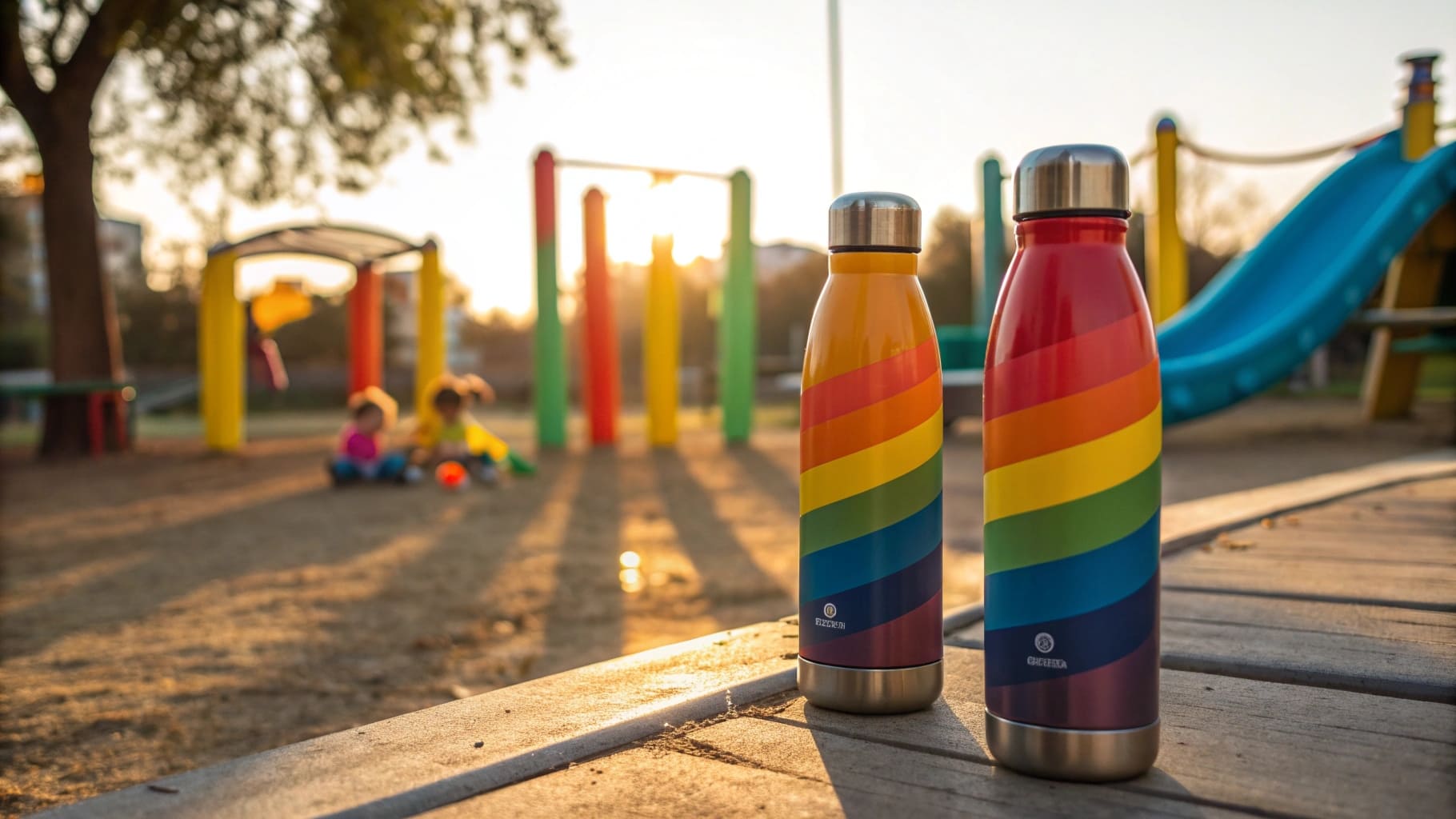
How Cup Holder Compatibility Affects Your Total Cost
Standard cup holders in North American vehicles accommodate a base diameter of 2.5 to 3.75 inches. This is the constraint your bottle design has to work within if cup holder fit is a selling point. Here is where it gets expensive.
A standard 20oz wide-mouth bottle from a stock mold fits most cup holders without modification. A 32oz wide-mouth bottle typically does not. To make a larger bottle cup holder compatible, you need a slim-waist or slim-body design. That design requires a custom mold. And a custom mold changes your MOQ breakpoint entirely.
| Bottle Type | Base Diameter | Mold Type | MOQ Breakpoint | Tooling Cost |
|---|---|---|---|---|
| 20oz standard wide mouth | 2.8 – 3.0 inches | Stock mold | 500 – 1,000 units | None |
| 32oz wide mouth | 3.5 – 3.8 inches | Stock mold | 1,000 – 2,000 units | None |
| 32oz slim cup-holder fit | 2.9 – 3.2 inches | Custom mold | 3,000 – 5,000 units | $800 – $2,500 |
| 40oz tumbler slim | 3.0 – 3.5 inches | Semi-custom | 2,000 – 3,000 units | $500 – $1,500 |
The tooling cost is a one-time charge, but it needs to be spread across your first order to understand the real per-unit impact. On a 3,000-unit order with a $1,500 tooling fee, that is $0.50 per unit added to your FOB cost. On a 5,000-unit second run with no tooling cost, your per-unit FOB drops. This is why cup holder compatible designs often make more sense for buyers who plan to reorder, not buyers testing a new SKU.
There is also a freight dimension here. Slim bottles pack slightly better than wide-mouth designs at the same volume. The difference per carton is small, but across a full container load it can reduce your per-unit ocean freight cost by $0.10 to $0.20. That is not a large number, but it is real money at scale.
My advice for buyers entering this category in 2026 is to start with a 20oz standard bottle on a stock mold. It fits most cup holders. It has no tooling cost. It gives you a low MOQ to test your market. If the product sells, move to a custom slim 32oz on your second order with the tooling cost already factored into your pricing model. Do not pay for custom tooling on a SKU you have not yet proven in your market.
Conclusion
In 2026, the right insulated water bottle is the one where your landed cost, your MOQ tier, and your market margin all work together. Start with those numbers, then pick your bottle.
-
"Know Your Incoterms - International Trade Administration", https://www.trade.gov/know-your-incoterms. An Incoterms reference explains that Free on Board allocates seller responsibility only up to loading the goods on the vessel, while subsequent transport costs, insurance choices, import charges, and inland delivery are handled outside the FOB unit price. Evidence role: definition; source type: institution. Supports: FOB price does not represent the full landed cost paid by an importer.. Scope note: This supports the cost-structure concept but does not verify any bottle-specific landed-cost figures. ↩
-
"Worldwide Top 10 Insulated Water Bottle Specs and Buying Tactics ...", https://icobottle.com/worldwide-top-10-insulated-water-bottle-specs-and-buying-tactics-for-2026/. Consumer product specifications and retail category descriptions commonly list vacuum-insulated bottles with 24-hour cold-retention claims and powder-coated finishes, supporting the statement that these features are widely used category benchmarks. Evidence role: general_support; source type: other. Supports: In the insulated bottle market, 24-hour cold retention and powder-coated finishes are commonly expected baseline features.. Scope note: Such sources show common market positioning, not a formal industry-wide minimum requirement. ↩
-
"Insulated Drinkware Market Share Report, 2026-2033", https://www.persistencemarketresearch.com/market-research/insulated-drinkware-market.asp. Retail market reports and brand histories document the prominence of YETI, Hydro Flask, and Stanley in insulated drinkware, supporting their use as leading reference brands in the category. Evidence role: general_support; source type: research. Supports: YETI, Hydro Flask, and Stanley are prominent insulated drinkware brands with strong retail positions.. Scope note: This supports brand prominence but does not establish exact market share unless the chosen source provides share data. ↩
-
"Top 20 High-Quality Stainless Steel Drinkware Factories in China", https://icobottle.com/top-20-high-quality-stainless-steel-drinkware-factories-in-china/. Company supply-chain disclosures, import records, or investigative trade-data sources can show that major drinkware brands use overseas contract manufacturing, including suppliers in China. Evidence role: case_reference; source type: other. Supports: YETI, Hydro Flask, and Stanley source at least some drinkware through contract manufacturers in China.. Scope note: Evidence may confirm some suppliers or shipments without proving that all products from each brand are made in China at all times. ↩
-
"Stanley drinkware sensation offers a vivid example of the power of ...", https://www.qu.edu/quinnipiac-today/stanley-cups-ride-the-wave-of-tiktok-popularity-2024-01-09/. Business and retail analyses document the rapid increase in Stanley tumbler visibility and sales during 2022–2024, especially for large handled tumbler formats promoted through social media. Evidence role: historical_context; source type: other. Supports: Stanley experienced rapid viral growth between 2022 and 2024.. Scope note: Such evidence supports the growth narrative but may not directly prove downstream factory-capacity effects. ↩
