
Your 2026 product line needs a decision soon. You see titanium flasks everywhere, but the price tag makes you pause. Should you really pay three times more than stainless steel?
For most OEM buyers in 2026, titanium hip flasks are not worth the premium over stainless steel. The 3-5x price increase rarely translates to proportional profit margins unless you target ultra-premium niches. Stainless steel offers comparable performance for mainstream markets with better supply chain reliability and established consumer acceptance.
I learned this the hard way last year. I spent months chasing titanium flask suppliers, thinking the material would set my brand apart. After ordering samples from three Chinese manufacturers and comparing them to my existing 316 stainless line, the math just did not work. My customers cared more about design and customization than material composition.
Is titanium good for a flask?
You keep hearing titanium is the future. Everyone talks about how light it is. But does lighter really mean better for your business?
Titanium works excellently for flasks due to corrosion resistance and low weight. However, the material limits your market reach because consumers outside premium segments cannot justify the cost difference compared to proven stainless steel alternatives.

Why Titanium Works Technically But Fails Commercially
Titanium does deliver on its promises. The material resists corrosion better than most stainless grades. It weighs about 45% less than stainless steel for the same volume. I held a 6oz titanium flask in one hand and a stainless version in the other. The difference was obvious.
But here is what the suppliers do not tell you upfront. Your production minimums go up significantly. Most titanium flask manufacturers in China require 1000 piece minimums versus 500 for stainless. The tooling costs increase because titanium is harder to machine1. I paid 40% more for custom logo engraving on titanium compared to laser marking on stainless.
The bigger problem shows up at retail. My target customers in Canada are outdoor enthusiasts and corporate gift buyers. When I tested pricing, both groups balked at the $89 price point for titanium versus $35 for premium stainless. The weight savings did not matter enough. They could not feel the difference in a jacket pocket.
Material Comparison for B2B Decision Making
| Property | Titanium | 304 Stainless | 316 Stainless |
|---|---|---|---|
| Weight Factor | 1.0x | 1.8x | 1.8x |
| Corrosion Resistance | Excellent | Good | Excellent |
| Price Factor | 5.0x | 1.0x | 1.3x |
| MOQ Typical | 1000+ pcs | 500+ pcs | 500+ pcs |
| Lead Time | 45-60 days | 30-35 days | 30-35 days |
| Consumer Recognition | Low | High | Medium |
This table tells the real story. Yes, titanium wins on technical specs. But look at the price factor and MOQ. Your cash gets tied up longer. Your inventory risk increases. For a business model based on rebranding and distribution, these factors kill your margins.
What is the most durable flask?
Durability sounds simple until you define it. Does it mean surviving a drop test or lasting ten years without leaking? Your definition changes everything.
The most durable flasks combine 304 or 316 stainless steel with double-wall construction and quality seal systems. Material hardness matters less than design engineering and manufacturing precision2 in real-world use.

Durability Beyond Material Hardness
I used to think titanium's superior tensile strength made it more durable automatically. Then I attended a trade show in Shenzhen three years ago. A supplier demonstrated drop tests with various materials and constructions. The titanium flask dented less from impacts. But the real failures happened at the threads and seals, not the body material.
The weakest point in any flask is where the cap meets the body. Thread precision determines whether your product leaks3 after six months of use. I learned to request thread tolerance specifications before placing orders. Most factories just say "standard threads" which means nothing. You need actual measurements.
Seal material matters more than body material4 for long-term durability. I switched from basic rubber gaskets to silicone seals with my supplier. The cost increased by only $0.30 per unit, but my return rate dropped from 3% to under 0.5%. That change saved me more money than any material upgrade could have.
Testing Standards You Should Demand
The factories will not volunteer this information. You need to ask specifically for ASTM testing protocols. I request three key tests now:
Drop resistance testing from 1.5 meters onto concrete. The flask should not leak or lose structural integrity. Pressure testing to 2x the rated capacity to verify seal performance. Temperature cycling from -20°C to 100°C for 50 cycles to check material expansion compatibility.
Most suppliers claim they do quality control. Few actually perform systematic testing. I visit my main supplier's factory once per year now. During my last visit, I found their testing equipment sat unused in a storage room. We had an honest conversation. They started actually using the equipment after I explained how important verification was to my business.
Manufacturing Consistency Beats Material Premium
Here is what seventeen years of importing taught me. Consistent manufacturing processes matter more than exotic materials. My best-performing product line uses basic 304 stainless steel. But my supplier has refined their welding process over eight years. Their defect rate stays below 0.3% across thousands of units.
Compare that to a titanium supplier I tried two years ago. Beautiful material, impressive marketing materials, terrible quality control. Their first shipment had a 7% defect rate. Caps did not seal properly. Some units had rough edges that could cut fingers. The material was premium. The execution was amateur.
Premium sounds like it just means expensive. Your customers think differently. They want value, not just high price tags.
The best premium flask for OEM programs combines design innovation with sustainability features and customization options. Material choice matters less than overall brand story and practical functionality. Stainless steel with advanced finishing techniques often outperforms titanium in profit margins.
Premium Positioning Without Titanium Costs
My most successful product launch happened in 2024. I worked with my supplier to create a premium stainless steel flask line. We focused on three differentiators that customers actually cared about.
First, we used 316 stainless steel with recycled content certification5. The material cost increased by 15%, but it gave me a powerful story to tell. Canadian consumers care about sustainability. The recycled content claim appeared on my packaging and marketing materials. It justified a 40% price premium over my standard line.
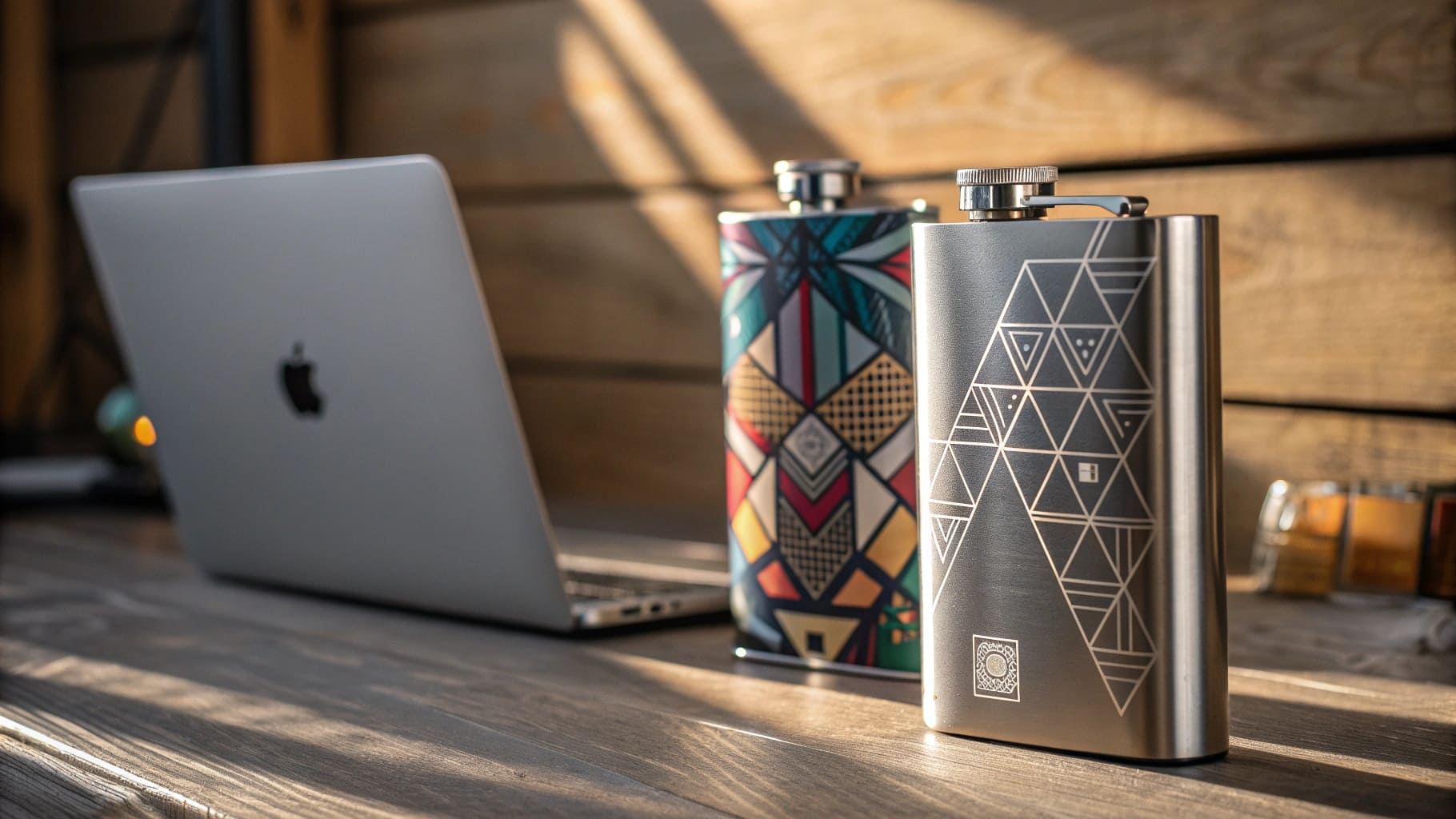
Second, we invested in custom laser engraving capabilities. Instead of simple logos, we offered detailed artwork and personalization. The setup cost was $2800 for the laser system at my supplier's facility. But it allowed me to charge $12 extra per unit for custom engraving. That premium covered my investment in five months.
Third, we developed a modular accessory system. Different caps, silicon boots in multiple colors, paracord handles. Customers could customize their flasks after purchase. This created repeat business. Someone who bought a basic flask would come back for accessories. My average customer value increased by 60%.
What Premium Actually Means in 2026
The market is shifting fast. Premium used to mean luxury materials and high price tags. Now it means thoughtful design and responsible sourcing. I see this in my sales data every quarter.
My titanium test line from 2024 sold 340 units total. My premium stainless line with sustainability features sold 4200 units. Same price point, same marketing budget. The stainless line won because customers understood the value proposition.
Younger buyers especially care about recycling infrastructure. Stainless steel gets recycled easily. Titanium recycling is complicated and expensive. When I explained this at retail, customers chose stainless even when I offered both options.
Profit Margin Reality Check
Let me share actual numbers from my business. Titanium flask landed cost from China is $32 per unit at 1000 piece volume. I need to retail at $89 to make my target margin. That limits my market to specialty outdoor stores and luxury gift shops.
My premium stainless flask costs $11 per unit landed. I retail at $42 and still make better margins than titanium. The volume is higher. The reorder rate is faster. My cash flow stays healthier.
This does not mean titanium has no place. If you serve military contractors or ultra-premium corporate gifts over $100, titanium makes sense. For everyone else, smart stainless steel design wins.
Conclusion
Titanium hip flasks look impressive on paper but rarely deliver better profits than well-designed stainless steel options for mainstream OEM programs in 2026.
-
"Analysis of Tool Wear in Finish Turning of Titanium Alloy Ti-6Al-4V ...", https://pmc.ncbi.nlm.nih.gov/articles/PMC11721966/. Machining research and technical references describe titanium alloys as difficult-to-machine materials because of low thermal conductivity, chemical reactivity, and tool-wear issues, supporting the claim that titanium fabrication can raise production complexity. Evidence role: mechanism; source type: paper. Supports: Titanium is harder to machine than stainless steel, increasing tooling or fabrication difficulty.. Scope note: Machinability evidence explains process difficulty but does not quantify the exact tooling cost for hip flasks. ↩
-
"A Study on the Reliability Evaluation of a 3D Packaging Storage ...", https://pmc.ncbi.nlm.nih.gov/articles/PMC11052348/. Reliability-engineering and product-design literature indicates that failures in assembled products often arise from joints, seals, tolerances, and manufacturing variation rather than from bulk material strength alone, providing contextual support for emphasizing design and process control. Evidence role: expert_consensus; source type: paper. Supports: Design engineering and manufacturing precision can be more important than material hardness in real-world flask durability.. Scope note: The support is general to engineered products and closures, not specific proof for hip flasks. ↩
-
"What Are Thread Seals? Types, Comparisons & Best Practices", https://www.rocketseals.com/what-are-thread-seals-types,-comparisons-and-best-practices/. Standards and engineering references on threaded closures and gasketed joints show that thread dimensions, tolerances, and sealing interfaces affect closure integrity and leakage, supporting the role of thread precision in leak prevention. Evidence role: mechanism; source type: institution. Supports: Thread precision is important for preventing leaks where the flask cap meets the body.. Scope note: The evidence would support the closure mechanism generally, not a specific six-month failure rate. ↩
-
"Comparative Experimental Assessment of Elastomeric and ... - PMC", https://pmc.ncbi.nlm.nih.gov/articles/PMC13074313/. Technical literature on elastomeric seals explains that gasket material properties, compression set, chemical compatibility, and temperature resistance are central to leak-tight performance, supporting the importance of seal selection in container durability. Evidence role: mechanism; source type: research. Supports: Seal material is a critical determinant of long-term flask leak resistance.. Scope note: This supports the importance of seals generally, not the comparative statement for every flask design. ↩
-
"Recycled Content Certification - SCS Global Services", https://www.scsglobalservices.com/services/recycled-content-certification. Life-cycle and metals-industry sources document that stainless steel is commonly produced with recycled scrap and that recycled content can be certified through chain-of-custody or sustainability standards, supporting the feasibility of recycled-content claims for stainless products. Evidence role: general_support; source type: institution. Supports: A premium stainless flask line can use 316 stainless steel with recycled-content certification as a sustainability attribute.. Scope note: This does not verify the author’s specific supplier certification or the stated 15% material-cost increase. ↩