
Silicone Boots for Bottles: What Durometer, Fit Tolerances, and AQL Plans Do You Actually Need?
You ordered a batch of bottle boots. They looked fine in photos. Then they arrived loose, discolored, or tearing at the rim. That's money lost and a season missed.
A silicone boot for a stainless steel water bottle needs a durometer between 40 and 60 Shore A, fit tolerances within ±0.5mm, and an AQL inspection plan using 1.5 for critical defects and 2.5 for major defects1. These three specs together decide whether your boot works or fails in the field.
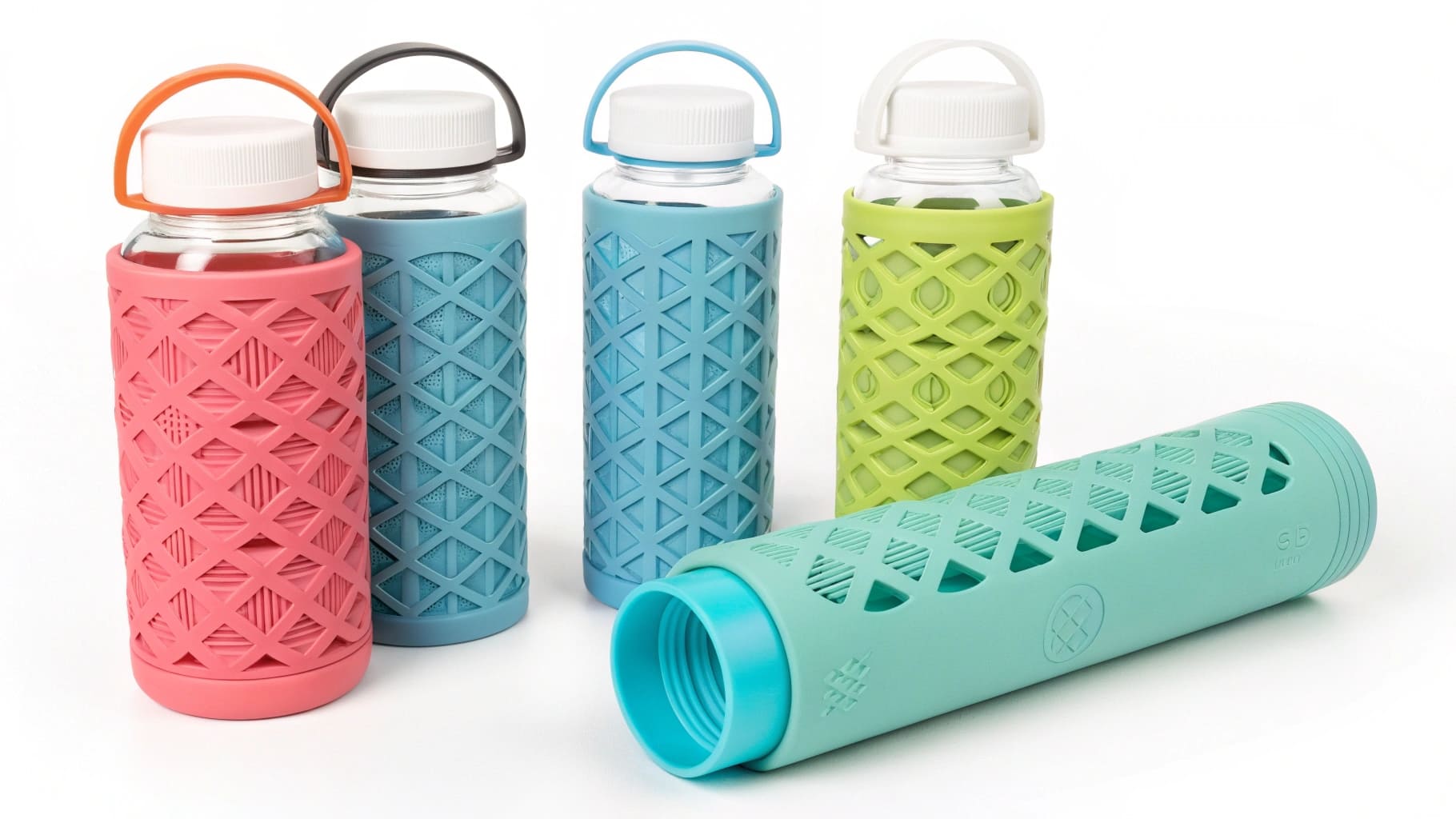
Most buyers skip these specs when placing their first order. They focus on color and price. That works until it doesn't. I've seen good bottles get returned because a cheap boot made the whole product feel wrong. This guide walks through each spec in plain terms, so you know what to ask before you sign a purchase order.
What's the Point of a Bottle Boot?
A bottle boot looks simple. It's just a rubber sleeve around the base of a bottle. But buyers who treat it as decoration almost always regret it.
A silicone boot protects the bottle base from drops, reduces noise when the bottle is set on hard surfaces, improves grip, and adds a layer of brand identity. For B2B buyers, the boot is often the first thing a customer touches. It sets the tone for the whole product.
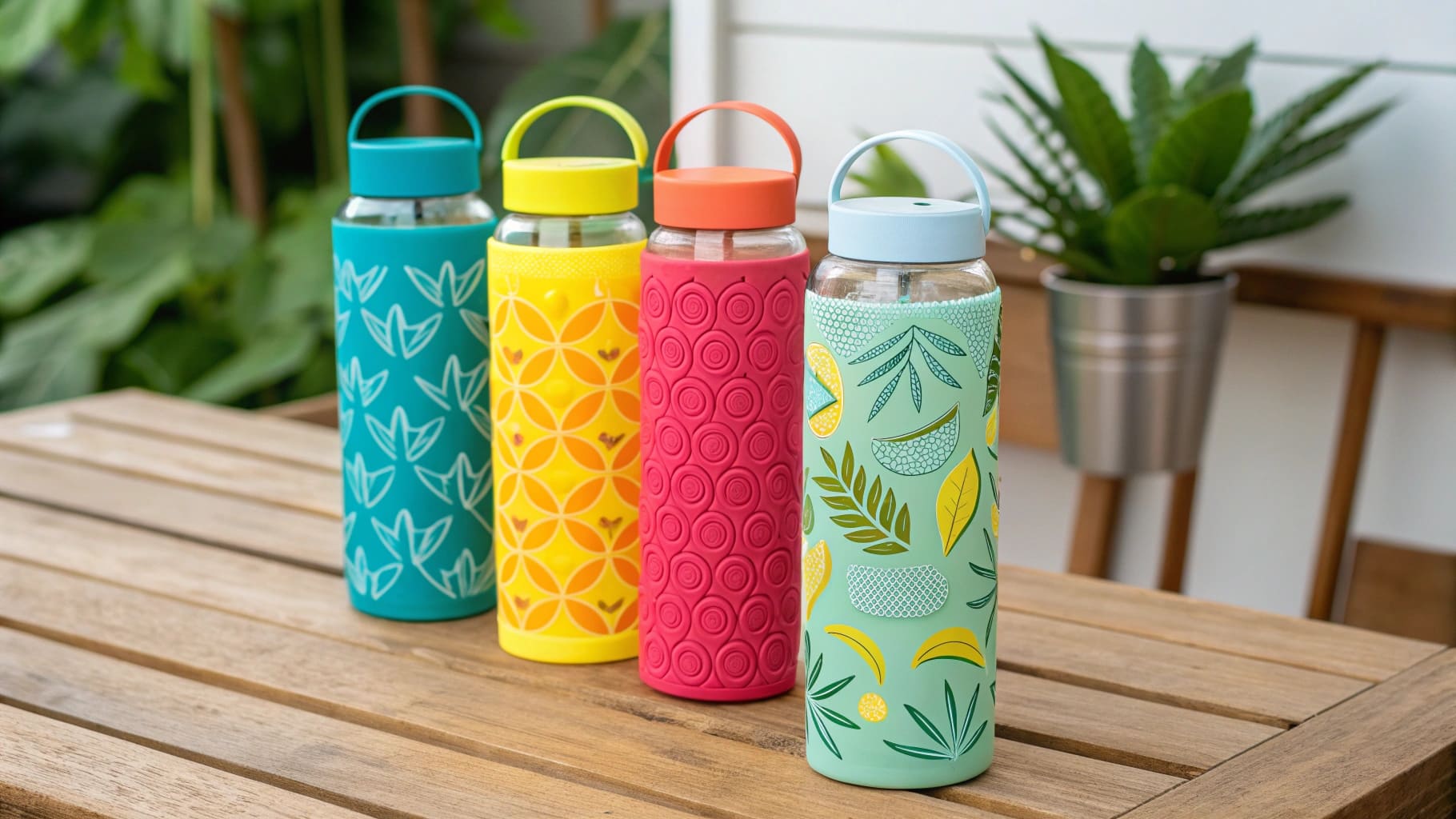
The boot does more work than most people expect. Here's how each function breaks down in practice.
Protection
A drop from counter height onto tile or concrete will dent an unprotected stainless steel bottle base. A silicone boot with the right durometer absorbs that impact2. Too soft, and the boot compresses fully without stopping the dent. Too firm, and the boot doesn't flex enough to absorb energy. The 40–60 Shore A range hits the balance point for most real-world drops.
Noise and Feel
Bare stainless steel on a desk or table makes a sharp clang. A boot removes that. For office use or hospitality settings, this matters more than buyers expect. I've had procurement managers from hotel chains bring this up before price.
Brand Expression
Premium brands use the boot as a design element. Color, texture, and logo embossing on the boot all signal quality. For buyers who want to rebrand bottles for retail distribution, the boot is one of the easiest and most visible places to add brand identity.
| Boot Function | Why It Matters for B2B Buyers |
|---|---|
| Drop protection | Reduces returns and damage claims |
| Noise reduction | Improves end-user experience in quiet settings |
| Grip improvement | Adds safety for outdoor or wet-hand use |
| Brand expression | Visible branding surface for rebranding |
| Premium positioning | Justifies higher retail price points |
The right boot serves all five functions at once. A boot that only checks one or two boxes is usually the result of cutting corners on material spec or mold quality.
Is Yeti Better Than Hydro Flask?
This question comes up a lot from buyers who want to understand the market before they commit to a product line. The honest answer is that "better" depends entirely on what your end customer cares about.
Yeti focuses on extreme durability and outdoor performance. Hydro Flask focuses on lifestyle, color variety, and everyday carry. They are built for different buyers, and their boot designs reflect that.
Looking at these two brands side by side helps clarify what you're actually buying when you spec a silicone boot. The differences in their approach are not accidental.
Durometer and Material
Yeti boots tend toward the firmer end of the Shore A range. This matches their brand positioning around toughness. The boot holds its shape under load and resists abrasion in outdoor conditions.
Hydro Flask boots lean slightly softer. They prioritize feel and color fidelity. Softer silicone takes dye more evenly, which is why Hydro Flask boots tend to hold color better across their wide palette.
Fit Tolerances
Both brands use tight tolerances at the manufacturing level. A loose boot on either brand would be a quality failure. For B2B buyers sourcing from third-party factories, this is the part that's hardest to replicate without a factory that invests in precise mold engineering.
What This Means for Your Order
If your end customers are in outdoor retail, push your supplier toward firmer durometer and abrasion resistance. If your customers are in everyday carry or lifestyle retail, prioritize color consistency and a softer feel.
| Spec Area | Yeti Approach | Hydro Flask Approach |
|---|---|---|
| Durometer range | Higher Shore A (55–60) | Mid Shore A (40–50) |
| Color palette | Limited, brand-focused | Wide, trend-driven |
| Boot texture | Smooth or lightly textured | Often textured for grip |
| Primary market | Outdoor and sport | Everyday lifestyle |
Neither brand is better in absolute terms. They made different choices to serve different markets. When you source boots, you need to make the same choice and then hold your factory to that spec.
Which Came First, Hydro Flask or Stanley?
This question matters more than it sounds. The timeline tells you which brand defined the modern insulated bottle market and how boots became part of the standard product design.
Stanley has the longest history by far. The brand started in 1913 and built its reputation around vacuum-insulated flasks for workers and outdoor users. But Stanley did not define the modern lifestyle bottle market. That came much later.
Understanding this timeline helps B2B buyers see why boots became a standard feature. It was not a slow evolution. It was driven by a few key brand decisions in a short window.
Hydro Flask's Role
Hydro Flask launched around 2009. The brand took vacuum insulation technology that had existed for decades and packaged it in a way that appealed to health-focused, design-aware consumers. Hydro Flask made the insulated water bottle a lifestyle product. Boots, color options, and clean branding were part of that from early on.
By the early 2010s, Hydro Flask had built a strong following in the US market3. Retailers took notice. Other brands started following the same format.
Stanley's Pivot
Stanley's heritage gave it credibility, but the brand was not competing in the lifestyle segment until the 2010s. The Stanley Quencher tumbler became a major retail success story later, driven largely by social media4. Stanley leaned into color drops and limited editions, a strategy borrowed directly from the playbook Hydro Flask had already proven.
Yeti's Entry
Yeti brought out bottles around 2016. By that point, the market had already been shaped by Hydro Flask. Yeti differentiated on performance and premium pricing rather than color variety.
| Brand | Market Entry (Modern Format) | Key Differentiator |
|---|---|---|
| Stanley | 1913 (heritage), 2010s (lifestyle pivot) | Legacy brand, wide distribution |
| Hydro Flask | ~2009 | Color, lifestyle branding, boots as standard |
| Yeti | ~2016 | Performance, premium pricing |
For B2B buyers, the lesson here is simple. Boots became a standard feature because Hydro Flask made them part of what a premium bottle looks and feels like. If you're sourcing bottles for premium retail, leaving out the boot puts your product at an immediate visual disadvantage on shelf.
Conclusion
Silicone boot specs are not optional details. Durometer, fit tolerance, and AQL plans decide whether your product holds up or gets returned. Get these right before you order.
-
"How to Set AQL Inspection Levels That Reduce Defects by 35%", https://aqiservice.com/aql-inspection-levels-guide-reduce-defects/. ISO 2859-1 and related acceptance-sampling references define AQL-based inspection plans and explain how acceptance quality limits are used to classify and sample lots for defects. Evidence role: definition; source type: institution. Supports: Bottle-boot orders should use an AQL inspection plan with specified defect thresholds.. Scope note: The standard supports the AQL inspection framework, but it does not independently establish that 1.5 for critical defects and 2.5 for major defects are the correct levels for this product category. ↩
-
"Hardness and shock absorption of silicone rubber for mouth guards", https://pubmed.ncbi.nlm.nih.gov/8642539/. Impact-attenuation research on elastomeric materials explains that hardness and compliance influence energy absorption under impact loading, supporting the claim that durometer affects protective performance. Evidence role: mechanism; source type: paper. Supports: The durometer of a silicone boot affects how well it absorbs impact.. Scope note: General elastomer impact studies may not directly test stainless-steel bottle boots or the exact drop heights described in the article. ↩
-
"Hydro Flask - Wikipedia", https://en.wikipedia.org/wiki/Hydro_Flask. Business histories and market reports on Hydro Flask describe the brand’s rapid growth in the early 2010s, providing contextual support for its emergence as a notable U.S. insulated-bottle brand. Evidence role: historical_context; source type: other. Supports: Hydro Flask had built a strong following in the U.S. market by the early 2010s.. Scope note: This would support market momentum qualitatively unless the source includes sales, distribution, or consumer-awareness data. ↩
-
"Stanley drinkware sensation offers a vivid example of the power of ...", https://www.qu.edu/quinnipiac-today/stanley-cups-ride-the-wave-of-tiktok-popularity-2024-01-09/. Retail and consumer-culture analyses of the Stanley Quencher document its rapid sales growth and the role of social media platforms in amplifying demand, supporting the characterization of the product as a later social-media-driven retail success. Evidence role: case_reference; source type: other. Supports: The Stanley Quencher became a major retail success and social media played a large role in that success.. Scope note: Available sources may describe social media as a major contributor rather than the sole causal driver of the product’s commercial success. ↩
