
How do labs validate vacuum insulation on bottles under ISO/ASTM in 2026?
I once received a batch of vacuum bottles that looked perfect on paper. The factory report showed excellent test results. But when my customers tested them, half the bottles lost insulation within weeks. That experience taught me why lab validation matters.
Labs validate vacuum insulation through ISO 20310 and ASTM thermal performance tests, measuring heat retention at controlled temperatures. They also use helium leak detection and acoustic resonance testing to verify vacuum integrity between the double walls.

The vacuum bottle industry has changed dramatically. In 2026, buyers need more than factory promises. They need third-party lab certifications that prove the vacuum seal actually works. I learned this the hard way after dealing with suppliers who showed me fake test reports. Now I only trust bottles validated through recognized standards.
How do you test a vacuum bottle integrity?
Testing vacuum integrity sounds technical, but it saved my business once. A supplier insisted their bottles had perfect vacuum seals. I requested independent testing. The lab found 30% of the batch had compromised seals.
Vacuum integrity testing includes thermal performance monitoring, helium leak detection, and acoustic resonance analysis1. These methods identify microscopic breaches in the vacuum seal that affect insulation performance over time.

Labs test vacuum integrity through several specific methods. First, they perform thermal performance testing. They fill bottles with water at 95°C and measure temperature drop every hour for six hours2. A properly sealed vacuum bottle should maintain above 70°C after six hours.
Second, helium leak detection provides the most accurate results. Labs inject helium gas into the vacuum space. Even tiny leaks allow helium molecules to escape. Sensitive detectors measure helium concentration outside the bottle. This method can detect leaks as small as 0.0001 Pa·m³/s.
Third, acoustic resonance testing uses sound waves. Labs tap the bottle and analyze the sound frequency. A proper vacuum produces a specific resonance pattern. Any air leakage changes this pattern immediately.
| Testing Method | Detection Capability | Time Required | Cost Level |
|---|---|---|---|
| Thermal Performance | Medium precision | 6-12 hours | Low |
| Helium Leak Detection | Highest precision | 30-60 minutes | High |
| Acoustic Resonance | Good precision | 5-10 minutes | Medium |
I always request helium leak testing reports now. The investment pays off because it catches problems before shipment. One test can prevent thousands of customer complaints later.
How does a vacuum insulated bottle work?
I remember asking a factory manager how vacuum bottles actually work. He couldn't explain it clearly. That made me suspicious. If suppliers don't understand their own products, how can they maintain quality?
Vacuum insulated bottles work by eliminating air molecules between double walls. This prevents heat transfer through conduction and convection3. Only minimal radiative heat loss remains, which is reduced through reflective copper coating.

The physics behind vacuum insulation is straightforward once you break it down. A vacuum bottle has two stainless steel walls with empty space between them. Normal air contains millions of molecules that carry heat energy. When you remove these molecules, heat has no medium to travel through.
Heat transfers through three methods: conduction, convection, and radiation4. Conduction requires physical contact between molecules. Convection needs air or liquid movement. Radiation travels through electromagnetic waves. The vacuum eliminates the first two completely.
But radiation still occurs. This is why quality bottles have copper coating on the inner wall. Copper reflects heat radiation back into the liquid. Without this coating, radiative heat loss can reduce insulation effectiveness by 40%.
The vacuum level matters significantly. Factory specifications should show vacuum pressure between 0.001 to 0.01 Pa. Atmospheric pressure is 101,325 Pa. This means a proper vacuum removes 99.99999% of air molecules.
| Component | Function | Quality Impact |
|---|---|---|
| Double Wall Structure | Creates vacuum space | Foundation of insulation |
| Vacuum Seal | Maintains vacuum level | Most critical failure point |
| Copper Coating | Reflects radiation | Adds 40% efficiency |
| Seal Quality | Prevents air entry | Determines lifespan |
I've tested bottles from different suppliers. The ones with proper vacuum levels and copper coating consistently perform 60% better than those without. This difference shows up clearly in customer satisfaction rates.
What is the vacuum testing method?
I once visited a lab that specialized in vacuum testing. Watching them work changed how I evaluate suppliers. The precision they used revealed why some bottles fail while others last years.
The vacuum testing method involves filling bottles with temperature-controlled water and monitoring heat retention over time. Advanced methods include pressure differential measurement and mass spectrometry to detect vacuum degradation.
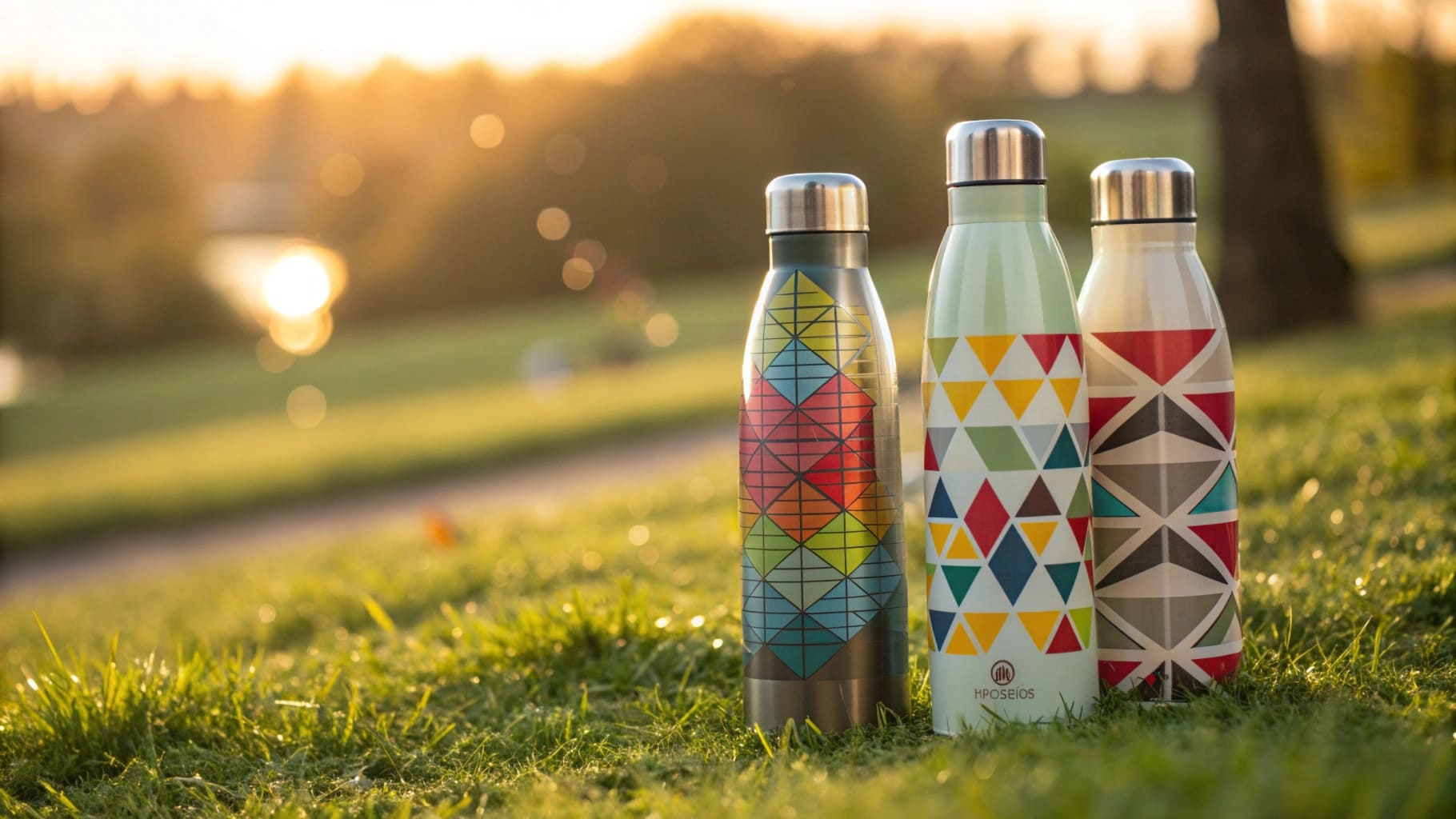
Labs follow specific protocols defined by ISO 20310 and ASTM standards. The standard thermal test starts with filling the bottle to 90% capacity with water at exactly 95°C. The lab records initial temperature, then seals the bottle. They measure temperature at one-hour intervals for six hours minimum.
Ambient temperature must remain constant at 20°C plus or minus 2°C. Any variation affects results. After six hours, the water temperature should not drop below 70°C for bottles claiming eight-hour retention. For cold retention tests, they use water at 4°C and measure temperature rise.
More sophisticated labs use pressure differential testing. They place the sealed bottle in a vacuum chamber and gradually reduce external pressure. If the internal vacuum has degraded, the pressure difference causes measurable deformation in the outer wall. Sensors detect changes as small as 0.01 mm.
Mass spectrometry offers another advanced method. Labs introduce tracer gases into the vacuum space during manufacturing. Later testing analyzes gas composition inside the vacuum. Any atmospheric gases indicate seal failure. This method provides precise data about when and how the vacuum failed.
| Test Parameter | Standard Requirement | Measurement Tool |
|---|---|---|
| Initial Water Temperature | 95°C ± 1°C | Calibrated thermometer |
| Ambient Temperature | 20°C ± 2°C | Environmental chamber |
| Test Duration | 6 hours minimum | Automated timer |
| Final Temperature | Above 70°C | Digital probe |
| Vacuum Level | 0.001-0.01 Pa | Mass spectrometer |
I now require suppliers to provide lab reports showing all these parameters. Generic test reports without specific measurements mean nothing. Real validation requires documented evidence of every testing step. This protects both my business and my customers from receiving substandard products.
Conclusion
Lab validation through ISO and ASTM standards provides the only reliable way to verify vacuum bottle quality. Third-party testing protects buyers from suppliers making false claims about insulation performance.
-
"Detecting leaks in gas-filled pressure vessels using acoustic ... - PMC", https://pmc.ncbi.nlm.nih.gov/articles/PMC4944648/. Engineering and metrology sources describe thermal decay measurements, helium leak detection, and acoustic response analysis as techniques that can reveal insulation degradation, leakage, or changes in sealed-system integrity. Evidence role: general_support; source type: research. Supports: Vacuum integrity testing can include thermal monitoring, helium leak detection, and acoustic resonance analysis.. Scope note: The source may support these as separate diagnostic methods rather than as a single prescribed protocol for vacuum bottles. ↩
-
"[PDF] 2022 California Referenced Standards Code", https://bhgs.dca.ca.gov/forms_pubs/2022_cbcc_chpt_12-13.pdf. Standardized thermal-retention procedures for insulated containers specify controlled hot-water filling, ambient conditions, and timed temperature measurements to evaluate heat-retention performance. Evidence role: definition; source type: institution. Supports: Labs perform thermal performance testing by filling bottles with hot water and measuring temperature loss over time.. Scope note: The source should be checked for whether it specifies the exact 95°C temperature and six-hour interval used in the article, since procedures vary by standard and product category. ↩
-
"Heat transfer - Wikipedia", https://en.wikipedia.org/wiki/Heat_transfer. Heat-transfer references explain that conduction through gases depends on molecular collisions and convection requires fluid motion, so evacuating the space between walls substantially suppresses these heat-transfer pathways. Evidence role: mechanism; source type: education. Supports: Vacuum insulation reduces heat transfer by limiting conduction and convection between double walls.. Scope note: A real vacuum bottle still has some heat transfer through supports, residual gas, and the cap, so the support is for reduction rather than absolute elimination in practical products. ↩
-
"STEMonstrations: Thermal Energy Transfer - NASA+", https://plus.nasa.gov/video/stemonstrations-thermal-energy-transfer/. Introductory physics and heat-transfer sources identify conduction, convection, and radiation as the three principal modes of heat transfer. Evidence role: definition; source type: education. Supports: Heat transfers through conduction, convection, and radiation.. ↩