
How Do You Choose Leak-Proof Insulated Coffee Mugs That Won't Spill During Your Commute?
Every morning, I watch commuters rush to their cars clutching travel mugs. Many arrive at work with coffee stains on their seats. This happens because most buyers focus on brand names instead of engineering fundamentals.
The best leak-proof insulated coffee mug combines three core elements: advanced lid technology1 with dual rubber gaskets, a tapered base that fits cup holders while preventing tips, and food-grade stainless steel construction that maintains vacuum seal integrity over thousands of uses.
At Icobottle, I work directly with procurement officers who source thousands of units annually. They tell me the same story repeatedly. Their previous suppliers promised leak-proof performance but failed real-world testing. I've spent years testing different designs to understand what actually works.
What Is the Best Leak-Proof Travel Mug Wirecutter?
You see Wirecutter recommendations everywhere. They test consumer products in controlled environments. But your QA process needs different criteria. Laboratory conditions don't replicate actual commuter scenarios where mugs face temperature swings and constant movement.
The best leak-proof travel mug for B2B procurement features 2-in-1 lid technology2 with both straw and flip-top options. Each mechanism uses separate rubber gaskets. The base must have a tapered design that fits standard cup holders while maintaining stability. Food-grade 18/8 stainless steel construction prevents warping.
Understanding Lid Technology That Actually Prevents Leaks
I learned this lesson the hard way. Three years ago, a major Canadian distributor ordered 5,000 units from us. They returned half the shipment because the single-seal lids leaked during transport. We redesigned our entire lid system after that experience.
Modern leak-proof lids require two key features. First, they need multiple rubber gasket layers. A single gasket can compress unevenly over time. This creates micro-gaps that allow liquid seepage. Second, the lid mechanism must create pressure distribution. When you close the lid, the force should spread evenly across the entire gasket surface.
I now recommend testing lids through three specific scenarios:
| Test Scenario | Pass Criteria | Why It Matters |
|---|---|---|
| Upside-down shake test | Zero drips after 30 seconds | Simulates bag carrying |
| Vehicle vibration test | No leakage after 20 minutes | Replicates commute conditions |
| Temperature stress test | Seal integrity from -20°C to 100°C | Prevents thermal expansion leaks |
The 2-in-1 design I mentioned earlier solves a major commuter pain point. Morning coffee needs a flip-top for hot beverages. Afternoon cold drinks work better with a straw. Having both options in one mug eliminates the need to carry multiple containers. Each mechanism operates independently with its own gasket seal.
Base Design Engineering for Cup Holder Stability
Last month, I visited a logistics company in Vancouver. Their fleet manager showed me a cup holder in their delivery trucks. Standard diameter: 7.5 cm. Most travel mugs measure 8-9 cm at the base. They don't fit properly.
Our solution uses a tapered base design. The bottom diameter measures 7 cm. The upper body expands to 8.5 cm. This creates a stable footprint while maintaining cup holder compatibility. The taper angle must stay between 3-5 degrees. Steeper angles reduce capacity. Gentler angles compromise stability.
I also learned that base weight distribution matters more than total weight. A flat, weighted base prevents tipping during sudden stops. We add extra steel thickness at the bottom. This lowers the center of gravity. When filled with liquid, the mug stays upright even during sharp turns.
Here's what your QA checklist should include:
| Base Feature | Specification | Testing Method |
|---|---|---|
| Bottom diameter | 6.5-7.5 cm | Caliper measurement |
| Taper angle | 3-5 degrees | Protractor verification |
| Base weight ratio | 30-35% of total weight | Scale testing |
| Stability test | No tip at 45-degree tilt when full | Physical tilt test |
Is Contigo or Stanley Better?
Brand comparisons miss the point entirely. I've sourced from factories that manufacture for both brands. The real question isn't which brand performs better. You need to understand what specifications create reliable performance regardless of the label.
Stanley typically uses thicker steel walls (0.6-0.8mm versus 0.4-0.5mm). This improves durability but adds weight. Contigo focuses on lid innovation with auto-seal technology. Both approaches work. Your choice depends on your customer's priorities: weight reduction or maximum impact resistance.
Material Quality Standards That Determine Long-Term Performance
I learned this from a painful mistake. Five years ago, I sourced mugs using 201 stainless steel to hit a lower price point. The client distributed them as corporate gifts. Within six months, complaints flooded in. The mug bodies had warped. Lids no longer sealed properly.
The problem was material grade. 201 stainless steel contains higher manganese content. It costs less but deforms under repeated thermal stress. We switched exclusively to 18/8 (304) food-grade stainless steel3 after that incident. The upfront cost increased by 15%. But return rates dropped to nearly zero.
Double-wall vacuum insulation serves two purposes. Most buyers focus on temperature retention. Hot beverages stay hot for 24 hours. Cold drinks remain cold for 18-48 hours. These numbers matter because they indicate vacuum seal quality.
The second benefit often gets overlooked. Proper vacuum insulation prevents exterior condensation. When cold liquid sits inside a single-wall container, moisture forms on the outside. This creates slipping hazards. Commuters place mugs on car seats or desks. Condensation leads to water rings and potential tipping.
Requesting the Right Specifications from Suppliers
Mark, my Canadian distributor, taught me a valuable lesson. He stopped asking "What's your best travel mug?" Instead, he requests specific technical data:
| Required Data | Why It Matters | Red Flags |
|---|---|---|
| Lid gasket material (food-grade silicone) | Determines seal longevity | Generic "rubber" descriptions |
| Base diameter with tolerance range (±0.5mm) | Ensures consistent cup holder fit | No tolerance specifications |
| Insulation test results (time/temperature) | Verifies vacuum seal quality | Vague "keeps drinks hot" claims |
| Drop test certification (1.5m height) | Confirms structural integrity | No test documentation |
Many suppliers provide general product descriptions. They use marketing language instead of engineering specifications. I've seen "leak-proof guaranteed" claims from factories that couldn't explain their gasket material composition. This signals quality control problems4.
What Is the Best Leak-Proof Travel Mug?
The best leak-proof travel mug depends on your distribution model and target customer. For corporate gifts, prioritize customization options5 and moderate pricing. For retail distribution, focus on premium features and strong insulation performance. For wholesale to commuter-focused retailers, emphasize practical design and verified QA testing.
All scenarios require the same foundation: multi-gasket lid technology, tapered stable base design, and 18/8 stainless steel construction with proper vacuum insulation. These specifications create reliable leak-proof performance across different price points and branding strategies.
QA Testing Protocols You Can Implement Immediately
I ship containers to distributors across North America monthly. Each shipment undergoes the same testing protocol. You can implement this before accepting delivery from your supplier.
Start with random sampling. Select 5% of units from different production batches. This catches manufacturing inconsistencies that quality control might miss. I once discovered that morning shift production had proper gasket installation while afternoon shift units showed gaps. Random sampling revealed this pattern.
The leak test comes first. Fill each sample mug with water. Add colored dye so you can spot even tiny leaks. Seal the lid completely. Shake the mug upside down for 60 seconds. Place it on white paper for 5 minutes. Any moisture indicates a failed seal.
Temperature retention testing requires more time but provides critical data:
| Test Phase | Procedure | Pass Criteria |
|---|---|---|
| Hot retention | Fill with 95°C water, measure after 12/24 hours | Above 65°C/45°C respectively |
| Cold retention | Fill with 4°C water and ice, measure after 12/24 hours | Below 10°C/15°C respectively |
| Seal integrity check | No temperature loss beyond specifications | Indicates proper vacuum seal |
Base stability testing needs real-world simulation. Place the filled mug in an actual vehicle cup holder. Drive over speed bumps and make sharp turns. The mug should remain upright without tipping. I keep a test vehicle at our facility for exactly this purpose.
Customization Options That Add Value Without Compromising Performance
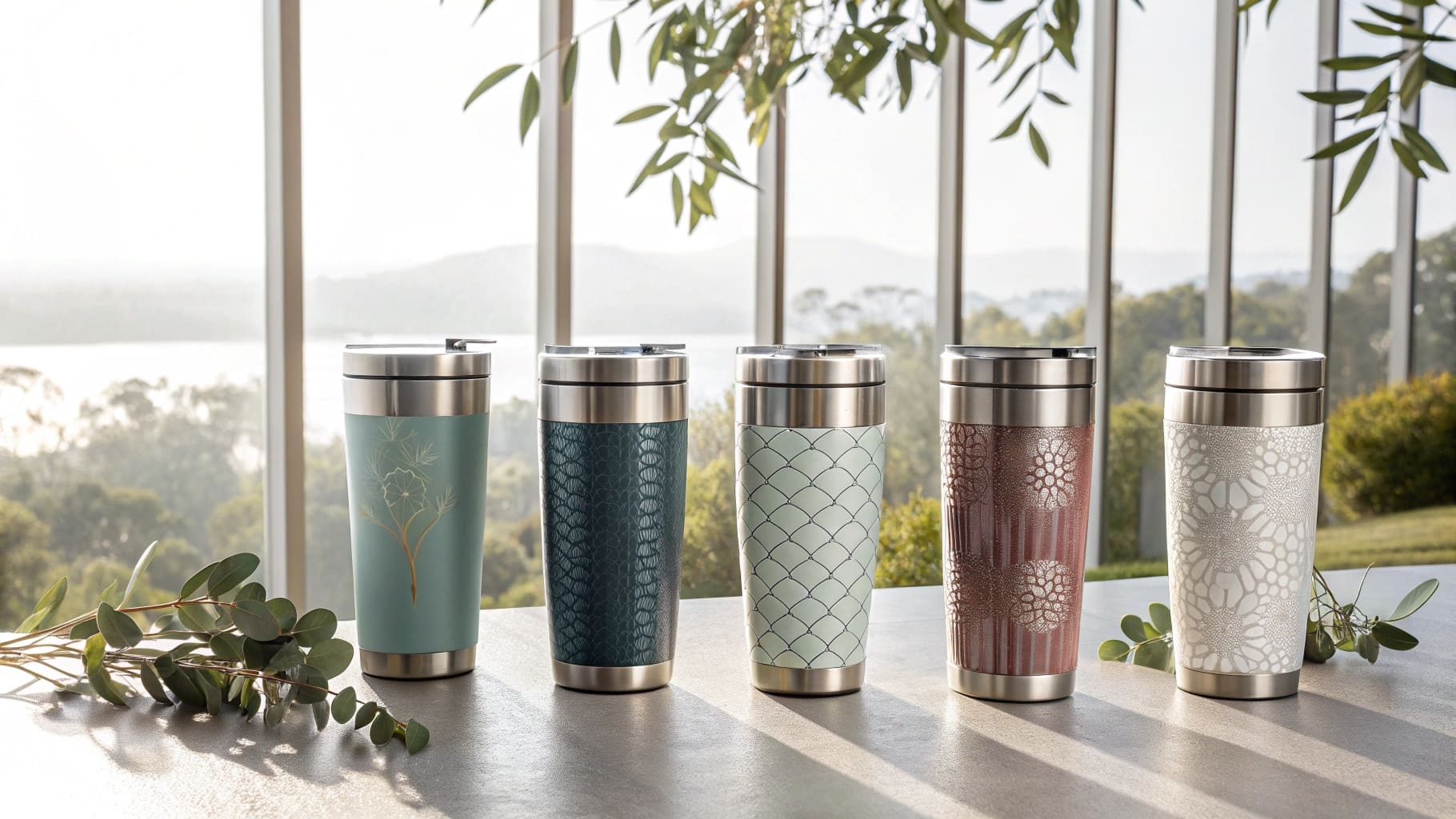
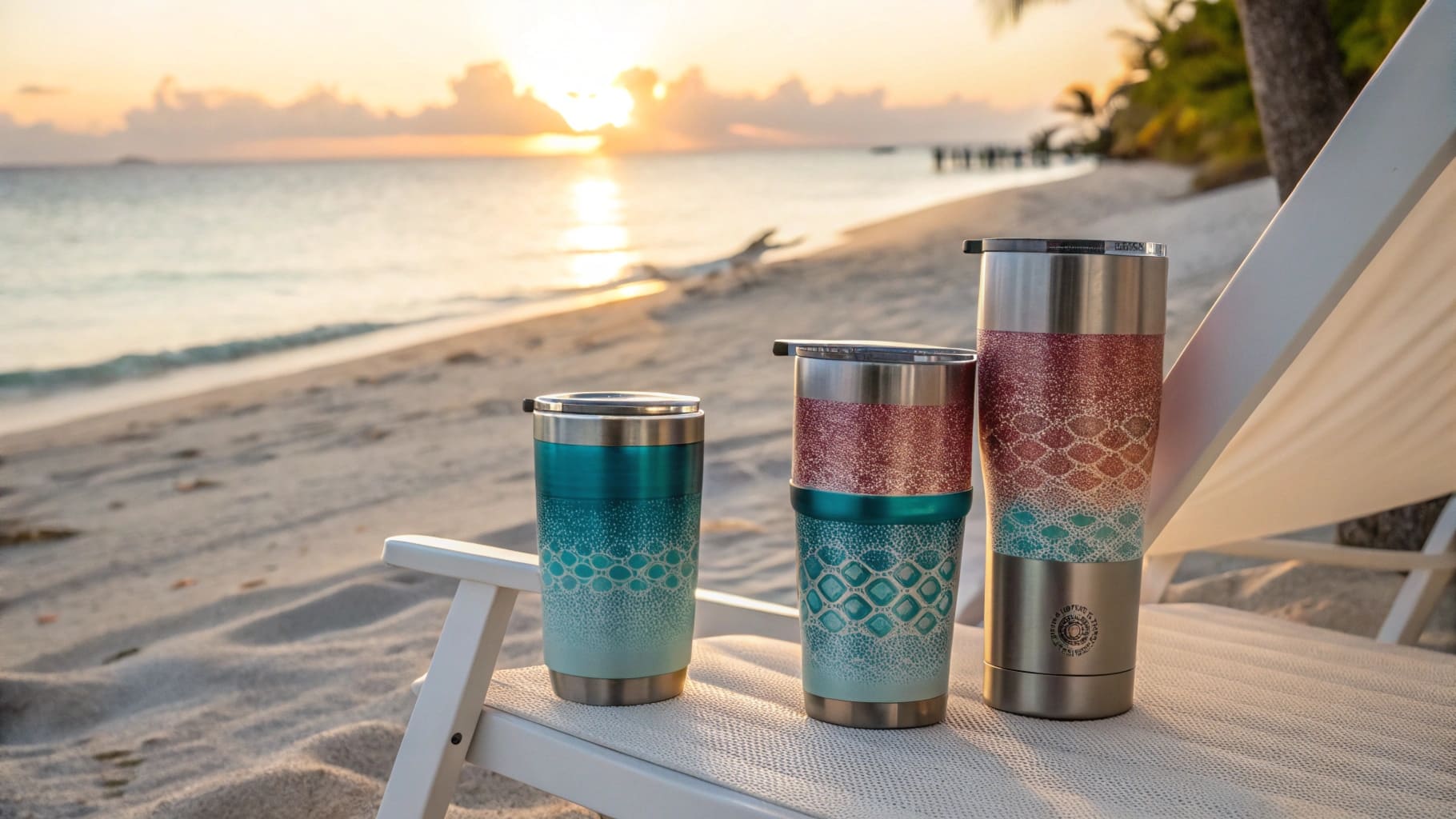
Mark orders 10,000 units quarterly. He requires logo printing6 and custom color options. This creates a challenge. Many customization processes can damage the vacuum seal or affect gasket fit.
Laser engraving works better than screen printing for stainless steel bodies. It doesn't require heat that might compromise the vacuum seal. The depth stays consistent at 0.1-0.2mm. This prevents structural weakness while creating permanent branding.
Powder coating allows custom colors but requires careful temperature control. The curing process uses high heat. If temperatures exceed specifications, the inner wall can expand. This breaks the vacuum seal. I learned to verify that suppliers maintain strict temperature monitoring during powder coating. The process should stay between 180-200°C for exactly 15 minutes.
Lid customization offers the most flexibility. You can change:
- Gasket color (while maintaining food-grade silicone)
- Handle design (without affecting seal mechanism)
- Flip-top or straw options (both can coexist)
- Logo placement on the lid top
I always recommend requesting sample units with your exact customization before placing bulk orders. Test these samples through your complete QA protocol. This catches compatibility issues before production.
Conclusion
The best insulated coffee mug for commuters combines proven engineering fundamentals with rigorous testing protocols7. Focus on lid technology, base design, material quality, and verifiable QA standards rather than brand comparisons alone.
-
Learn about innovative lid designs that enhance leak-proof capabilities and user experience. ↩
-
Explore how this innovative design offers versatility for both hot and cold beverages. ↩
-
Discover the significance of using high-quality stainless steel in ensuring safety and durability. ↩
-
Discover potential issues that can affect the performance of your travel mug. ↩
-
Explore how customization can enhance your travel mug without compromising performance. ↩
-
Learn about effective branding techniques that won't compromise mug performance. ↩
-
Explore essential testing methods to ensure the quality and reliability of your mugs. ↩
