
Paracord handles and cloth bags: stitch strength, fit checks, and MOQs
Last month, a Canadian buyer rejected 2,000 paracord handles. The stitching failed his pull test. This cost me $3,500 in remakes. I learned that day that paracord accessories demand more attention than the bottles themselves.
Paracord handles must meet three core requirements: they need breaking strength above 550 pounds, length calculations that account for braiding patterns, and MOQs around 3,000 pieces for custom production. Proper stitch testing and fit verification during sampling prevent costly rejections.
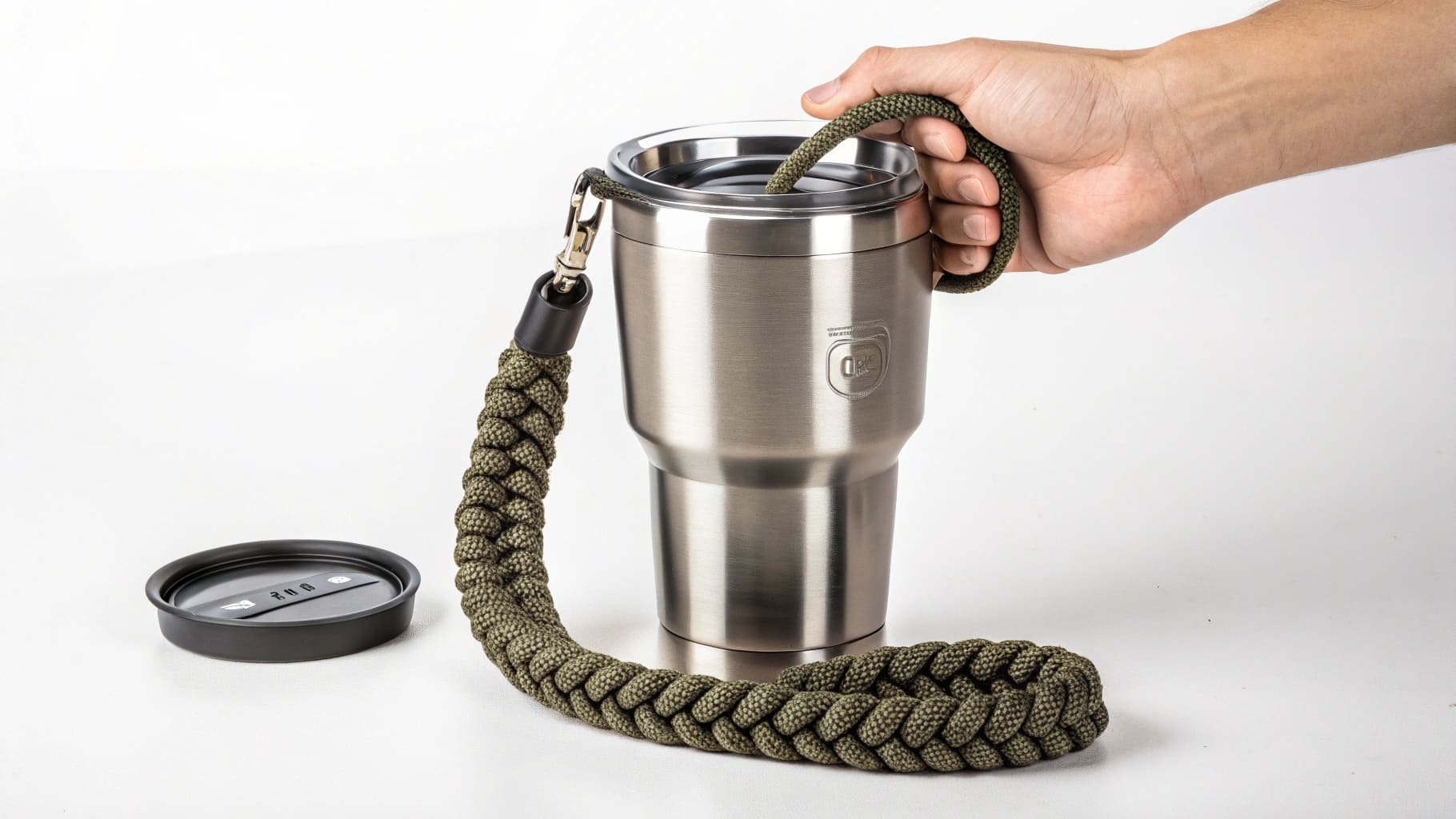
I have been supplying water bottle accessories to North American distributors for six years. The paracord handle and cloth bag segment looks simple from outside. But the technical details separate quality suppliers from problematic ones. Buyers who skip proper verification usually face returns or angry end customers.
How much force can paracord handle?
Your customers will drop bottles. They will swing them. They will hang them from backpacks during hikes. The paracord handle needs to survive all of this without snapping or stretching.
True military-spec 550 paracord offers minimum breaking strength of 550 pounds. This means the cord itself can hold that weight before it fails. But the working load should stay at 10 to 20 percent of breaking strength for safety.
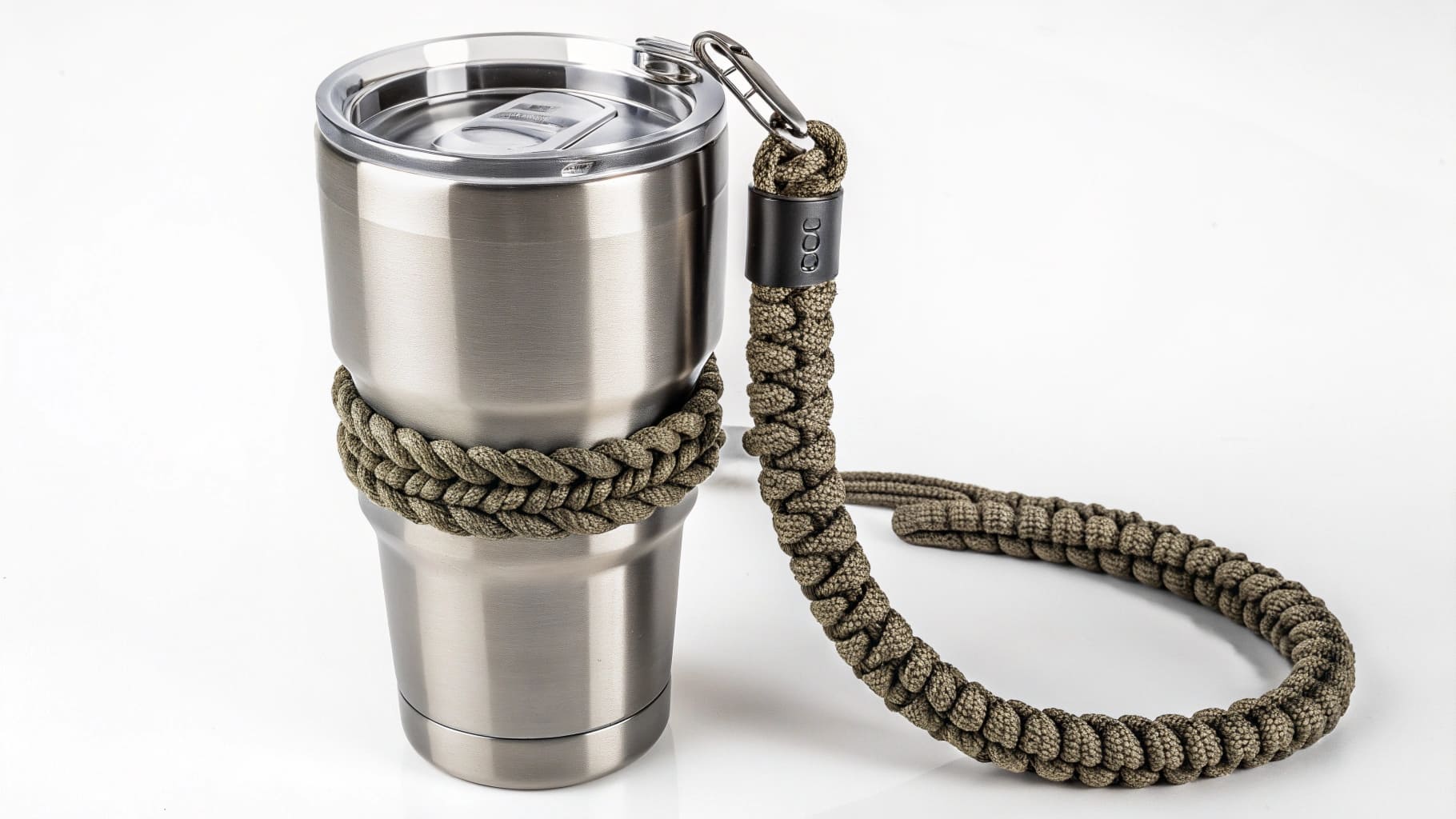
Real-world force requirements for water bottle handles
A 128-ounce stainless steel bottle weighs about 4 pounds when full. That sounds light. But dynamic forces change everything. When someone swings a bottle or drops it with the handle catching the fall, the force multiplies.
I run pull tests on every new paracord batch. My standard test applies 150 pounds of force for 30 seconds. This exceeds normal use by a safe margin. The paracord itself rarely fails during these tests. The failure point usually sits at the attachment stitching where cord meets bottle loop.
Here is how different paracord types compare for bottle handle applications:
| Paracord Type | Breaking Strength | Recommended Working Load | Best Use Case |
|---|---|---|---|
| Type I | 95 pounds | 10-20 pounds | Small bottles under 32 oz |
| Type II | 400 pounds | 40-80 pounds | Standard water bottles |
| Type III (550) | 550 pounds | 55-110 pounds | Large outdoor bottles |
| Type IV | 750 pounds | 75-150 pounds | Heavy-duty applications |
Type III paracord works for most water bottle handles. It provides enough strength with reasonable cost. Type II might save money but creates risk for larger bottles. I avoid Type I completely for handles because the safety margin becomes too thin.
The stitching matters more than the cord itself. I had a situation two years ago where the paracord tested perfectly but customer returns flooded in after three months. The issue was the thread quality at attachment points. Now I specify bonded nylon thread with minimum 40-pound test strength for all handle stitching. The thread needs to match the cord's durability or the whole system fails.
How do I calculate how much paracord I need?
Most buyers guess at paracord length. They measure the bottle circumference and think that covers it. Then production starts and the handles come up short or waste material with excess length.
Proper paracord handles require 2.5 to 3 times the finished handle length. This accounts for braiding patterns, knots at both ends, and the attachment loops that connect to bottle grommets or carabiners.
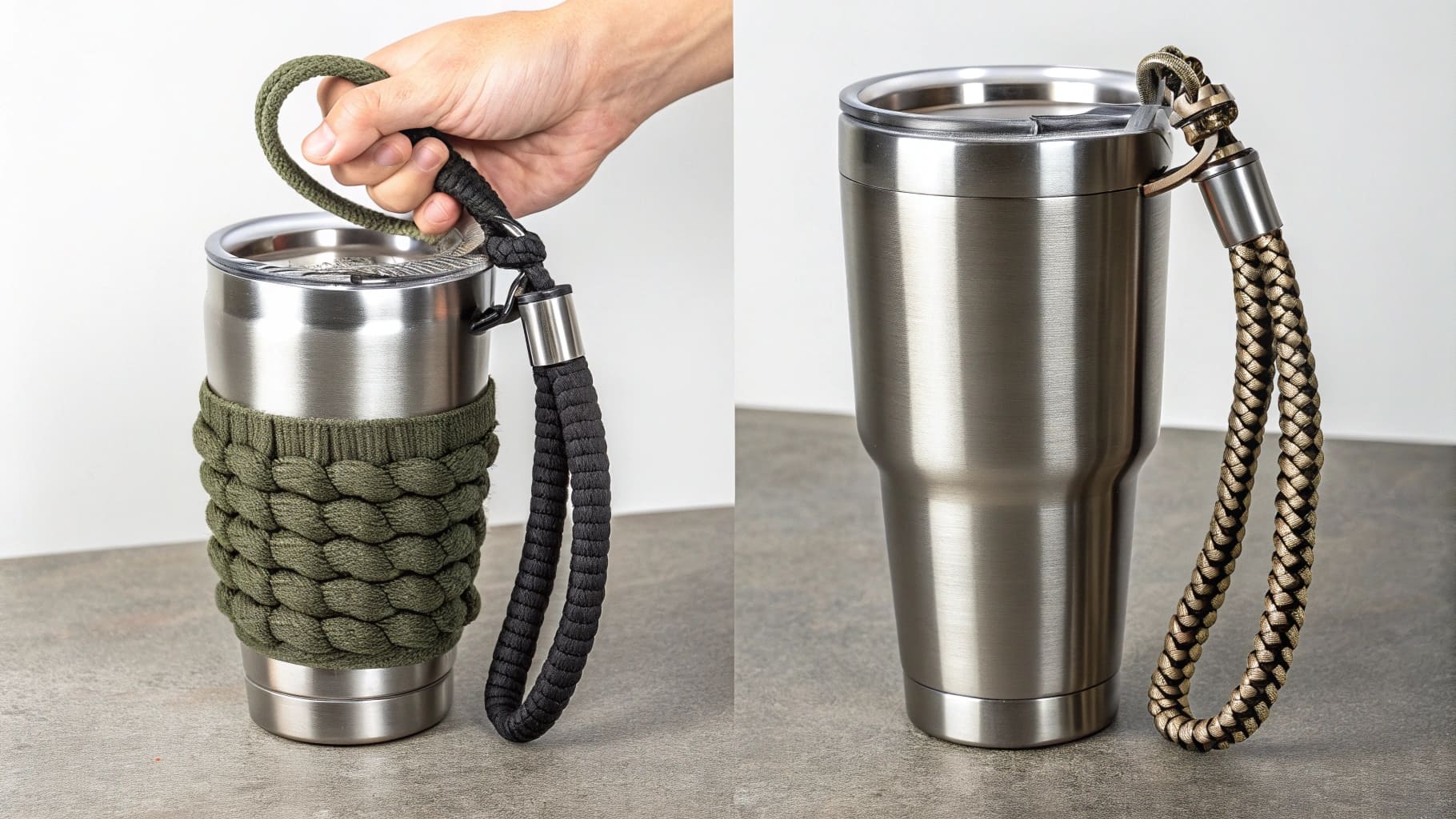
Step-by-step calculation method for paracord handles
Start with the desired finished handle length. For a standard wide-mouth water bottle, most customers want 6 to 8 inches of handle space for a comfortable grip. Add 4 to 6 inches for attachment loops and hardware integration.
I learned this calculation method after wasting 500 feet of paracord on a trial order. The customer wanted cobra weave handles but I only calculated for basic length. Cobra weave consumes more cord than simple braids because of the pattern density.
Here is my calculation formula for different handle styles:
Basic loop handle: Finished length × 2.5 + 6 inches for attachments
Cobra weave handle: Finished length × 3.0 + 6 inches for attachments
King cobra weave: Finished length × 3.5 + 6 inches for attachments
For a real example, suppose you want a cobra weave handle with 7 inches of grip space for a 64-ounce bottle. The calculation goes: 7 inches × 3.0 = 21 inches, then add 6 inches for attachments = 27 inches total paracord needed per handle.
But bottle diameter affects this too. Wide-mouth bottles need longer attachment loops because the opening is larger. I add another 2 inches to the base calculation for any bottle with mouth diameter above 2.5 inches. This prevents the handle from sitting too tight against the bottle body.
Always order samples before placing bulk orders. I send 2 to 3 prototypes with different handle lengths for buyer testing. The sample lead time runs 2 to 3 days for standard designs or 5 to 7 days for custom patterns. This small time investment prevents major headaches later.
Material waste happens during production too. I factor in 10 percent extra material for cutting waste and quality rejects. A 3,000-piece order might need paracord for 3,300 pieces in reality. This keeps production moving when some pieces fail quality checks.
What size paracord is best for handles?
Paracord comes in different diameters. The size affects both strength and comfort. Too thin cuts into hands. Too thick feels bulky and looks wrong on smaller bottles.
Standard 550 paracord measures about 4mm in diameter. This size balances strength and comfort for most water bottle applications. It provides enough grip surface without overwhelming the bottle proportions.
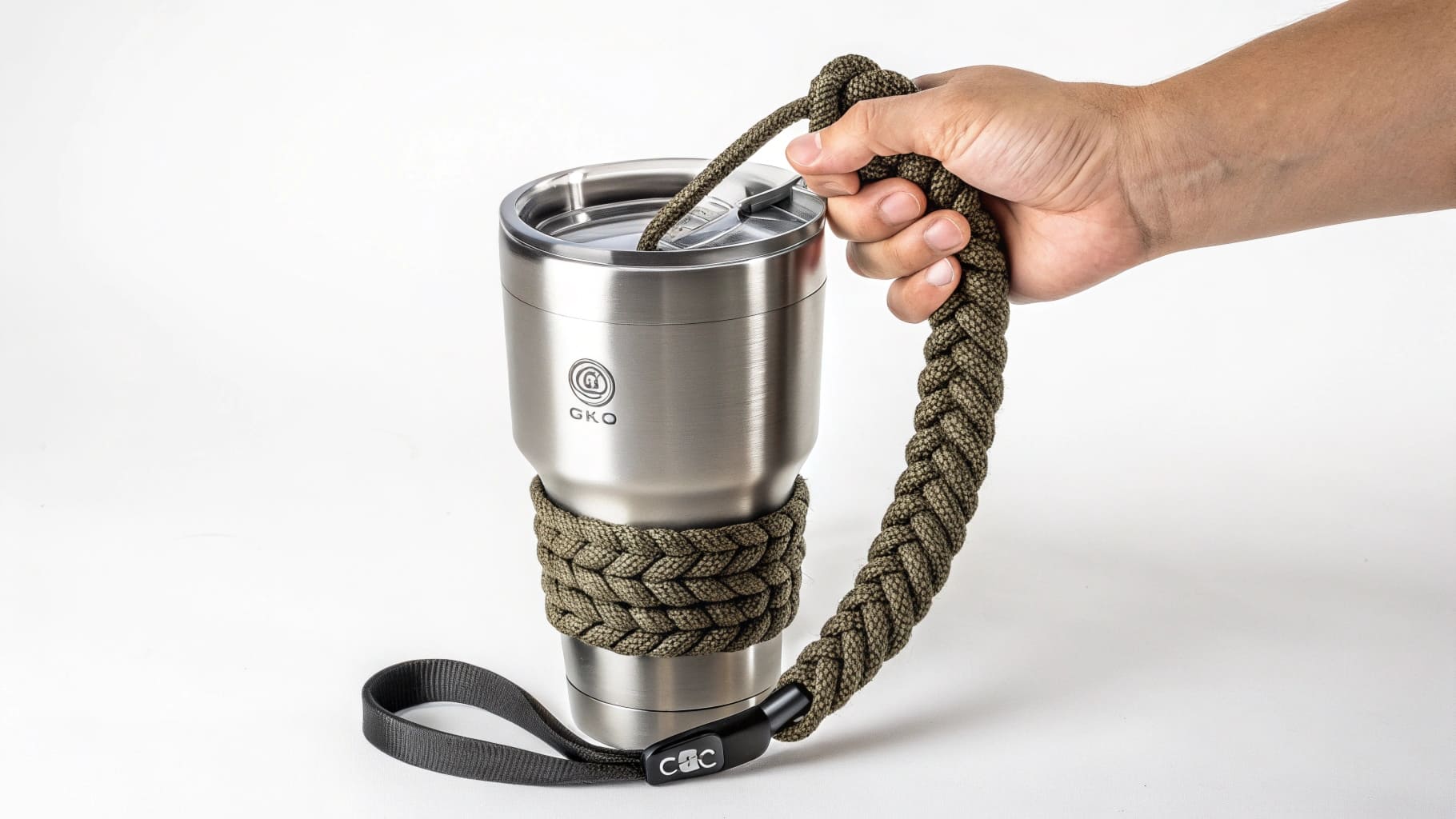
Matching paracord diameter to bottle size and user needs
I match paracord size to bottle capacity and target market. A 32-ounce bottle for office use needs different handling than a 128-ounce bottle for camping trips. The outdoor market expects thicker, more robust handles. The urban market prefers sleeker profiles.
Three months ago, a startup founder ordered handles for premium office bottles. He wanted the thinnest paracord possible for a minimalist look. I warned him that 2mm cord would not hold up. He insisted. Two weeks after his product launch, complaints started. The thin cord stretched and the handles became loose. We had to remake everything with 4mm cord.
Here is how I match paracord diameter to different bottle applications:
| Bottle Capacity | Paracord Diameter | User Scenario | Handle Comfort Level |
|---|---|---|---|
| 18-32 oz | 3-4mm | Office, gym | High - easy to carry |
| 32-64 oz | 4-5mm | Outdoor, sports | Medium - balanced grip |
| 64-128 oz | 5-6mm | Camping, hiking | Lower - prioritizes strength |
The 4mm diameter serves as the sweet spot for most orders. It works across multiple bottle sizes and markets. Keeping one standard size also helps with MOQ requirements because you consolidate volume instead of splitting it across multiple SKUs.
Color availability changes with diameter too. My paracord supplier stocks 50 color options in 4mm but only 20 colors in 6mm. Custom color matching through Pantone systems costs extra and adds 5 to 7 days to production time. Buyers who need specific brand colors should confirm availability early.
Cloth bags face similar sizing decisions. The drawstring cord typically uses 3mm paracord for lighter weight. But the bag material quality matters more than cord thickness. I use 600D polyester fabric as baseline because it resists tears and water. The stitching around stress points needs double reinforcement where drawstring exits the bag channel.
Testing involves more than just pull strength. I do abrasion tests where I rub the paracord against rough surfaces for 500 cycles. This simulates real outdoor use where handles scrape against rocks or gear. The outer sheath should show minimal fraying. If the inner core strands become visible, the quality is insufficient.
MOQ requirements for paracord handles typically start at 3,000 pieces. This reflects the economics of custom color matching1 and logo customization through laser engraving or embossing. Some suppliers offer flexibility for trial orders at 1,000 pieces but charge 15 to 20 percent premium pricing.
I require pull test documentation from every production batch. The testing protocol applies force 4 times higher than expected working loads. For a handle that normally carries 4 pounds, I test at 16 pounds minimum. This safety factor protects against manufacturing variations and material inconsistencies.
The certification requirements vary by target market. European buyers often request REACH compliance for paracord materials. North American markets care more about performance specifications than chemical compliance. But outdoor gear retailers increasingly demand both. I maintain test reports for breaking strength, UV resistance, and material composition for all paracord products.
Conclusion
Paracord handles demand attention to force ratings, length calculations, and production scales. Sample testing prevents expensive mistakes. Quality suppliers provide documentation and support proper verification before bulk orders begin.
-
Explore the process of custom color matching and its implications for branding and product design. ↩