
Why do some double-wall dishwasher-safe cups fail? Common root causes in QA
I have seen too many cases where buyers receive containers marked as "dishwasher safe," only to find water trapped between the walls after a few wash cycles. The seal breaks down. The cup loses its purpose. Your customer complains. This happens because many manufacturers cut corners during production, using materials that cannot handle the stress of repeated dishwasher exposure.
When double-wall cups fail in dishwashers, the root cause usually traces back to poor seal integrity at the rim or base, inadequate material selection for high-heat environments, or insufficient quality testing1 before shipment. These failures result in trapped moisture, warping, and loss of insulation properties that defeat the product's core value proposition.
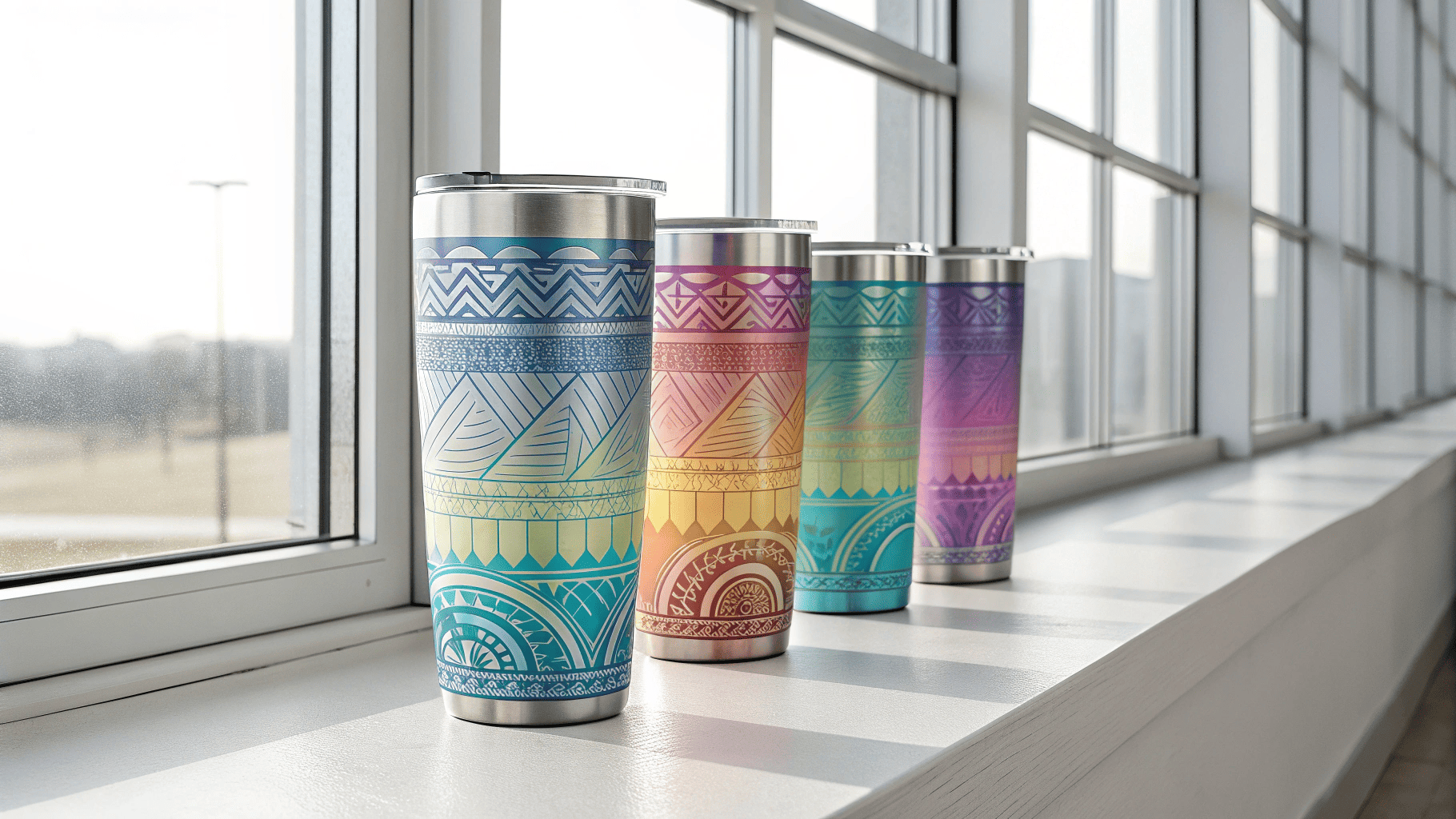
I have worked with hundreds of suppliers over the years. The ones who understand thermal stress testing and material specifications rarely face quality issues. The ones who skip these steps always do. Let me walk you through the technical vulnerabilities that cause these failures and how you can spot them during supplier qualification.
How to get water out of a double walled cup?
Water trapped between double walls signals a manufacturing defect or damage that occurred after production. Most customers do not realize this means the seal has failed. They think they can fix it somehow. They cannot.
The presence of water between the double walls indicates a breach in the seal integrity, typically at the rim joint or base weld point. This moisture cannot be removed without disassembling the cup, which is not possible for most double-wall designs. The seal failure renders the insulation properties useless.
Why does water get trapped in the first place?
The seal between the two walls serves as the barrier that maintains the air gap or vacuum needed for insulation. When manufacturers use low-quality welding techniques or skip proper seal testing, weak points develop. These weak points may not show up immediately. They appear after thermal cycling in dishwashers.
I have examined failed samples from various suppliers. The pattern repeats. Thin gauge stainless steel at the rim. Poor TIG welding that leaves microscopic gaps. No vacuum seal verification2 before packaging. The dishwasher's high-pressure water jets and temperature swings exploit these weaknesses. Water penetrates. The gap floods. The product fails.
Material choice matters here too. For plastic double-wall tumblers, materials like Tritan, PPSU, and PP offer different heat resistance levels. Tritan can handle temperatures up to 94 degrees Celsius before deformation occurs. PPSU performs better, withstanding up to 207 degrees Celsius. When a supplier uses standard PP instead of PPSU for cost savings, the material warps during dishwasher cycles. The seal distorts. Water enters.
The seal design itself plays a role. Some manufacturers use adhesive bonds at the rim. Others use mechanical crimp seals. The mechanical seals generally perform better under thermal stress. But only if the crimp force meets specification. I have seen suppliers reduce crimp pressure to increase production speed. The short-term gain costs them long-term reputation.
| Seal Type | Temperature Tolerance | Dishwasher Durability | Common Failure Point |
|---|---|---|---|
| Adhesive Bond | 80-100°C | Low | Bond degrades with detergent exposure |
| Mechanical Crimp | 120-150°C | Medium | Insufficient crimp pressure |
| TIG Weld (Stainless) | 150-200°C | High | Incomplete penetration weld |
| Vacuum Seal | 200°C+ | Very High | Poor initial vacuum level |
Can you put glass mugs in the dishwasher?
Many buyers assume that glass equals dishwasher safe. This assumption creates problems. Not all glass handles dishwasher conditions equally. The type of glass matters. The tempering process matters. The double-wall construction adds complexity.
Glass double-wall mugs can be dishwasher safe if manufactured from borosilicate glass with proper tempering, but standard soda-lime glass often fails due to thermal shock when exposed to rapid temperature changes in commercial dishwasher cycles. The manufacturer's material specification and quality control processes3 determine actual dishwasher compatibility.

What makes some glass mugs fail in dishwashers?
Borosilicate glass contains boron trioxide, which gives it superior thermal shock resistance. This material handles temperature differentials that would shatter standard glass. When you place a cold glass mug in a hot dishwasher, the rapid temperature change creates stress. Borosilicate absorbs this stress. Standard soda-lime glass does not.
I always ask suppliers for their glass composition certificates. Many cannot provide them. They source from glass manufacturers who make unverified claims. The first batch works fine. The second batch uses different glass formulation. Failures appear. Your customer's trust disappears.
The double-wall construction adds vulnerability. The two glass layers expand at different rates during heating. If the seal between the layers lacks flexibility, stress concentrates at the connection points. Micro-cracks develop. These cracks propagate with each dishwasher cycle until the mug fails catastrophically.
Tempering process matters too. Properly tempered glass undergoes controlled heating and rapid cooling that creates compression stress on the surface. This compression makes the glass stronger and more resistant to thermal shock. But tempering adds cost. Some suppliers skip it. They claim their mugs are dishwasher safe anyway. They are not.
The dishwasher detergent itself attacks glass over time. Alkaline detergents etch the glass surface. This etching appears as cloudiness. The cloudy surface has microscopic pits. These pits become stress concentration points. Thermal cycling propagates cracks from these points. The mug looks fine until it suddenly shatters.
Can you put boiling water in double walled glass?
Customers often fill their new double-wall glass mugs with boiling water straight from the kettle. Sometimes the mug survives. Sometimes it cracks immediately. This inconsistency points to quality control issues during manufacturing.
Quality double-wall glass vessels made from borosilicate glass can safely handle boiling water due to the material's low thermal expansion coefficient, but only if properly manufactured with uniform wall thickness and adequate seal design. Poor quality control results in stress points that fail under thermal shock from boiling liquids.
Understanding thermal shock resistance in double-wall construction
Thermal shock resistance depends on the thermal expansion coefficient of the material. Borosilicate glass has a coefficient around 3.3 x 10^-6/K. Soda-lime glass has a coefficient around 9 x 10^-6/K. The lower the coefficient, the less the material expands when heated. Less expansion means less stress. Less stress means fewer failures.
For stainless steel double-wall cups, the situation differs. Food-grade 18/8 stainless steel handles boiling water without issue. The material does not suffer from thermal shock like glass. But the seal still matters. Poor vacuum sealing or inadequate base welding creates failure points.
I test samples by filling them with boiling water, then immediately plunging them into ice water. This thermal shock test reveals weak points quickly. Quality products survive multiple cycles. Poor products crack or show seal failure after just a few cycles. Your supplier should perform this test routinely. Most do not.
Wall thickness uniformity matters critically for glass double-wall mugs. Manufacturing tolerances must stay tight. When one section of the wall is thinner than another, thermal stress concentrates in the thin area. The stress exceeds the material's strength. Fracture occurs. I have measured wall thickness variation in failed samples. The coefficient of variation often exceeds 15%. Quality products keep this under 5%.
The seal between the inner and outer walls must accommodate thermal expansion. Rigid seals crack. Flexible seals survive. Some manufacturers use silicone gaskets4 at seal points. Others use glass-to-glass fusion seals with controlled flexibility. The fusion seals perform better but require precise temperature control during manufacturing. Suppliers without proper quality systems cannot maintain the consistency needed.
For plastic double-wall tumblers, boiling water presents different challenges. Materials like PP and standard PC deform above 100°C. Only PPSU-grade plastics reliably handle boiling water, with temperature resistance up to 207°C. When a supplier claims their PP tumbler handles boiling water, they are either lying or ignorant. Neither option builds confidence.
The vacuum seal quality affects performance too. A proper vacuum between the walls prevents heat transfer to the outer surface. Poor vacuum allows heat conduction. The outer wall becomes too hot to hold. Customers perceive this as a defect. They are right. The vacuum pressure should stay below 0.1 Pa. Most suppliers cannot verify their vacuum levels. They lack the testing equipment.
| Material | Max Safe Temperature | Boiling Water Compatible | Thermal Shock Risk | Quality Indicator |
|---|---|---|---|---|
| Borosilicate Glass | 400°C+ | Yes | Low | Uniform wall thickness <5% variation |
| Soda-Lime Glass | 200°C | No | High | Often shows stress patterns under polarized light |
| 18/8 Stainless Steel | 500°C+ | Yes | Very Low | Clean TIG weld with full penetration |
| PPSU Plastic | 207°C | Yes | Low | No warping after 100°C water test |
| PP Plastic | 100°C | No | Medium | Visible deformation above 90°C |
| Tritan Plastic | 94°C | No | Medium | Cracks appear above rated temperature |
Conclusion
Double-wall cup failures stem from predictable causes: poor seal integrity, inappropriate material selection, and inadequate quality testing. I always verify these three areas before placing orders. You should too. Your brand reputation depends on it.
-
Understanding quality testing can help you ensure the products you buy are reliable. ↩
-
Understanding vacuum seal verification can help you choose products that maintain insulation. ↩
-
Understanding quality control can help you ensure the products you buy are reliable. ↩
-
Explore how silicone gaskets enhance seal performance for better insulation. ↩