
Which tumbler finishes resist fingerprints best: powder coat, PVD, or brushed?
I often see buyers choose a shiny tumbler finish, then panic when every touch leaves marks before a product photo or client sample review.
I find brushed finishes hide fingerprints best in daily use, powder coat masks them well, and PVD resists oil best when the surface has a satin or matte design1. For most wholesale tumbler projects, I choose brushed for practical concealment, powder coat for color, and PVD for premium branding.
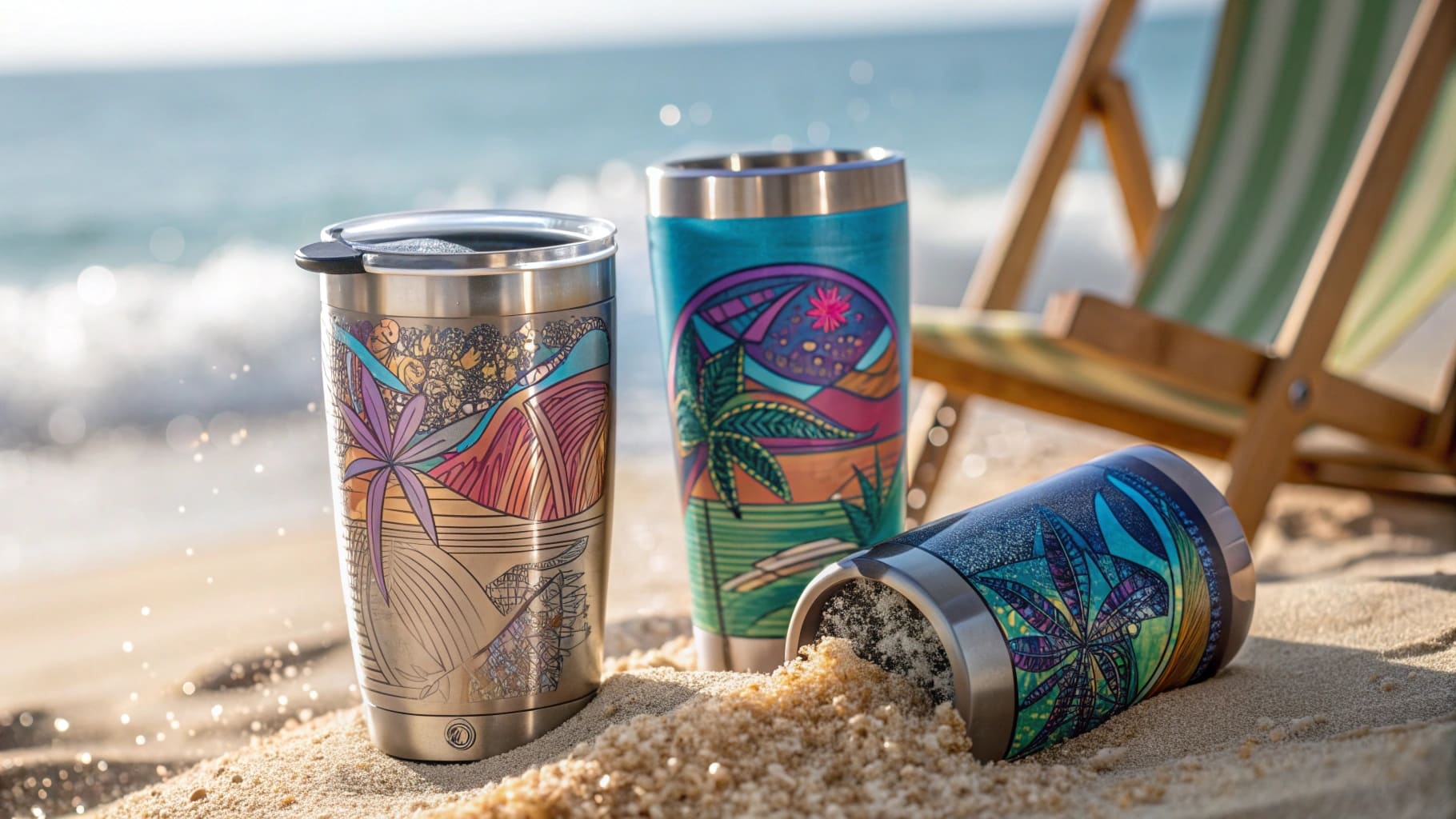
I do not treat finish as a small design choice. I treat it as a sales tool, a quality signal, and a risk point. When I prepare samples for a buyer in Canada, Europe, or America, I test the finish under office light, warehouse light, and phone camera light. I do this because fingerprints can look minor in a factory, but they can look serious in a retail photo or boardroom sample review. That is why I compare powder coat, PVD, and brushed finish by real use, not only by appearance.
Which is better PVD coating or powder coating?
I see many buyers compare price first, then discover that coating choice affects photos, returns, and how premium a tumbler feels in the hand.
I choose PVD when a brand needs a hard, sleek, premium surface with strong oil resistance. I choose powder coating when a brand needs many colors, soft touch, and lower cost at higher volume. The better choice depends on market position, not only coating strength.
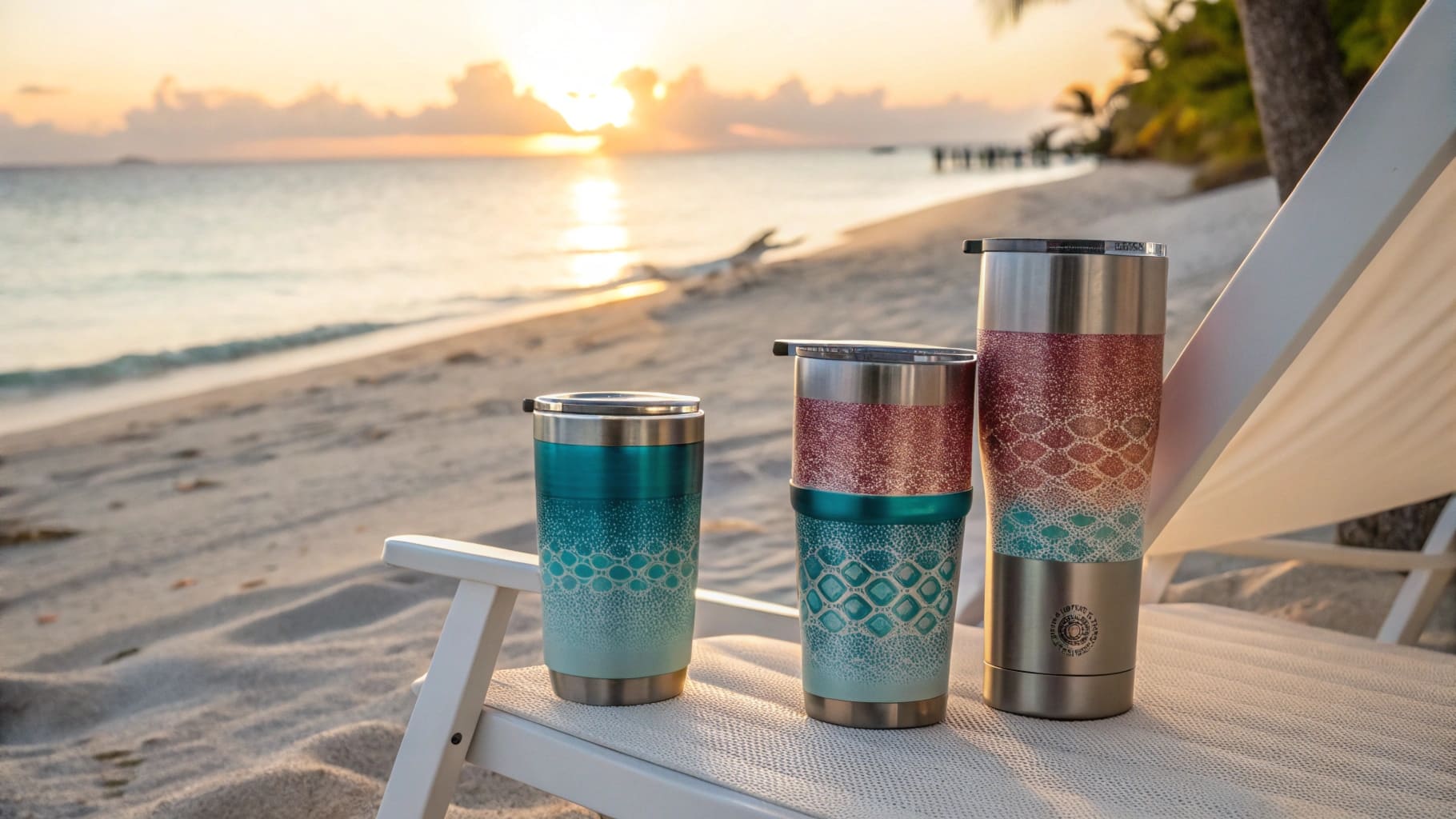
How I compare PVD and powder coat in sourcing
I compare PVD and powder coat by purpose. I do not ask which coating is always better, because that question can mislead a buyer. I ask where the tumbler will be sold, how the brand will position the item, and what price the buyer must reach. PVD looks modern and clean. It also feels more premium when the color is metal based, such as gold, black, champagne, or steel tone. Powder coat gives me more freedom in color. I can match brand colors more easily2, and I can create a soft, matte surface that hides marks well.
| My buying question | PVD coating | Powder coating |
|---|---|---|
| I need a premium look | I usually prefer it | I use it when the color story is stronger |
| I need wide color choice | I use it less often | I usually prefer it |
| I need lower unit cost | I use it only for higher price lines | I usually choose it |
| I need better scratch resistance | I trust it more | I check the formula and test result |
| I need simple logo branding | I use laser or controlled printing | I use printing, laser, or decal options |
I also look at inspection risk. PVD must be controlled well in the vacuum process. A poor PVD finish can show color drift or weak adhesion.3 Powder coat must be cured well. A poor powder coat can chip, peel, or show orange peel texture.4 I ask for sample approval before bulk order. I also ask my team to rub the surface by hand, touch it after using hand cream, and photograph it under strong light. This simple test tells me more than a smooth sales claim. For a buyer who lacks technical background, I explain the result in plain terms. If the target customer pays for premium feel, I suggest PVD. If the target customer needs colorful stock for a promotion, I suggest powder coat.
What does "powder coated tumbler" mean?
I have met buyers who like the phrase powder coated, but they still feel unsure about what is actually added to the tumbler surface.
A powder coated tumbler is a stainless steel tumbler covered with dry color powder, then heated so the powder melts and bonds to the metal. I use it when a buyer wants a durable colored surface, a matte hand feel, and strong logo options for wholesale projects.
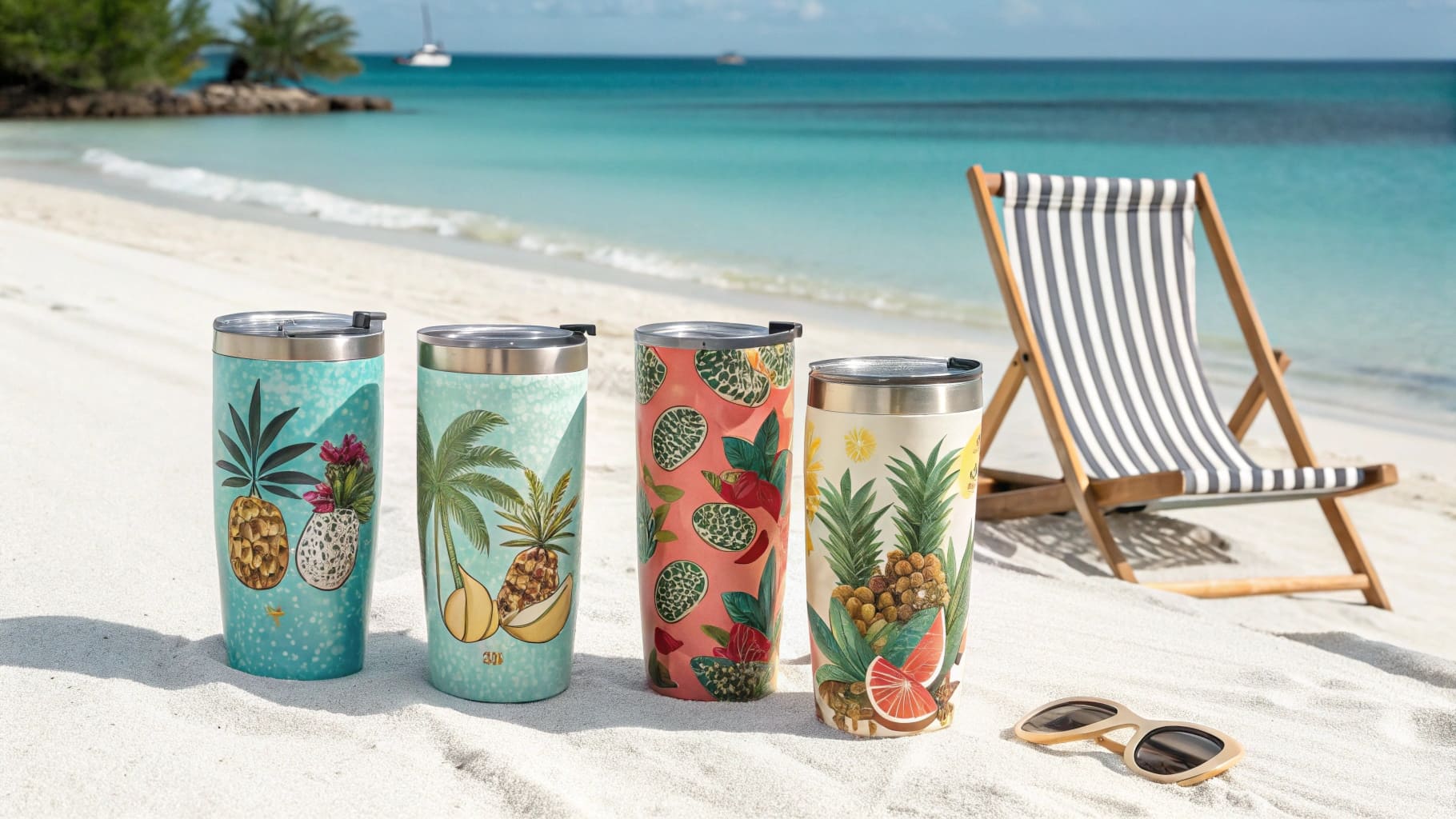
What I expect from a powder coated tumbler
I see powder coating as a practical finish for mass market stainless steel tumblers. The factory sprays fine dry powder onto the tumbler body. The powder sticks to the metal surface through static charge. Then the tumbler enters a heated curing area.5 The heat melts the powder and forms a solid color layer. This layer is thicker than many metal coatings. Because of this, it can cover small surface marks and create an even visual effect. It does not make fingerprints disappear. It makes them less obvious because the surface has texture, softness, or lower shine.
| My check point | What I look for | Why I care |
|---|---|---|
| Surface feel | I look for smooth matte or fine texture | I want fingerprints to blend into the finish |
| Color match | I compare the sample with the brand target | I want repeat orders to stay consistent |
| Edge coverage | I check the rim, base, and curve areas | I want to avoid weak coating points |
| Logo area | I test printing or laser position | I want branding to look clean |
| Packing test | I check rubbing during transport | I want the goods to arrive sale ready |
I like powder coat for promotional orders because it gives a strong balance between look and cost. A company can order black, white, navy, beige, green, or custom colors, and the product can still look professional. I also remind buyers that the quality depends on pretreatment, powder quality, curing time, and packing. If one step is weak, the tumbler may look good in the first photo but fail during shipping or daily use. I have seen samples that looked perfect at first, but the base edge showed damage after simple table contact. That is why I always test the bottom, the curve near the shoulder, and the area around the logo. These small areas show the real coating level.
What is the best powder coat finish?
I know buyers want one safe answer, but the best powder coat finish changes when the market, logo style, and retail price change.
I usually choose a fine matte powder coat for fingerprint resistance, brand color control, and daily grip. I use semi gloss only when the brand wants brighter color. I avoid very glossy powder coat when fingerprint visibility is a key concern.
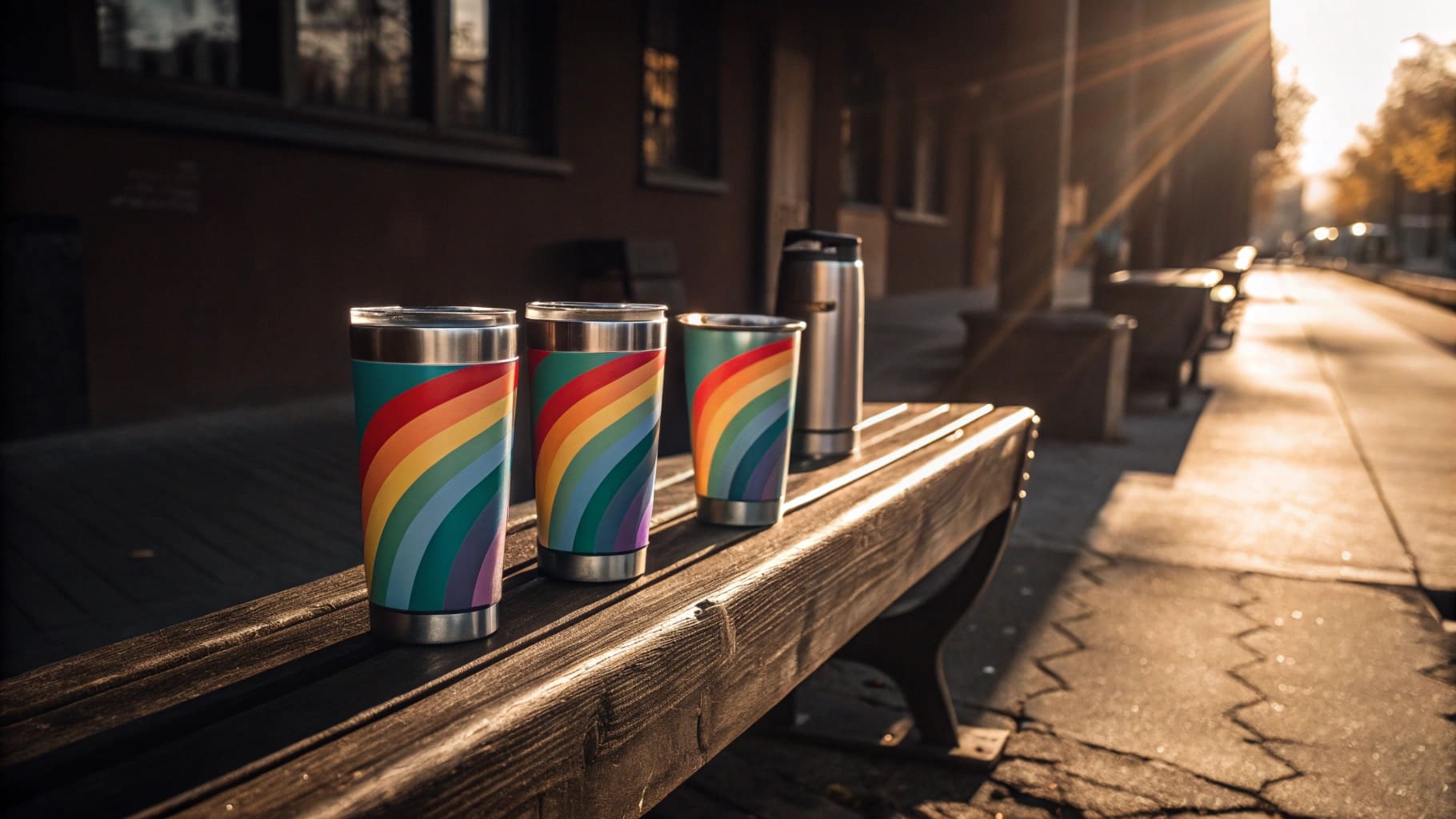
How I choose the best powder coat surface
I do not choose powder coat only by color. I choose it by texture, shine level, and the way the customer will touch the tumbler. A fine matte finish is my common choice because it hides fingerprints better than gloss6 and still feels clean. It also gives the hand a secure grip. This matters for stainless steel water bottles and tumblers because the user touches the body many times each day. If the surface is too smooth and shiny, skin oil becomes more visible. If the surface is too rough, dust can stay in the texture and the product may feel cheaper.
| My powder coat option | Fingerprint control | Best use case |
|---|---|---|
| Fine matte | I rate it strong | I use it for most retail and corporate orders |
| Semi gloss | I rate it medium | I use it for brighter brand colors |
| Rough texture | I rate it strong but risky | I use it only when grip is the main feature |
| High gloss | I rate it weak | I use it when shine matters more than touch marks |
| Soft touch | I rate it good but I test it carefully | I use it for premium hand feel when budget allows |
I also match the finish to the logo process. A fine matte surface works well with many printed logos. It also supports a clean laser effect when the coating and base material are suitable. For a buyer who sells rebranded bottles in Canada, I often suggest testing the real logo size on the real coating before confirming bulk production. A small logo may look sharp on matte black, but a large light color logo may need another method. I also ask for approval samples before shipment. This helps avoid slow communication later, because the buyer can approve color, texture, logo, and packing at the same time. If the order targets peak season, I do not want finish changes to delay production. A good powder coat choice should protect the sales plan, not only look good in a sample photo.
How should I choose between brushed, powder coat, and PVD for a tumbler order?
I have seen good buyers lose time because they choose a finish by taste, then realize the finish does not fit the sales channel.
I choose brushed finish for practical fingerprint concealment, powder coat for color and value, and PVD for premium positioning. The best finish is the one that matches the buyer’s price point, quality promise, logo plan, and delivery schedule.
My finish decision table for wholesale tumbler projects
I start with the customer profile. If the buyer sells to corporate clients, the finish must look clean under meeting room light. If the buyer sells through retail, the finish must look strong in photos and survive shelf handling. If the buyer sells promotional bottles, the finish must support color, logo, and cost control. Brushed finish is often the safest surface when fingerprint hiding is the main concern. The linear grain breaks the look of touch marks. It also keeps a stainless steel look without extra color coating. Powder coat works well when the buyer needs brand colors and a warmer hand feel. PVD works best when the brand wants a higher price image and a harder surface.7
| My target project | My usual finish choice | My reason |
|---|---|---|
| Corporate gift line | I choose PVD or fine matte powder coat | I want a clean and higher value look |
| Mid market water bottle | I choose brushed or powder coat | I want simple quality and stable cost |
| Promotion campaign | I choose powder coat | I want color range and logo flexibility |
| Minimal metal style | I choose brushed | I want fingerprints to hide in the grain |
| Premium lifestyle brand | I choose PVD | I want a modern surface and strong shelf appeal |
I also check certification and logistics before I confirm the finish. A finish decision can affect testing, lead time, defect rate, and packing method. I never want a buyer to discover these points after paying a deposit. I explain the trade-off early. Brushed finish has low processing cost, but it has a more industrial look. Powder coat has strong color value, but it needs careful curing and packing. PVD looks premium, but it needs stricter surface control and higher budget. When I share this with a buyer like a company owner or procurement officer, I keep the message direct. The finish should support the brand story, reduce complaints, and arrive before the selling season.
Conclusion
I choose brushed for hiding touch marks, powder coat for color and value, and PVD for premium feel when the selling price supports it.
-
"Tunable, permanent and instantly available super-wettability states on ...", https://pmc.ncbi.nlm.nih.gov/articles/PMC12307744/. Surface energy and roughness studies suggest that matte or satin textures increase micro-scale surface area and alter contact angle behavior of oils, which can reduce the uniform spread of sebaceous fingerprint residues and decrease their visual prominence. Evidence role: mechanism; source type: research. Supports: The relationship between surface roughness or texture in PVD coatings and their resistance to visible oil or fingerprint deposition. Scope note: Most available research addresses wettability in functional coatings rather than decorative PVD on consumer products specifically. ↩
-
"PVD for Decorative Applications: A Review - PMC - NIH", https://pmc.ncbi.nlm.nih.gov/articles/PMC10381906/. Powder coating manufacturers commonly offer color ranges compatible with RAL and Pantone color systems, enabling close brand color matching across custom formulations; PVD color range is more constrained by the physics of thin-film interference and target material selection. Evidence role: general_support; source type: institution. Supports: The breadth of color options available through powder coating systems and their compatibility with standardized color matching systems. Scope note: Direct side-by-side color gamut comparisons between PVD and powder coat for consumer products are not widely published in neutral academic sources. ↩
-
"Thin Film Deposition & Vacuum Technology", https://brightspotcdn.byui.edu/dd/77/29776abd49debcfae8c18c51446d/stefan-lofgranw13.pdf. Research on PVD thin-film deposition identifies substrate preparation, target purity, and chamber pressure as critical variables; deviations in these parameters are associated with reduced adhesion and spectral color non-uniformity in decorative coatings. Evidence role: mechanism; source type: research. Supports: Process control parameters in PVD deposition that affect coating adhesion strength and color consistency. Scope note: Available literature often addresses industrial or optical PVD rather than consumer product decorative coatings specifically. ↩
-
"Generic Testing and Quality Assurance", https://archive.epa.gov/nrmrl/archive-etv/web/pdf/06_vp_powder.pdf. Powder coating defects such as orange peel, chipping, and delamination are associated with insufficient curing temperature or duration, inadequate surface pretreatment, and improper film thickness, as documented in polymer coating quality literature. Evidence role: mechanism; source type: research. Supports: Documented failure modes of powder coatings including orange peel texture, chipping, and delamination linked to curing and application variables. Scope note: Technical sources typically address industrial or architectural coatings; consumer drinkware-specific data may be limited. ↩
-
"Powder coating", https://en.wikipedia.org/wiki/Powder_coating. Powder coating is applied electrostatically as a dry powder, which is then cured under heat to form a hard, durable surface layer; the electrostatic charge causes the powder to adhere to the grounded metal workpiece prior to curing. Evidence role: mechanism; source type: encyclopedia. Supports: The electrostatic spray deposition and oven-curing mechanism by which powder coatings bond to metal substrates. ↩
-
"Surface-specific performance of metal and metal oxide nanoparticles in ...", https://pmc.ncbi.nlm.nih.gov/articles/PMC12508418/. Studies on surface appearance and soiling perception indicate that high-gloss surfaces enhance the specular contrast of thin oil films such as fingerprints, whereas matte surfaces diffuse reflected light and reduce the perceptual visibility of such deposits. Evidence role: expert_consensus; source type: research. Supports: Optical or perceptual evidence that matte surfaces reduce the visual salience of fingerprint residues compared to glossy surfaces. Scope note: Controlled psychophysical studies specifically on drinkware finishes are scarce; findings are generally extrapolated from architectural and automotive coating research. ↩
-
"PVD Coating vs Powder Coating — Know the Difference", https://providencemetallizing.com/feeds/blog/difference-pvd-coating-powder-coating. PVD coatings such as titanium nitride and chromium nitride exhibit Vickers hardness values typically ranging from 1500 to 3000 HV, far exceeding the pencil hardness ratings of 2H–4H common for cured thermosetting powder coatings, supporting PVD's superior scratch resistance. Evidence role: statistic; source type: research. Supports: Comparative hardness values for PVD coatings versus powder coatings on metal substrates. Scope note: Decorative PVD coatings for consumer products are generally softer than hard-functional PVD grades; direct hardness comparisons under consumer-use conditions are not widely published. ↩
