
Which stainless steel cups suit schools best: size, weight, spill-proof lids?
I talk with school procurement officers every month. They worry about the same things. Students drop bottles. Lids leak in backpacks. Parents complain about heavy weights.
Schools need 12-14 oz cups for elementary students and 18-24 oz for older kids1. The weight should stay under 250g. Get screw-top or flip-straw lids with silicone gaskets. These designs survive the rough handling that happens in classrooms.

I started selling stainless steel cups to schools five years ago. The first year taught me hard lessons. One school ordered 500 bottles with push-button lids. Half came back broken within three months. The students pressed the buttons too hard. I learned that simple designs work better for educational institutions.
What grade stainless steel is best for water bottles?
Schools ask me this question first. They want safe materials. They also need to stay within budget. The steel grade affects both.
Food-grade 304 stainless steel works for most schools2. It meets FDA and EU regulations. The cost fits institutional budgets. I recommend it to 90% of school buyers.
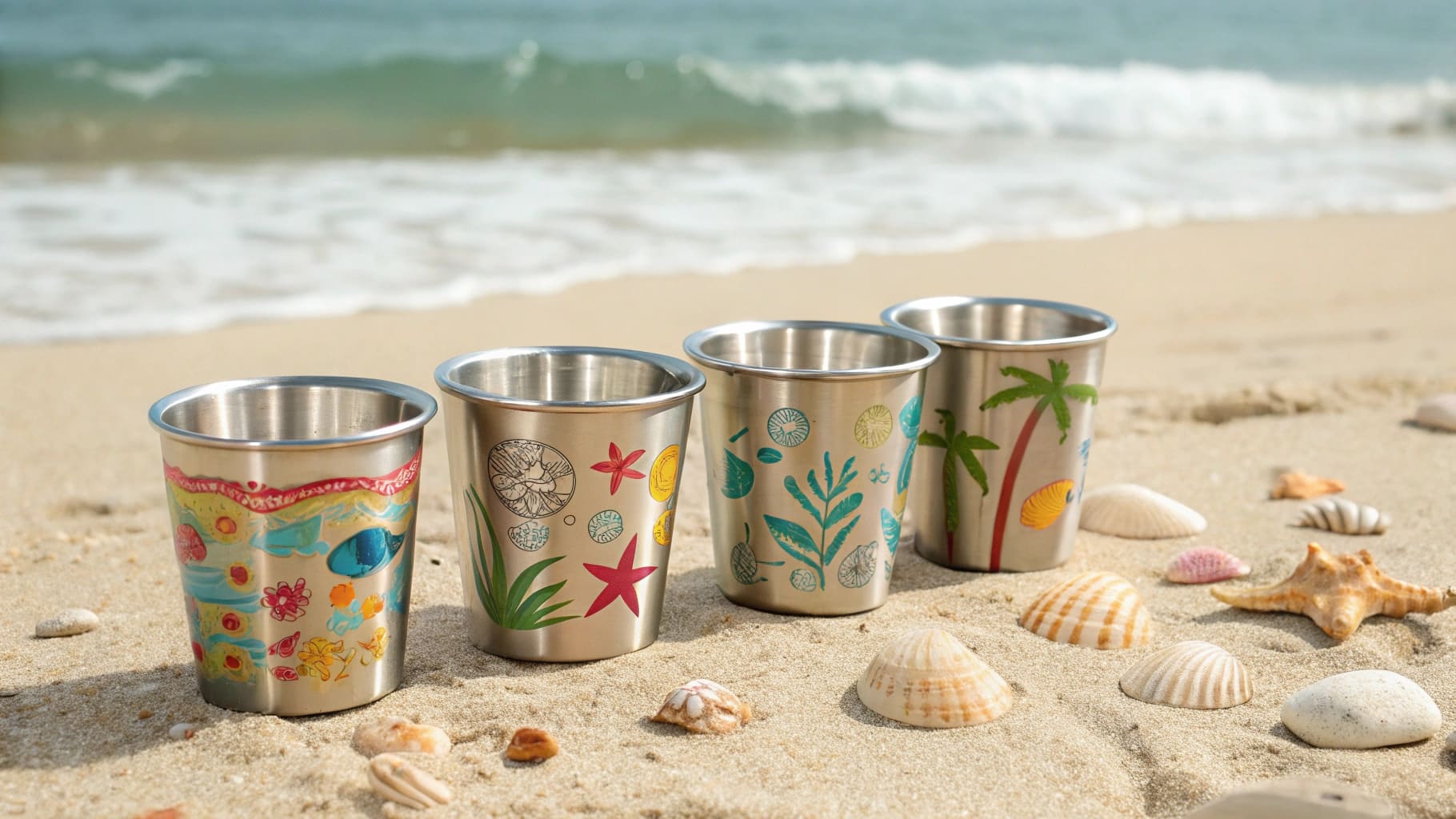
I tell buyers to think about their location. Most schools need 304 stainless steel. This grade contains 18% chromium and 8% nickel. The chromium creates a protective layer3. This layer stops rust and corrosion. I have sold thousands of 304 bottles to schools across America and Europe. They last for years with normal use.
Some schools near oceans ask about 316 stainless steel. This grade adds molybdenum. The molybdenum helps resist saltwater corrosion. A school in California once asked me about this. They were three blocks from the beach. Students brought bottles to outdoor activities near the water. For them, 316 made sense. But the price jumps 30-40% higher than 304.
I always check the full material composition. The bottle body uses 304 or 316 steel. But what about the lid? Many suppliers use plastic components in lids. These plastics must be BPA-free4. I test samples before confirming orders. One supplier in Vietnam claimed BPA-free lids. My test showed they were lying. I dropped that supplier immediately.
Here is how the grades compare:
| Steel Grade | Chromium % | Nickel % | Special Addition | Price Level | Best For |
|---|---|---|---|---|---|
| 304 | 18 | 8 | None | Standard | Most schools |
| 316 | 16-18 | 10-14 | Molybdenum | 30-40% higher | Coastal schools |
| 201 | 16-18 | 3.5-5.5 | Manganese | 15% lower | Not recommended |
Grade 201 costs less. Some suppliers push it for budget orders. I do not recommend it for schools. The lower nickel content means it rusts easier5. Students will see brown spots after a few months. Parents will complain. The savings are not worth the problems.
Are stainless steel cups safe for kids?
Parents call schools about this. School administrators then call me. They need facts to share with worried parents. Safety goes beyond the steel grade.
Yes, stainless steel cups are safe for kids when properly designed. The steel itself does not leach chemicals. But the design details matter more than the material alone.
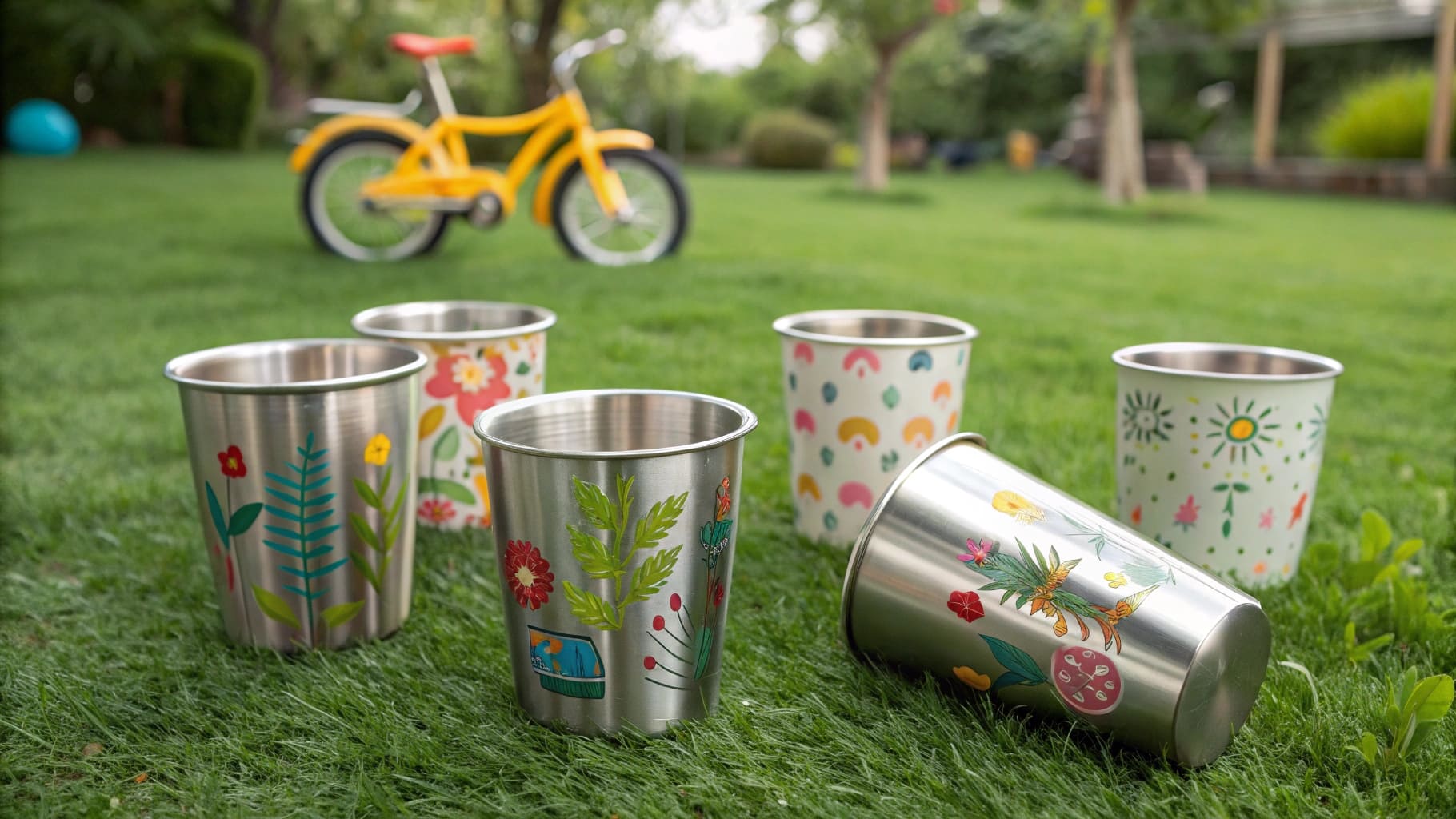
I focus on three safety areas when I talk with school buyers. First, the physical design must prevent injuries. Sharp edges cut fingers. Small parts become choking hazards. I had one buyer almost order bottles with removable straws. The straws came in three pieces. A kindergarten teacher pointed out the choking risk. We switched to fixed straw designs.
Round edges make bottles safer. I tell my factory to smooth all edges during production. The bottom rim needs rounding. The drinking spout needs rounding. Even the handle attachment points need smooth transitions. One school reported a student got a cut lip from a sharp spout edge. That taught me to inspect every edge carefully.
The lid assembly creates most safety concerns. Complex mechanisms have small springs and buttons. These parts can break off. Students put things in their mouths. A simple screw-top lid has fewer risks. Flip-straw lids work well if the straw connects firmly to the cap. I avoid push-button lids for elementary schools entirely.
Double-wall vacuum insulation adds safety beyond temperature control. Hot liquids stay hot inside. But the outside stays cool enough to touch6. This prevents burns. The vacuum layer also stops condensation. Wet bottles slip from hands and fall. Dry bottles are easier to grip.
Weight matters for safety too. A heavy bottle becomes a weapon when students swing backpacks. I recommend keeping elementary bottles under 200g empty. Middle school bottles can go to 250g. High school students handle up to 300g without problems. I weigh every sample before approving production.
Certification documents prove safety claims. I send FDA compliance certificates with every school order. European schools need different paperwork. I keep both sets ready. Some buyers ask for CPSIA compliance for children's products. I provide that too. Never trust a supplier who cannot show certification immediately.
Which tumbler keeps ice the longest?
Schools in hot states care about this question. Students need cold water all day. Ice melting by lunchtime creates complaints. Buyers want specific performance numbers.
Quality vacuum insulation keeps ice for 24 hours minimum. But real performance depends on wall thickness, vacuum quality, and lid seal. I test samples in my office before placing orders.
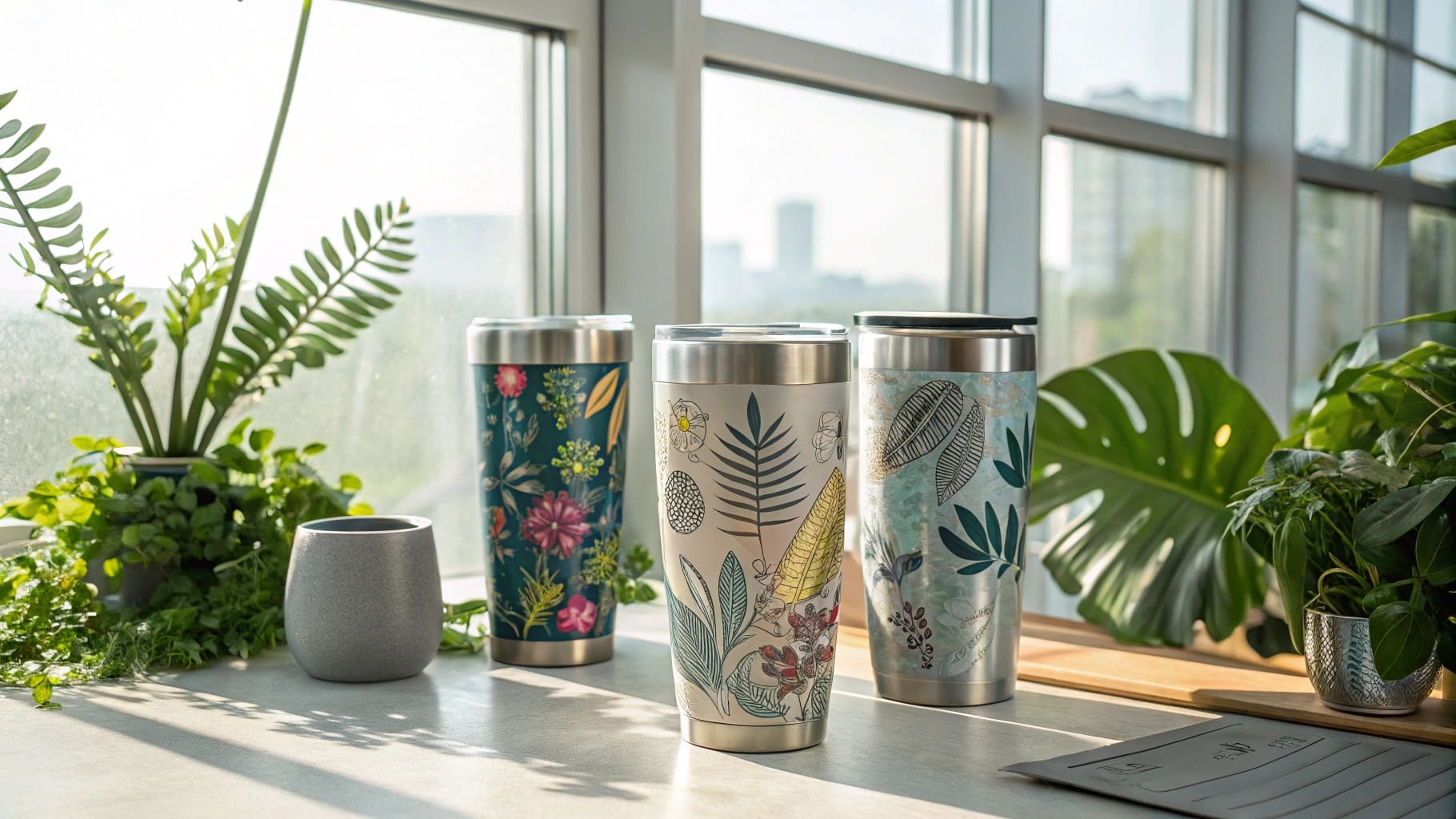
I run a simple ice test on every new tumbler model. I fill the cup with ice and water at 8 AM. I check it at 8 AM the next day. Good tumblers still have ice cubes floating. Poor ones just have cold water. The best ones keep ice for 30-36 hours.
The vacuum gap between walls makes the difference7. Most manufacturers use a 1.5mm to 2mm gap. Wider gaps insulate better. But they also add weight and cost. I balance these factors for school orders. A 1.8mm gap gives excellent performance without excessive weight.
Vacuum quality varies between factories. Creating a true vacuum requires good equipment. Some suppliers only create partial vacuums. This cuts their costs. But it also cuts performance in half. I learned to test this the hard way. A supplier in China once sent me bottles that lost ice in 12 hours. Their vacuum pump was broken. They shipped the order anyway. I caught it during inspection.
The lid creates the weak point in most tumblers. Heat enters through gaps in the seal. I prefer lids with thick silicone gaskets. The silicone should be at least 3mm thick. Thin gaskets compress and create gaps. A school in Texas complained about ice melting fast. I checked their bottles. The lids had 1mm gaskets. We switched to 4mm gaskets. The complaints stopped.
Screw-top lids seal better than flip tops. But students prefer flip tops for convenience. I suggest screw-tops for younger students who need maximum insulation. Flip-straw designs work for older students who can handle minor insulation loss for easier drinking.
Here is what affects ice retention:
| Factor | Good Performance | Poor Performance | Impact Level |
|---|---|---|---|
| Vacuum gap | 1.8-2.0mm | Below 1.5mm | High |
| Vacuum quality | True vacuum | Partial vacuum | Very high |
| Lid gasket | 3mm+ silicone | Below 2mm | Medium |
| Lid type | Screw-top | Complex mechanism | Medium |
| Wall material | 304 steel | 201 steel | Low |
I tell buyers to verify claims through testing. Many suppliers claim 24-hour ice retention. Few actually deliver it. I ask for samples. I run my own tests. Then I decide if the supplier is honest. One supplier claimed 36-hour performance. My test showed 18 hours. I did not order from them.
The bottle opening size also matters. Wide mouths let heat in faster. But they make ice cubes fit easier. I recommend 2-inch openings for school bottles. This size balances ice retention and ice loading convenience.
Students will not screw lids on tightly. This reality affects ice retention. Even the best vacuum bottle fails if the lid stays loose. I suggest bottles with click-indicators that show when the lid seals properly. These small details prevent complaints later.
Conclusion
Schools need practical solutions that balance safety, durability, and cost. Start with 304 stainless steel, choose simple lid designs, and verify ice retention through testing.
-
"Fast Facts: Data on Water Consumption | Nutrition - CDC", https://www.cdc.gov/nutrition/php/data-research/fast-facts-water-consumption.html. Authoritative hydration guidance for children and adolescents gives age-dependent daily water intake ranges, supporting age-scaled container capacity as a practical procurement consideration; it does not prescribe these exact bottle sizes. Evidence role: general_support; source type: government. Supports: Schools need 12-14 oz cups for elementary students and 18-24 oz for older kids.. Scope note: The source would support age-related hydration needs, not the article’s specific 12–14 oz and 18–24 oz procurement thresholds. ↩
-
"[PDF] Studies Related to Microbially Induced Corrosion of Stainless Steel ...", https://openprairie.sdstate.edu/cgi/viewcontent.cgi?article=2758&context=etd. Food-contact and materials references identify AISI 304 stainless steel as a common austenitic stainless steel used in food-contact applications because of its corrosion resistance; this supports its general suitability but not any individual school procurement decision. Evidence role: expert_consensus; source type: institution. Supports: Food-grade 304 stainless steel works for most schools.. Scope note: The source would establish common food-contact use and material properties, not prove that 304 is optimal for every school environment. ↩
-
"Case Study: How Chromium Protects Steel", https://mse.engin.umich.edu/internal/demos/case-study-how-chromium-protects-steel. Corrosion science references explain that chromium in stainless steel forms a passive chromium-oxide surface film that reduces oxidation and corrosion, supporting the mechanism described. Evidence role: mechanism; source type: education. Supports: The chromium in stainless steel creates a protective layer that helps stop rust and corrosion.. Scope note: The degree of corrosion resistance depends on alloy composition, surface condition, and exposure environment. ↩
-
"An insight into bisphenol A, food exposure and its adverse effects on ...", https://pmc.ncbi.nlm.nih.gov/articles/PMC9671506/. Public-health and regulatory sources discuss bisphenol A exposure from certain plastics and restrictions on BPA in some child-related food-contact products, supporting the need to verify BPA status for plastic lid components. Evidence role: general_support; source type: government. Supports: Plastic components in children’s bottle lids should be verified as BPA-free.. Scope note: Rules vary by jurisdiction and product category, so BPA-free status alone does not establish complete safety compliance. ↩
-
"Best Exhaust Tip Material: 304 vs 201 Stainless Steel", https://buzz.uni.edu/exhaustenthusiast/best-exhaust-tip-material-304-vs-201/. Materials references comparing 200-series and 300-series stainless steels explain that reduced nickel and altered alloy chemistry can lower corrosion resistance in some environments, supporting the caution about 201 stainless steel. Evidence role: expert_consensus; source type: institution. Supports: Grade 201 stainless steel generally has lower corrosion resistance than 304 because of its lower nickel and different alloy composition.. Scope note: Actual rusting depends on manufacturing quality, surface finish, cleaning practices, and exposure conditions. ↩
-
"Vacuum Flask - HyperPhysics", http://hyperphysics.phy-astr.gsu.edu/hbase/thermo/vacfla.html. Heat-transfer references explain that vacuum insulation reduces conductive and convective heat transfer between inner and outer walls, supporting the claim that double-wall vacuum vessels can keep the exterior cooler when hot liquid is inside. Evidence role: mechanism; source type: education. Supports: Double-wall vacuum insulation can keep the outside surface cooler to touch when hot liquids are inside.. Scope note: Exterior temperature still depends on liquid temperature, fill level, lid design, wall geometry, and product quality. ↩
-
"Vacuum Flask - HyperPhysics", http://hyperphysics.phy-astr.gsu.edu/hbase/thermo/vacfla.html. Thermal engineering sources describe vacuum flasks as reducing heat transfer primarily by evacuating the space between walls, supporting the importance of the inter-wall vacuum gap for insulation performance. Evidence role: mechanism; source type: education. Supports: The vacuum gap between bottle walls is a major factor in insulation performance.. Scope note: The source would support the general mechanism, not the article’s specific 1.5–2.0 mm gap recommendation. ↩
