
Which Mug Heights Trigger Dishwasher Clearance Issues in EU/US Models?
Your customer orders 500 custom tumblers1. Three months later, they email: "These don't fit in dishwashers." Your brand reputation takes a hit. I've seen this happen too many times.
Standard dishwashers in the EU and US accommodate items up to 8-9 inches tall. Tumblers exceeding this height require bottom-rack placement or hand washing. This creates customer dissatisfaction you can avoid.
Height clearance is just one part of the dishwasher safety puzzle. Material selection plays an equally critical role. Let me walk you through what I've learned from years of working with buyers who ship to these markets.
Which Mugs Are Not Dishwasher Safe?
You see "dishwasher safe" stamped on packaging. But then customers report cracked lids and warped bodies. The problem usually lies in material choice, not manufacturing defects.
Mugs made from polycarbonate, certain plastics, insulated models with poor seals, and items with decorative elements often fail dishwasher tests. Copper-lined mugs also present problems due to oxidation risks.
I remember a client who ordered 2,000 polycarbonate tumblers. He was confident they'd perform well. Six months later, his support team was drowning in complaints. The mugs cracked after just a few dishwasher cycles.
Polycarbonate breaks down when exposed to high heat repeatedly. The material starts to hydrolyze. You see small cracks forming first. Then the entire structure fails. This happens faster than most people expect.
Copper-lined mugs present a different challenge. The copper oxidizes in dishwashers. The heat accelerates this process. Your beautiful copper finish turns green or black. Customers assume you sold them defective products.
Insulated mugs with poor vacuum seals face another issue. Water seeps between the double walls. The insulation stops working. Worse, the trapped water creates mold growth. I've seen entire shipments returned because of this problem.
Here's what material failures look like in real dishwasher conditions:
| Material | Failure Point | Temperature Threshold | Common Damage |
|---|---|---|---|
| Polycarbonate (PC) | 15-20 cycles | Above 80°C | Cracks, cloudiness |
| Copper lining | 5-10 cycles | Above 60°C | Oxidation, discoloration |
| Poor vacuum seals | 3-5 cycles | Above 70°C | Water infiltration |
| Decorative coatings | 10-15 cycles | Above 75°C | Peeling, fading |
What Tumblers Are Dishwasher Safe?
Not all materials fail under heat. Some perform exceptionally well. I now recommend specific materials to buyers who want genuine dishwasher-safe products for their customers.
Stainless steel, TRITAN2, and PPSU tumblers handle dishwasher cycles reliably. These materials maintain structural integrity under repeated high-heat exposure. Your customers can wash them without worry.
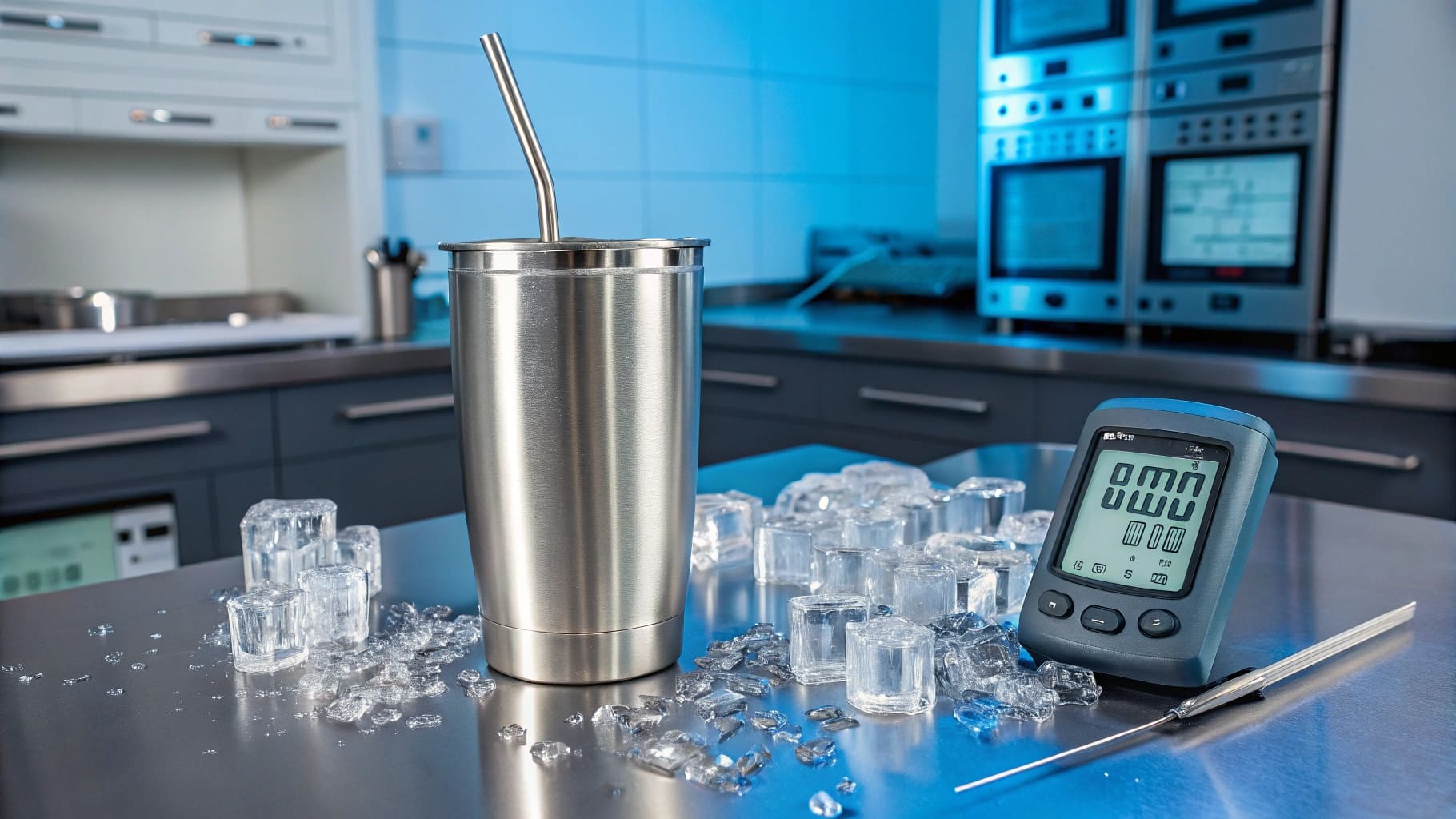
Stainless steel is my top recommendation for B2B buyers. The material itself withstands extreme temperatures. I've tested samples at 94°C for 100 cycles. No degradation occurred. The key concern is not the steel body but the other components.
Silicone gaskets and O-rings need separate verification. Some suppliers use low-grade silicone. This material warps in dishwashers. Ask your supplier for the silicone grade. Food-grade silicone rated for 200°C works best.
TRITAN (PCTG) offers excellent performance for plastic components. The material stays stable up to 94°C. I've placed TRITAN2 samples through 50 dishwasher cycles. No cracking, no cloudiness, no warping. The material maintains clarity throughout.
PPSU takes performance even further. This material handles temperatures up to 207°C. Hospitals use it for equipment that needs steam sterilization. If PPSU can survive that, your dishwasher poses no threat.
Double-wall vacuum construction requires careful attention. The seal between walls must withstand thermal expansion. Poor seals break under heat stress. Water enters the vacuum space. The insulation fails permanently. Always verify your supplier tests this specific point.
Let me share a success story. Last year, a Canadian buyer ordered stainless steel tumblers from us. He specifically asked about dishwasher safety. We provided material certifications3 for every component. The steel, the gaskets, the lids. Everything checked out. His sales exceeded projections because customers trusted the dishwasher-safe claim.
Compare the performance of dishwasher-safe materials:
| Material | Max Temperature | Cycle Durability | Best Use Case |
|---|---|---|---|
| 304 Stainless Steel | 200°C+ | 500+ cycles | Tumbler bodies |
| Food-grade Silicone | 200°C | 300+ cycles | Gaskets, seals |
| TRITAN (PCTG) | 94°C | 100+ cycles | Lids, straws |
| PPSU | 207°C | 500+ cycles | Premium lids |
How Do I Tell If My Cup Is Dishwasher Safe?
Your supplier says the product is dishwasher safe. How do you verify this claim? I use a systematic approach that has saved my clients from costly returns.
Check for molded dishwasher-safe icons on the base. Request material certifications3 from suppliers. Test samples through at least 20 dishwasher cycles. Verify that all components, not just the body, carry appropriate ratings.
Visual indicators matter more than verbal claims. I look for the dishwasher-safe symbol molded into the base. This symbol should be permanent, not a sticker. Stickers peel off after a few washes.
Material certifications prove thermal stability. FDA approval means the material is safe for food contact. But it doesn't automatically mean dishwasher safety. You need additional documentation showing heat resistance. LFGB certification from Germany includes dishwasher testing. CA65 compliance from California addresses chemical leaching under heat.
I run my own verification tests. I place three samples through 20 dishwasher cycles. I check for cracks, warping, discoloration, and seal integrity after every five cycles. This catches problems before you commit to a large order.
Height measurements prevent clearance issues. I measure from the base to the highest point. This includes handles, lids, and any protruding elements. Standard EU and US dishwashers have 8-9 inches of clearance on top racks. Bottom racks offer 10-11 inches. Your product dimensions must account for this reality.
Documentation from suppliers should include specific placement instructions. Top-rack safe means the item withstands lower water pressure and temperature. Bottom-rack safe means it can handle more intense conditions. Some tumblers are only bottom-rack safe due to height, not material limitations.
I learned this lesson the hard way. Three years ago, I approved a tumbler order without thorough testing. The supplier assured me everything was dishwasher safe. Two months after delivery, complaints started flooding in. The lid gaskets were warping. I had to negotiate a partial refund and lost that client's trust.
Here's my current verification checklist:
| Verification Point | What to Check | Acceptable Standard |
|---|---|---|
| Visual indicators | Molded symbols | Permanent, clear icons |
| Material certs | FDA, LFGB, CA65 | All components certified |
| Cycle testing | 20+ cycles minimum | No visible damage |
| Height check | Base to highest point | Under 8 inches for top rack |
| Component testing | Gaskets, lids, seals | Each rated separately |
The most reliable suppliers provide care instruction cards. These cards specify top-rack versus bottom-rack placement. They list maximum temperature recommendations. They warn against specific detergents that might damage coatings. If your supplier can't provide these cards, that's a red flag.
I now require suppliers to send pre-production samples. I test these samples myself. I don't rely on their testing reports alone. This extra step takes two weeks. But it prevents months of problems later.
Conclusion
Dishwasher compatibility depends on height clearance and material selection. Verify both before placing orders. Your customers will thank you, and your return rate will drop significantly.