
Which insulated tumbler profiles fit car holders: straight or tapered in 2026?
Last month, I received an urgent call from a long-time buyer in Vancouver. His retail customers were returning 40oz tumblers because they did not fit their car cup holders. This problem happens more often than you think in our industry.
Tapered tumblers fit most standard car cup holders better than straight-walled designs in 2026. The key is the base diameter, which should measure between 2.75 to 3 inches to ensure compatibility with automotive cup holders while maintaining stability for larger capacity bodies.
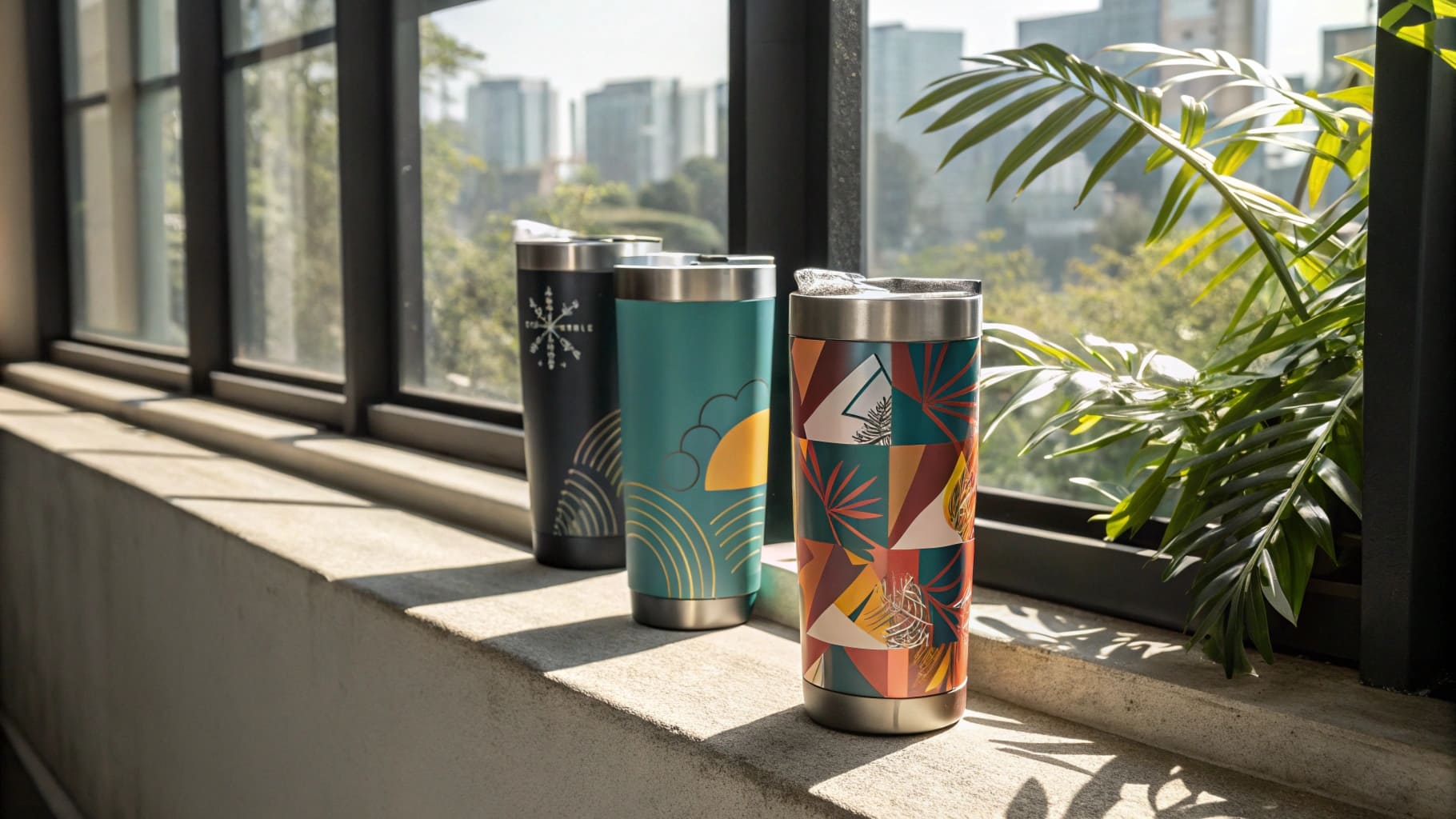
I have been manufacturing insulated tumblers for over a decade now. During this time, I have seen countless designs come and go. But the car cup holder compatibility1 issue keeps coming back. Every buyer asks me the same questions before placing their orders. They want large capacity for their customers, but they also need these tumblers to fit in vehicles. Let me share what I have learned from working with hundreds of importers who faced this exact challenge.
Which Hydro Flask fits in a car cup holder?
Your customers expect their premium tumblers to work in their daily commute. The wrong choice means returns, negative reviews, and lost sales for your brand. I have helped clients avoid this expensive mistake dozens of times.
Most Hydro Flask models with tapered bases and bottom diameters under 3 inches fit standard car cup holders. The 32oz and 40oz tapered designs work best, while straight-walled models often create fitting issues in compact vehicles.
Understanding Base Diameter Requirements
I always tell my buyers to focus on one number first. That number is the base diameter. This measurement determines everything about vehicle compatibility.
Standard car cup holders vary by vehicle type. Compact cars typically have holders measuring 2.5 to 2.8 inches in diameter. Mid-size vehicles offer slightly more room at 2.8 to 3.2 inches. Larger SUVs and trucks can accommodate up to 3.5 inches.
Here is the reality I see in our factory testing:
| Tumbler Design | Base Diameter | Car Holder Fit | Market Feedback |
|---|---|---|---|
| Straight 40oz | 3.2-3.5 inches | Limited | High return rate |
| Tapered 40oz | 2.75-3.0 inches | Universal | Customer favorite |
| Straight 32oz | 3.0-3.2 inches | Moderate | Mixed reviews |
| Tapered 32oz | 2.6-2.8 inches | Excellent | Strong repeat orders |
I recommend requesting samples first. Test them in different vehicle models your target market drives. One of my Canadian buyers learned this the hard way. He ordered 5,000 straight-walled tumblers without testing. His team spent months dealing with returns because the tumblers did not fit Honda Civic cup holders.
The Taper Angle Factor
The taper is not just about the base. The angle matters too. Our engineering team designs tumblers with a gradual taper from top to bottom. This creates stability while keeping the base narrow enough for cup holders.
I use a 5 to 8 degree taper angle on most of my production runs. This works for over 90 percent of vehicles on North American roads. Anything steeper makes the tumbler top-heavy. Anything less does not provide enough size reduction at the base.
What size water bottle fits in a car holder?
Your customers want capacity, but physics limits what fits in a car. I have seen buyers struggle with this balance every season. They push for bigger volumes without considering the practical constraints of automotive design.
Water bottles with base diameters of 2.6 to 3.0 inches and capacities between 32oz to 40oz fit most car holders. The bottle height should not exceed 10 inches to avoid interference with dashboard controls and visibility.
Capacity and Dimension Trade-offs
The 40oz tumbler became the industry standard for a reason. Customers want all-day hydration without constant refills. But this capacity creates design challenges.
I manufacture tumblers in several size ranges. Each has specific dimensional constraints:
| Capacity | Recommended Height | Base Diameter | Top Diameter | Best Use Case |
|---|---|---|---|---|
| 20oz | 7-8 inches | 2.6 inches | 3.2 inches | Compact cars, short commutes |
| 30oz | 8-9 inches | 2.75 inches | 3.5 inches | Daily commuters, office use |
| 40oz | 9-10 inches | 2.8-3.0 inches | 3.8 inches | Long drives, outdoor activities |
| 64oz | 11-12 inches | 3.2 inches | 4.0 inches | Gym bags, not for cup holders |
Last year, I worked with a startup founder in Seattle. She wanted to launch 64oz tumblers for the fitness market. I explained that these would never fit car cup holders. We compromised on a 40oz design with a carrying handle. Her first order sold out in three weeks.
Height Considerations
Base diameter is not the only factor. Height affects usability too. Taller bottles block driver visibility or hit the car ceiling when lifted from the holder.
I keep production heights under 10 inches for car-friendly designs. This allows easy removal and insertion. Drivers can grab the bottle without looking down. Safety matters as much as capacity.
Some buyers ask for taller, narrower designs to maximize volume. I advise against this. The narrow base makes tumblers unstable. They tip over during acceleration or turns. Spilled coffee on a customer's car seat leads to bad reviews for your brand.
Does Yeti 42 oz fit in a cup holder?
Premium brand compatibility drives purchasing decisions. Your retail customers compare your products against market leaders. I field these comparison questions weekly from buyers evaluating our manufacturing capabilities.
The Yeti 42oz Rambler with handle does not fit most standard car cup holders due to its 3.5-inch base diameter. However, Yeti's handleless 36oz model with a 2.875-inch base fits the majority of vehicle cup holders.

Competitive Design Analysis
I study competitor products constantly. My buyers need to understand what they are competing against. The major brands made specific design choices for reasons related to their target markets.
Yeti prioritized durability and ice retention over universal cup holder fit with their 42oz model. They target outdoor enthusiasts who use trucks and SUVs with larger cup holders. This makes sense for their brand positioning.
Here is how the major competitors approach this issue:
| Brand | Model | Base Diameter | Handle | Cup Holder Fit |
|---|---|---|---|---|
| Yeti | 42oz Rambler | 3.5 inches | Yes | Large vehicles only |
| Yeti | 36oz Rambler | 2.875 inches | No | Most vehicles |
| Stanley | 40oz Quencher | 2.9 inches | Yes | Most vehicles |
| Hydro Flask | 40oz Wide Mouth | 3.5 inches | No | Large vehicles only |
| Hydro Flask | 32oz Standard | 2.8 inches | No | Universal fit |
Handle Design Impact
Handles add functionality but affect cup holder compatibility. A side handle increases the overall width. Even if the base fits, the handle can prevent insertion.
I manufacture two versions for this reason. One has an integrated top handle that folds down. The other uses a detachable handle system. Both solve the width problem while maintaining the convenience customers want.
One of my European buyers initially rejected handles completely. She thought they looked bulky. After I showed her the folding handle prototype, she changed her mind. Her first container sold faster than any previous order.
Material Thickness Considerations
Thicker walls provide better insulation but increase outer diameter. I use double-wall vacuum insulation2 on all my tumblers. The gap between walls adds roughly 0.3 inches to the total diameter.
Premium buyers sometimes request triple-wall construction. I explain that this makes cup holder fit nearly impossible. The performance gain does not justify the compatibility loss. Most buyers agree once they see the dimensional comparison.
The stainless steel gauge matters too. I use 18/8 food-grade stainless steel. This provides the right balance of durability and weight. Thicker gauges add diameter without meaningful performance improvements.
Conclusion
Tapered designs with 2.75 to 3 inch base diameters dominate the 2026 market for good reason. Test samples in real vehicles before committing to production. Your customers need capacity and compatibility together.