
Which Coatings Keep Insulated Coffee Mugs Stain-Free from Tea and Syrups?
You source thermal mugs. Your customers love them at first. Then the stains come. Complaints follow. Repeat orders disappear. The coating choice made all the difference.
The most effective stain prevention comes from electropolished stainless steel 304 or 316 interiors, often combined with food-grade ceramic or powder coatings. These surfaces block tannins and syrup sugars from bonding to the mug wall. The result is a cleaner, longer-lasting product that protects your brand.
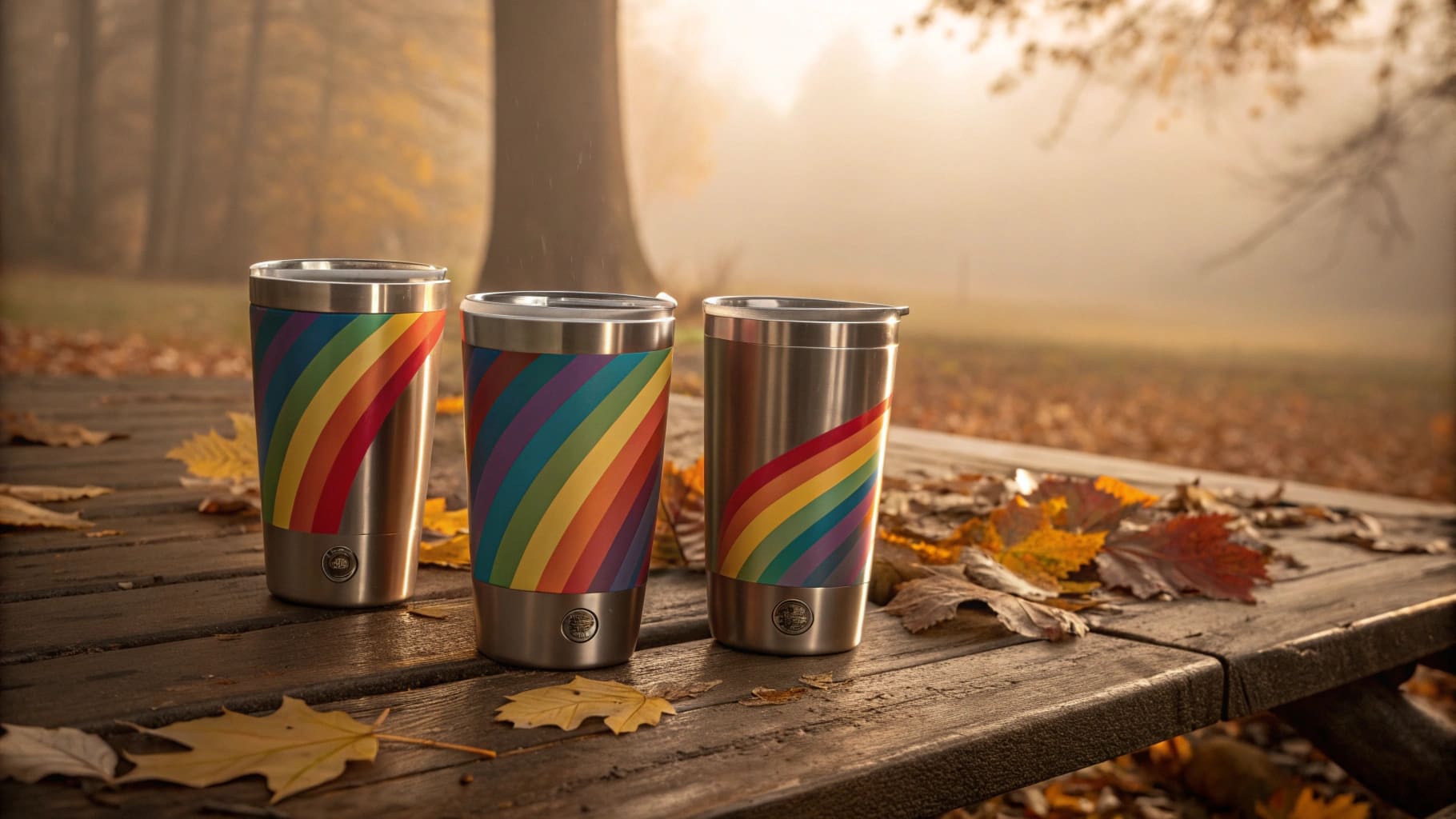
I have spent years sourcing and testing stainless steel mugs at Icobottle. What I keep seeing is this: buyers focus on shape, color, and price. They skip the coating specs. That is where the problems start. The right coating is not just a surface finish. It is the reason a customer buys from you again, or does not.
Is Ceramic or Stainless Steel Better for Coffee?
You want a mug that holds heat, survives shipping, and still looks good after 200 washes. Most materials fail at least one of those tests. The material you choose matters more than most buyers think.
Stainless steel outperforms ceramic in B2B thermal mug applications.1 It holds temperature longer, survives drops and dishwashing cycles, and supports far more customization options. Ceramic suits retail display. Stainless steel suits real-world commercial use.

I have worked with buyers from North America and Europe, and the conversation always comes back to the same point. Ceramic mugs look great in photos. But when they land in a distribution warehouse and get shipped again to end users, the breakage rate climbs fast. Cracked rims and chipped interiors become customer service problems.
Stainless steel with the right coating solves most of this. Here is how the two materials compare directly:
| Feature | Stainless Steel | Ceramic |
|---|---|---|
| Heat Retention | 4 to 6 hours | 2 to 3 hours |
| Drop Resistance | High | Low |
| Dishwasher Safe | Yes | Limited |
| Customization Options | Powder coat, laser engrave, color | Glaze colors only |
| Stain Resistance | High (with electropolish or ceramic coat) | Medium |
| Unit Cost | Moderate to high | Low to moderate |
| B2B Suitability | Strong | Weak |
The vacuum-insulated double wall in stainless steel is the key structural advantage.2 Ceramic cannot replicate that construction without cracking risk. For B2B buyers targeting premium or mid-market segments, stainless steel is the safer and stronger bet.
Beyond durability, customization is a real business driver. Powder-coated stainless steel accepts logo printing, color matching, and laser engraving. These are the tools that let a distributor like Mark build a branded product line that commands a price premium in the Canadian market.
Why Do My Coffee Mugs Stain?
You wash the mug. The stain stays. You wash it again. Still there. Your customers notice, and they tell others. The problem is not the coffee. It is what the mug is made of inside.
Coffee and tea stains form when polyphenolic compounds, mainly tannins, oxidize and attach to microscopic scratches or porous surfaces inside the mug.3 Lower-grade steel, rough interior finishes, and thin or absent coatings all make this worse.
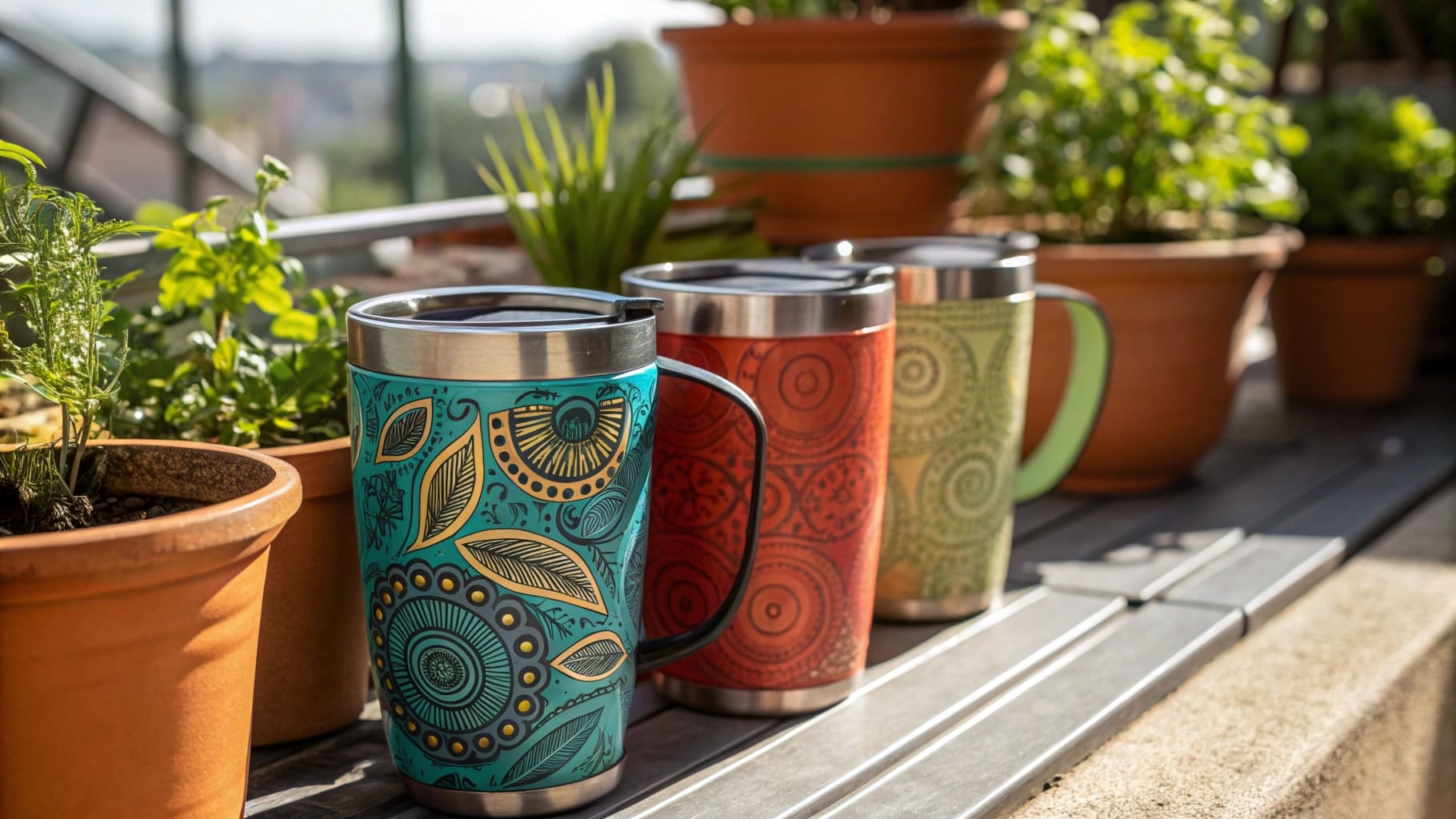
I see this pattern often with mugs that use 201-series stainless steel or interiors that were never properly finished. The surface looks smooth to the eye. Under a microscope, it is full of tiny grooves. Tannins sit in those grooves and bond over time. No amount of washing removes them cleanly.
Here is the science broken down simply:
Why tannins stick:
Tannin molecules are large and carry an electric charge. When a steel surface has microscopic scratches or a high Ra value (surface roughness), these molecules find places to grip. Once oxidized, the bond becomes permanent.
What makes it worse:
| Risk Factor | Why It Causes Staining |
|---|---|
| 201-grade stainless steel | Lower chromium content, less corrosion resistance |
| High Ra surface value (above 0.8μm) | More surface area for tannins to grip |
| No interior coating | Steel surface exposed directly to liquids |
| Thin powder coat below 20 microns | Coat wears away quickly, exposing bare steel |
| Repeated dishwasher exposure | Strips weak coatings faster |
The solution starts at the material specification stage. I always ask suppliers for two numbers before sampling: the Ra surface roughness value and the coating thickness in microns. A mirror-polished 316 stainless steel interior with an Ra value below 0.4μm gives tannin molecules almost nothing to grab.
Electropolishing is the process that achieves this. It removes surface peaks at a microscopic level, making the interior far smoother than mechanical polishing alone. Some premium suppliers now add a ceramic-infused layer on top of the electropolished surface. This adds 15 to 20 percent to unit cost but drops stain complaints significantly.
Before any bulk order, I run a 72-hour tea stain test on samples. I fill the mug with strong black tea, seal it, and leave it. After 72 hours, I empty it and wash it once with mild soap. A good interior coating shows little to no staining. A poor one shows a brown ring that will not move.
Which Is the Best Thermal Mug?
Everyone claims their mug is the best. Few can back that up with data. You need clear criteria, not marketing language. The right mug depends on who your end customer is and what they need it to do.
The best thermal mug for B2B distribution combines vacuum-insulated double-wall construction, a 316 stainless steel interior with electropolishing, and a leak-proof lid with food-grade silicone seals. For premium markets, add a ceramic coating layer. For mid-market, 304 steel with electropolished interiors performs well at lower cost.
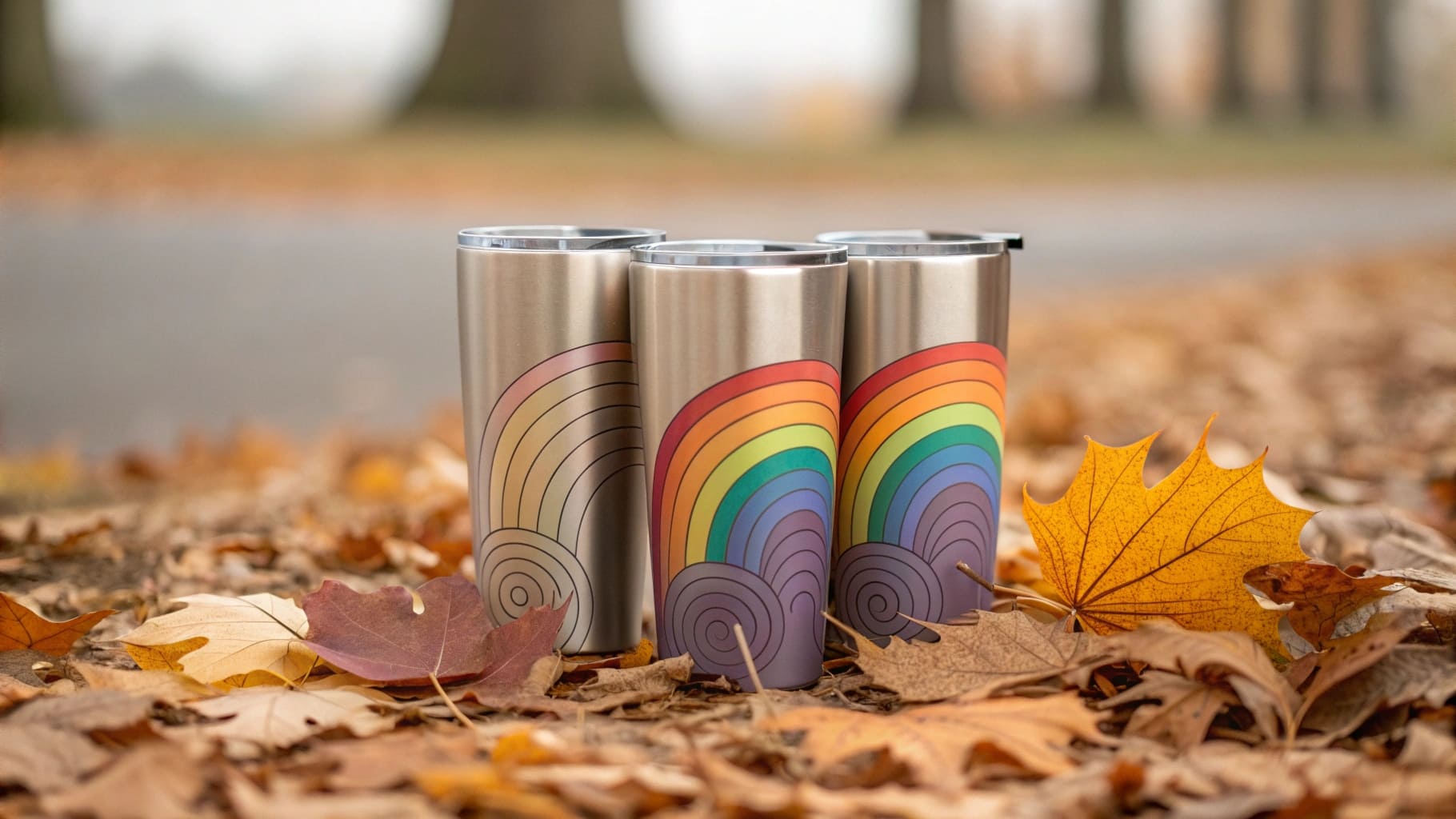
The word "best" only means something when tied to a market position. I work with buyers who sell to very different end customers. A corporate gift buyer needs a mug that photographs well and holds a logo cleanly. A café chain buyer needs something that survives a commercial kitchen. The specs shift, but the core quality indicators stay the same.
Here is a practical breakdown by market segment:
| Segment | Steel Grade | Interior Finish | Lid Type | Capacity | Target Market |
|---|---|---|---|---|---|
| Premium | 316 stainless | Electropolished + ceramic coat | Leak-proof, push-button | 350 to 500ml | Gift sets, branded retail |
| Mid-Market | 304 stainless | Electropolished | Sliding lock lid | 350 to 500ml | Office distribution, cafés |
| Entry Level | 304 stainless | Standard polish | Screw top | 300 to 400ml | Budget retail, promotions |
For buyers targeting the US or EU market, two non-negotiables apply regardless of segment. First, BPA-free materials throughout, including lids and seals4. Second, relevant certifications such as FDA compliance for US imports or LFGB for European markets. I have seen suppliers present fake certificates. I always verify directly with the certification body before placing a bulk order.
Beyond certifications, lid quality is where many sourcing decisions go wrong. A mug can have perfect steel and a perfect coating, but a lid that leaks under pressure destroys the product experience. I test lids by filling mugs completely, sealing them, and shaking hard. Liquid around the seal edge after shaking means the lid fails.
Powder coating on the exterior also plays a role in the "best" conversation. A minimum of 20 to 25 microns of powder coat thickness holds color through commercial use. Thinner coats chip and fade fast. Chips on a branded mug reflect directly on the brand using it, which means it reflects on the distributor who sourced it.
Conclusion
The right coating protects your product, your brand, and your repeat order rate. Stainless steel with electropolished or ceramic-coated interiors solves staining. Matching specs to your market segment does the rest.
-
"Scientific Principles", https://matse1.matse.illinois.edu/metals/prin.html. Engineering references describe stainless steel as ductile and tough relative to ceramic materials, while ceramics are generally brittle and susceptible to fracture, supporting the article’s durability comparison in distribution and repeated-use contexts. Evidence role: expert_consensus; source type: education. Supports: Stainless steel is generally more durable than ceramic for mugs exposed to shipping, drops, and repeated use.. Scope note: The source would support general material behavior; actual failure rates depend on mug design, wall thickness, packaging, and handling conditions. ↩
-
"Vacuum flask - Wikipedia", https://en.wikipedia.org/wiki/Vacuum_flask. Descriptions of vacuum flasks identify the evacuated space between double walls as the main feature that limits heat transfer, supporting the statement that double-wall vacuum construction is central to thermal mug performance. Evidence role: mechanism; source type: encyclopedia. Supports: Vacuum-insulated double-wall construction is a key reason stainless steel thermal mugs retain temperature.. Scope note: This is contextual support for the construction principle rather than proof that all stainless-steel double-wall mugs outperform all ceramic designs. ↩
-
"The Impact on Dental Staining Caused by Beverages in ... - PMC - NIH", https://pmc.ncbi.nlm.nih.gov/articles/PMC9683888/. Food chemistry sources identify tea and coffee as rich in polyphenolic compounds, including tannins, and surface-science studies show that rough or porous surfaces can retain organic residues more readily, supporting the proposed staining mechanism. Evidence role: mechanism; source type: paper. Supports: Coffee and tea stains are associated with polyphenolic compounds that can persist on rough or porous mug surfaces.. Scope note: The support is partly inferential because studies may address polyphenols and surface retention separately rather than mug staining as a single tested system. ↩
-
"Bisphenol A (BPA): Use in Food Contact Application - FDA", https://www.fda.gov/food/food-packaging-other-substances-come-contact-food-information-consumers/bisphenol-bpa-use-food-contact-application. Public health and regulatory sources describe bisphenol A as a chemical used in some plastics and resins and note regulatory restrictions or safety evaluations for food-contact uses, supporting the requirement to consider BPA exposure in mug lids and seals. Evidence role: general_support; source type: government. Supports: BPA-free materials are an important specification for plastic or polymer parts in food-contact mugs.. Scope note: BPA-free status is relevant mainly to polymer components; it does not address stainless-steel interiors or all possible substitute chemicals. ↩