
Which bottle diameters actually fit US/EU cup holders without collisions?
I see many brands lose repeat orders because one small diameter error turns a good bottle into a daily driving problem.
A stainless steel bottle fits most US and EU cup holders when its lower body diameter stays around 2.75 to 3.0 inches, or 70 to 76 mm. I treat 3.15 inches, or 80 mm, as the upper safe limit, especially for European cars and compact vehicles.
I do not treat cup holder fit as a small design detail anymore. I treat it as a sales requirement. When I talk with buyers in Canada, America, and Europe, I often hear the same worry. The bottle looks good. The logo looks good. The price looks possible. But the buyer still asks one direct question. Will it fit in a car cup holder1 without hitting the console, the gear area, or the second drink?
What's the average diameter of a cup holder?
I often see buyers assume cup holders are standard, then they receive samples that feel right by hand but fail inside real cars.
The average vehicle cup holder diameter is about 2.75 to 3.15 inches, or 70 to 80 mm2. I see US vehicles accept slightly larger bottles, while many European vehicles feel safer around 2.95 inches, or 75 mm.
Why I do not use one single cup holder number
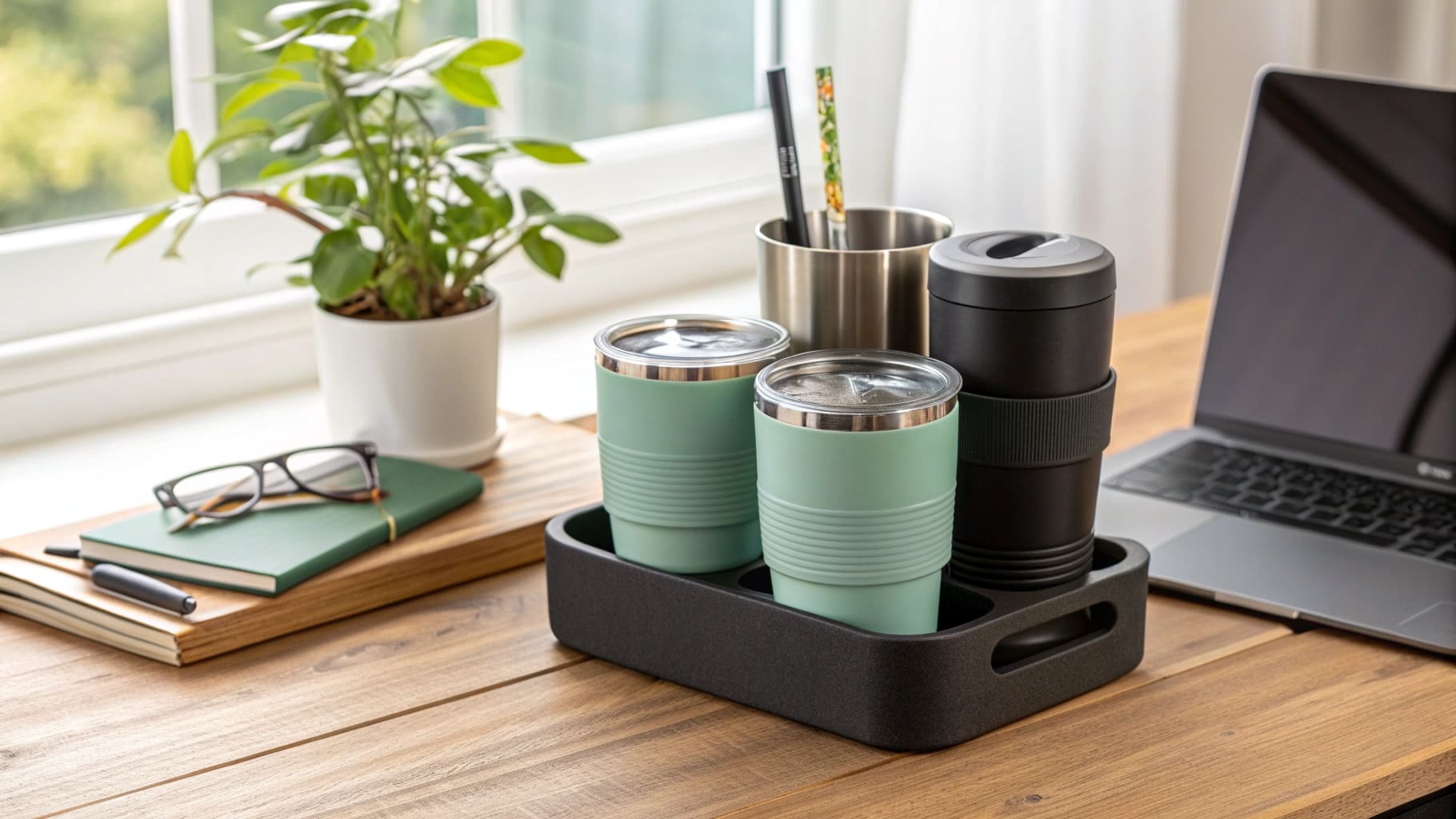
I do not like to give one fixed number for all cup holders because the real world is messy. A cup holder is not only a round hole. It can be tapered. It can have soft tabs3. It can sit near a console wall. It can sit next to another cup holder. So a bottle may enter the holder, but it may still collide with the car interior.
When I prepare a bottle project for a B2B buyer, I check the lower body diameter first. I also check the widest point near the base. If the bottle has a silicone boot, I measure the bottle with the boot installed. If the bottle has powder coating, I include that coating in the final measurement. Small changes matter because a few millimeters can decide if the bottle feels smooth or annoying.
| Market target I usually see | Diameter I prefer | My reason |
|---|---|---|
| EU commuter retail | 2.75 to 2.95 inches, 70 to 75 mm | I need safer fit in compact and mid-size cars |
| US mass retail | 2.8 to 3.15 inches, 71 to 80 mm | I can cover many cars without making the bottle too wide |
| US truck and SUV market | Up to about 3.5 inches, 89 mm | I see more room, but I still test for side collisions |
| Outdoor specialty retail | 3.3 inches and above, 84 mm and above | I accept weaker car fit because capacity and grip matter more |
How I test fit before mass production
I always prefer a real sample test before the buyer confirms a bulk order. I place the bottle in different cup holders and check three points. I check if the base reaches the bottom. I check if the bottle leans too much. I check if it blocks another cup or touches the console. I also ask the buyer about the target market. A bottle for Canadian office workers needs a different fit target than a bottle for campers.
For a wholesale order, I suggest one simple rule. I keep the daily-use bottle under 3 inches when the buyer wants wide market coverage. I only go wider when the product is clearly sold for gym, hiking, or desk use.
What size Hydro Flask fits in a cupholder?
I see many buyers mention Hydro Flask because it gives a useful lesson in size planning, not just brand power.
Hydro Flask standard mouth bottles around 18 to 32 oz usually fit cup holders because their diameter is about 2.87 inches, or 73 mm4. Wide mouth versions around 3.58 inches, or 91 mm, usually target outdoor use, not car cup holders.
What I learn from the Hydro Flask size strategy
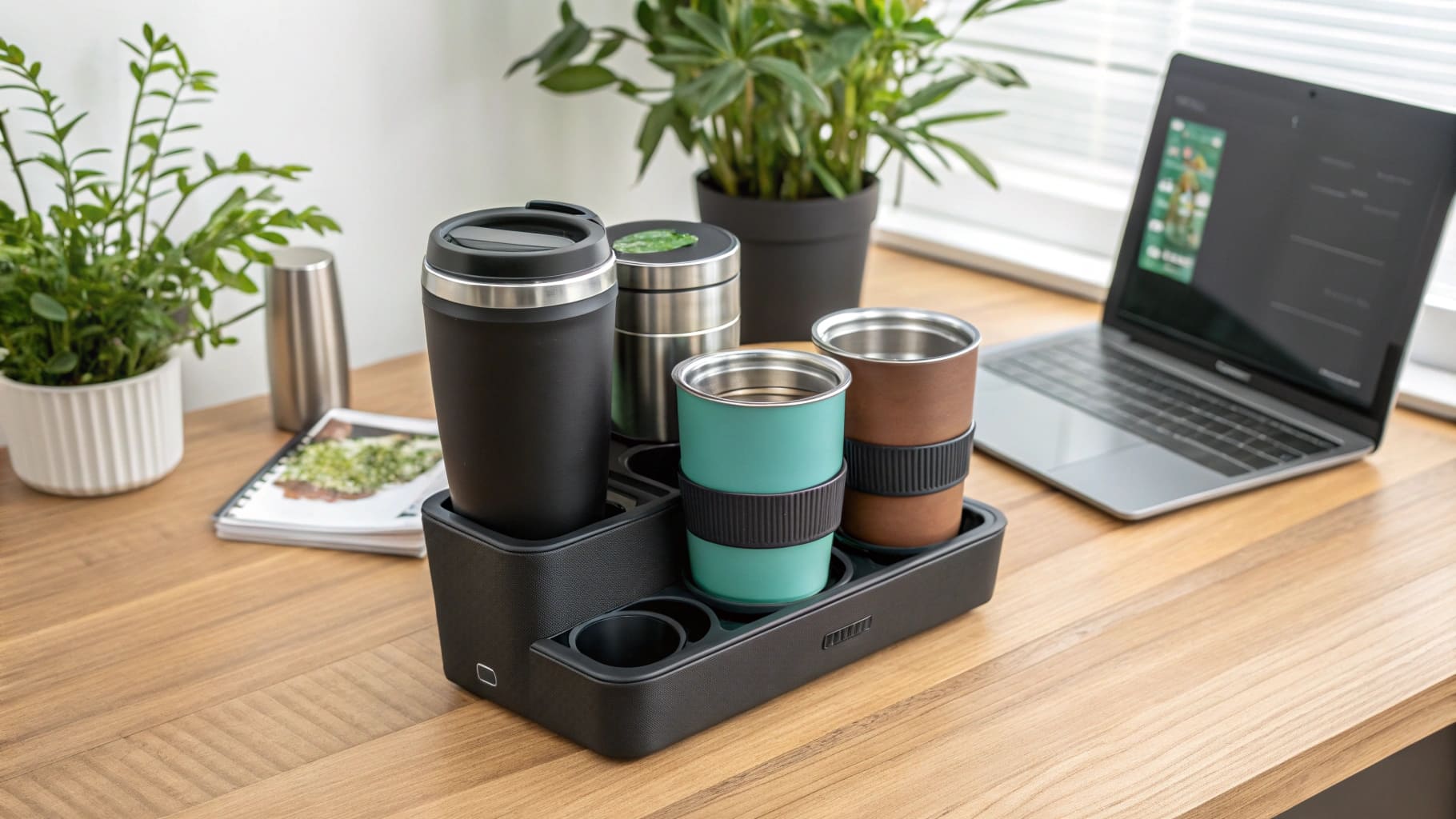
I do not copy another brand, but I do study why some formats sell well. The standard mouth Hydro Flask style works well for daily carry because the body stays slim. The buyer gets a bottle that fits backpacks, office desks, gym bags, and vehicle cup holders. This size makes sense for commuters because the bottle does not fight with the car interior.
The wide mouth style is different. It feels easier to clean. It can take ice cubes more easily. It also gives a strong outdoor look. But the larger diameter makes it much harder to fit common cup holders. I see this as a clear market split. A slim bottle is a commuter product. A wide bottle is an outdoor or gym product.
| Bottle format I compare | Typical diameter I see | Cup holder result I expect | Best use case I suggest |
|---|---|---|---|
| Standard mouth 18 to 32 oz | About 2.87 inches, 73 mm | I expect strong fit in most cars | Office, commute, daily retail |
| Wide mouth 32 oz and above | About 3.58 inches, 91 mm | I expect weak fit in many cars | Hiking, gym, camping |
| Slim 24 to 32 oz custom bottle | 2.75 to 3.0 inches, 70 to 76 mm | I expect better US and EU coverage | B2B private label |
| Large 40 oz bottle | 3.1 inches or more, 79 mm or more | I test more carefully | Premium and lifestyle retail |
How I use this lesson in custom bottle sourcing
When I work on a custom stainless steel bottle, I ask the buyer to choose the main scene first. If the main scene is driving, office, school, or travel, I keep the diameter slim. I add volume by increasing height, not width. This design choice protects cup holder fit and also keeps the bottle easy to hold.
If the buyer wants a premium outdoor feeling, I may allow a wider body. But I explain the trade-off early. A wider bottle may look strong on the shelf, but it may fail during daily use. That failure can create bad reviews, returns, and weak repeat orders.
I also remind buyers to define the measurement point in the technical sheet. The maximum outer diameter must include coating, base ring, bottom curve, and silicone boot if used. If the supplier only provides the bare stainless body size, the final product may become too wide after finishing. I have seen this small gap create big arguments after samples arrive.
What is replacing Stanley cups?
I see buyers ask this because Stanley created demand, but many customers now want the same capacity without the daily fit problems.
Stanley cups are being challenged by slimmer, leak-resistant bottles and tumblers from brands like Owala, Simple Modern, and Zojirushi5. I see the market moving toward 24 to 40 oz products that keep a cup holder-friendly diameter.
Why I think the market is moving beyond oversized cups
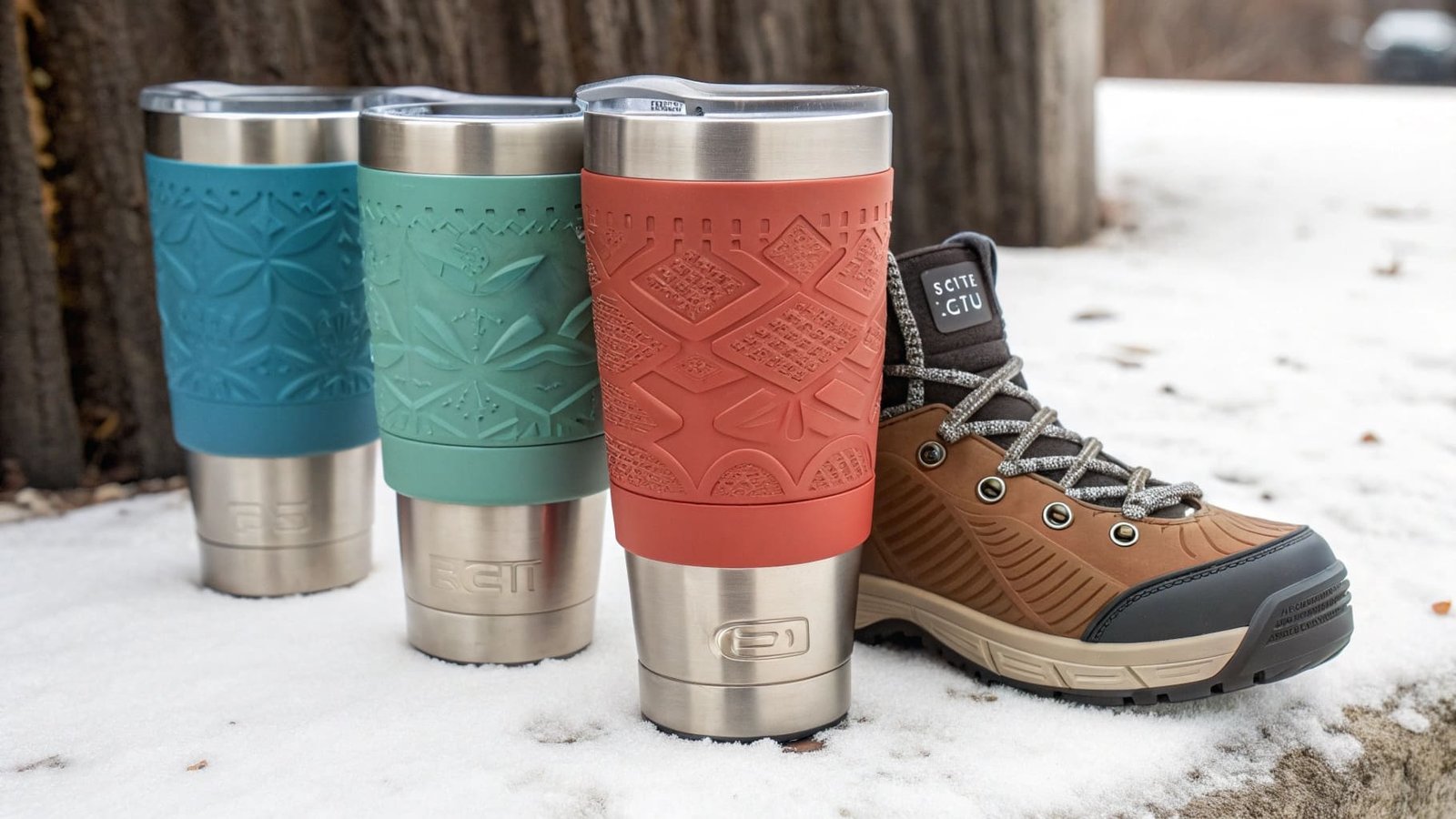
I do not think one single product is replacing Stanley cups. I think the use case is changing. Many consumers still want large capacity. They still like straws, handles, colors, and lifestyle design. But they also want the bottle to fit a car, a stroller, a gym machine holder, and a work desk. A large cup that cannot fit common holders creates stress in daily life.
The famous large tumbler shape showed buyers that design can drive social demand. But it also showed a clear weakness. A wide base near 3.86 inches, or 98 mm, does not match many vehicle cup holders6. Some cars can take it. Many cars cannot. So I see more brands move toward a slimmer lower section, taller body, better lids, and more functional handles.
| New market direction I see | What I think buyers want | Diameter choice I prefer |
|---|---|---|
| Slim large bottle | High capacity without a wide base | 2.9 to 3.1 inches, 74 to 79 mm |
| Leak-resistant straw bottle | Easy drinking in car and office | Under 3.0 inches, 76 mm |
| Handle bottle with narrow base | Carry comfort and cup holder fit | Base under 3.1 inches, 79 mm |
| Premium insulated bottle | Better finish, strong logo area, reliable use | 2.8 to 3.0 inches, 71 to 76 mm |
What I would tell a B2B buyer before choosing the next trend
I would not chase only the hottest shape. I would first ask if the product can survive daily use. For stainless steel water bottles7, daily use includes driving. If the bottle cannot sit safely in a cup holder, the customer notices the problem every day. That problem becomes stronger than the logo, the color, or the packaging.
For a buyer like Mark in Canada, I would suggest two SKU paths. I would make one standard commuter bottle with a diameter around 2.8 to 3.0 inches. This item can serve offices, corporate gifts, retail shelves, and online sales. I would also make one larger premium bottle around 3.2 to 3.3 inches only if the brand wants an outdoor or gym position. This split can reduce inventory risk because each size has a clear purpose.
I also suggest asking the supplier for a pre-production sample and a simple fit report. The report does not need to be fancy. It should show the maximum diameter, the bottle with all accessories, the lower base shape, and several real cup holder checks. I prefer clear photos, short notes, and honest limits. This protects both sides before the deposit turns into a large production risk.
Conclusion
I choose 2.75 to 3.0 inches for daily bottles because cup holder fit now affects reviews, repeat orders, and B2B buying confidence.
-
"Forgot Your Bottle or Bag Again? How Well-Placed Reminder Cues Can ...", https://www.journals.uchicago.edu/doi/10.1086/725110. Consumer preference surveys on reusable drinkware consistently identify portability and compatibility with everyday carry environments—including vehicle cup holders—as significant purchase drivers alongside price, aesthetics, and insulation performance. Evidence role: general_support; source type: research. Supports: That functional portability attributes, including vehicle cup holder compatibility, rank among key consumer and buyer criteria for reusable drinkware. Scope note: Publicly available surveys rarely isolate cup holder fit as a standalone variable; the claim is supported by general portability preference data rather than a direct measurement of cup holder fit as a purchase criterion. ↩
-
"Is there a standardized cupholder design/standard for dimensions?", https://www.reddit.com/r/AskEngineers/comments/1ae3t9b/is_there_a_standardized_cupholder_designstandard/. Automotive interior ergonomics literature and consumer product testing reports document cup holder diameters in the 70–80 mm range as common across a broad sample of passenger vehicles, though exact dimensions vary by manufacturer, model year, and trim level. Evidence role: statistic; source type: research. Supports: The typical interior cup holder diameter range found in passenger vehicles. Scope note: No single universal standard mandates cup holder dimensions; figures represent observed averages rather than regulated specifications. ↩
-
"Cup Holder Inserts For Car Console", https://www.amazon.com/cup-holder-inserts-car-console/s?k=cup+holder+inserts+for+car+console. Automotive interior ergonomics literature describes cup holder designs as highly variable across manufacturers, encompassing straight-walled, tapered, spring-loaded, and tab-assisted configurations, with placement relative to console walls further affecting effective usable diameter. Evidence role: general_support; source type: research. Supports: That vehicle cup holders are not uniform cylindrical cavities but vary in taper, flexibility, and proximity to console elements. Scope note: Systematic cross-manufacturer dimensional surveys of cup holder geometry are limited in the public literature; this characterization is supported by design documentation rather than large-scale empirical measurement. ↩
-
"24 oz Standard Mouth Bottle", https://www.hydroflask.com/24-oz-standard-mouth?srsltid=AfmBOooOCvhY-Cl3RHpxarfyoNLCNCwWD6OWEVr8TYi80ObiMQXeMddO. Hydro Flask's published product specifications and independent consumer reviews consistently report the lower body diameter of standard mouth bottles in the 18–32 oz range at approximately 2.87 inches (73 mm), making them compatible with most vehicle cup holders. Evidence role: statistic; source type: other. Supports: The outer body diameter of Hydro Flask standard mouth bottles in the 18–32 oz range. Scope note: Manufacturer specifications describe the bare stainless body; diameter with powder coating or accessories may differ slightly. ↩
-
"Reusable Water Bottle Market Size, Share Report, 2026-2033", https://www.grandviewresearch.com/industry-analysis/reusable-water-bottle-market. Market research on the reusable drinkware segment indicates increased competition from brands offering slimmer, leak-resistant designs following the viral growth of oversized tumbler formats, with consumer preference data showing renewed interest in cup-holder-compatible products. Evidence role: general_support; source type: research. Supports: That the reusable drinkware market has seen competitive fragmentation with multiple brands gaining share against dominant tumbler formats. Scope note: Brand-specific market share data is proprietary and rapidly changing; named brands represent illustrative examples rather than an exhaustive competitive ranking. ↩
-
"The Quencher H2.0 Flowstate™ Tumbler | 40 OZ", https://www.stanley1913.com/products/adventure-quencher-travel-tumbler-40-oz. Consumer reviews and product measurement reports for the Stanley Quencher H2.0 tumbler document a base diameter in the range of approximately 3.86 inches (98 mm), which exceeds the opening of most standard passenger vehicle cup holders. Evidence role: statistic; source type: other. Supports: The base diameter of the Stanley Quencher tumbler and its incompatibility with standard vehicle cup holders. Scope note: Dimensions may vary across Stanley product generations and sizes; the 40 oz and 30 oz variants differ, and measurements should be confirmed against current specifications. ↩
-
"Reusable Water Bottles Market Size & Growth Trends, 2033", https://www.persistencemarketresearch.com/market-research/reusable-water-bottles-market.asp. Market research reports on the global reusable water bottle industry document stainless steel as the leading material in the insulated segment, driven by consumer preference for durability, taste neutrality, and double-wall vacuum insulation performance relative to plastic alternatives. Evidence role: general_support; source type: research. Supports: That stainless steel has become the predominant material in the insulated reusable water bottle segment. Scope note: Market share figures vary by report and geography; stainless steel dominance is strongest in the premium and mid-market insulated segment rather than across all reusable bottle categories. ↩