
Which 20oz Tumbler Wholesale Options Include Handles, Lids, and Powder-Coats?
You want to source 20oz tumblers in bulk. But the wrong features mean returns, complaints, and lost customers. Here is what you need to know before you order.
A 20oz tumbler with a handle, lid, and powder-coat finish is the most requested wholesale configuration right now. The best options use 304 stainless steel with a welded handle, a silicone-sealed lid, and a 15–20 micron powder-coat layer. These three features together make a product that is durable, brandable, and sellable.
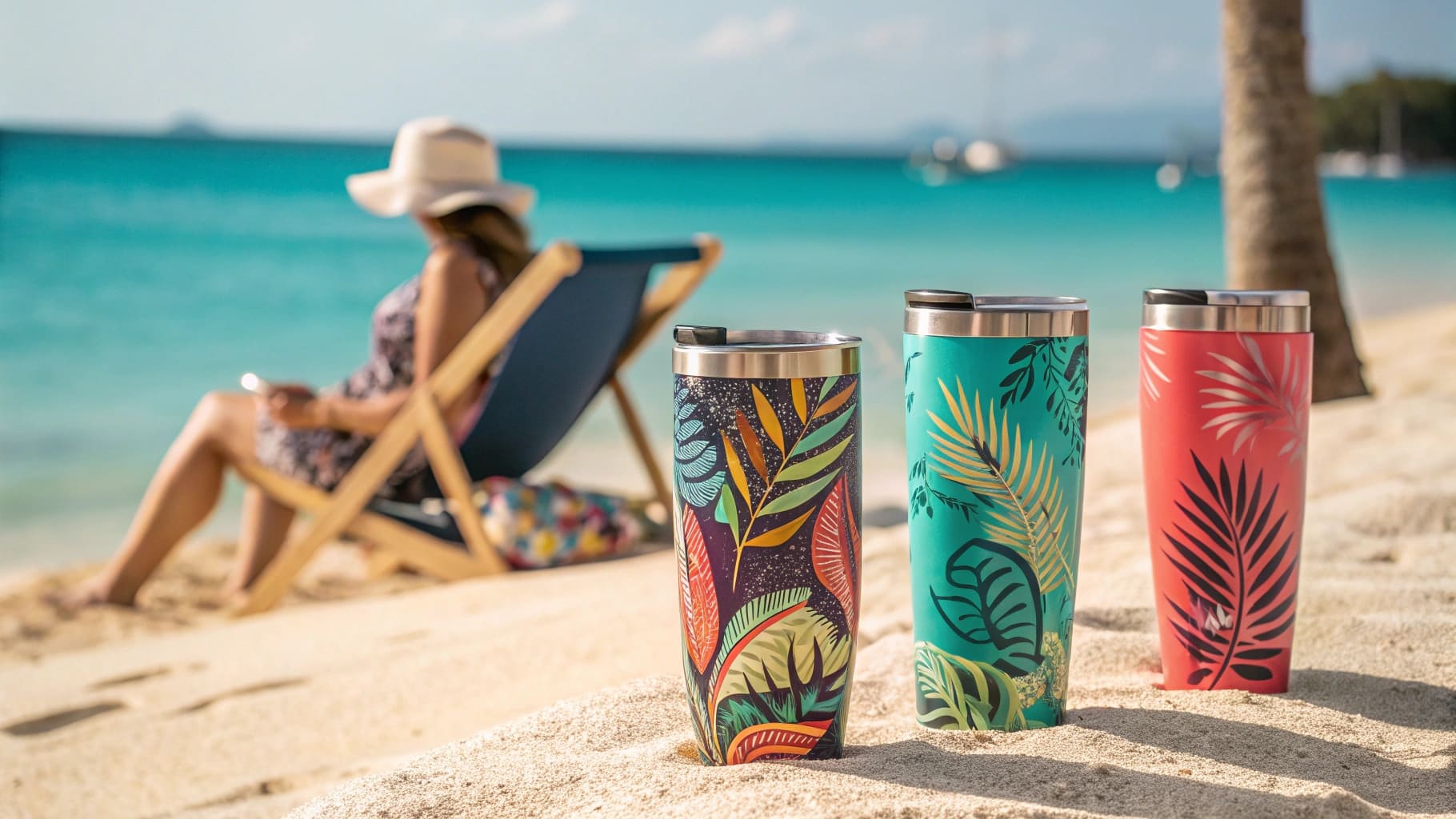
Most buyers come to me asking for a simple product. They want a tumbler that looks good, holds up in daily use, and carries their logo cleanly. That sounds easy. But once you go deeper into the specs, you realize that small decisions—like how the handle is attached or how thick the powder-coat is—can make or break your product after it ships. I want to walk you through the details that matter most, so you can make a smarter sourcing decision.
How Big Should a Decal Be for a 20oz Tumbler?
You printed a decal. You applied it to your tumbler. Then it peeled at the edges within two weeks. This is one of the most common complaints I hear from buyers. Size and placement are only half the problem.
For a 20oz tumbler, the standard decal size runs from 3x3 inches for a small chest-area logo up to 4x8 inches for a full wraparound design. The right size depends on whether you want a single-side placement or a wraparound. Leaving at least a 0.5-inch margin from seams and edges helps prevent early peeling.1
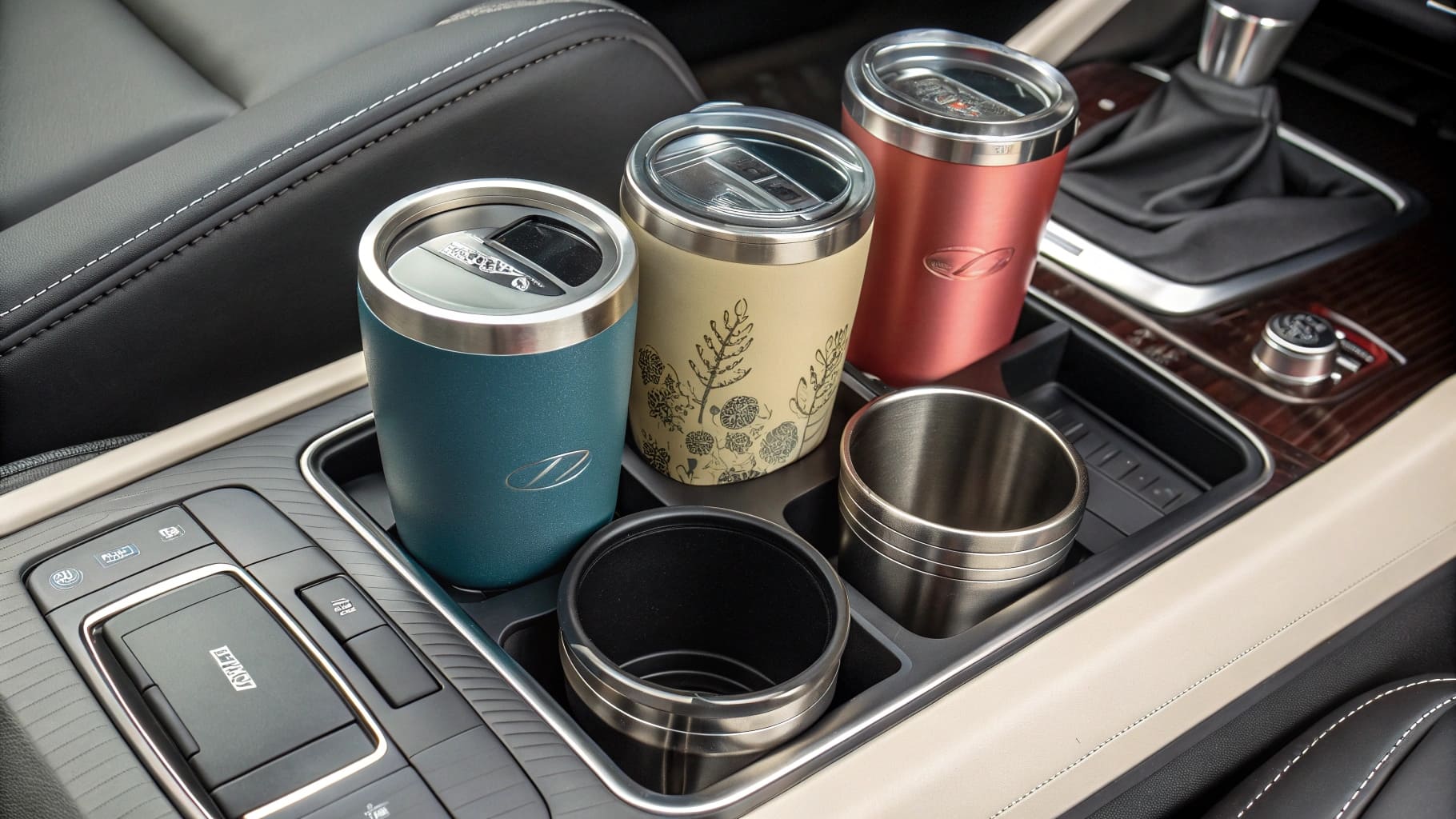
Decal size is only one part of the equation. The surface condition of the tumbler matters just as much.
A powder-coated surface has a slightly textured finish. That texture affects how well a decal or vinyl sticker bonds to the surface.2 If the powder-coat is applied unevenly, or if the surface has not been cleaned and primed before coating, the adhesion will be weak3. The decal may look fine at first, but it will start to lift after a few weeks of regular handling.
Here is how I think about decal sizing for wholesale orders:
| Placement Type | Recommended Decal Size | Notes |
|---|---|---|
| Single side (front only) | 3x3 to 3.5x4 inches | Good for logos and small graphics |
| Dual side | 3x3 inches per side | Keep both sides balanced |
| Wraparound | 4x7 to 4x8 inches | Works best on straight-wall tumblers |
| Bottom band | 1x8 inches | Common for brand name text |
Beyond size, you also need to consider the decal material. Vinyl decals with a matte laminate layer hold up better on powder-coated surfaces than plain gloss vinyl.4 If your buyer plans to hand-wash the tumbler often, a UV-resistant laminate adds another layer of protection.
For B2B buyers who plan to brand tumblers for resale, I always suggest requesting a pre-production sample with the actual decal applied. Use that sample for at least one week before approving the order. That short test will tell you more than any spec sheet.
Are Powder Coated Tumblers Dishwasher Safe?
Your customer puts the tumbler in the dishwasher. The color chips. They blame you. Then they blame your supplier. This situation is avoidable, but only if you ask the right questions before you place the order.
Powder-coated tumblers can be dishwasher safe, but not all of them are. The durability of the coating depends on the powder type, the coat thickness, and the curing temperature used during production. High-quality powder-coats applied at 180–200°C and cured properly5 will hold up through repeated dishwasher cycles. Low-grade coatings will not.
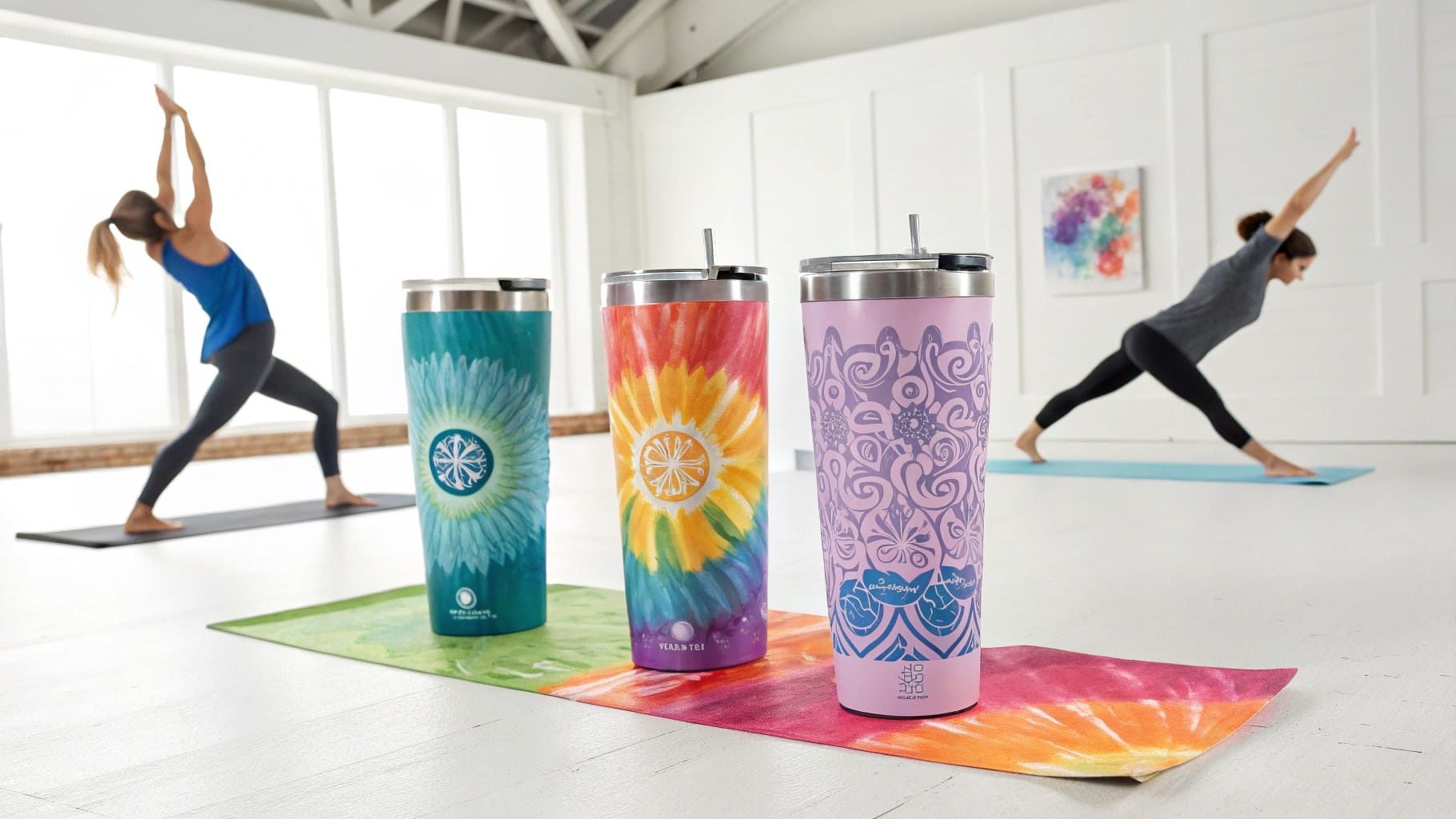
The short answer is this: a well-made powder-coated tumbler can handle dishwasher use. A poorly made one will not. The difference comes down to how the coating was applied, not just what material was used.
Here is a more detailed breakdown of what separates a dishwasher-safe powder-coat from one that will fail:
| Factor | Good Quality | Poor Quality |
|---|---|---|
| Coat thickness | 15–20 microns | Below 10 microns |
| Curing temperature | 180–200°C | Under-cured or inconsistent |
| Base material | 304 or 316 stainless steel | Low-grade steel or recycled alloy |
| Surface prep | Sandblasted and primed | Untreated or lightly wiped |
| Dishwasher test result | Holds color after 100 cycles | Chips or fades after 10–20 cycles |
I have seen suppliers send samples that look perfect on delivery. But when I run them through a dishwasher test for two to three weeks, the coating on the handle joints starts to flake first. That is because the handle-to-body weld point is the hardest area to coat evenly. Any supplier who claims full dishwasher safety should be able to show you test data that covers that specific area.
For B2B buyers, my recommendation is simple. Before you approve any wholesale order, request a dishwasher stress test report. Ask the supplier to run at least 50 wash cycles at 60°C and send you photos of the sample before and after. If they cannot provide that, treat it as a red flag.
Also, note that even the best powder-coat will wear faster if the dishwasher uses harsh detergent or runs at very high temperatures6. Including a care card with each tumbler is a smart move if your end customer plans to use a dishwasher regularly.
What Is the Best Tumbler on the Market?
Every supplier tells you their tumbler is the best. Every product page says "premium quality." But when your first batch arrives and your customers start returning them, those words mean nothing. What actually separates a great tumbler from an average one?
For B2B buyers, "best" is not a brand name. It is a set of measurable specs. The best tumbler for wholesale use is one that meets your buyers' performance needs, survives repeated use, and holds your logo cleanly for the life of the product.
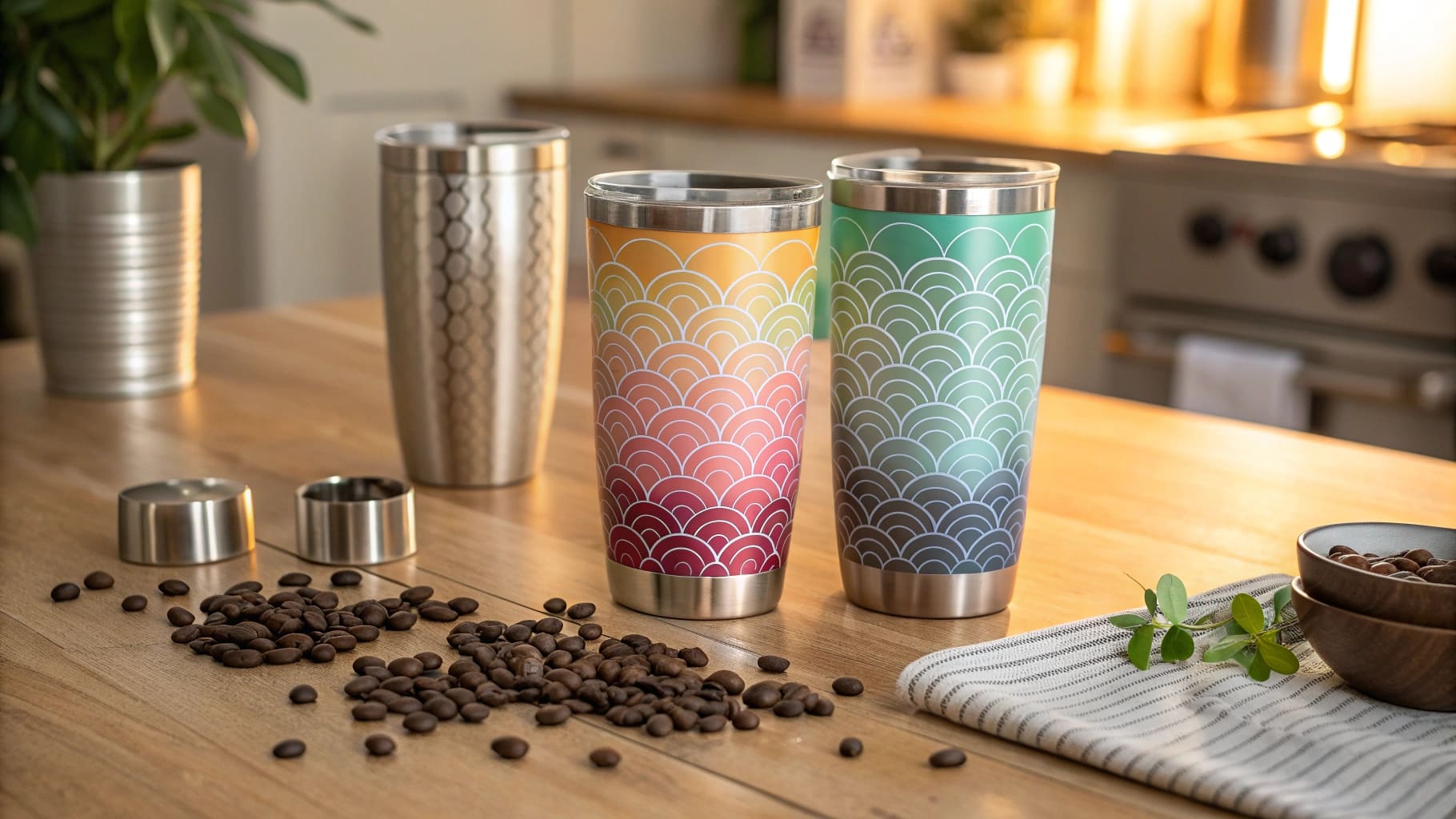
The best tumbler on the market is not defined by a brand. It is defined by specs. For B2B wholesale, focus on double-wall vacuum insulation, 18/8 stainless steel construction, a leak-proof silicone-sealed lid, and a welded handle. These are the features that actually determine performance and longevity.
When I evaluate tumblers for wholesale recommendations, I use a checklist built around function, not brand recognition. Here is the framework I use:
| Feature | Minimum Standard | Premium Standard |
|---|---|---|
| Steel grade | 18/8 (304) stainless steel | 18/10 (316) stainless steel |
| Insulation type | Double-wall vacuum | Double-wall vacuum with copper lining |
| Hot liquid retention | 6 hours | 10–12 hours |
| Cold liquid retention | 12 hours | 18–24 hours |
| Lid seal | Single silicone gasket | 3-point silicone sealing system |
| Handle attachment | Welded | Welded and reinforced |
| Powder-coat thickness | 15 microns | 18–20 microns |
| BPA status | BPA-free lid | BPA-free lid and straw |
The handle attachment method deserves extra attention. A glued handle may look the same as a welded one in a product photo. But under load—especially when someone picks up a full 20oz tumbler by the handle repeatedly—a glued handle will loosen over time. A welded handle will not. For B2B buyers who are selling into markets where durability is part of the brand promise, this is not a minor detail.
Lid design is another area where I see wide variation. A basic snap-on lid keeps costs low, but it is not truly leak-proof. A sliding or locking lid with a silicone gasket is a better choice for buyers whose customers use tumblers while commuting or traveling.
For any wholesale order above a certain volume, I always advise requesting three to five physical samples before committing. Test them yourself. Fill them with hot water. Leave them overnight. Drop them from waist height onto a hard floor. Put them through a week of dishwasher cycles. The results will tell you more than any supplier's product description ever could.
Conclusion
Choose 20oz tumblers based on steel grade, weld quality, coating thickness, and lid seal. Test before you order. Specs matter more than brand names.
-
"Double-Sided Pressure-Sensitive Adhesive Materials under Human ...", https://pmc.ncbi.nlm.nih.gov/articles/PMC11403543/. A technical application guide for pressure-sensitive films explains that edge distance, surface geometry, and seam placement affect vinyl adhesion and edge lifting, providing contextual support for leaving margins near edges and seams. Evidence role: mechanism; source type: institution. Supports: Keeping decals away from seams and edges can reduce early peeling on tumblers.. Scope note: The exact 0.5-inch margin may be an industry practice rather than a universally tested threshold. ↩
-
"Comparative Mechanical Study of Pressure Sensitive Adhesives ...", https://pmc.ncbi.nlm.nih.gov/articles/PMC9656936/. An adhesion-science source explains that surface roughness and surface energy influence pressure-sensitive adhesive bonding, supporting the claim that powder-coat texture can affect decal adhesion. Evidence role: mechanism; source type: paper. Supports: Surface texture affects how well decals or vinyl stickers adhere to powder-coated tumblers.. Scope note: The source would explain the adhesion mechanism generally and may not test tumbler decals specifically. ↩
-
"Matls IM 568, Revised 4/21/15 - Iowa Department of Transportation", https://ia.iowadot.gov/erl/archiveapril2015/IM/content/568.htm. A coating-preparation reference states that substrate cleaning and pretreatment are critical to coating adhesion, supporting the claim that inadequate surface preparation can weaken powder-coat adhesion. Evidence role: mechanism; source type: government. Supports: Poor cleaning or priming before coating can weaken adhesion on coated metal products.. Scope note: The evidence supports coating adhesion generally, not the subsequent adhesion of every decal material applied over the coating. ↩
-
"3M™ Graphic Protection Options Overlaminates and Clears", https://multimedia.3m.com/mws/media/663997O/product-bulletin-graphic-protection-options-english-version.pdf. A pressure-sensitive film or graphic-laminate technical source documents that overlaminates can improve abrasion, UV, and handling resistance of vinyl graphics, providing contextual support for laminated decals lasting longer than unprotected vinyl. Evidence role: mechanism; source type: institution. Supports: Laminated vinyl decals can be more durable than unlaminated or plain vinyl decals on handled products.. Scope note: Support for matte laminate specifically outperforming gloss vinyl on powder-coated tumblers may be indirect unless the source compares these materials directly. ↩
-
"Powder coating - Wikipedia", https://en.wikipedia.org/wiki/Powder_coating. A powder-coating technical source describes common curing schedules for thermoset powder coatings, including cure temperatures around 180–200°C, supporting the stated production range as a typical curing condition. Evidence role: definition; source type: research. Supports: Powder coatings commonly require curing around 180–200°C to achieve intended durability.. Scope note: Actual cure requirements vary by powder chemistry, substrate mass, and manufacturer formulation. ↩
-
"Contribution of household dishwashing to microplastic pollution - PMC", https://pmc.ncbi.nlm.nih.gov/articles/PMC10076389/. A coatings or detergent-chemistry source explains that alkaline detergents, heat, and repeated wash exposure can accelerate degradation or discoloration of coated surfaces, supporting the caution about dishwasher conditions. Evidence role: mechanism; source type: paper. Supports: Harsh dishwasher detergents and high temperatures can accelerate wear of powder-coated tumblers.. Scope note: The extent of wear depends on the coating chemistry and dishwasher conditions, so the source may provide general rather than tumbler-specific evidence. ↩