
What Tests Validate Leak-Proof Lids on Insulated Bottles Across SKUs in QA?
Last month, I received an urgent call from a client in Toronto. His team had just unpacked a container of water bottles, and twenty percent showed leaks. The loss was significant. This problem could have been avoided with proper testing.
Quality assurance testing for leak-proof lids1 includes pressure tests, inversion tests, and temperature cycling tests. I verify each SKU through these three core protocols. The pressure test simulates altitude changes. The inversion test checks seal integrity over 24 to 48 hours. Temperature cycling validates gasket performance under thermal stress.

At Icobottle, I have seen many buyers struggle with quality issues. They order thousands of units, only to discover problems after shipping. The cost of returns and reputation damage is high. I want to share what I have learned about leak-proof validation. These insights will help you avoid the mistakes I have seen too many times.
What Is the Difference Between Spill Proof and Leak Proof Bottles?
Many buyers confuse these two terms. I have had clients request "spill-proof" bottles when they actually needed leak-proof ones. The confusion leads to wrong orders and disappointed customers.
Spill-proof bottles minimize liquid escape during normal use but may fail under pressure or when inverted. Leak-proof bottles maintain a perfect seal under stress conditions including full inversion, temperature changes, and pressure variations. The distinction matters for your product positioning and customer expectations.

Understanding the Technical Differences
I test both types regularly in my facility. Spill-proof designs use simple mechanisms. These include spring-loaded closures or basic snap lids. They work fine when the bottle stays upright. But they often fail when you throw them in a bag or turn them upside down.
Leak-proof bottles require more sophisticated sealing systems. I use food-grade silicone gaskets2 in most of my products. The gasket creates a compression seal between the lid and the bottle body. This seal must withstand multiple stress factors.
Here is how I categorize the performance differences:
| Feature | Spill-Proof | Leak-Proof |
|---|---|---|
| Upright Performance | Good | Excellent |
| Inverted Performance | Poor to Fair | Excellent |
| Pressure Resistance | Limited | High |
| Gasket Quality | Basic | Premium Food-Grade Silicone |
| Price Point | Lower | Higher |
| Target Market | Casual Use | Professional/Outdoor Use |
I always tell my clients to match the design to their end user. A corporate gift bottle for office use can be spill-proof. But if your customers are hikers or travelers, they need truly leak-proof bottles. The lockable push-button flip lid design I offer combines convenience with genuine leak-proof performance. It allows one-handed operation while maintaining seal integrity through a dual-gasket system.
Is Tritan or Stainless Steel Better?
This question comes up in nearly every negotiation I have. Buyers want to know which material delivers better value. The answer depends on your market and price positioning.
Stainless steel offers superior durability, corrosion resistance, and temperature retention. Tritan provides transparency, lighter weight, and impact resistance. I manufacture stainless steel products exclusively because my B2B clients prioritize long-term performance and premium positioning.
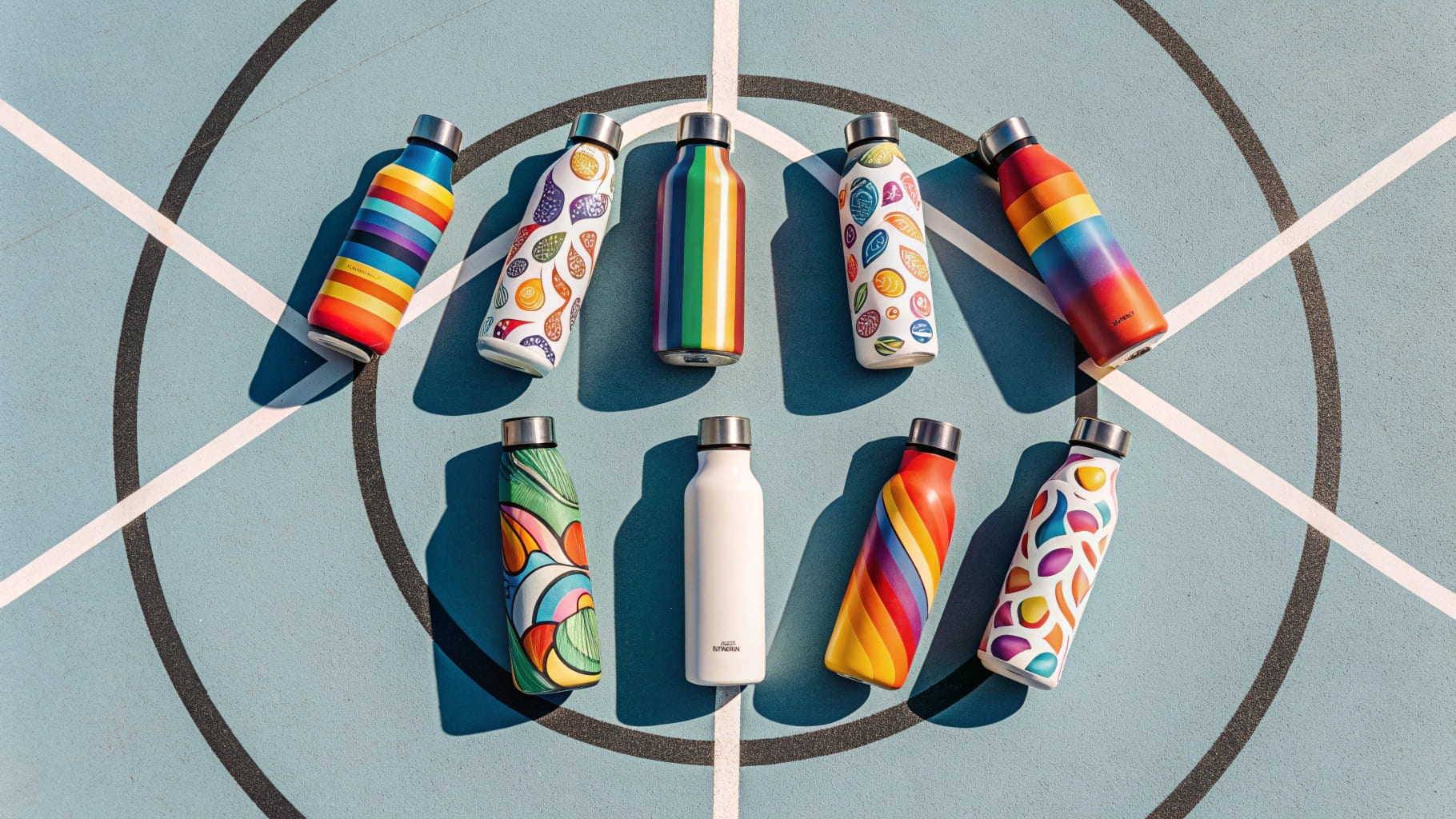
Material Performance Analysis
I work primarily with 304 and 316 stainless steel3. The 304 grade, known as 18/8 stainless steel, contains eighteen percent chromium and eight percent nickel. This composition gives it excellent acid and alkali resistance. I use it for most of my water bottles and coffee mugs because it meets food-grade standards globally.
The 316 stainless steel includes molybdenum, which increases corrosion resistance. I recommend it for products that will hold acidic beverages or be used in marine environments. The price difference is modest but the performance gain is significant in harsh conditions.
Tritan is a BPA-free copolyester. It has strong impact strength and good chemical resistance. I have seen Tritan products from competitors. They offer high transparency, which appeals to consumers who want to see their beverage. But Tritan can deform at temperatures above ninety-four degrees Celsius. This limits its use for hot beverages.
Here is my comparison based on real production experience:
| Property | 304 Stainless Steel | 316 Stainless Steel | Tritan |
|---|---|---|---|
| Temperature Range | -20°C to 100°C | -20°C to 100°C | -10°C to 94°C |
| Weight | Heavy | Heavy | Light |
| Transparency | Opaque | Opaque | Clear |
| Impact Resistance | Good | Good | Excellent |
| Corrosion Resistance | Excellent | Superior | Good |
| Cost per Unit | Medium | Higher | Lower |
| Customization Options | Excellent | Excellent | Limited |
I can apply powder coating, laser engraving, or silk screen printing to stainless steel. This flexibility helps my clients create distinctive branded products. The double-wall vacuum insulation4 I build into my stainless steel bottles keeps beverages hot for twelve hours or cold for twenty-four hours. Tritan cannot match this thermal performance.
For B2B buyers targeting premium markets in America and Europe, stainless steel delivers better perceived value. My clients report that customers associate stainless steel with quality and durability. They can command higher retail prices.
Are Yeti Bottles Leak Proof?
Yeti has become the benchmark brand in premium insulated bottles. My clients often ask me to match Yeti specifications. I respect their engineering and quality standards.
Yeti bottles5 are genuinely leak-proof. They use high-quality gaskets and precision-engineered lid systems. Their double-wall vacuum insulation and secure closure mechanisms set industry standards. The products are designed for rugged outdoor use and typically feature heavier construction.

Learning from Premium Brands
I have purchased and tested multiple Yeti products. Their MagSlider lid uses strong magnets to keep the opening closed. The gasket is thick food-grade silicone that compresses evenly around the rim. The thread precision is excellent, with no gaps or misalignment.
At Icobottle, I apply similar engineering principles. My challenge is delivering comparable quality at wholesale prices that work for B2B buyers. I achieve this through careful supplier selection and rigorous quality control.
My leak-proof validation process includes these specific tests:
Pressure Test Protocol
I fill bottles to ninety percent capacity and seal them. Then I place them in a pressure chamber that simulates altitude changes from sea level to three thousand meters. The bottles remain under pressure for two hours. Any pressure drop indicates a leak.
Inversion Test Protocol
I fill bottles with colored water and seal them tightly. Then I invert them and place them on white paper towels. The bottles remain inverted for forty-eight hours in a temperature-controlled environment. I check for any moisture on the paper after twenty-four hours and again after forty-eight hours.
Temperature Cycling Protocol
I fill bottles with water at ninety-five degrees Celsius and seal them. After two hours, I transfer them to a freezer at minus fifteen degrees Celsius. I repeat this cycle five times. The gaskets must maintain their seal through expansion and contraction. This test catches inferior gasket materials that become brittle or lose elasticity.
| Test Type | Duration | Pass Criteria | Failure Rate Industry Average |
|---|---|---|---|
| Pressure Test | 2 hours | No pressure drop | 3-5% |
| Inversion Test | 48 hours | No visible moisture | 5-8% |
| Temperature Cycling | 5 cycles | Seal integrity maintained | 4-6% |
| Combined Stress Test | 72 hours | All criteria met | 8-12% |
I reject any SKU that fails any single test. For my clients, this means they receive products that match premium brand performance. The additional testing cost is minimal compared to the cost of returns or reputation damage.
When buyers ask if they should specify Yeti-level quality, I tell them yes if they want to compete in premium segments. But I also explain that many successful brands build their reputation on consistent quality at accessible price points. The key is matching your quality standards to your target market and pricing strategy.
Conclusion
Proper leak-proof testing protects your brand and satisfies customers. I validate every SKU through pressure, inversion, and temperature cycling protocols. Choose materials and designs that match your market positioning. Your quality investment pays back through customer loyalty.
-
Explore this resource to understand the essential testing methods that ensure leak-proof performance in insulated bottles. ↩
-
Learn why food-grade silicone gaskets are essential for maintaining a leak-proof seal in insulated bottles. ↩
-
Find out why 316 stainless steel is recommended for products exposed to harsh conditions. ↩
-
Learn how double-wall vacuum insulation keeps beverages at optimal temperatures for longer. ↩
-
Investigate the leak-proof claims of Yeti bottles and what sets them apart in the market. ↩
