
What is the Best Travel Mug Vacuum Insulated Coffee Cup for Commuters?
Every morning, commuters face the same problem. Your coffee gets cold before you finish your drive. Or worse, it spills all over your car seat. I see this frustration daily when talking to my wholesale customers who need reliable solutions for their end users.
The best travel mug for commuters needs three things. It must keep drinks hot for at least six hours. It must never leak in your bag or car. And it must fit standard cup holders while being easy to clean and use on the go.

I have been in the stainless steel drinkware business for over a decade. Through countless conversations with buyers and testing hundreds of samples, I learned what actually matters. Let me share what I discovered about choosing the right commuter mug.
What is the Best Commuter Coffee Mug?
You want a mug that works with your daily routine. Not every fancy feature matters. What matters is whether it keeps your coffee hot during your entire commute and whether you can operate it with one hand while driving.
The best commuter coffee mug combines double-wall vacuum insulation1 with a leak-proof lid system. It should hold between 12 to 20 ounces, fit in your car cup holder, and have a reliable one-handed opening mechanism that you can use safely.
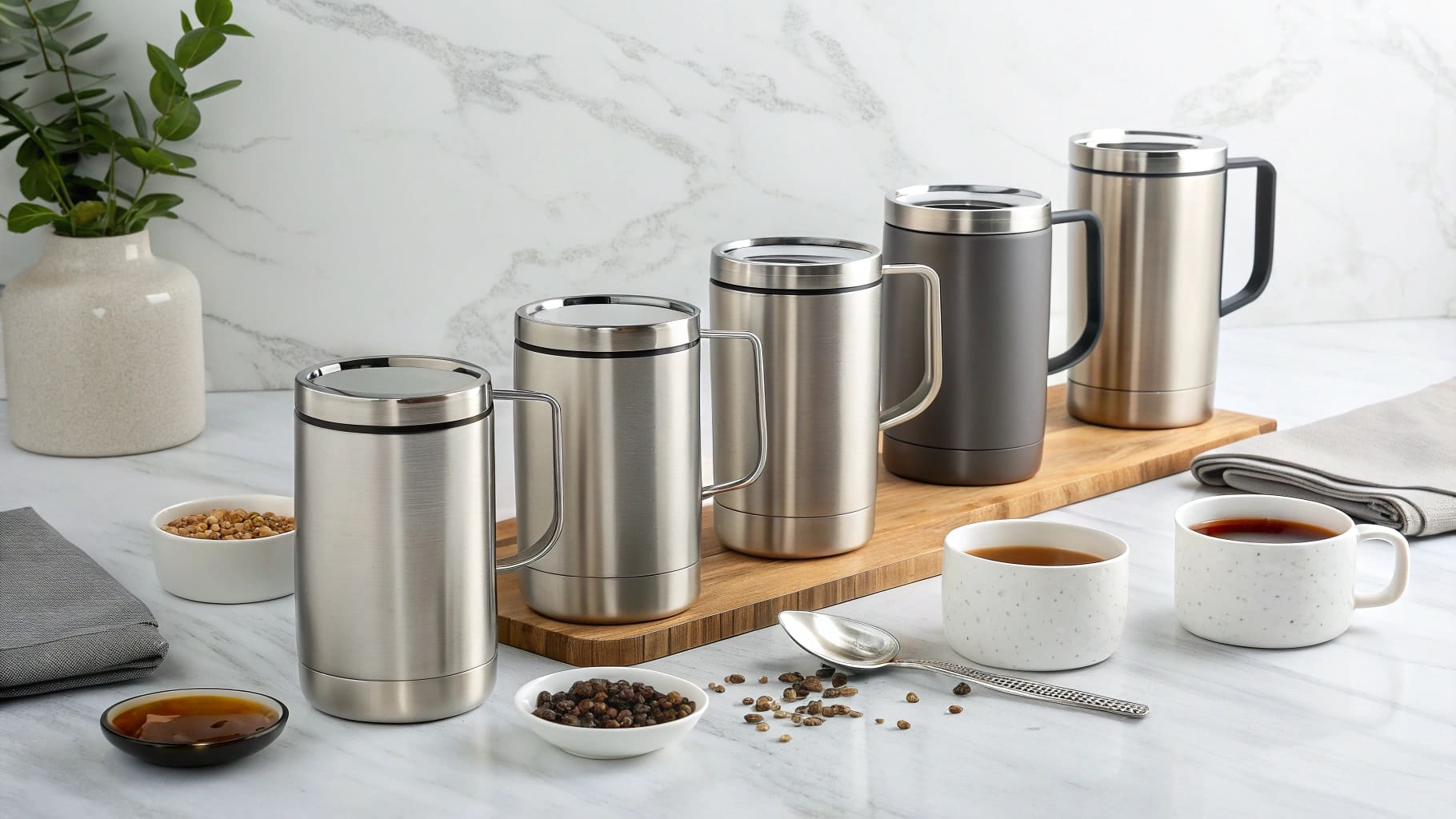
Understanding What Makes a Commuter Mug Actually Work
I remember a buyer from Toronto who returned to me three times. He kept trying different mugs for his retail store. His customers complained about every single batch. Some leaked. Others did not keep coffee hot. A few had lids that were too complicated to open while driving.
The breakthrough came when we focused on real commuter needs. Most people drive for 30 to 90 minutes. They need their coffee to stay hot for at least six hours because they might not finish it until they reach the office. The vacuum insulation gap between the inner and outer steel walls needs to be at least 1.5mm to achieve this performance.
The lid design matters just as much as insulation. I have seen beautiful mugs fail because their lids leaked after two weeks of use. The gasket needs to be made from high-quality silicone that can withstand daily compression and temperature changes. Cheap rubber gaskets lose their seal after a month.
Here is what separates good commuter mugs from mediocre ones:
| Feature | Why It Matters | What to Look For |
|---|---|---|
| Insulation Duration | Keeps coffee hot during long commutes | 6+ hours for hot, 12+ hours for cold |
| Lid Mechanism | One-handed operation while driving | Push-button or flip-top with secure lock |
| Size and Shape | Fits car cup holders without wobbling | Tapered base, 2.75-3.5 inch diameter |
| Gasket Quality | Prevents leaks in bags and cars | Food-grade silicone, replaceable |
| Cleaning Access | Prevents mold and stain buildup | Wide mouth opening, smooth interior |
The cup holder fit is something many manufacturers overlook. I learned this the hard way when a large order got rejected because the mugs were 4 inches wide at the base. They did not fit most car cup holders. Now I always recommend a maximum base diameter of 3.5 inches.
What is the Best Insulated Cup You Can Buy?
The material makes all the difference. Not all stainless steel is equal. You need to understand the grade because it affects taste, durability, and safety. This knowledge helps you avoid costly mistakes when selecting products for your market.
The best insulated cup uses food-grade 304 stainless steel with proper vacuum sealing between double walls. This construction blocks heat transfer effectively, keeps drinks at the right temperature for hours, and ensures no metallic taste enters your beverage.
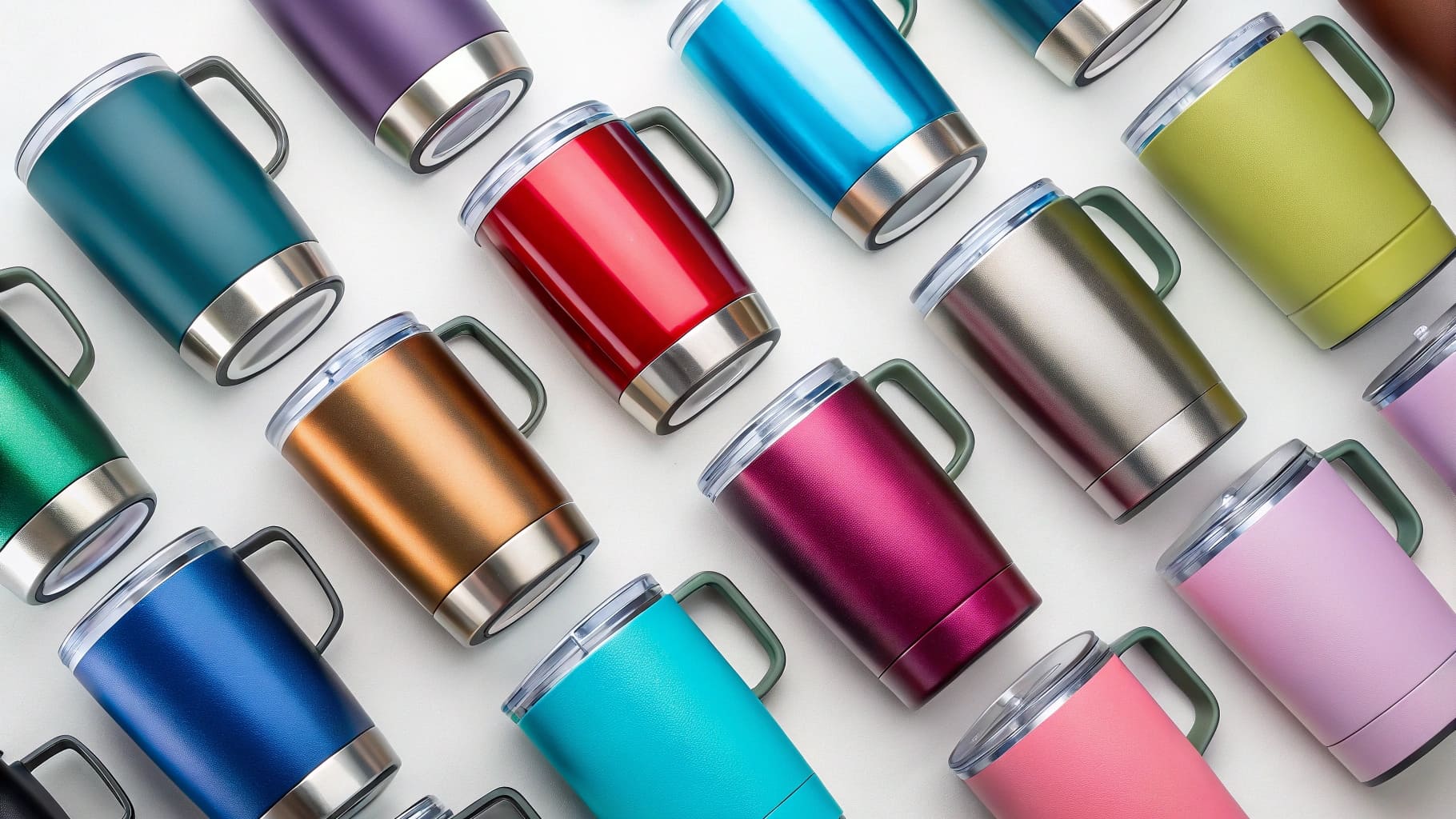
Breaking Down Insulation Technology and Material Quality
I once had a customer who bought cheaper mugs from another supplier to save costs. Within three months, his customers started reporting a metallic taste in their coffee. The problem was 201 stainless steel instead of 304. It costs less but reacts with acidic beverages like coffee.
Food-grade 304 stainless steel contains 18 percent chromium and 8 percent nickel. This composition makes it resistant to corrosion and prevents any interaction with your drink. When I visit factories, I always ask for material certificates. Some manufacturers try to use 201 steel on the interior and only 304 on the exterior to cut costs.
The vacuum seal between the walls is equally critical. A true vacuum means removing almost all air from the space between the inner and outer walls. This creates an insulation barrier because heat cannot transfer through empty space. But creating and maintaining this vacuum requires precision welding and quality control.
I have seen three main construction methods in my years sourcing these products:
Single-wall construction uses one layer of steel. It offers no insulation. Your drink gets cold within an hour. This is only suitable for room-temperature beverages.
Double-wall air gap construction has two steel walls with regular air between them. This provides some insulation but not much. Your hot coffee stays warm for maybe two to three hours. Air conducts heat, so this design has limitations.
Double-wall vacuum construction removes the air between walls, creating a near-perfect insulation barrier. This is what you need for serious temperature retention. Hot drinks stay hot for six to twelve hours. Cold drinks stay cold for up to 24 hours.
The welding quality matters too. Poor welds can break the vacuum seal. I test samples by filling them with ice water and checking for condensation on the outside after 30 minutes. If you see moisture forming, the vacuum seal has failed.
Why are Stanley Cups so Popular?
Social media created a buying frenzy. But underneath the trend lies real product quality. I watched the Stanley phenomenon from a manufacturer's perspective. It taught me valuable lessons about what drives consumer preference beyond marketing.
Stanley Cups became popular because they combine proven durability with aesthetic appeal and lifestyle positioning. Their thick steel construction, lifetime warranty, and versatile sizes created trust. Social media amplified this by making the cups a visible status symbol.

Understanding the Factors Behind Viral Product Success
The Stanley trend started with a specific customer base before exploding everywhere. I noticed this pattern when several of my retail buyers suddenly asked for similar designs in late 2022. They showed me social media posts where people collected multiple Stanley tumblers in different colors.
But viral success does not happen without substance. Stanley built its reputation over 100 years making products for serious outdoor users. When they adapted their industrial thermos technology for everyday tumblers, they brought that reliability with them. The products genuinely performed well.
I studied what made them work because my buyers wanted to understand how to select products that would resonate with their customers. Here is what I found:
The construction uses thicker steel than most competitors. This adds weight but also durability. The cups can survive drops and impacts that would dent ordinary tumblers. For buyers, this means fewer returns and complaints.
The handle design makes them practical for commuters and outdoor users. You can carry them easily while holding other items. This seems simple but many vacuum mugs ignore handles entirely or add flimsy ones that break.
The size options matter more than most realize. Stanley offers everything from 14 ounces to 40 ounces. Different commuters have different needs. Someone driving 20 minutes wants less volume than someone on a 90-minute train ride.
But here is the business lesson I want to share. The Stanley success shows that consumers will pay more for products that combine quality with emotional appeal. As a wholesale buyer, you need both. Quality ensures customer satisfaction and repeat purchases. Emotional appeal drives the initial sale and word-of-mouth marketing.
When I help buyers select products, I focus on these lasting value factors:
- Verifiable insulation performance through testing
- Durable materials with proper certification
- Design features that solve real daily problems
- Aesthetic options that allow personalization
- Reliable suppliers who can maintain quality at scale
The Stanley trend will eventually cool down like all trends do. But the underlying product qualities that made them successful will continue driving purchase decisions. Focus on these fundamentals when selecting travel mugs for your market.
Conclusion
The best commuter mug delivers on three essentials: proven insulation performance, leak-proof reliability, and practical daily-use features. Focus on these fundamentals rather than trends, and you will select products that satisfy customers long-term.
-
Understand the benefits of double-wall vacuum insulation and why it's essential for keeping drinks hot. ↩