
Struggling to find vacuum flasks that truly excite your customers? You might be offering outdated designs. Discover the innovative features that are now defining modern vacuum flasks.
The future of vacuum flask design is pushing beyond basic insulation. Key trends include sustainable materials like recycled steel, smart features such as temperature displays, enhanced personalization options, and improved ergonomics, all meeting the demands of today's B2B buyers.
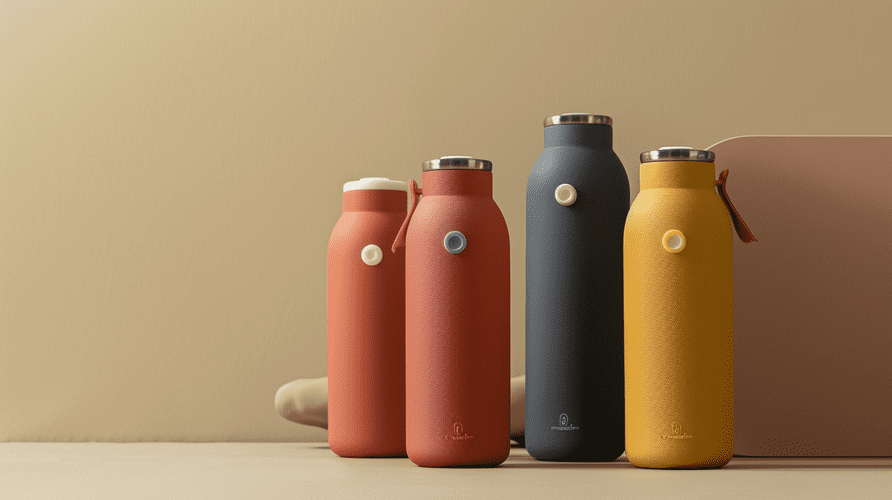
It's clear that vacuum flasks are changing a lot. But what really causes these changes? We need to look at specific parts and how they affect what buyers like you want. This will help you choose better.
What is the purpose of the vacuum in a vacuum flask that is used to store a cold liquid?
Do you wonder how your flask keeps drinks so cold for hours? Maybe the "vacuum" part sounds a bit technical. Let me explain the simple science that makes it work.
The vacuum layer between the flask's double walls is the key. It stops heat from moving easily by conduction and convection. This means less outside warmth reaches your cold liquid, keeping it chilled.
To really understand this, the vacuum is all about insulation. Heat usually moves in three main ways. First, conduction, which is heat traveling through a material itself, like when a metal spoon gets hot if you leave it in hot soup. Second, convection, which is heat moving through liquids or gases, like when hot air rises. Third, radiation, which is heat moving as waves, like the warmth from the sun.
A vacuum flask is very good at stopping conduction and convection.
How the Vacuum Stops Heat
The space between the two walls of the flask is almost empty; it's a near-vacuum. This means there are very few air molecules in that space.
- Stopping Conduction: Because there is hardly any material (like air) between the walls, heat cannot easily travel from the outer wall to the inner wall by conduction.
- Stopping Convection: With so few air molecules, there is no significant air movement or current to transfer heat by convection.
Think about it like this: if you want to pass a message (which is like heat) through a big crowd of people (which are like molecules), it's pretty easy. But if the room is almost empty and there's hardly anyone there (that's the vacuum), the message can't get through easily. That's how the vacuum keeps your cold drink from getting warm from the outside air. For hot drinks, it works the other way around, keeping the heat inside the flask. This basic principle is something we at Icobottle have focused on for many years in our manufacturing. We always make sure the vacuum seal is top quality. This is very important because even a tiny leak can completely ruin the insulation. I remember a client, Mark Shenng from Canada, who was very careful about testing the vacuum integrity for his order of stainless steel water bottles. He knew this was fundamental to how well the product would perform.
What are the adaptations of vacuum flask?
Do you think all vacuum flasks are pretty much the same? You might be settling for basic designs and missing out. Let's explore the exciting new adaptations available today.
Modern vacuum flasks are adapting with features like sustainable materials (think recycled steel), smart lids that can show the temperature, modular designs for different uses, and much better options for personalization. These changes meet many different customer needs.
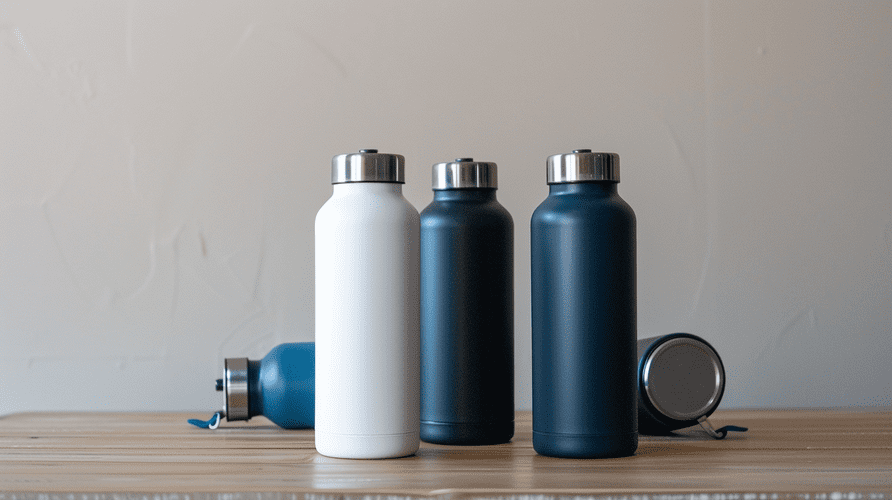
Vacuum flasks are not just simple containers anymore. We are seeing many new adaptations in the market. These changes are happening because customers have new demands and expectations. As a manufacturer, I see these trends directly influencing what B2B buyers are looking for.
Key Adaptation Areas
Here is a breakdown of what’s new and important:
| Adaptation Category | Examples | Benefit for B2B Buyers like Mark |
|---|---|---|
| Sustainability | Using recycled stainless steel (e.g., 90% post-consumer content), bio-based plastics for lids and accessories. | Meets growing demand for eco-friendly products, improves brand image. |
| Smart Features | Lids with digital temperature displays, hydration reminders (e.g., blinking lights), built-in UV water sterilization. | Adds significant user value, appeals to tech-savvy consumers. |
| Personalization | Unique body shapes, advanced coating techniques (like durable powder coating or vibrant UV printing), precise laser engraving for logos. | Allows for stronger branding, creates differentiated products in the market. |
| Modularity | Systems with interchangeable lids (e.g., a straw lid for sports, a sip lid for coffee, a secure carry handle lid for travel). | Increases versatility of a single bottle, appeals to a wider user base. |
| Ergonomics & Convenience | Improved grip designs, lighter weight materials without sacrificing quality, features for easier cleaning (e.g., wider mouths). | Enhances the overall user experience, makes the product more practical for daily use. |
I've noticed that procurement officers, including people like Mark from Canada, are very interested in these adaptations. For instance, when I showed him our new flask line that came with modular lids – one bottle body but with three different types of caps – he immediately saw the potential. He told me, "Aries, this is excellent. My customers can buy one bottle and use it for the gym, for the office, or when they go hiking." He understood that these adaptations provide much more value. He also asked about the durability of the coatings we use for personalized designs. We talked about how our advanced powder coating techniques are great at resisting chips and scratches. This is very important for maintaining a premium look, especially for products that are rebranded and sold in markets like Canada. This attention to detail is what makes a product successful. Mark, being sensitive to quality, always digs into these specifics.
What is the use of vacuum flask in chemistry?
Do you think vacuum flasks are only for keeping your coffee hot or water cold? You might be overlooking some very specialized and important uses for them. Let's discover their role in chemistry labs.
In chemistry, special vacuum flasks, often called Dewar flasks, are essential. They are used to store and transport extremely cold substances like liquid nitrogen or dry ice. Their excellent insulation is critical for safely maintaining these very low temperatures.

While most of my B2B clients, such as Mark who buys stainless steel water bottles for the Canadian retail market, are focused on consumer vacuum flasks for everyday drinks, it is interesting to know that these flasks also have highly specialized uses. In chemistry laboratories, a specific type of vacuum flask, known as a Dewar flask (named after its inventor, James Dewar), is very important.
Why Dewar Flasks are Special in Labs
Their design is carefully made for extreme temperature control and safety.
- Cryogenic Storage: Dewar flasks are primarily designed to hold substances at incredibly low temperatures. We're talking about things like liquid nitrogen, which is at -196°C (or -321°F), or liquid oxygen. These are called cryogenic liquids. Without the superior insulation of a Dewar flask, these substances would boil away very quickly and could be dangerous.
- Safety in Handling: Working with such cold materials can be hazardous. Direct contact can cause severe frostbite. Dewar flasks are built to be robust. They often have protective casings to minimize the risk of spillage or breakage of the inner vacuum vessel, which is often made of glass in lab settings.
- Controlled Experimentation: Scientists use Dewar flasks to maintain stable, very low temperatures needed for certain chemical reactions or physical experiments. They are also used to quickly cool samples or to trap volatile substances.
The basic working principle is exactly the same as the flask you use for your coffee: it has a double wall with a vacuum in between to stop heat transfer. But, the materials and construction are often more specialized for lab use. For example, the inner vessel of a lab Dewar flask might be made of borosilicate glass because this type of glass can handle rapid and extreme temperature changes without cracking. Larger Dewar flasks, especially those for industrial or bulk transport of cryogenic liquids, are often made of stainless steel for better durability, much like our drink flasks.
While Icobottle focuses on producing food-grade stainless steel vacuum flasks for beverages and food, understanding these high-performance scientific applications really reinforces the value and effectiveness of good vacuum technology. It highlights just how critical that vacuum seal and the quality of the insulation are. Mark, for instance, doesn't purchase laboratory flasks for his business. But when I explained this specialized use to him once, he mentioned that it gave him even more confidence in the underlying technology of the everyday stainless steel water bottles he was sourcing from us. He appreciated knowing that the science was solid and proven in very demanding applications.
Conclusion
Emerging vacuum flask trends focus on sustainability, smart tech, personalization, and better ergonomics. These innovations offer exciting opportunities for B2B buyers to meet evolving consumer demands effectively.