
What drop and leak tests should insulated tumblers pass before FCL shipment?
You ordered thousands of tumblers. They arrive damaged. Your customers cancel orders. I've seen this nightmare destroy businesses. One simple quality check could have prevented everything.
Before FCL shipment, insulated tumblers must pass comprehensive leak tests where each lid is tested individually while positioned upside down, and drop tests from standard heights to verify the impact-resistant base cap and double-wall structure1 remain intact without dents or functional damage.
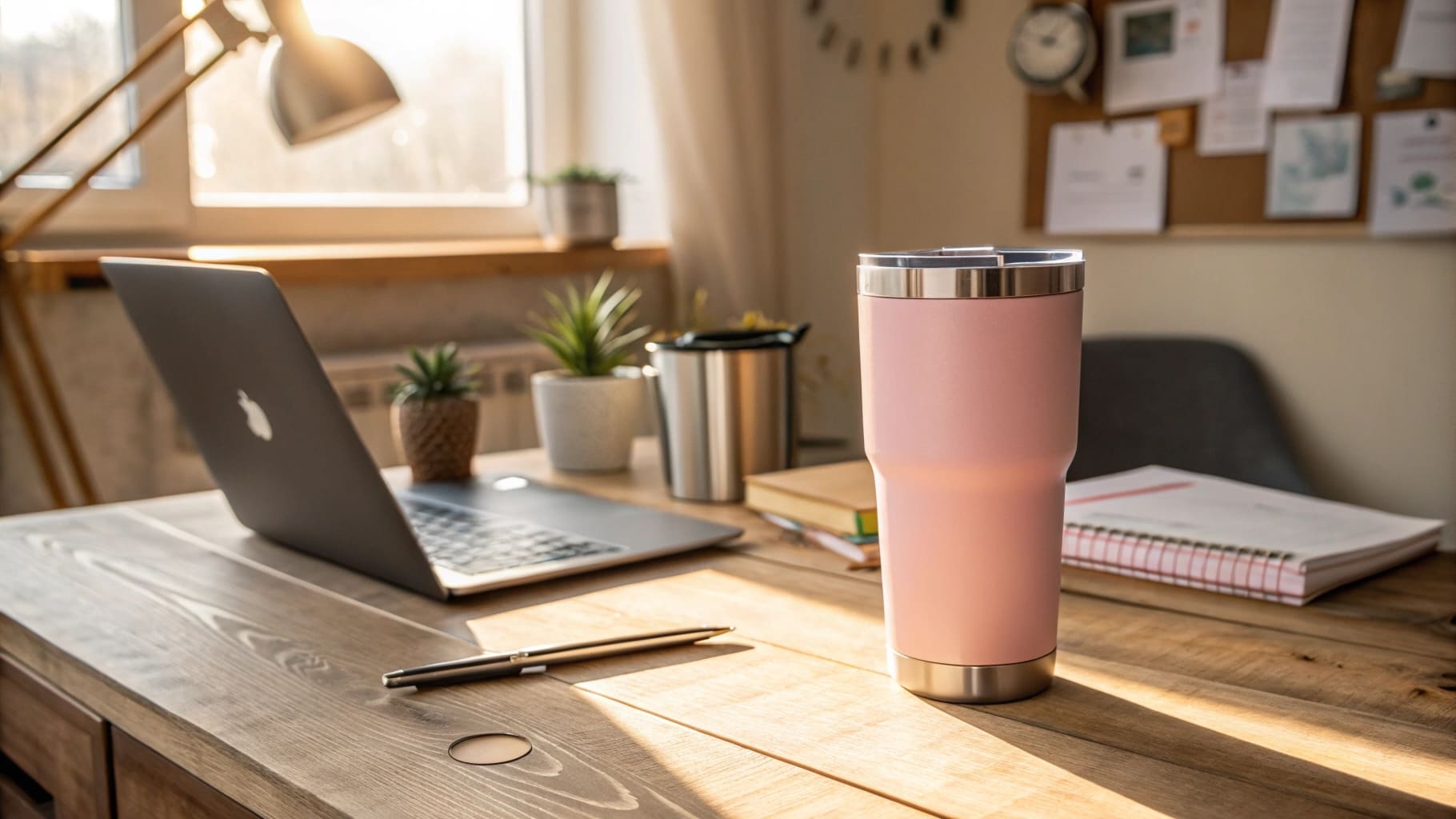
I learned this lesson the hard way fifteen years ago. My first major export shipment failed because I skipped proper testing. The financial loss taught me why every tumbler needs rigorous inspection before it leaves the factory. Let me share what I've discovered through decades of manufacturing experience.
How does a metal insulated tumbler help regulate heat transfer?
Your coffee turns cold in minutes. Your iced water becomes room temperature fast. Standard cups fail you daily. The science behind keeping drinks at perfect temperature isn't complicated, but most people don't understand how it works.
Metal insulated tumblers use double-wall vacuum construction to block conduction and convection, while the vacuum space between walls eliminates air molecules that normally transfer heat, keeping cold drinks ice cold for 24 hours and hot beverages warm for 12 hours.

The vacuum technology that changes everything
The core principle sits between two layers of premium stainless steel. We create a vacuum space by removing nearly all air molecules. Heat needs molecules to travel through. No molecules means no pathway for heat transfer.
I remember when we first upgraded to vacuum insulation technology. Our test results shocked everyone. The temperature retention2 jumped from 4 hours to 12 hours for hot drinks. Cold drinks stayed icy for an entire day instead of warming up after lunch.
The vacuum works because it attacks two heat transfer methods at once. Conduction requires direct molecular contact. The vacuum eliminates this contact. Convection needs air movement to carry heat. The vacuum has no air to move. This dual-action approach makes vacuum insulation far superior to simple air gaps.
| Heat Transfer Method | How Vacuum Stops It | Result |
|---|---|---|
| Conduction | No molecules to touch | Heat can't pass through |
| Convection | No air to move | No heat circulation |
| Radiation | Reflective barriers | Heat bounces back |
Why the inner surface matters
The electro-polished interior does more than look shiny. This smooth surface prevents flavor molecules from sticking. Your morning coffee won't affect your afternoon iced tea. I've tested this personally over thousands of uses.
The triple-wall construction in our premium models adds another insulation layer. This design keeps the exterior comfortable to touch even with boiling water inside. No burns. No condensation rings on your desk. The outer surface stays dry and room temperature.
What not to put in an insulated tumbler?
Someone told me their tumbler exploded. Another customer complained about metallic taste. These problems come from putting wrong substances inside. The tumbler wasn't defective. The user simply didn't know the limitations.
Avoid highly acidic substances, carbonated beverages under pressure, and dairy products requiring refrigeration in insulated tumblers, though high-quality 304/316 stainless steel safely handles most hot and cold beverages from coffee to cocktails without flavor transfer or safety concerns.

Understanding material limitations
Our tumblers use food-grade 304 or 316 stainless steel. These materials resist corrosion and don't react with normal beverages. Coffee, tea, water, juice, wine—all perfectly safe. The BPA-free, phthalate-free, and lead-free certifications confirm this safety standard.
But some substances push beyond design parameters. Highly carbonated drinks build pressure inside sealed containers. I've seen lids pop off from this pressure buildup. The tumbler itself remains intact, but the sudden release creates mess and potential injury risk.
Dairy products present different challenges. Milk doesn't damage stainless steel. The problem is bacterial growth. The insulation keeps liquids at room temperature too long. Bacteria multiply in this environment. Spoiled milk smells terrible and poses health risks.
Extremely acidic substances need consideration. Lemon juice, vinegar-based drinks, and highly acidic sports drinks won't hurt 316 stainless steel. But lower quality alloys might react over extended contact. This is why I only manufacture with premium grades.
What works perfectly
Morning coffee stays hot through your commute. Afternoon smoothies remain cold until evening. Evening cocktails maintain their chill for hours. These normal beverages are exactly what we designed tumblers to handle.
The key advantage is zero flavor transfer. Your tumbler won't taste like yesterday's drink. The polished interior prevents absorption. I use the same tumbler for coffee at breakfast and water at lunch. No coffee flavor in my water. Ever.
How do tumblers eliminate all three methods of heat transfer?
Physics defines three ways heat moves: conduction, convection, and radiation. Standard cups fail because they only address one or two methods. Premium tumblers must block all three pathways completely.
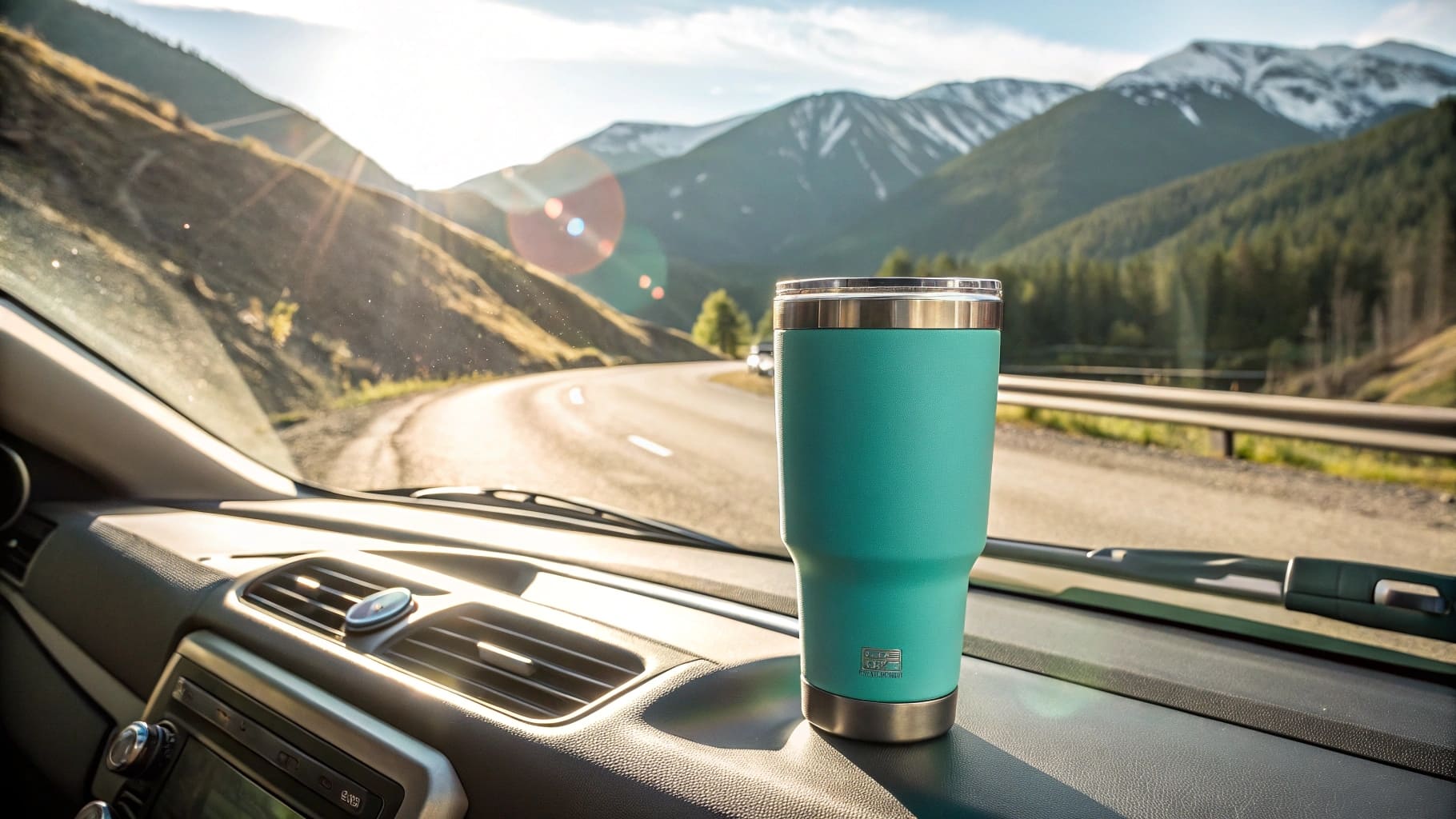
Premium tumblers eliminate conduction through vacuum space between walls, stop convection by removing air molecules that create currents, and reduce radiation with reflective barriers, creating a complete thermal envelope that maintains hot drinks warm for 12 hours and cold beverages chilled for 24 hours.
Breaking down the engineering
Conduction happens when molecules touch. Heat passes from hot molecules to cool ones through direct contact. The double-wall design separates inner and outer surfaces. But an air gap alone isn't enough. Air molecules still conduct heat slowly.
The vacuum changes everything. We pump out nearly all air during manufacturing. The remaining molecules are too few to transfer meaningful heat. This is why vacuum insulation outperforms simple double-wall air gaps by such huge margins.
I've tested both designs side by side. Air gap tumblers keep drinks hot for maybe 4 hours. Vacuum insulated versions last 12 hours. The difference is night and day.
Why convection needs attention
Convection relies on fluid movement. Hot air rises. Cold air sinks. This circulation transfers heat continuously in normal containers. Even in double-wall designs with air gaps, convection currents form between walls.
The vacuum eliminates convection completely. No air means no circulation. No circulation means no convective heat transfer. This is the second pathway we block with vacuum technology.
Tackling radiation
Radiation is different. Heat radiates as infrared energy. It doesn't need molecules or air. This is how the sun warms earth through space vacuum. Standard insulation can't stop radiation.
Advanced tumblers use reflective barriers on inner wall surfaces. These coatings bounce thermal radiation back toward the liquid. The heat can't escape as radiant energy. Combined with the vacuum blocking conduction and convection, the tumbler now stops all three transfer methods.
The airtight sealing lid completes the system. It prevents air exchange between inside and outside. Warm air can't escape from hot drinks. Cool air can't leak from cold beverages. This sealed design maintains the thermal envelope we engineered into the structure.
Conclusion
Quality testing before FCL shipment protects your business and reputation. I've spent 15 years perfecting these processes because I know one failed shipment can destroy years of relationship building with customers.
