
What AQL Should You Set for Lid Seals on Travel Coffee Mugs to Prevent Leaks?
A leaking travel mug destroys your brand before your customer finishes their morning coffee. One bad seal can trigger a wave of returns you never recover from.
Setting the right AQL for lid seals on travel coffee mugs means using AQL 1.0 or 0.65 for critical defects like tears, deformation, or poor fit. This is tighter than the standard AQL 2.5 used for non-critical parts. A small crack or compressed seal is all it takes to cause a leak that kills your reputation.

Most buyers treat the lid seal as a minor detail. It is not. The seal is the one component that stands between a satisfied customer and a one-star review. Get it wrong and you eat the cost of returns, replacements, and lost trust. Get it right and your brand becomes the one people recommend. The rest of this article breaks down exactly how to do that.
How to Stop a Travel Mug from Leaking?
You followed the supplier's checklist. You approved the sample. Then the shipment arrives and customers start complaining about leaks. The problem was there before the mugs ever left the factory.
Stopping a travel mug from leaking starts before production. It starts with specifying the right seal material, the right fit tolerances, and the right inspection steps. If you skip any of these, you are gambling with every order you place.
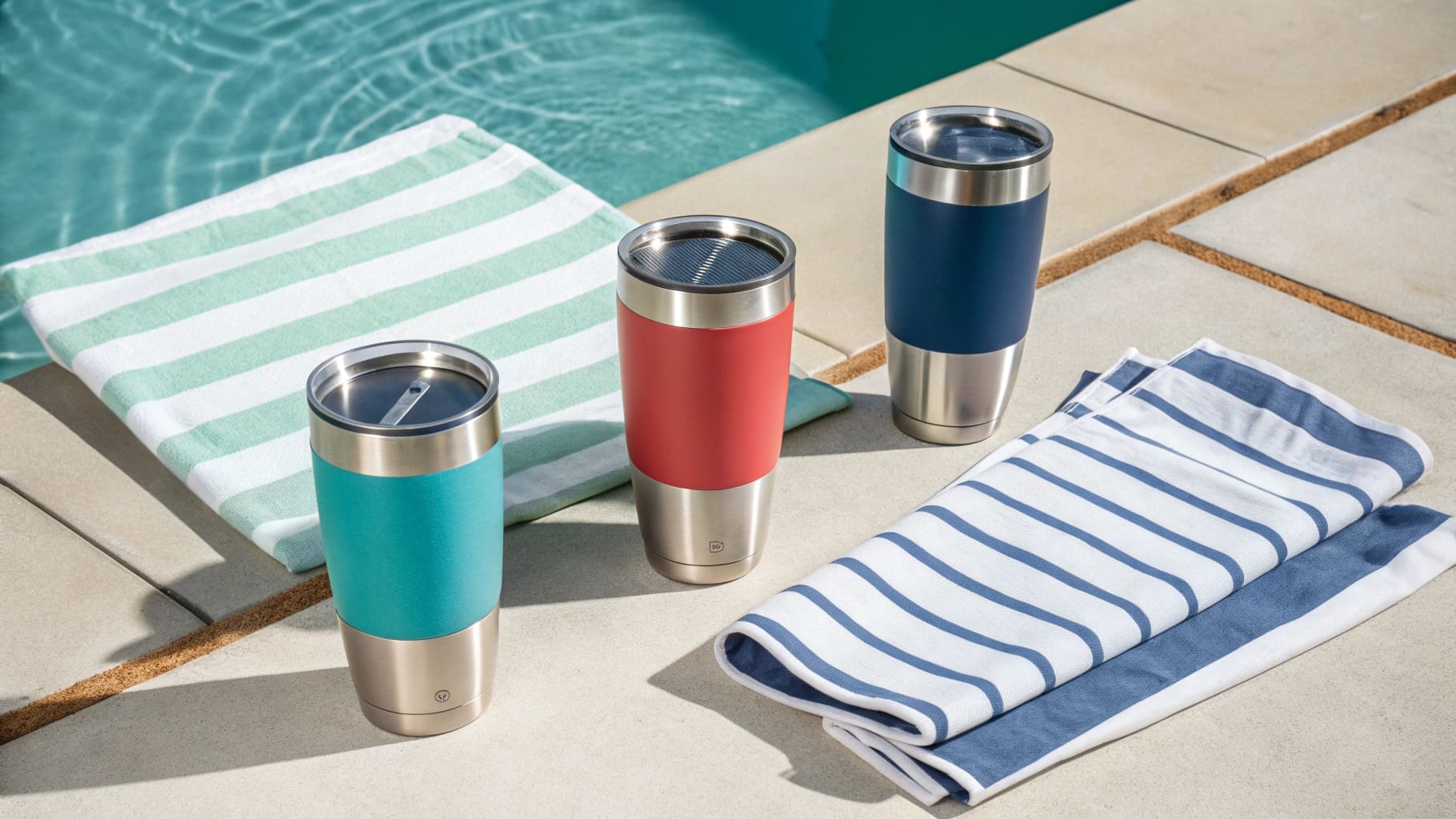
Leaks in travel mugs are a system problem, not a single-part problem.1 The seal, the lid thread, and the cup rim all work together. If any one of these three is off, the mug leaks. Here is how each part contributes to the problem:
What Does Each Part of the Sealing System Actually Do?
| Component | Role in Leak Prevention | Common Failure Point |
|---|---|---|
| Silicone seal | Creates the watertight barrier between lid and cup | Hardening, cracking, or poor fit into groove |
| Lid thread | Holds the lid in position under pressure | Loose tolerance, cross-threading, burrs |
| Cup rim finish | Provides a flat, even surface for seal contact | Burrs, uneven grinding, surface roughness |
Each of these needs to meet a standard before you sign off on a shipment. Inspecting only the seal while ignoring the thread or rim is like checking the tire pressure and ignoring the wheel bolts.
During factory inspections, I always ask for a simple fit test and a compression test on the seal. The seal needs to spring back to its original shape after pressure is released.2 If it stays compressed, it has already lost its ability to form a tight contact. Combine this with a visual check for surface defects, and you cover most of the failure modes before anything ships.
The most overlooked step is testing the full assembly. Put liquid in the mug, close the lid, invert it, and apply light pressure.3 This takes less than a minute per unit. It catches failures that no individual component check will ever find.
What Is the Best Travel Mug Leak Proof?
Every supplier claims their mug is leak-proof. Not every supplier can back that claim with test data, material certifications, or a defined inspection process.
A genuinely leak-proof travel mug is built on three things: food-grade silicone with high elasticity retention, a precisely machined lid and thread, and a quality control process that tests the whole assembled unit. Any mug missing one of these is not truly leak-proof.
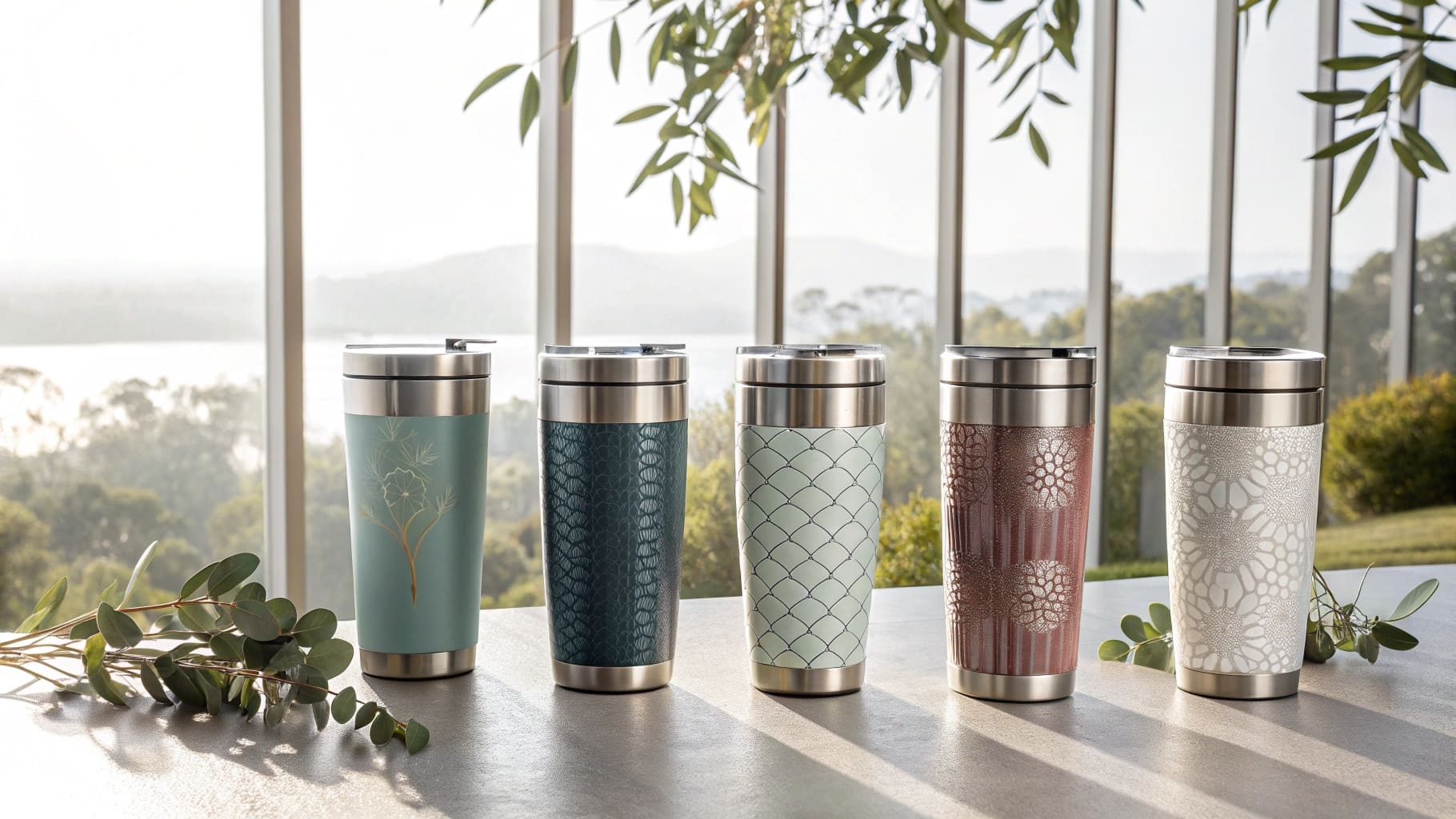
From my experience sourcing stainless steel travel mugs, the difference between a mug that leaks and one that does not often comes down to the silicone specification. Here is what that means in practice:
What Should You Specify for the Seal Material?
| Specification | Why It Matters | What to Ask Your Supplier |
|---|---|---|
| Food-grade silicone | Safe for contact with drinks | Request FDA or LFGB certification |
| High-temperature resistance | Seal must not deform with hot liquids | Ask for performance data at 100°C |
| Elasticity retention | Seal must spring back after repeated compression | Request Shore hardness and compression set test data |
| Tight groove fit | Seal must sit flush with no gaps | Provide a detailed drawing with tolerances |
Suppliers who cannot provide this data are guessing. A supplier who can provide it has a process. You want a supplier with a process.
I learned this the hard way on an early order. The sample mug was perfect. The bulk order used a different batch of silicone. Nobody tested the hardness of that batch before molding. The seals were stiffer, the fit was off by a fraction of a millimeter, and about eight percent of the shipment leaked. Eight percent sounds small. On a large order, it is hundreds of units and a very unhappy customer base.
The fix is not complicated. You specify the silicone grade in the purchase order. You request a material certificate for every production batch. You include seal compression tests in your pre-shipment inspection checklist. These three steps close the gap between what you approved in the sample and what actually ships.
Why Does My Coffee Cup Always Leak?
You buy from a well-known supplier. You inspect the samples carefully. Yet somehow, customers keep coming back with the same complaint. The mug leaks.
This is one of the most frustrating patterns in product sourcing. The answer is almost always the same: the inspection process checked the parts but not the system. One small mismatch between components creates a leak that no single-part check ever catches.
There are a few root causes that come up repeatedly in leaking travel mugs. Once you know what they are, they are not hard to control.
What Are the Most Common Root Causes of Leaking Travel Mugs?
| Root Cause | What Happens | How to Catch It |
|---|---|---|
| Low-grade silicone | Seal hardens over time and loses contact pressure | Require material certification and compression set test |
| Improper mold design | Seal has uneven surface and does not sit flush | Check seal cross-section for uniformity |
| Burrs on cup rim | Rim surface creates gaps even with a good seal | Include rim surface check in inspection protocol |
| Loose lid thread tolerance | Lid does not tighten to a consistent depth | Specify thread tolerance in product drawings |
| No full-assembly leak test | Individual parts pass but assembled unit leaks | Mandate assembled leak test before shipment |
The most useful thing I have done when working with a new supplier is ask them to show me their existing QC checklist for lids and seals. A supplier with no written checklist is running on guesswork. A supplier with a detailed checklist that includes assembly testing is operating at a different level.
Pressure testing is another step worth adding to your pre-shipment inspection. You do not need complex equipment. A basic water submersion test or an inverted pressure test catches most real-world leak scenarios. If the mug passes this test under conditions harder than normal use, your customer is unlikely to ever experience a leak.
One more thing worth repeating: always ask for the seal material certification, not just a verbal assurance. Certificate fraud is a real problem in this industry. Cross-check the certificate against the supplier name, the batch number, and the test date. If any of these do not match the order, treat it as a red flag and request a re-test from an accredited lab.
Conclusion
Lid seal quality controls whether your travel mug brand survives or suffers. Set AQL 1.0 or 0.65, test the full assembly, and always verify seal certifications before shipment.
-
"Calculation Model of Mechanical and Sealing Properties of NiTi ...", https://pmc.ncbi.nlm.nih.gov/articles/PMC9267744/. Engineering references on sealing systems explain that leakage depends on interacting factors such as gasket material, compression, mating-surface finish, and joint geometry; this supports treating a travel mug leak as an assembly-level problem, though the evidence is general to seals rather than specific to consumer mugs. Evidence role: mechanism; source type: education. Supports: Travel mug leaks result from the interaction of the seal, lid thread, and cup rim rather than from the seal alone.. Scope note: The support is based on general seal-engineering principles rather than travel-mug-specific experiments. ↩
-
"Compression Set - an overview | ScienceDirect Topics", https://www.sciencedirect.com/topics/engineering/compression-set. ASTM D395 defines compression set as the residual deformation of rubber after compressive stress is removed, supporting the claim that elastic recovery is important for seals that must maintain contact pressure; the standard measures material behavior, not finished mug leak performance directly. Evidence role: mechanism; source type: institution. Supports: A lid seal should recover its shape after compression to maintain sealing contact.. Scope note: Compression set data indicate likely sealing performance but do not by themselves prove that a specific mug will not leak. ↩
-
"Vacuum decay container/closure integrity testing technology. Part 1 ...", https://pubmed.ncbi.nlm.nih.gov/20158052/. Package and closure testing standards use inversion, pressure, or vacuum exposure to reveal leakage in assembled containers, supporting the principle of testing the complete filled assembly; the standards may not specify the exact manual travel-mug procedure described here. Evidence role: general_support; source type: institution. Supports: A full-assembly leak test using liquid, inversion, and pressure can detect failures missed by individual component checks.. Scope note: The source supports the test principle rather than this exact inspection protocol for travel mugs. ↩