
USA-made vs China hip flasks: COO marks, tariffs, and landed cost math
You got a quote from a Chinese supplier. The price looks good. But wait—did you calculate the real cost after shipping, tariffs, and duties? Many buyers miss this step and lose money.
China-made hip flasks cost 40-60% less in factory price compared to US-made ones. However, your landed cost depends on current tariff rates, shipping method1, and order volume. The final price difference narrows to 25-35% after all costs.

I have worked with over 200 procurement officers in the past five years. Most of them made the same mistake at the start. They compared only the factory prices. Later, they found their profit margins disappeared because of hidden costs. Let me show you how to calculate the real numbers.
How to Calculate Landed Cost of Imported Goods from China?
Your supplier sends you a quote: $3.50 per hip flask. You think you can sell it for $15. The profit looks great on paper. Then reality hits you with extra costs you never expected.
Landed cost formula: Factory Price + International Freight + Insurance + Customs Duties + Tariffs + Domestic Transportation + Quality Control = Total Landed Cost. You need to add 30-45% on top of the factory price for China imports.

I remember my first big order in 2018. A Canadian buyer ordered 5,000 hip flasks. The factory price was $3.20 each. He calculated his profit based on this number. Three months later, he called me. He was angry. The actual cost reached $4.65 per unit.
Here is the breakdown I should have explained from the start:
| Cost Component | Amount per Unit | Percentage |
|---|---|---|
| Factory Price (FOB) | $3.20 | 68.8% |
| Sea Freight | $0.35 | 7.5% |
| Insurance | $0.08 | 1.7% |
| Customs Duty (5%) | $0.16 | 3.4% |
| Tariff (25%) | $0.80 | 17.2% |
| Inland Transport | $0.06 | 1.4% |
| Total Landed Cost | $4.65 | 100% |
You must ask your supplier about the Incoterms. FOB means you pay for shipping from the Chinese port. CIF means the supplier includes freight and insurance. Each term changes your calculation. I always recommend FOB for large orders. You get better control over the shipping company. You can negotiate better rates when you ship 10 or 20 containers per year.
How Much Does Manufacturing in China Cost Compared to the US?
A US factory quoted you $8.50 per hip flask. Your Chinese supplier offers $3.20. The difference seems huge. But you need to understand what creates this gap.
Chinese factories have lower labor costs, established supply chains2 for stainless steel 304 and 316, and specialized manufacturing equipment. Labor in China costs $5-8 per hour versus $25-35 in the US for skilled workers.

I visited a US manufacturer in Oregon last year. They make high-quality hip flasks. Their factory was clean and modern. The workers knew their job well. But they could not compete on price.
The owner explained his cost structure:
US Manufacturing Costs:
- Raw material (304 stainless steel): $1.80 per flask
- Labor (30 minutes per unit): $3.20
- Equipment depreciation: $1.50
- Overhead (utilities, rent): $1.20
- Certification and compliance: $0.80
- Total: $8.50
China Manufacturing Costs:
- Raw material (same quality 304): $1.10 per flask
- Labor (30 minutes per unit): $0.80
- Equipment depreciation: $0.50
- Overhead: $0.40
- Certification: $0.40
- Total: $3.20
The raw material costs less in China because steel mills are closer. The manufacturers buy in huge volumes. I source from factories that produce 500,000 pieces monthly. This volume brings the cost down. US factories often make 50,000 pieces monthly. They cannot get the same prices from steel suppliers.
Chinese factories also invest heavily in automation. One factory I work with installed a new pressing line in 2022. It cost $2 million. But it reduced labor needs by 60%. The factory spreads this cost across millions of units. A US factory making smaller volumes cannot justify such investment.
How to Calculate Tariff Cost?
Tariffs changed everything after 2018. You need to know the exact rate for your product. One wrong digit in the HS code costs you thousands of dollars in extra fees.
Hip flasks use HS code 7323.93.00 with a 5% base duty plus additional tariffs. Current China tariffs add 7.5-25% depending on the List classification. Check the USTR website for your specific product category before ordering.
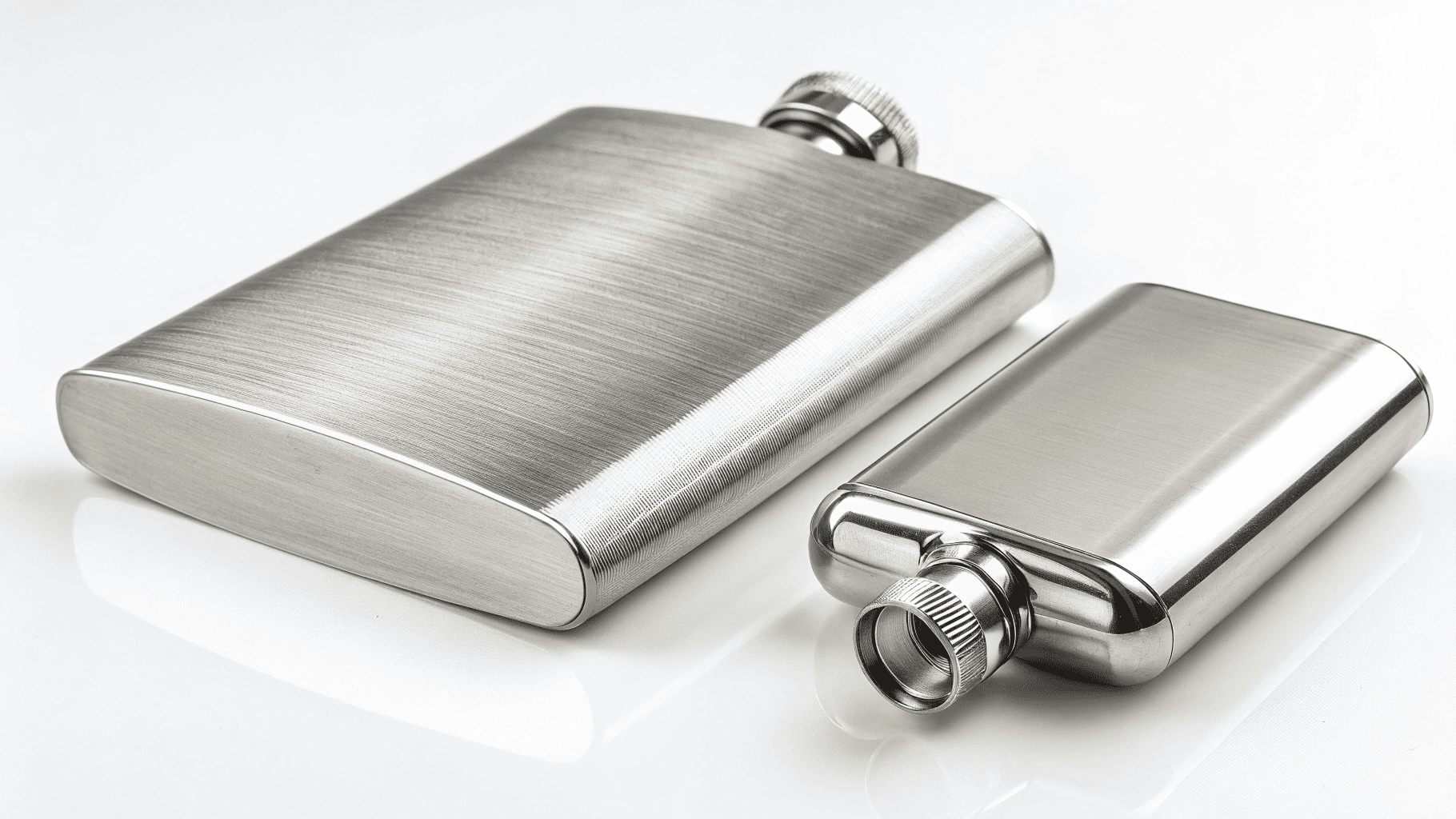
Tariff calculation confuses many buyers. I explain it step by step. First, you need the correct HS code. Hip flasks fall under "Table, kitchen or other household articles of stainless steel." The code is 7323.93.00. But wait—water bottles might use 9617.00.40 if they have vacuum insulation. The code changes the tariff rate.
Here is how you calculate:
Base Calculation:
- CIF Value (Cost + Insurance + Freight): $3.63 per unit
- Base Customs Duty: 5% of CIF = $0.18
- China Tariff (List 4A): 7.5% of CIF = $0.27
- Total Import Tax: $0.45 per unit
Current Tariff Categories:
- List 1 items: 25% additional tariff
- List 2 items: 25% additional tariff
- List 3 items: 25% additional tariff
- List 4A items: 7.5% additional tariff
Most stainless steel hip flasks fall under List 4A. But if your product has electronic components (like a smart water bottle), it might fall under a different list. I always tell my clients to work with a customs broker. They charge $150-300 per shipment. This fee saves you from classification mistakes.
One client tried to save this fee. He classified his vacuum flasks as "containers" instead of "household articles." Customs caught it. He paid a $15,000 penalty plus back duties. The customs broker fee suddenly looked very cheap.
You also need to consider duty drawback. If you re-export the goods, you can claim back 99% of the duties paid. But you need proper documentation from the start. I keep all my commercial invoices, packing lists, and bills of lading for seven years. The US Customs can audit you anytime in this period.
What About Country of Origin Marking Requirements?
Every product entering the US needs a country of origin mark. You think your supplier handles this. Many suppliers miss the exact requirements. Customs rejects your shipment.
US Customs requires permanent, legible "Made in China" marks on imported goods and packaging. The mark must be visible to the ultimate purchaser. Hip flasks need laser etching or stamped marks that survive normal use and washing.
I learned about marking requirements the hard way. In 2019, I shipped 10,000 hip flasks to a buyer in Texas. The flasks had stickers saying "Made in China." Customs rejected the entire shipment. Stickers are not permanent. They can peel off.
The US Customs and Border Protection has specific rules:
Acceptable Marking Methods for Hip Flasks:
- Laser etching on the bottom (my preferred method)
- Deep stamping into the metal
- Ceramic printing that survives 100 wash cycles
- Permanent molding for plastic components
Unacceptable Methods:
- Paper labels
- Adhesive stickers
- Ink stamps that wear off
- Packaging-only marks (unless the product is too small)
The mark must be in English. It must say "Made in China" or "Product of China." You cannot use abbreviations. The letters must be at least 1.5mm tall for hip flasks. I check every sample before production starts. My supplier sends me photos of the marking die. I approve it in writing. This saves me from problems later.
Some buyers ask me about "Made in USA" marking. They want to buy Chinese-made flasks, laser print logos in the US, then mark them "Made in USA." This violates federal law. The substantial transformation must happen in the US. Adding a logo does not count. I never help clients do this. The penalties include fines up to $500,000 and criminal charges.
Does Higher China Price Mean Better Quality?
You get three quotes: $2.80, $3.50, and $4.20 per hip flask. All claim to use 304 stainless steel. You assume the $4.20 flask is better quality. This assumption can be wrong.
Price reflects factory capabilities, certification costs, and quality control3 systems, not just material quality. A $4.20 flask from a certified factory with ISO 9001:2015 and FDA approval offers better consistency than a $2.80 flask without documentation.
I test samples from every new supplier. Price tells part of the story. But I need to verify everything. Here is my testing process:
I send samples to a US testing lab. They do spectral analysis. Real 304 stainless steel contains 18% chromium and 8% nickel. Some cheap factories use 201 grade steel. It contains only 1% nickel. The cost difference is huge. But 201 steel rusts easily and leaches metals into drinks.
Quality Indicators by Price Range:
| Price Range | Typical Features | Risk Level |
|---|---|---|
| $2.50-3.00 | Basic 304 steel, no certifications, limited QC | High |
| $3.00-3.80 | Certified 304 steel, ISO factory, basic testing | Medium |
| $3.80-4.50 | Premium 304/316 steel, FDA approved, full testing | Low |
The middle price range usually offers the best value. These factories have certifications but keep costs reasonable. They produce for established brands but also sell to smaller buyers like you.
I work with a factory that charges $3.65 per hip flask. They hold ISO 9001:20154, BSCI social compliance, and FDA food contact certification. Their testing includes:
- Material composition check on every batch
- Leak testing on 100% of products
- Drop testing on random samples
- Coating adhesion testing for colored flasks
A cheaper factory at $2.85 skips most testing. They check only 2% of finished products. One bad batch can destroy your brand reputation. Is saving $0.80 per unit worth that risk? I say no.
Conclusion
Calculate your landed cost before you commit to any supplier. Add 30-45% to the factory price for imports from China. Verify tariff rates for your exact HS code. Work with a customs broker to avoid classification mistakes.
-
Choosing the right shipping method can save you time and money in the import process. ↩
-
A well-established supply chain can lower costs and improve efficiency in production. ↩
-
Implementing strong quality control can prevent defects and ensure product consistency. ↩
-
ISO certification ensures that a manufacturer meets quality management standards. ↩
