
Silicone Boots for Bottles: Do You Know What You're Actually Buying?
You ordered 10,000 silicone boots. They arrived soft, floppy, and falling off every bottle in your lineup. Your peak season just started.
A silicone boot is a protective sleeve that fits around the base or body of a bottle. It protects the bottle from impact and improves grip. The quality of a silicone boot depends on three things: its hardness rating, how precisely it fits, and how it was tested before shipment.
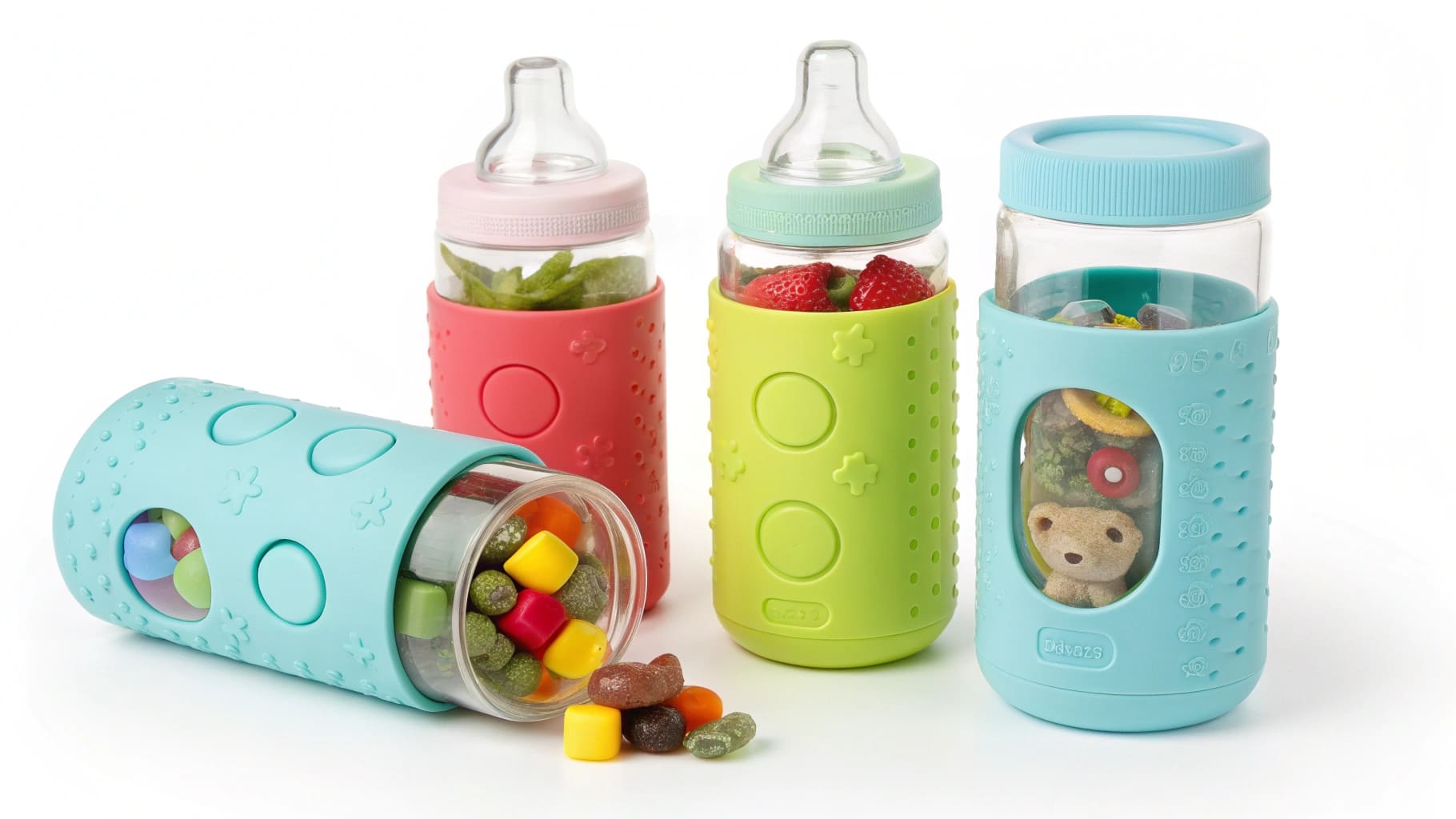
Most buyers focus on price per unit when sourcing silicone boots. That is a mistake. The real cost shows up later — in customer returns, damaged bottle coatings, and failed market launches. I have seen this happen more than once with buyers who skipped the technical checks. This article breaks down exactly what you need to know before you place your next order.
What Are Silicone Boots Actually Used for on a Bottle?
You know it sits on the bottom of the bottle. But do you know why it matters so much to your end customer?
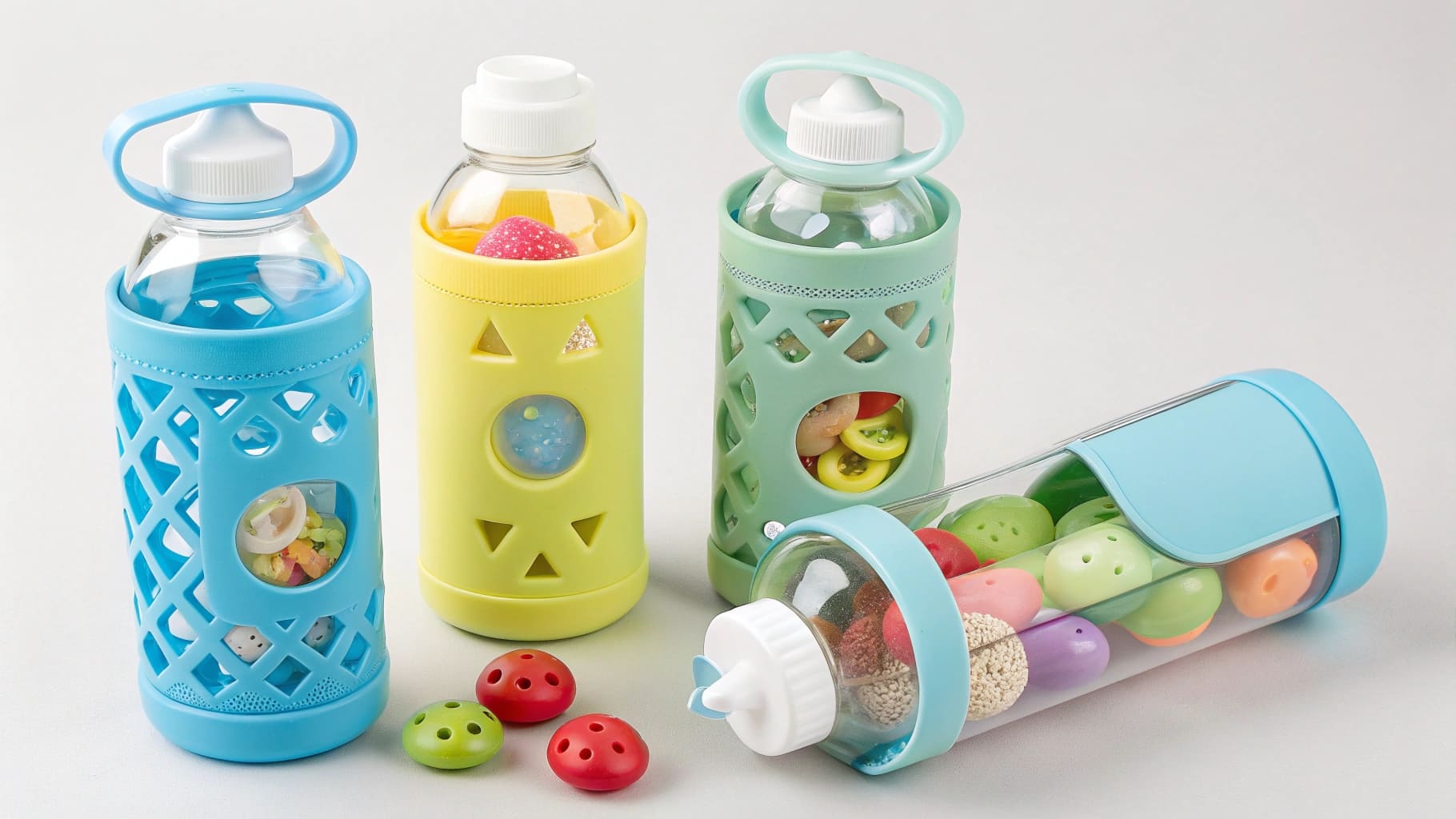
A silicone boot protects the bottle base from scratches and dents during daily use. It also absorbs impact if the bottle is dropped. On hard surfaces, it prevents the bottle from sliding. For stainless steel bottles, the boot also protects any coating on the exterior from peeling caused by friction.
Why the Hardness Number Changes Everything
The hardness of silicone is measured in Shore A units1. This is called durometer. The number tells you how soft or firm the material is.
For bottle boots, most B2B buyers target a Shore A range of 40 to 60. Here is what that range means in practice:
| Shore A Range | Feel | Best Use Case | Trade-off |
|---|---|---|---|
| 40 – 45 | Very soft | Premium grip, shock absorption | Wears out faster |
| 50 – 55 | Medium | Balanced performance | Most popular range |
| 56 – 60 | Firm | High durability, structured fit | Can feel rigid |
I always recommend 50 to 55 Shore A for buyers targeting North American or European retail. It gives a good grip feel without sacrificing lifespan. Softer silicone looks and feels premium in the hand, but it shows wear marks faster.2 That matters if your customer uses the bottle every day.
If your brand is positioning around outdoor or rugged use, go slightly firmer — 56 to 60 Shore A. If your brand is lifestyle or wellness, stay in the 50 to 55 range.
One thing many buyers miss: durometer is not always consistent across production batches. A factory can produce boots at 48 Shore A in one run and 57 Shore A in the next if they do not have strict material controls. Always request durometer test reports tied to the specific batch you receive. A one-time sample approval does not protect your entire order.
What Is the Healthiest Material for a Water Bottle?
You are selling into a market where your customers read ingredient labels. They will also ask what their bottle is made from.
Food-grade silicone is one of the safest materials used in drinkware accessories today.3 It does not contain BPA, phthalates, or other harmful plastics. It stays stable across a wide temperature range. It does not react with liquids stored inside the bottle.
How to Tell If a Silicone Boot Is Truly Food-Grade
Not all silicone is the same. The label "food-grade" means nothing without the right documentation behind it. There are two main production methods used for silicone parts, and they produce very different results.
| Production Method | Process | Residue Risk | Certification Fit |
|---|---|---|---|
| Platinum-cured | Uses platinum catalyst | Very low | FDA, LFGB, EU standards |
| Peroxide-cured | Uses peroxide catalyst | Higher | Less suitable for food contact |
Platinum-cured silicone is the correct choice for any bottle accessory that comes into contact with food or drinks4 — or that is positioned near them. Peroxide-cured silicone can leave behind residue from the curing process. That residue may not be visible. It may not smell. But it can still affect the purity of the product.
What Certifications Should You Ask For
When I source silicone boots for buyers in the US and Europe, I ask for both FDA and LFGB certification documents. FDA covers the US market. LFGB is the German food safety standard5 and is widely respected across the EU.
Here is a simple checklist I use when reviewing supplier documentation:
- FDA compliance letter — must reference the specific silicone compound used
- LFGB test report — must be issued by an accredited third-party lab
- Platinum-cure confirmation — ask the supplier directly, then verify in the material safety data sheet
- Migration test results — confirms no harmful substances migrate from the silicone under heat and contact conditions
Do not accept a generic certificate that has no batch number or product description. A certificate should match the exact item you are ordering. I have seen suppliers reuse old certificates from different products. Always check the document date and the product description line.
Are There Any Health Risks With Silicone?
Your buyer in Toronto is asking this question right now. You need a clear answer.
When silicone is platinum-cured and certified to food-grade standards, it does not pose health risks under normal use. It is chemically inert. It does not leach harmful compounds. It is stable between -40°C and 230°C.
Where the Real Risk Comes From
The health risk with silicone is not the material itself. The risk comes from poor manufacturing. Here is where problems actually happen:
| Risk Source | What It Means | How to Catch It |
|---|---|---|
| Peroxide-cured silicone | Leaves chemical residue after curing | Request platinum-cure confirmation in writing |
| Incomplete curing | Partially cured silicone releases byproducts | Check that factory runs post-cure oven cycles |
| Filler additives | Some factories add cheap fillers to reduce cost | Request material composition report |
| Fake certifications | Certificates forged or reused | Use a third-party lab to verify independently |
I once reviewed a shipment where the factory had sent a legitimate LFGB certificate — but for a different product line. The boots in the actual order had never been tested. The buyer had no idea until we ran an independent check.
How AQL Testing Protects You
AQL stands for Acceptable Quality Level. It is a statistical method used to decide how many units to inspect from a production batch. For silicone boots, I recommend the following setup:
For critical defects — tears, wrong hardness, missing material — use AQL 2.5. This means a stricter inspection threshold. You accept less risk on defects that make the product unusable or unsafe.
For major defects — surface blemishes, minor dimensional issues, color inconsistency — use AQL 4.0. These defects affect appearance or performance but are less serious than critical ones.
On top of standard visual inspection, add two physical tests to your plan:
- Durometer spot test: Pull 10 random units from the batch. Measure Shore A on each. All results should fall within your specified range.
- Slip resistance test: Place the boot on the bottle and press it against a hard surface at an angle. The boot should not move or rotate under normal hand pressure.
These two tests take less than 30 minutes on-site and catch the most common silicone boot failures before your shipment leaves the factory.
Conclusion
Silicone boots are simple parts. But getting them right requires three things: the correct durometer, precise fit tolerances, and a structured AQL test plan backed by verified certifications.
-
"Shore durometer - Wikipedia", https://en.wikipedia.org/wiki/Shore_durometer. ASTM and engineering references define Shore A durometer as a standard method for measuring the indentation hardness of flexible elastomers such as rubber and silicone. Evidence role: definition; source type: institution. Supports: Silicone hardness is commonly measured using the Shore A durometer scale.. ↩
-
"Resistance to Abrasive Wear with Regards to Mechanical Properties ...", https://pmc.ncbi.nlm.nih.gov/articles/PMC10144973/. Elastomer wear studies generally associate hardness and formulation with abrasion resistance, indicating that softer rubbers can be more susceptible to surface wear under frictional contact. Evidence role: mechanism; source type: paper. Supports: Softer silicone can show wear sooner than firmer silicone under repeated use.. Scope note: The evidence would support the hardness–wear relationship in elastomers generally, not consumer perceptions of a “premium” feel. ↩
-
"Food Packaging & Other Substances that Come in Contact with Food", https://www.fda.gov/food/food-ingredients-packaging/food-packaging-other-substances-come-contact-food-information-consumers. Food-contact regulatory guidance recognizes certain silicone materials for food-contact applications when they meet applicable compositional and migration requirements. Evidence role: expert_consensus; source type: government. Supports: Properly certified food-grade silicone is considered suitable for drinkware and food-contact accessories.. Scope note: Regulatory acceptance supports appropriate food-contact use but does not establish that all products marketed as “food-grade silicone” are safe without testing. ↩
-
"Why Industries Use Platinum Silicone - ILT", https://www.iltusa.com/why-industries-use-platinum-silicone/. Food-contact and silicone-processing references describe platinum-cured silicone as an addition-cure system that can have low extractables when properly formulated and post-cured, making it commonly used in food and medical applications. Evidence role: expert_consensus; source type: institution. Supports: Platinum-cured silicone is generally preferred for food-contact silicone accessories.. Scope note: This supports suitability in principle; compliance still requires product-specific testing against the relevant food-contact standard. ↩
-
"German Food and Feed Code (LFGB) - Tradavo Compliance", https://compliance.tradavo.eu/en/german-food-and-feed-code/. German food-safety sources identify the LFGB, the Lebensmittel-, Bedarfsgegenstände- und Futtermittelgesetzbuch, as Germany’s Food and Feed Code governing food, feed, and consumer products including food-contact articles. Evidence role: definition; source type: government. Supports: LFGB is Germany’s food and consumer-product safety framework relevant to food-contact materials.. Scope note: This establishes what LFGB is; it does not by itself verify any supplier’s LFGB certificate. ↩
