
Shopping Insulated Bottles for OEM: What Do You Really Need to Know About 20oz vs 750ml, MOQ, FOB/DDP, and Lead Time?
You want to source insulated bottles for your brand. But one wrong decision — wrong size, wrong certifications, wrong supplier terms — can cost you an entire selling season.
An insulated bottle is a double-walled stainless steel container with a vacuum layer between the two walls. That vacuum layer stops heat from moving in or out. Most quality insulated bottles keep drinks hot for 12 hours and cold for 24 hours1. They are the standard choice for private label and OEM water bottle projects worldwide.
I have worked with buyers from North America and Europe on OEM insulated bottle projects for years. The questions I hear most often are always the same: Is there lead in these bottles? What is the difference between a thermos and an insulated bottle? Which size should I pick — 20oz or 750ml? What are the real MOQ, shipping terms, and lead times I should plan for? This post answers all of those questions directly, so you can walk into your next sourcing conversation with full confidence.
What Is an Insulated Bottle?
You have heard the term a hundred times. But when your supplier uses it, do you actually know what they are selling you?
An insulated bottle is a container made from two walls of stainless steel with no air between them. That empty space is called a vacuum. The vacuum blocks heat transfer. This is what keeps your drink hot or cold for hours.
How Does the Vacuum Actually Work?
Heat moves in three ways: conduction, convection, and radiation. A single-wall bottle fails because metal conducts heat directly from the outside air into your drink. A double-wall bottle with a vacuum layer removes the medium that heat needs to travel through. There is no air, so there is almost no conduction and no convection. The inner wall also gets a copper coating or a reflective finish in many designs to reduce radiation as well2.
Here is a simple comparison of bottle types:
| Bottle Type | Wall Structure | Heat Retention | Best Use Case |
|---|---|---|---|
| Single-wall stainless | One layer | None | Room temperature drinks only |
| Double-wall without vacuum | Two layers, air gap | Low | Short-term insulation |
| Double-wall with vacuum | Two layers, vacuum gap | High (12h hot / 24h cold) | OEM, retail, gifting, outdoor |
For OEM buyers, the double-wall vacuum structure is the only option worth sourcing. Anything less will generate complaints and returns. I always tell buyers to ask their supplier for the vacuum level specification during sampling. This number tells you how well the vacuum was sealed during manufacturing. A poor vacuum means poor performance in the real world, and your customers will notice.
The material also matters. Food-grade 304 stainless steel is the standard for the inner wall3. Some buyers in medical or premium segments request 316 stainless, which has stronger resistance to corrosion from acidic drinks like coffee and juice4. I recommend confirming the steel grade in your purchase contract, not just in the product description.
Do All Insulated Bottles Have Lead?
This is one of the most common fears I hear from buyers targeting North America and Europe. And it is a fair question. Lead contamination in food contact products is a serious issue.
Not all insulated bottles have lead. High-quality manufacturers use food-grade 304 or 316 stainless steel and lead-free welding throughout the production process. The risk comes from low-quality suppliers who cut costs on materials or use outdated welding methods.
How Do You Verify That Your Bottles Are Lead-Free?
The safest approach is to require third-party lab test reports before you place your bulk order5. These tests are done by independent labs and they check for heavy metals including lead, cadmium, and chromium. The certifications below are the ones your target markets care about most:
| Certification | Market | What It Covers |
|---|---|---|
| FDA | United States | Food contact safety, material compliance |
| LFGB | Germany / Europe | Food contact safety, stricter than FDA on some points |
| California Prop 65 | California, USA | Heavy metals and chemicals that cause cancer or reproductive harm |
| REACH | European Union | Restriction of hazardous chemicals in products |
I always ask for these reports during the sampling phase. Do not wait until production is done. Some suppliers provide outdated reports or reports from a different product. A reputable supplier will have no problem sharing current test reports from a recognized lab like SGS, Intertek, or Bureau Veritas.
One issue I have seen more than once is certificate fraud. A supplier sends you a PDF that looks real but was issued for a different product or a different batch. My advice: verify the report directly on the lab's website using the report number. This step takes five minutes and protects you from a very costly mistake.
Lead-free welding is also something to ask about specifically. The welding points on the base of the bottle are a common area where low-quality suppliers use leaded solder. Ask your supplier to confirm their welding process in writing and request photos of their production line if needed.
What Is the Difference Between a Thermos and an Insulated Bottle?
A lot of buyers use these two words as if they mean the same thing. This can cause real problems when you are building a private label brand.
Thermos is a brand name. It is one of the oldest vacuum bottle brands in the world. Over time, people started using "thermos" to mean any vacuum-insulated bottle, the same way people say "Kleenex" for any tissue. But in a legal sense, Thermos is a registered trademark owned by a specific company6.
Why Does This Matter for OEM Buyers?
If you are building your own brand, you cannot call your product a "thermos" on your packaging or marketing materials. Using that word to describe a competitor product or your own private label product in certain markets puts you at legal risk. The correct term to use is "insulated bottle," "vacuum bottle," or "vacuum-insulated water bottle."
Here is a quick comparison to make this clear:
| Term | Type | Can You Use It for Your Brand? |
|---|---|---|
| Thermos | Brand name (trademark) | No — legal risk in most markets |
| Vacuum bottle | Generic product term | Yes |
| Insulated bottle | Generic product term | Yes |
| Double-wall bottle | Generic product term | Yes |
Beyond the legal point, there is also a positioning question. In North America, many consumers associate "thermos" with old-style, work-site lunch containers. If your target customer is a young, health-focused commuter or an outdoor athlete, using "insulated bottle" or "vacuum bottle" on your packaging will land better with that audience.
I have seen buyers come to us asking us to print "thermos" on their custom bottles. We always explain this issue clearly before production starts. Getting the label right before the first production run saves you from reprinting thousands of units later.
For OEM projects, the tech spec does not change whether you call it a thermos or an insulated bottle. The double-wall vacuum structure is the same. What changes is how you brand it and what words you use to sell it in your market.
20oz vs 750ml, MOQ, FOB/DDP, and Lead Time: What Should You Plan For?
You have picked your product. Now comes the part where most first-time buyers make planning mistakes that push back their launch date by weeks.
The 20oz size and the 750ml size are close in volume but they serve different markets. Choosing the wrong one for your region can slow down your sales from day one.
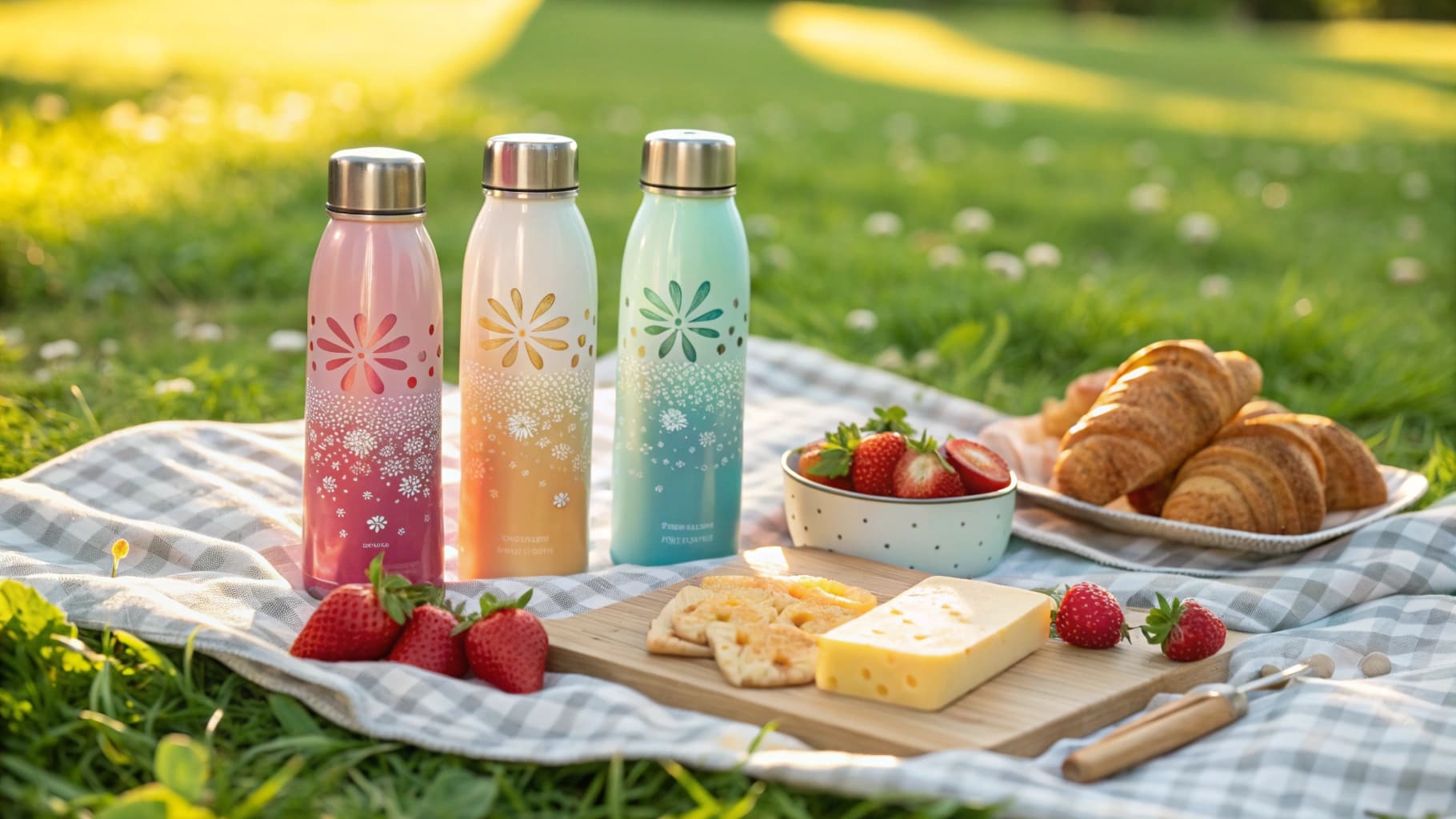
How Do You Make the Right Decision on Size, Terms, and Timeline?
Start with size. The 20oz bottle (about 590ml) is the dominant size in North America. It fits in most car cup holders and backpack side pockets. It is the go-to choice for office workers and daily commuters. The 750ml bottle is more popular in Europe and with athletes or outdoor buyers who want more capacity per refill. If you are distributing in Canada or the US, start with 20oz. If you are targeting European retailers or sports channels, 750ml is the safer bet.
Here is a side-by-side breakdown:
| Specification | 20oz (~590ml) | 750ml |
|---|---|---|
| Primary market | North America | Europe, outdoor/sports |
| Cup holder fit | Yes (standard) | Usually no |
| Target user | Commuters, office workers | Athletes, outdoor enthusiasts |
| MOQ (typical) | 1,000 – 3,000 units per design | 1,000 – 3,000 units per design |
| FOB price range | Lower | Slightly higher (more material) |
| DDP vs FOB gap | 15–20% more for DDP | 15–20% more for DDP |
| Lead time (repeat) | 35–45 days | 35–45 days |
| Lead time (new tooling) | 50–60 days | 50–60 days |
On pricing terms, FOB means the supplier delivers the goods to the port in China and you handle everything from there — freight, customs, and delivery to your warehouse. DDP means the supplier handles everything, including delivery to your door. DDP costs 15–20% more, but it removes logistics management from your plate. For first-time buyers or buyers with no freight forwarding experience, DDP is simpler. For experienced buyers with a trusted freight agent, FOB gives you more control and lower cost.
On lead time, the numbers above assume your design and artwork are approved before production starts. Pre-production approval usually takes 5–10 business days after you receive and confirm your sample. Factor that in when you set your launch date. If your peak selling season is in Q4, you need to place your order no later than August to have product in your warehouse before October. Missing that window is the most common reason buyers run out of stock during their best sales period.
Conclusion
Sourcing insulated bottles for OEM is straightforward when you know the basics. Get the structure right, verify certifications, pick the correct size for your market, and plan your timeline early.
-
"Vacuum flask - Wikipedia", https://en.wikipedia.org/wiki/Vacuum_flask. Independent product testing or laboratory performance standards for vacuum bottles can document typical hot- and cold-retention ranges for double-wall vacuum containers. Evidence role: statistic; source type: research. Supports: Quality insulated bottles commonly advertise or achieve approximately 12 hours of hot retention and 24 hours of cold retention.. Scope note: Performance varies by bottle geometry, lid design, starting temperature, ambient conditions, and test protocol, so the source would contextualize rather than prove all products meet these times. ↩
-
"Colorful low-emissivity paints for space heating and cooling energy ...", https://pmc.ncbi.nlm.nih.gov/articles/PMC10450664/. Technical descriptions of vacuum flasks note that reflective or low-emissivity surfaces reduce radiative heat transfer across the evacuated gap, supporting the role of copper or reflective coatings in some bottle designs. Evidence role: mechanism; source type: education. Supports: Reflective finishes or coatings inside vacuum bottles can reduce radiative heat transfer.. Scope note: The source supports the physical principle of reflective surfaces reducing radiation, not the prevalence of copper coatings across all manufacturers. ↩
-
"Food Packaging & Other Substances that Come in Contact with Food", https://www.fda.gov/food/food-ingredients-packaging/food-packaging-other-substances-come-contact-food-information-consumers. Food-contact materials references and stainless-steel guidance identify austenitic stainless steels such as type 304 as commonly used in food and beverage equipment, supporting its suitability for bottle interiors. Evidence role: general_support; source type: institution. Supports: 304 stainless steel is commonly used for food-contact interiors in insulated bottles.. Scope note: The source can support common food-contact use, but it may not establish that 304 is the universal industry standard for every insulated-bottle factory. ↩
-
"Studies Related to Microbially Induced Corrosion of Stainless ...", https://openprairie.sdstate.edu/cgi/viewcontent.cgi?article=2758&context=etd. Materials-engineering references describe type 316 stainless steel as having improved corrosion resistance compared with type 304, particularly because of molybdenum alloying, supporting the article’s distinction between the grades. Evidence role: mechanism; source type: education. Supports: 316 stainless steel has stronger corrosion resistance than 304 stainless steel, relevant to acidic beverages.. Scope note: The source supports comparative corrosion resistance generally; resistance in specific drinks depends on formulation, temperature, exposure time, and cleaning conditions. ↩
-
"Food Packaging & Other Substances that Come in Contact with Food", https://www.fda.gov/food/food-ingredients-packaging/food-packaging-other-substances-come-contact-food-information-consumers. Government and food-safety compliance guidance emphasizes testing and documentation for food-contact materials to verify regulatory conformity, supporting the use of third-party laboratory reports before bulk purchasing. Evidence role: expert_consensus; source type: government. Supports: Third-party laboratory test reports are a prudent way to verify food-contact safety before bulk orders.. Scope note: Such guidance supports testing as a compliance practice; it does not prove that third-party reports eliminate all supply-chain or batch-substitution risks. ↩
-
"Global Brand Database - WIPO", https://www.wipo.int/en/web/global-brand-database. Trademark registry records identify THERMOS as a registered mark associated with Thermos-related goods, supporting the article’s statement that the term has trademark status. Evidence role: historical_context; source type: government. Supports: Thermos is a registered trademark, not merely a generic product term in all legal contexts.. Scope note: Trademark status and generic-use rules differ by jurisdiction, so a registry citation should be matched to the target market where packaging will be sold. ↩