
Lightweight Vacuum Flasks: Can You Cut Weight Without Losing Durability?
Heavy flasks lose sales. Your buyers want lighter options, but they also want products that last. The right engineering makes both possible at the same time.
A lightweight vacuum flask can match the durability of a standard one.1 The key is wall thickness precision, high-grade stainless steel, and reinforced construction at stress points. A well-engineered 500ml flask can weigh between 180 and 220 grams while keeping full thermal and structural performance.

Weight reduction in vacuum flasks is no longer a trade-off. Manufacturers who understand material engineering can cut weight by 15 to 25 percent without touching durability2. This matters a lot if you are sourcing flasks for a competitive market. The sections below break down exactly how this works, which brands and suppliers deliver on this promise, and how to define "best" for your specific B2B use case.
Which Brand Is Best for Vacuum Flasks?
Many buyers start with brand names. But brand recognition alone does not guarantee the best product for your business. The real question is whether the manufacturer can consistently deliver on technical specifications.
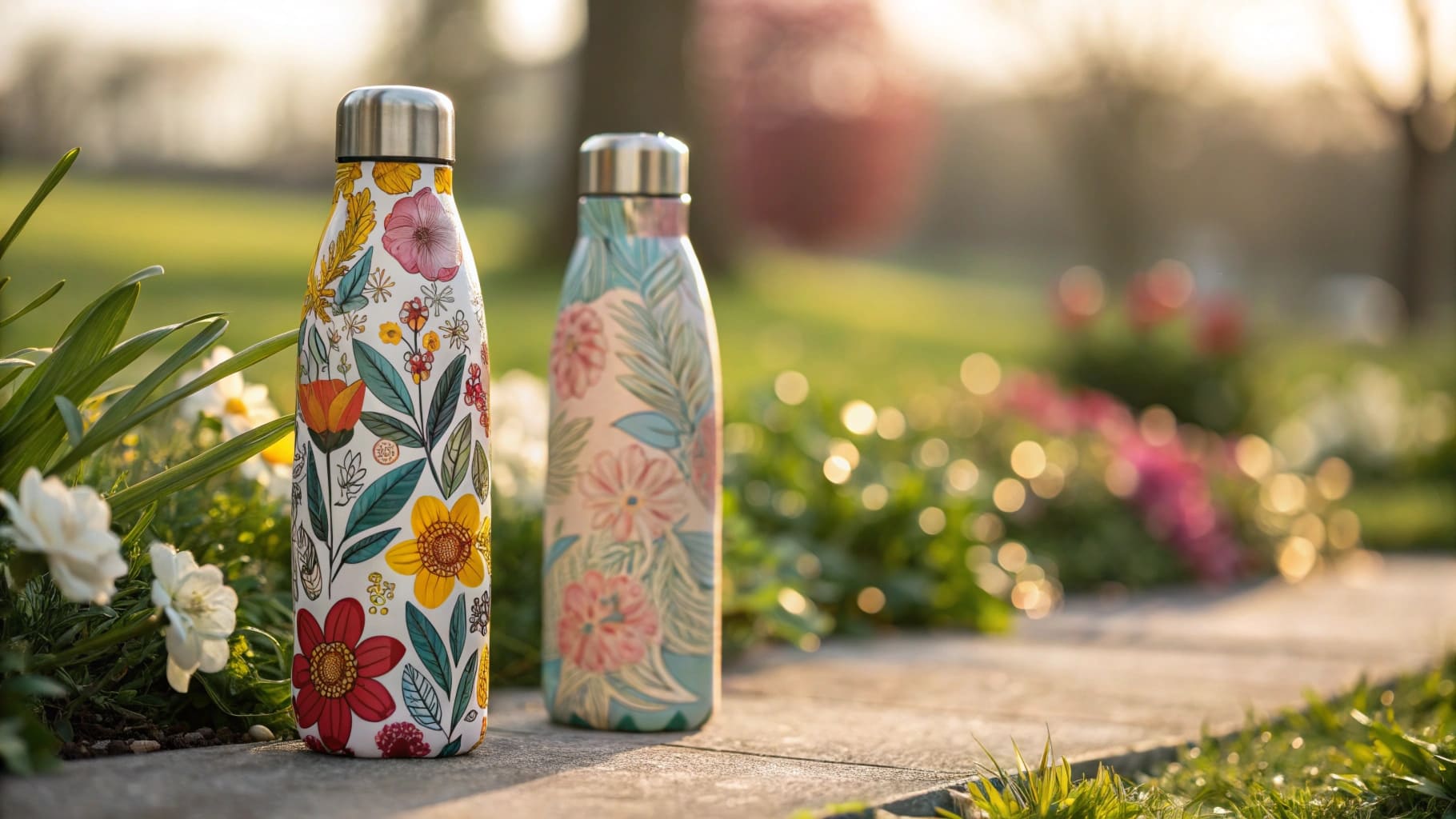
For B2B procurement, the best vacuum flask brand is the one that meets your target specifications consistently, offers certification documentation, and supports customization at a competitive price. Consumer brands like Hydro Flask, Yeti, and Stanley carry strong market recognition, but quality ODM manufacturers in China now match or exceed their specs at better price points.
What Technical Specs Should You Evaluate?
When I work with buyers who ask which brand is best, I always redirect the conversation to specs first. Brand names carry marketing value, but they do not protect you from quality variation at the batch level.
Here are the core technical benchmarks I use to compare suppliers:
| Specification | Minimum Acceptable | Premium Standard |
|---|---|---|
| Wall thickness tolerance | ±0.05mm | ±0.02mm |
| Vacuum pressure | Below 0.01 Pa | Below 0.005 Pa |
| Drop test height | 1.0 meter, no vacuum loss | 1.2 meters, no vacuum loss |
| Temperature retention (hot) | 6 hours above 55°C | 12 hours above 55°C |
| Temperature retention (cold) | 12 hours below 15°C | 24 hours below 15°C |
Consumer-facing brands like Hydro Flask and Yeti are strong on marketing but are not always open to private-label customization at volume. Quality ODM manufacturers in China, on the other hand, can meet or exceed these benchmarks while offering logo printing, custom colors, and flexible MOQs.
The decision comes down to your profit model. If your buyers expect a recognizable brand name on the product, licensing or white-label options exist. If you want better margins through your own branding, an ODM partner gives you more control. I have seen buyers spend months comparing consumer brands when what they actually needed was a reliable manufacturing partner who could pass a third-party quality audit. Focus on the factory's capability first. The label on the bottle comes second.
What Type of Flask Is Recommended for Use With a Vacuum Line?
This question comes up often, and it causes real confusion in B2B procurement. The word "vacuum" appears in both product types, but they are not the same thing at all.
A standard double-wall vacuum flask uses a sealed vacuum space between its inner and outer walls to block heat transfer. A vacuum line flask is a scientific vessel designed to connect to an external vacuum system.3 These are completely different products serving completely different purposes.
How to Tell the Two Product Types Apart
I have spoken with buyers who ordered standard stainless steel vacuum flasks thinking they could use them in laboratory or industrial vacuum line setups. That does not work. Here is a clear breakdown of the two types:
| Feature | Consumer Vacuum Flask | Vacuum Line Flask |
|---|---|---|
| Vacuum type | Sealed internal vacuum | Open, connects to external vacuum |
| Material | 304 or 316 stainless steel | Borosilicate glass or chemical-grade steel |
| Pressure rating | Not rated for external pressure | Rated for specific vacuum levels |
| Port connections | None | Specialized vacuum ports included |
| Primary use | Beverage temperature retention | Laboratory or industrial processes |
| Certifications needed | Food-grade (FDA, LFGB) | ISO lab standards, chemical compatibility |
If your B2B customers are in food service, outdoor retail, or corporate gifting, they need sealed double-wall vacuum flasks. If your customers are in research, pharmaceutical, or industrial settings, they need laboratory-grade vacuum vessels. Sourcing the wrong type creates returns, complaints, and damaged relationships with your buyers.
When a new inquiry comes in mentioning "vacuum flask for vacuum line use," I always ask two clarifying questions before recommending anything. First, is the flask meant to hold a beverage or a chemical? Second, does it need to connect to any external system? Those two answers point clearly to one product category or the other. Getting this right early saves everyone time and prevents costly sourcing mistakes.
What's the Best Vacuum Flask?
There is no single answer to this question. The best vacuum flask depends entirely on who your end customer is and what they need from the product. A flask that is perfect for an outdoor gear retailer may be completely wrong for a corporate gift buyer.
The best vacuum flask for your business is the one that matches your customer segment's priorities. This means balancing weight, thermal performance, durability, aesthetic design, and price within the context of how the flask will actually be used and sold.
How to Define "Best" by Customer Segment
I find it helpful to think about this in three layers. Most successful B2B buyers I work with carry a tiered product range rather than a single SKU. This approach covers more of the market and protects margins at every price point.
| Customer Segment | Top Priority | Recommended Flask Type |
|---|---|---|
| Outdoor recreation brands | Lightweight + impact resistance | Thin-wall 304 steel, reinforced rim, wide mouth |
| Corporate gift buyers | Aesthetics + customization | Powder-coated, logo-ready, premium finish |
| Food service distributors | Cleanability + durability | Wide mouth, dishwasher-rated, seamless interior |
| Health and fitness brands | Weight + thermal performance | 0.35mm wall, copper-plated vacuum layer |
| Budget retail distributors | Price + basic performance | Standard 0.5mm wall, basic vacuum retention |
A tiered approach works like this. Your entry-level option meets basic vacuum retention standards and targets price-sensitive buyers. Your mid-tier option is a lightweight flask that balances performance and price, appealing to mainstream outdoor and lifestyle buyers. Your premium option uses advanced materials like copper plating or titanium coating for superior thermal efficiency, targeting buyers who want a high-end product story to justify a premium retail price.
I have used this exact structure when advising buyers on product line planning. It prevents the common mistake of going all-in on one product type and then losing sales to competitors who cover the full spectrum. A buyer who comes to you for a premium flask should also be able to find a solid mid-range option. Keeping that buyer inside your product range is far more valuable than winning a single transaction.
Can You Really Cut Weight Without Losing Durability?
This is the core technical question behind every lightweight vacuum flask conversation. Many buyers are skeptical, and that skepticism is fair. Thinner walls sound like a shortcut. But when done correctly, weight reduction is an engineering achievement, not a compromise.
Yes, you can reduce flask weight by 15 to 25 percent without losing durability. The process requires thinner, higher-grade steel combined with reinforced construction at stress points and validated through drop testing and long-term vacuum retention data.
How Manufacturers Engineer Weight Out of a Flask
Weight reduction in a vacuum flask is not just about using less steel. It is about using steel more precisely. Here is how leading manufacturers approach this:
| Engineering Method | What It Does | Weight Impact |
|---|---|---|
| Thinner walls (0.35–0.45mm) | Reduces total steel used in shells | 15–25% weight reduction |
| Tapered body design | Concentrates material at high-stress zones | Maintains strength with less total material |
| Reinforced rim construction | Prevents denting at the most vulnerable point | No weight increase, higher impact resistance |
| Powder coating | Protects surface with minimal added weight | Under 5 grams added per flask |
| Finite element analysis | Identifies exactly where material can be removed | Maximizes weight savings without structural loss |
The switch from standard 0.5mm to 0.6mm walls down to 0.35mm to 0.45mm walls is where most of the weight saving comes from. A 500ml flask built to traditional specs weighs between 250 and 280 grams. The same flask built with precision thin walls comes in between 180 and 220 grams. That is a meaningful difference when your buyers are comparing products on a shelf or in a catalog.
But thinner walls only work with consistent, high-grade steel. Grade 304 stainless steel is the standard.4 Grade 316 is better for buyers who need higher corrosion resistance5, such as those serving coastal markets or industrial end users. The material consistency has to be tight. Wall thickness tolerance needs to stay within 0.02mm across a production batch. Wider variance leads to weak spots, denting under normal use, and vacuum loss over time.
When I evaluate a new supplier claiming to offer lightweight flasks, I ask for three things before placing any order. First, I request drop test certification at 1.2 meters with no vacuum loss recorded. Second, I ask for vacuum pressure retention data showing performance below 0.005 Pa held over a 24 to 48 hour period. Third, I request physical samples that I can test myself before committing to volume. Any supplier unwilling to provide these three things is not ready for serious B2B supply. A supplier who provides all three without hesitation is worth a deeper conversation.
Conclusion
Lightweight vacuum flasks are achievable without durability loss. Choose suppliers based on specs, not brand names, and match your product range to your customer segment's real priorities.
-
"Finite Element Analysis and Experimental Study of Manufacturing ...", https://pmc.ncbi.nlm.nih.gov/articles/PMC10779626/. Materials-engineering literature on thin-walled stainless-steel structures supports the principle that reduced wall thickness can maintain structural performance when material grade, geometry, and reinforcement are controlled. Evidence role: mechanism; source type: paper. Supports: A lightweight vacuum flask can match the durability of a standard one when engineered with precision wall thickness, high-grade stainless steel, and reinforcement at stress points.. Scope note: This would support the engineering principle, not prove that every lightweight flask on the market matches standard-flask durability. ↩
-
"Current Trends in Automotive Lightweighting Strategies and Materials", https://pmc.ncbi.nlm.nih.gov/articles/PMC8588011/. Engineering studies on lightweighting metallic consumer products can support the general feasibility of 15–25% mass reduction through optimized wall thickness and geometry while maintaining target mechanical performance. Evidence role: general_support; source type: paper. Supports: Manufacturers can reduce vacuum flask weight by 15 to 25 percent without reducing durability when material engineering and structural optimization are applied.. Scope note: Such evidence would be contextual unless it tests vacuum flasks specifically under the same drop and vacuum-retention criteria. ↩
-
"Working Safely with Vacuum | Duke OESO", https://www.safety.duke.edu/laboratory-safety/work-practices-ppe/working-safely-vacuum. Laboratory glassware and vacuum-system references describe vacuum flasks and related vessels as apparatus designed for connection to external vacuum sources through ports or side arms. Evidence role: definition; source type: education. Supports: A vacuum line flask is a scientific vessel designed to connect to an external vacuum system.. Scope note: Terminology varies across laboratories; some sources may discuss filtering flasks, Schlenk flasks, or vacuum traps rather than using the phrase “vacuum line flask.” ↩
-
"Study of the Corrosion Behavior of Stainless Steel in Food Industry", https://pmc.ncbi.nlm.nih.gov/articles/PMC11012613/. Food-contact and stainless-steel materials references describe AISI 304 stainless steel as widely used in food-processing and food-contact equipment because of its corrosion resistance and cleanability. Evidence role: expert_consensus; source type: government. Supports: Grade 304 stainless steel is the standard material for many stainless-steel vacuum flasks intended for food or beverage use.. Scope note: The source supports 304 stainless steel as a common food-contact material, not a universal requirement for all vacuum flasks. ↩
-
"Marine grade stainless", https://en.wikipedia.org/wiki/Marine_grade_stainless. Materials references comparing stainless-steel grades state that 316 stainless steel contains molybdenum and generally provides better resistance to chloride-induced corrosion than 304 stainless steel. Evidence role: mechanism; source type: education. Supports: Grade 316 stainless steel offers higher corrosion resistance than 304 stainless steel, especially in chloride-rich or coastal environments.. Scope note: Improved corrosion resistance is environment-dependent and does not automatically justify 316 stainless steel for all consumer flask applications. ↩
