
How to spec insulated water bottles for Prop 65 and BPA-free claims in RFQs?
I remember when a buyer from Toronto lost a $40,000 shipment because his supplier's "BPA-free" claim couldn't be verified at customs. He called me in panic, asking if we could rush a replacement order. That conversation changed how I explain certifications to every new client.
When you source insulated water bottles for North American markets, you need Prop 65 compliance and documented BPA-free certifications in your RFQ. Request material breakdowns, third-party test reports1, and FDA/LFGB certifications upfront to avoid shipment delays and liability issues.

Most buyers treat "BPA-free" as a checkbox item in their RFQ. But the reality is different. I have seen distributors face Amazon listing removals because they couldn't prove their claims. The same goes for Prop 65—California law doesn't care about your good intentions. You need paper proof.
How to identify BPA-free bottles?
I get this question in almost every initial inquiry email. Buyers often assume stainless steel automatically means BPA-free. They forget about the lid, the gasket, and the inner coating.
BPA-free bottles use materials with specific recycling codes and certified plastics. Stainless steel bodies (304 or 316 grade) paired with PP, Tritan, or ABS lids naturally avoid BPA contamination2. The critical verification point is the plastic components where liquid makes contact.
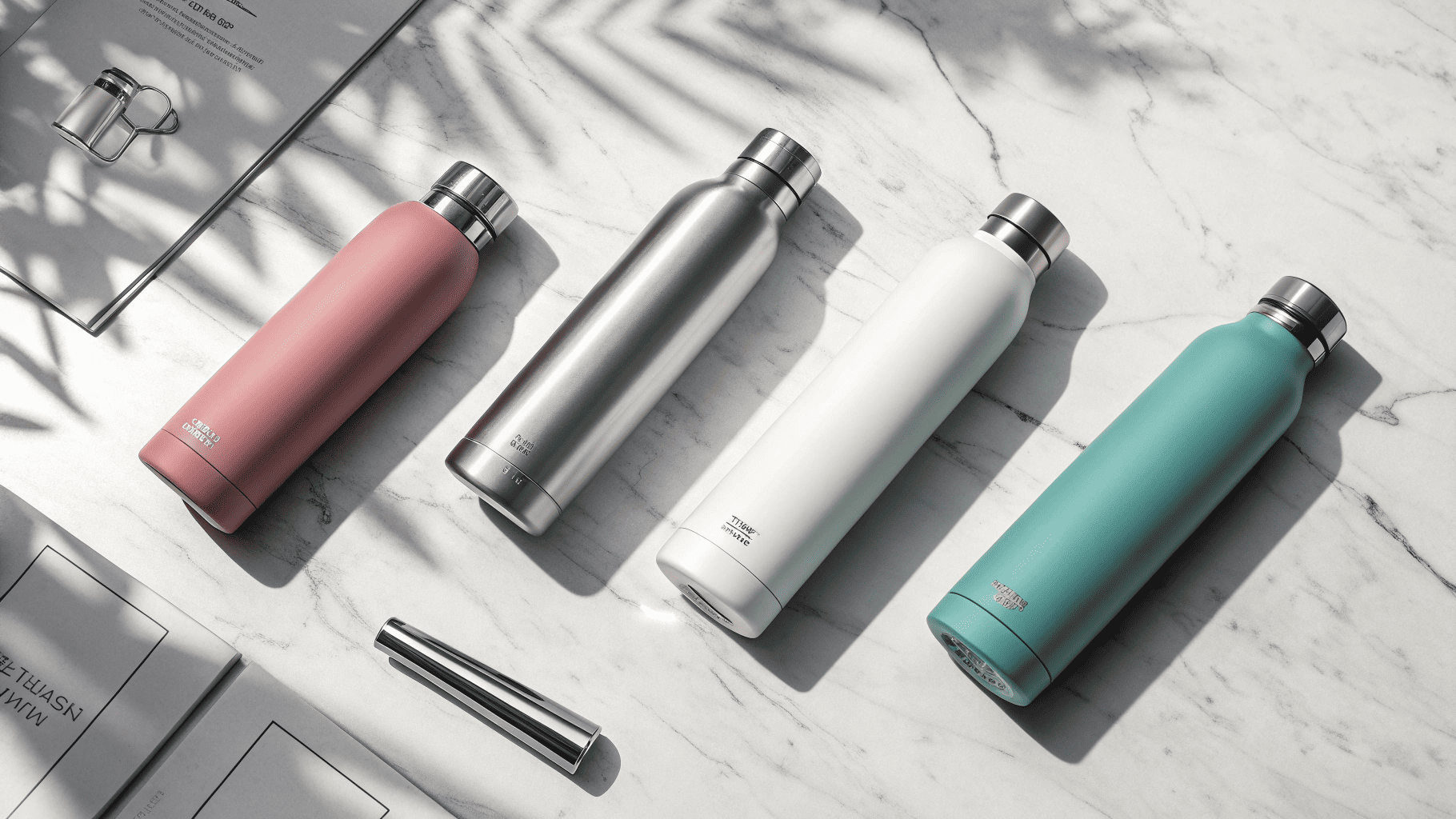
What recycling codes tell you about BPA
I always advise my clients to check the recycling code on plastic components. Codes 1, 2, 4, 5, and 6 are generally BPA-free. Code 7 requires extra attention because it covers mixed resins. Some code 7 plastics are safe, others are not. You cannot guess.
When I review samples from potential suppliers, I test the lid components first. The body might be pristine 304 stainless steel, but if the lid uses cheap polycarbonate with code 7, you have a BPA problem. I ask for material data sheets for every plastic part. This includes the silicone gasket, the spout insert, and any coating applied to the interior.
Here is a breakdown of common materials in insulated bottles:
| Component | BPA-Safe Material | BPA-Risk Material |
|---|---|---|
| Bottle Body | 304/316 Stainless Steel | None (metal) |
| Lid/Cap | PP, Tritan, ABS | Polycarbonate (PC) |
| Gasket/Seal | Food-grade Silicone | Cheap rubber blends |
| Spout | PP, Tritan | Mixed Code 7 plastics |
I once had a buyer who insisted on the cheapest quote. He ignored my warning about the lid material. Three months later, his retail partner demanded full documentation. He had none. He came back to me and ordered again, this time asking for every certificate we had.
What are the labeling requirements for Prop 65?
California's Proposition 65 confuses many first-time importers. They think it only applies if they sell in California. That is wrong. Amazon and major retailers apply Prop 65 standards nationwide to avoid state-by-state inventory complications.
Prop 65 requires warnings for products containing chemicals known to cause cancer or reproductive harm. For water bottles, compliance means proving your materials do not contain these listed chemicals through third-party testing. Non-compliant products need clear warning labels, which hurt sales.

What chemicals does Prop 65 cover beyond BPA
Prop 65 lists over 900 chemicals. For water bottles, the main concerns are BPA, phthalates, lead (in coatings or prints), and cadmium. I have seen decorative prints on stainless steel bottles fail Prop 65 testing because the ink contained lead. The bottle itself was perfect, but the decoration killed the deal.
When you write your RFQ, you need to specify Prop 65 compliance with documentation. This means requesting a CA65 certificate or Prop 65 test report3 from an accredited lab. I provide these automatically to my North American clients because I know the requirement. But many suppliers do not understand the difference between general safety and Prop 65 compliance.
Here is what proper documentation should include:
| Document Type | What It Proves | Who Issues It |
|---|---|---|
| Prop 65 Test Report | No listed chemicals detected | Third-party lab (SGS, Intertek) |
| FDA Certificate | Food-safe materials | FDA or accredited body |
| LFGB Certificate | EU food safety standard | German testing institute |
| Material Declaration | Component breakdown | Manufacturer |
I remember a procurement officer from Vancouver who asked me why we charge slightly more than competitors. I sent him our complete certification package. He compared it to three other quotes he had received. None of the cheaper suppliers could provide Prop 65 reports. He placed the order with us the next day. He told me the peace of mind was worth the price difference.
You also need to understand the labeling. If your product cannot pass Prop 65 testing, you must display a warning. The warning must be clear and visible. Most buyers avoid this entirely by sourcing only from certified suppliers. Warning labels kill premium branding.
What does insulated BPA-free mean?
I hear buyers use "insulated BPA-free" as one term. They are actually two separate specifications. Insulated refers to vacuum technology between double walls. BPA-free refers to material safety. You need both, but they address different concerns.
Insulated BPA-free means the vacuum-sealed stainless steel body is paired with BPA-free plastic components in lids, gaskets, and spouts. This combination ensures no chemical leaching under temperature extremes, whether the bottle holds hot coffee or ice water.
Why temperature extremes matter for BPA-free claims
Heat accelerates chemical leaching. If a plastic lid contains BPA and you pour boiling water into the bottle, the BPA migrates into the liquid faster. This is why "insulated BPA-free" matters more than "regular BPA-free" for products marketed as multi-temperature vessels.
I test this during quality control. We fill sample bottles with hot water (95°C) and let them sit for 2 hours. Then we test the water for chemical migration. Our PP and Tritan lids pass every time. I have seen competitor samples fail this test because they used cheap mixed plastics to save a few cents per unit.
The insulation itself—the vacuum between the steel walls—does not contain BPA because it is just air space. The risk comes from anywhere plastic touches liquid. This includes the lid threads, the drinking spout, the flip mechanism, and the seal gasket. You need material certification for each component.
Here is how I break down insulated BPA-free in technical terms:
| Feature | Function | BPA-Free Requirement |
|---|---|---|
| Double-wall Vacuum | Temperature retention | Not applicable (no material) |
| Inner Steel Wall | Liquid contact surface | 304/316 grade (BPA-free) |
| Outer Steel Wall | Exterior body | 304/316 grade (BPA-free) |
| Lid Assembly | Primary liquid contact | PP/Tritan/ABS (certified BPA-free) |
| Gasket Seal | Secondary liquid contact | Food-grade silicone (BPA-free) |
I once worked with a startup founder from Seattle. He wanted to market his bottles as "the safest insulated bottle on the market." I explained that safety requires documentation. We provided him with material breakdowns, temperature stress test results, and full Prop 65 compliance. He used these documents in his marketing. His first retail partner signed immediately after reviewing the certificates.
When you write your RFQ, do not just say "insulated and BPA-free." Specify the material for each component. Ask for temperature stress test results. Request third-party verification. This separates serious suppliers from traders who are just reselling without quality knowledge.
Conclusion
Specifying Prop 65 and BPA-free compliance in your RFQ protects your business and your customers. Request documented proof, understand material codes, and verify every plastic component before placing your order.
-
Third-party test reports provide unbiased verification of product safety and compliance, essential for credibility. ↩
-
Preventing BPA contamination is crucial for product safety and compliance, impacting brand reputation. ↩
-
A Prop 65 test report is vital for proving compliance with California's safety standards, protecting your business. ↩