
How to Engineer Handles for Comfort on 18–20 oz Insulated Coffee Mugs SKUs?
I have watched countless B2B buyers reject perfectly good mug samples because the handles felt wrong. They complained about discomfort. They worried their end customers would not like the grip. This costs you time and delays your launch.
Engineering comfortable handles requires three elements: ergonomic width with non-slip surfaces, consistent thermal coating1 on both body and handle, and balanced weight distribution for single-handed use. These factors transform basic functionality into premium user experience.
I learned this lesson the hard way five years ago when a Canadian distributor returned an entire shipment. The mugs looked beautiful. The insulation worked perfectly. But the handles? Too narrow and got too hot. Mark taught me that handle engineering makes or breaks repeat orders.
How to Make Comfortable Mug Handles?
Most suppliers focus only on attaching a handle to the mug body. They ignore what happens when real people use the product daily. Your customers will notice immediately if the handle causes hand fatigue or feels unstable.
Comfortable mug handles need proper width (minimum 35mm), textured powder coating for grip, and placement that balances the filled mug's weight. The handle must feel natural in different hand sizes and support the mug securely when users multitask.

Understanding Handle Width Requirements
I measure every handle design against actual hand dimensions. The opening must accommodate four fingers comfortably. Too narrow forces users into awkward grips. Too wide makes the mug unstable during lifting.
My factory uses 35-40mm as the standard width range for 18-20 oz mugs. This accommodates most adult hands from petite to large. The internal curve radius matters just as much. A 25mm radius prevents the handle from digging into fingers during extended holding.
We test each handle prototype with different grip styles. Some users prefer wrapping all fingers through the opening. Others use a pinch grip with thumb and two fingers. The design must work for both approaches without causing pressure points.
Adding Non-Slip Surface Treatment
Plain stainless steel handles become slippery when users have wet hands or lotions. I apply textured powder coating to every handle surface. This creates microscopic peaks and valleys that increase friction.
The coating process involves electrostatic spray application followed by high-temperature curing. I select powder formulas with matte finishes rather than glossy ones. Matte surfaces provide better grip characteristics.
Temperature control during curing affects the final texture. We maintain 180-200°C for optimal coating adhesion and surface feel. This creates a slightly rough texture that feels secure without being abrasive against skin.
| Handle Surface Treatment | Grip Coefficient | Heat Resistance | Cost Impact |
|---|---|---|---|
| Plain stainless steel | 0.3 | Excellent | Baseline |
| Glossy powder coating | 0.4 | Good | +8% |
| Matte powder coating | 0.6 | Excellent | +10% |
| Textured powder coating | 0.8 | Excellent | +12% |
How to Handle a Coffee Mug?
Your end customers will use these mugs in cars, at desks, during meetings, and while walking. Each scenario demands different handling approaches. The mug design must support multiple grip styles without compromising comfort or safety.
Handle engineering should enable both firm two-handed grips for filling and effortless single-handed operation for drinking. The handle must stay cool when contents are hot and prevent condensation from making grips slippery when contents are cold.
Thermal Isolation Principles
Heat transfer through handles creates safety concerns and comfort issues. I insist on applying the same powder coating to both mug bodies and handles. This creates consistent thermal barriers across all contact surfaces.
Uncoated stainless steel conducts heat rapidly. A handle attached to a mug filled with 90°C coffee will reach uncomfortable temperatures within three minutes. Users will need potholders or towels.
The powder coating layer acts as thermal insulation. It reduces heat transfer rate by approximately 60% compared to bare metal. The coating thickness matters. We apply 60-80 microns for optimal thermal protection without adding excessive weight.
I also pay attention to the handle attachment points. These welded joints create thermal bridges where heat can bypass the coating. Our welding technique minimizes contact area while maintaining structural strength. This reduces heat conduction through the attachment zones.
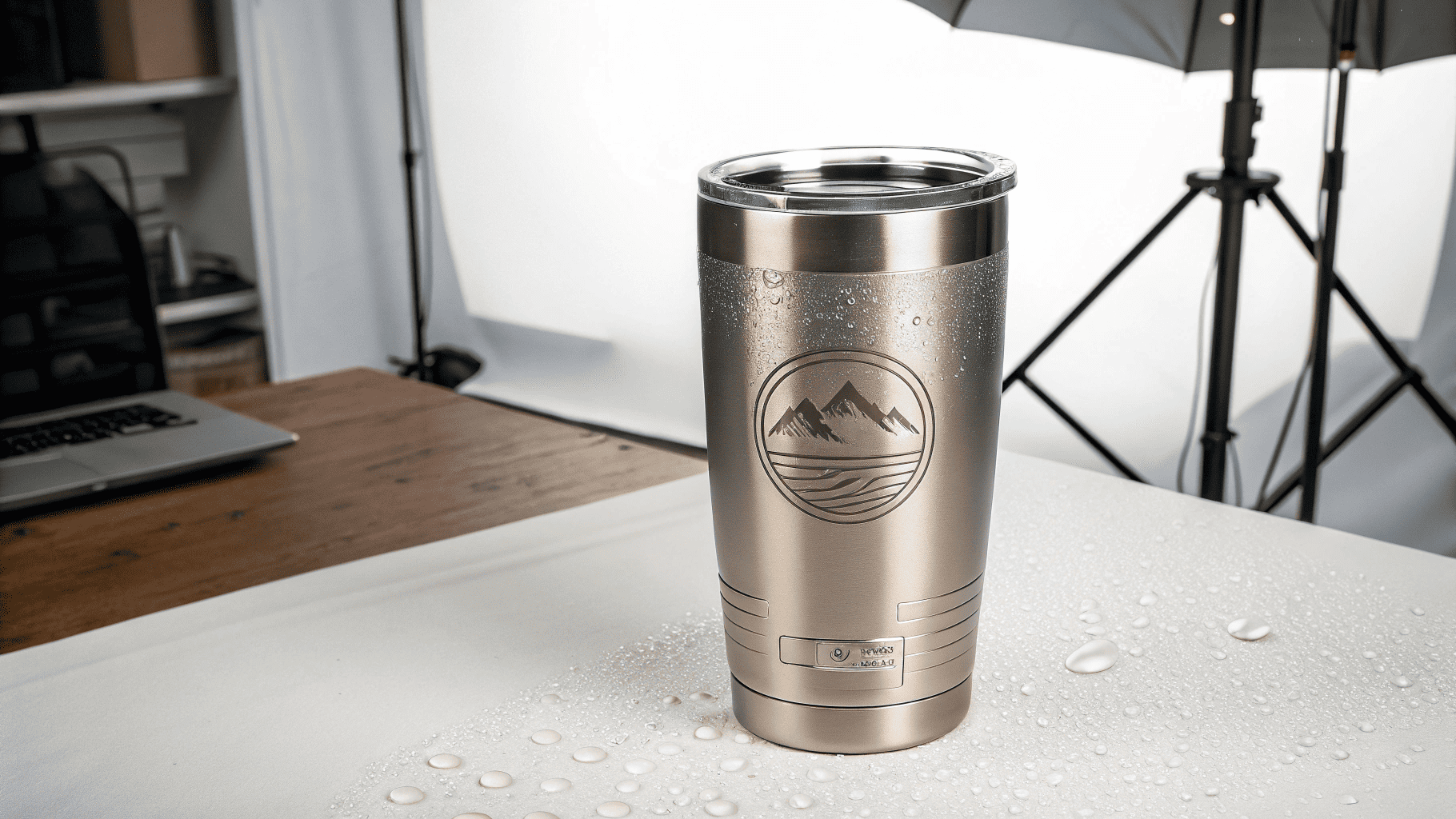
Cold beverages present a different challenge. Condensation forms on the exterior when ice-cold drinks meet room temperature air. This moisture can drip onto hands or make handles slippery. The powder coating provides a warmer surface temperature that reduces condensation formation on the handle itself.
Supporting Different Grip Styles
I watch how people naturally hold filled mugs during our product testing sessions. Three primary grip patterns emerge consistently across different users.
The finger-loop grip2 involves inserting four fingers through the handle opening with the thumb resting against the mug body. This grip distributes weight across multiple fingers and works well for filled mugs during stationary use.
The pinch grip uses thumb and one or two fingers to hold the handle from opposite sides. Users prefer this grip for quick sips or when carrying the mug short distances. The handle must be thick enough to provide secure pinching surfaces.
The palm-wrap grip involves wrapping fingers around the handle while pressing the palm against the mug body. This grip provides maximum stability when walking or moving between locations. The handle angle3 relative to the body must allow comfortable palm contact.
Our handle designs accommodate all three grips without forcing users into unnatural hand positions. The opening dimensions, handle thickness, and body clearance work together to support multiple holding styles.
What is the Best Handle Design for a Mug?
The best handle design balances three priorities: structural strength, thermal comfort, and ergonomic feel. These priorities often conflict. A stronger handle might be thicker and less comfortable. A more ergonomic design might create weak points.
Optimal handle designs use C-shaped profiles with 12-15mm thickness, positioned 3-5mm from the mug body, and angled 5-10 degrees outward. This combination provides strength, prevents knuckle contact, and creates stable weight distribution.
Calculating Weight Distribution Points
I use a simple balance test for every new handle design. When the mug is filled to 90% capacity and held by the handle, the mug should hang vertically without tilting forward or backward.
The handle's vertical position determines this balance. Placing the handle center point at 55-60% of the mug's total height creates optimal balance for most 18-20 oz designs. This allows the filled liquid's weight to align with the natural pivot point of the wrist.
Forward tilt happens when handles sit too high on the mug body. Users must actively counterbalance this tilt by tensing their wrist muscles. This causes fatigue during extended use. I see this design flaw frequently in budget-oriented products from inexperienced suppliers.
Backward tilt occurs when handles sit too low. The mug wants to tip away from the user when lifted. This feels unstable and dangerous. Users worry about spilling hot liquids on themselves.
Determining Proper Body Clearance
The gap between the handle's inner curve and the mug's outer surface affects both comfort and functionality. Too little clearance causes knuckle contact. Too much clearance creates leverage problems.
I maintain 3-5mm clearance for standard adult hands. This provides adequate space for fingers without reducing structural support or creating excessive reach distance.
The clearance measurement must account for the powder coating thickness on both surfaces. We measure clearance after final coating application. Pre-coating measurements can be misleading and result in rejected samples.
Knuckle contact becomes problematic during extended holding periods. Even slight pressure points cause discomfort after 10-15 minutes of continuous use. Business professionals often hold mugs during long meetings or focus sessions. Design flaws that cause knuckle pressure generate negative brand associations.
Choosing Handle Angle and Orientation
The handle angle relative to the mug body affects how naturally the mug sits in different positions. A purely vertical handle works well for desk use but feels awkward when walking. A severely angled handle might interfere with cup holders or storage.
We angle handles 5-10 degrees outward from vertical. This subtle tilt improves grip ergonomics without creating compatibility issues. The outward angle allows the wrist to maintain a more neutral position during lifting and drinking.
The angle measurement starts from the mug's centerline and extends through the handle's midpoint. We verify angles using digital protractors before final production approval. Small angle variations significantly impact user perception.
| Handle Design Element | Optimal Specification | Impact on Comfort |
|---|---|---|
| Width opening | 35-40mm | Accommodates various hand sizes |
| Profile thickness | 12-15mm | Provides secure grip surface |
| Body clearance | 3-5mm | Prevents knuckle contact |
| Outward angle | 5-10 degrees | Reduces wrist strain |
| Vertical position | 55-60% of height | Balances filled weight |
I remember a distributor from Toronto who ordered 3,000 units without requesting samples first. He trusted my specifications based on our previous successful orders. When the shipment arrived, his team tested the mugs immediately. The handles performed exactly as promised. He sent me a photo of his warehouse staff all holding the mugs comfortably. That validation confirmed our engineering approach works across different markets and user preferences.
Conclusion
Engineering comfortable handles requires precise attention to width, thermal coating, weight balance, and multi-grip support. These elements transform functional products into premium user experiences that drive repeat B2B orders and justify higher pricing.