
How should OEMs spec hip flask welds and seams: AQL levels and tests in QC?
You order a batch of hip flasks and they leak. Your brand reputation suffers. Customers demand refunds. This nightmare happens when weld specs are unclear.
OEMs should specify AQL 1.5 to 2.5 for critical weld defects and AQL 4.0 for minor issues. Testing protocols must include pressure testing, visual weld inspection1, and food-grade material verification to ensure leak-proof performance and safety compliance.
I have worked with hundreds of B2B clients over the years. The most common quality complaint I receive involves leaking hip flasks. The root cause is almost always poor weld specifications at the sourcing stage.
What should a hip flask be made of?
You see cheap hip flasks everywhere. They corrode quickly. The welds fail after a few uses. Your customers will not forgive this.
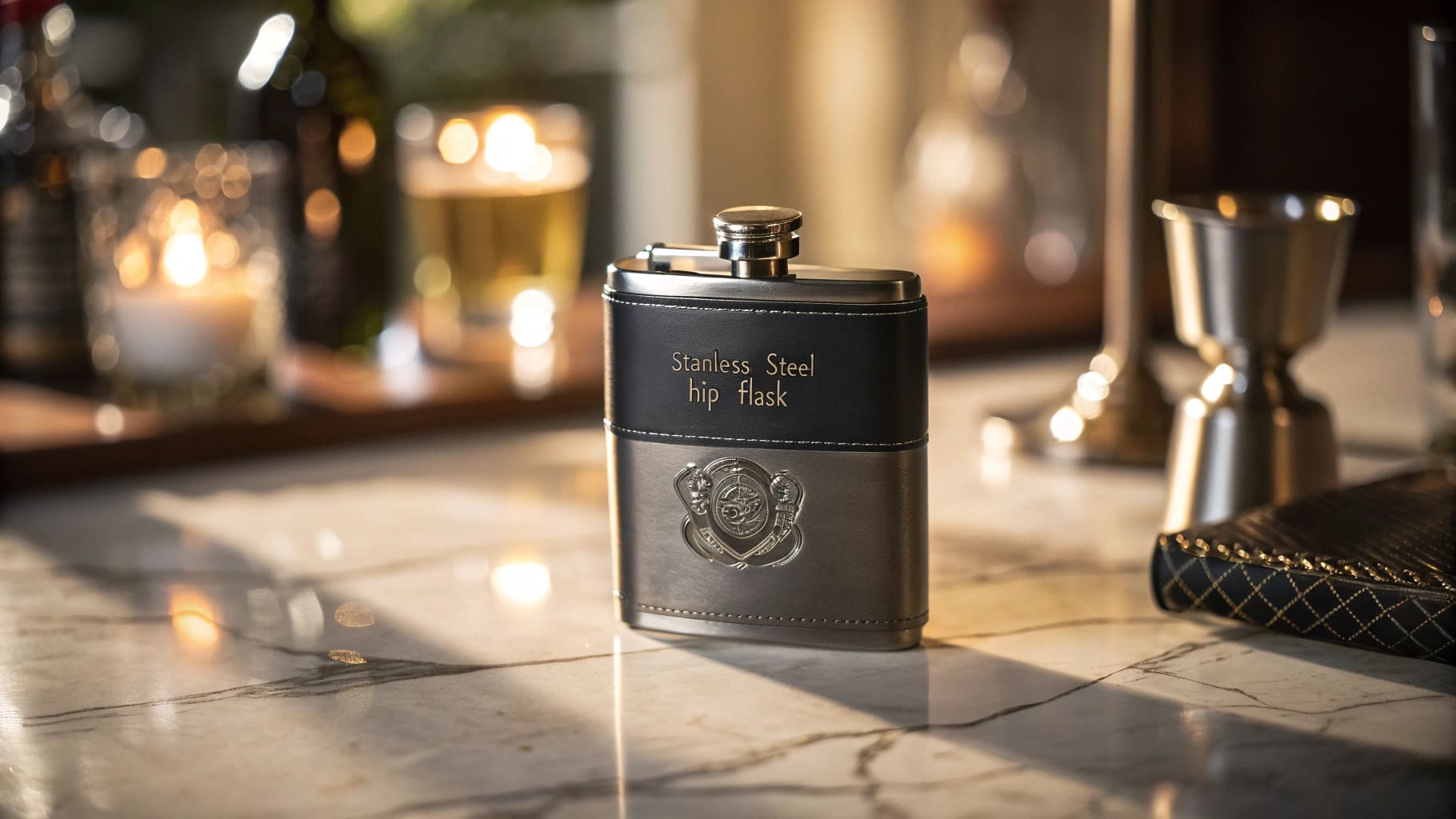
Hip flasks should be made from 18/8 food-grade stainless steel2 (SUS 304). This material offers superior corrosion resistance and maintains weld integrity when exposed to acidic beverages like whiskey or wine.
Why material choice affects weld quality
I need to be honest with you. Not all stainless steel is the same. When I started in this business, I learned this lesson the hard way.
The 18/8 designation means the steel contains 18 percent chromium and 8 percent nickel. This specific composition creates a passive oxide layer that resists corrosion. Lower grades like 201 stainless steel cannot provide this protection.
Weld points represent the weakest areas in any hip flask. When you use inferior steel, these weld points corrode faster. The metal becomes porous. Leaks develop within months.
Here is what different steel grades mean for your product:
| Steel Grade | Chromium Content | Nickel Content | Weld Durability | Food Safety |
|---|---|---|---|---|
| 304 (18/8) | 18% | 8% | Excellent | FDA/LFGB compliant |
| 201 | 16-18% | 3.5-5.5% | Poor | Not recommended |
| 316 | 16-18% | 10-14% | Superior | Medical grade |
I recommend 304 steel for most commercial hip flask applications. The price point stays competitive. The quality meets international food safety standards. Your weld integrity remains stable across normal use conditions.
Some clients ask me about 316 steel. Yes, it performs better in extreme conditions. But for hip flasks holding whiskey or vodka, 304 steel provides more than adequate protection at a better price point.
What is the purpose of a hip flask?
You might think this question is obvious. But understanding purpose helps you define better quality specs. Many buyers skip this step.
A hip flask serves as a portable container for spirits or other beverages. It must maintain liquid integrity during movement, prevent contamination, and withstand repeated opening and closing cycles without compromising seal quality.
How purpose drives weld specifications
Last year, I worked with a startup founder from Toronto. He wanted hip flasks for his whiskey brand. We discussed his target market extensively.
His customers would carry these flasks while hiking, camping, and traveling. The flasks needed to survive rough handling. Temperature changes. Pressure variations.
This conversation shaped our weld specifications completely. We could not treat this like a decorative item. Every weld point needed to handle real-world stress.
Let me break down what this means for quality control:
Pressure resistance requirements
Hip flasks experience internal pressure changes. Altitude shifts affect liquid pressure. Temperature variations cause expansion and contraction. Your welds must accommodate these forces without failure.
I specify pressure testing at 0.6 bar for all our hip flask production runs. We hold this pressure for 3 minutes minimum. Any leakage indicates weld failure.
Movement stress factors
Flasks sit in pockets, backpacks, and purses. They experience constant flexing and impact. Weld points must remain flexible enough to absorb these shocks without cracking.
We test this by subjecting sample flasks to drop tests from 1 meter height onto concrete surfaces. The welds should show no visible damage or leakage after 10 drops.
Chemical exposure considerations
Spirits contain alcohol and acids. These chemicals attack weak weld points over time. Your material certification must verify that both the base metal and weld filler material resist chemical corrosion.
I always request material certificates showing compliance with FDA standards, LFGB certification from Germany, and California Prop 65 compliance. These certifications prove the welds will not leach harmful substances into beverages.
Who makes the best hip flask?
You want a simple answer. But quality varies dramatically between manufacturers. Price alone does not tell you anything about weld integrity.
The best hip flask manufacturers maintain dedicated quality control teams with 30 in-process inspectors and use AQL sampling plans. They combine automated production lines3 with human expertise to achieve consistent weld quality across all production runs.
How to evaluate manufacturer weld capabilities
I meet potential suppliers at trade shows every year. Most claim excellent quality. Few can actually prove it.
When I evaluate a new hip flask factory, I follow a systematic process. You should do the same.
Inspection team structure
Ask how many quality inspectors4 work on the production floor. Our factory employs 30 in-process quality inspectors plus 5 dedicated open-box inspectors. This ratio ensures that every hip flask gets checked before packing.
Factories with fewer than 1 inspector per 20 workers cannot maintain consistent quality. Math does not lie. If they produce 10,000 flasks daily with only 5 inspectors, defects will slip through.
AQL implementation approach
Request their AQL sampling plan documentation. Professional manufacturers use different AQL levels for different defect types.
Here is the standard I recommend for hip flask procurement:
| Defect Type | AQL Level | Example |
|---|---|---|
| Critical | 1.5 | Weld leaks, food safety issues |
| Major | 2.5 | Rough weld surfaces, cap seal problems |
| Minor | 4.0 | Small cosmetic scratches, slight color variation |
Critical defects like weld leaks should have AQL 1.5 or lower. This means less than 1.5 percent defect rate is acceptable in sampling. Major issues like rough welds that could cut users get AQL 2.5. Minor cosmetic problems receive AQL 4.0.
Any supplier refusing to work with defined AQL levels should raise red flags. They either lack quality control systems or hide quality problems.
Testing equipment verification
Visit the factory if possible. Check their testing equipment. I look for:
Pressure testing machines with digital pressure gauges. Manual pumps cannot provide consistent pressure readings.
Automated water filling stations that detect leaks during filling. This catches weld failures before final packing.
Ultrasonic welding inspection tools for spot-checking weld integrity. These devices identify microscopic cracks invisible to the human eye.
Quality documentation review
Request their quality assurance manual5. ISO 9001:2015 certified factories maintain detailed documentation of every quality checkpoint.
I review their inspection record sheets. How do they track defects? What happens when weld quality drops below AQL limits? Do they have corrective action procedures?
One factory I visited in Zhejiang province showed me five years of quality records. They tracked defect rates by production line, inspector, and raw material batch. This level of detail indicates serious quality commitment.
Remember that certificates alone mean nothing. Anyone can buy fake certificates. But comprehensive quality records are difficult to fabricate. They tell the real story about weld consistency.
Conclusion
Specify clear AQL levels for weld defects, require pressure testing protocols, verify material certifications, and choose manufacturers with proven quality control systems to ensure your hip flasks meet safety standards and protect your brand reputation.
-
Learn about visual weld inspection techniques to maintain high-quality standards in manufacturing. ↩
-
Find out why 18/8 stainless steel is preferred for hip flasks due to its durability and safety. ↩
-
Learn how automation can enhance quality control and consistency in production. ↩
-
Discover the critical role of quality inspectors in maintaining product quality and safety. ↩
-
Discover the essential components of a quality assurance manual for effective quality management. ↩
