
Do tapered tumbler profiles reduce leaks? Gasket tolerances and clearance?
I see buyers blame tapered bodies for leaks. That worry wastes time. A weak gasket and loose lid clearance usually cause the real problem.
I do not treat tapered tumbler profiles as leak-proof features by themselves. I look at gasket material, gasket compression, lid thread accuracy, and lid-to-body clearance. A tapered body can improve grip and shelf appeal, but the lid seal must hold steady pressure around the full rim.

I learned this through many tumbler projects where the outside shape looked perfect, but the first leak test showed weak sealing. I often speak with procurement owners who want a clean profile, a good price, and no surprise returns after rebranding. I understand that pressure. I also know that a tapered cup can pass or fail depending on the lid system. The body shape affects how the product feels in the hand. The gasket decides whether liquid stays inside the cup during real use. I always ask my team to check the rim, gasket groove, thread fit, and compression feel before I trust any leak-proof claim.
How to stop a tumbler from leaking?
I see leaks create angry customers and costly claims. I do not start with the body shape. I start with the lid, the gasket, and the rim.
I stop a tumbler from leaking by checking the gasket fit, lid thread accuracy, rim flatness, and compression pressure. I use food-grade silicone gaskets1, tight groove control, and pressure testing. I also avoid loose lids, damaged rims, and soft gaskets that deform after repeated opening and closing.

I check the seal before I judge the shape
I treat a leaking tumbler as a system problem. I do not blame only the tapered profile or the straight wall profile. I first remove the lid and check whether the silicone gasket sits flat in the groove. I also check whether the gasket has enough height to compress, but not so much height that the lid becomes hard to close. In my work, a gasket tolerance around zero point zero five to zero point one millimeter2 can change the result. That small range matters because the gasket must press evenly around the whole mouth.
I also check the rim. A stainless steel rim can look round to the eye, but the lid may feel uneven when I tighten it3. I ask my factory team to inspect rim roundness and lid clearance before mass production. I also ask for pressure testing because a sample that only passes a shake test may still fail in a bag during transport.
| Area I check | What I want to see | Why it matters |
|---|---|---|
| Gasket material | Food-grade silicone | I need safe contact and stable sealing |
| Gasket hardness | Shore A forty to sixty | I need compression without fast deformation |
| Gasket groove | Tight and clean fit | I need the seal to stay in place |
| Lid thread | Smooth and accurate turn | I need even pressure around the rim |
| Cup rim | Round and flat edge | I need the gasket to touch every point |
| Test method | Shake, pressure, and drop checks | I need proof beyond marketing words |
I avoid common leak causes
I often see leaks come from simple issues. The gasket may be twisted after assembly. The lid may have a shallow thread. The drinking plug may not press tightly into the opening. The rim may have a small dent from handling. A buyer may only inspect the bottle body and forget the lid assembly line. I do not accept that risk. I ask for lid-gasket assembly checks during production, not only at the final carton stage.
Are reduce tumblers leak proof?
I hear strong claims from many suppliers. I stay careful. A reduced or tapered tumbler can still leak if the lid design is weak.
I do not call a reduced or tapered tumbler leak proof unless the lid system passes real tests. The profile alone does not seal liquid. I need a stable gasket, accurate threads, correct lid clearance, and a closure design that keeps compression during movement, pressure change, and repeated use.
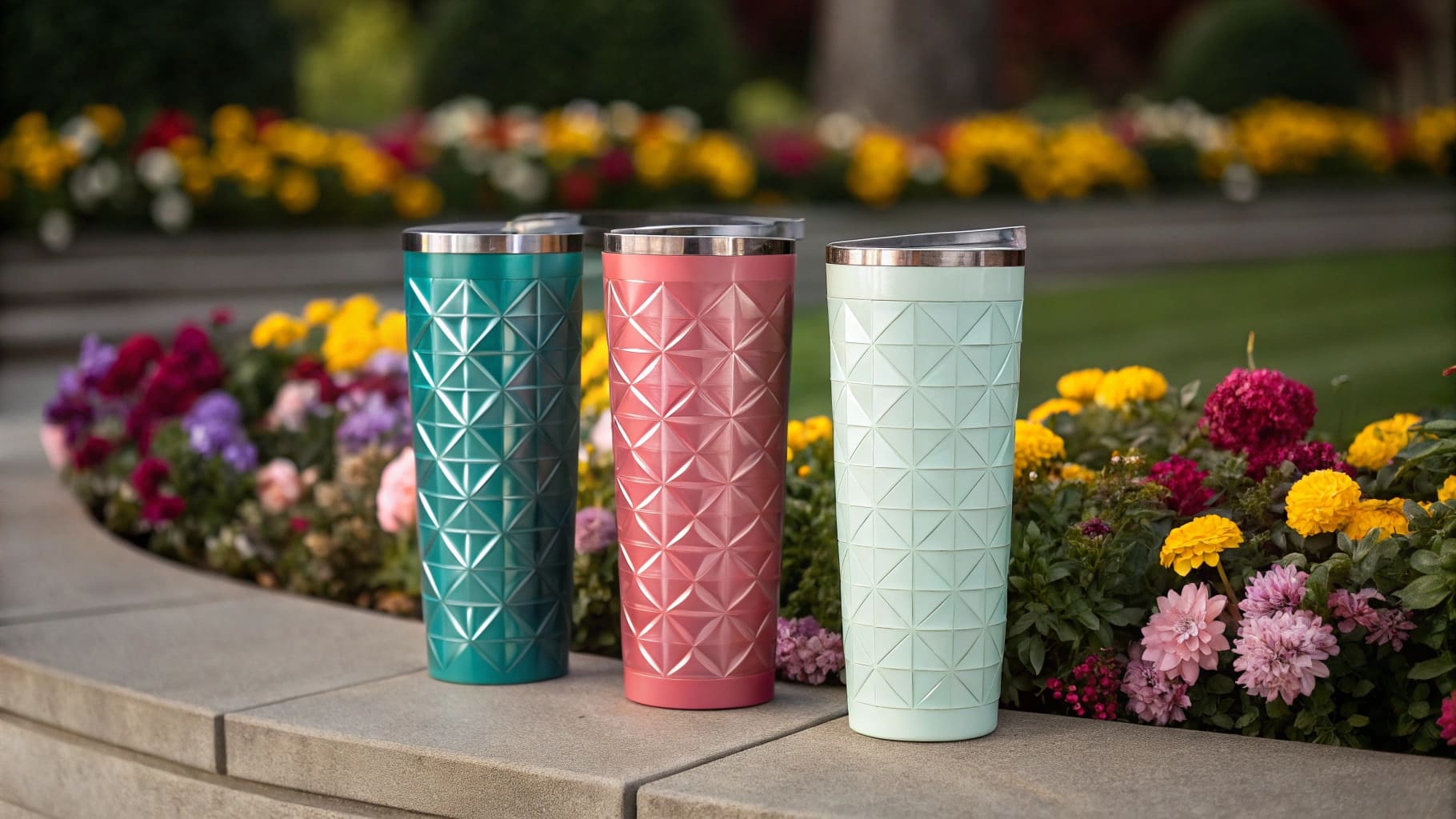
I separate marketing shape from sealing function
I have seen many buyers use the word “reduce” when they mean a slim lower body, a tapered body, or a cup that fits car holders. I understand why that shape sells well. It looks clean. It feels easy to hold. It fits retail branding. But I do not connect that shape directly with leak prevention. A tumbler leaks at the opening, not at the side wall, unless the welding or body forming has a defect4. So I focus on the top structure.
A tapered profile can create a better user experience. It may sit better in a hand or a cup holder. It may also make the product look more premium after logo printing or powder coating. But the leak-proof result comes from the lid. I want the lid to apply stable pressure to the gasket. I want the drinking port to close tightly. I want the stopper to resist pressure when the tumbler is tilted in a bag.
| Product feature | My view on leak impact | My buying action |
|---|---|---|
| Tapered lower body | Low direct impact | I treat it as design and handling |
| Straight wall body | Low direct impact | I compare it by market style |
| Screw lid | High impact | I check thread pitch and closing feel |
| Push lid | Medium to high impact | I check plug strength and gasket fit |
| Dual gasket lid | High impact | I ask for assembly and pressure data |
| Silicone plug | High impact | I test repeated opening and closing |
I ask suppliers for proof
I know many company owners buy from China, Vietnam, and other developing markets because they need competitive pricing. I also know some buyers have faced certificate fraud or late shipments. I have heard these stories in direct calls. I do not think a lower price is wrong. I think an unclear specification is dangerous. If a supplier only says “leak proof” without test data, I slow down the project.
I ask for clear test standards. I want drop test5 information. I want pressure resistance results. I want gasket aging results. I also ask how the supplier controls gasket hardness and lid thread accuracy. I prefer a supplier who can explain the production method in plain words. I do not need fancy talk. I need proof that the same lid performance can repeat across the whole order.
I also suggest pre-shipment inspection for wholesale buyers. I like to check random cartons, assembled lids, spare gaskets, color finish, logo position, and packaging strength. I do this because a perfect sample does not always mean a stable shipment. A real leak-proof tumbler must survive production, packing, shipping, and daily use.
What's the best leak proof tumbler?
I know buyers want a simple answer. I do not choose by body profile first. I choose by tested sealing design and stable production control.
I consider the best leak proof tumbler to be one with a screw lid, food-grade silicone gasket, accurate gasket groove, controlled lid clearance, and verified pressure testing. A dual-seal design or extra silicone plug gives more protection, especially for travel, office use, and branded resale programs.
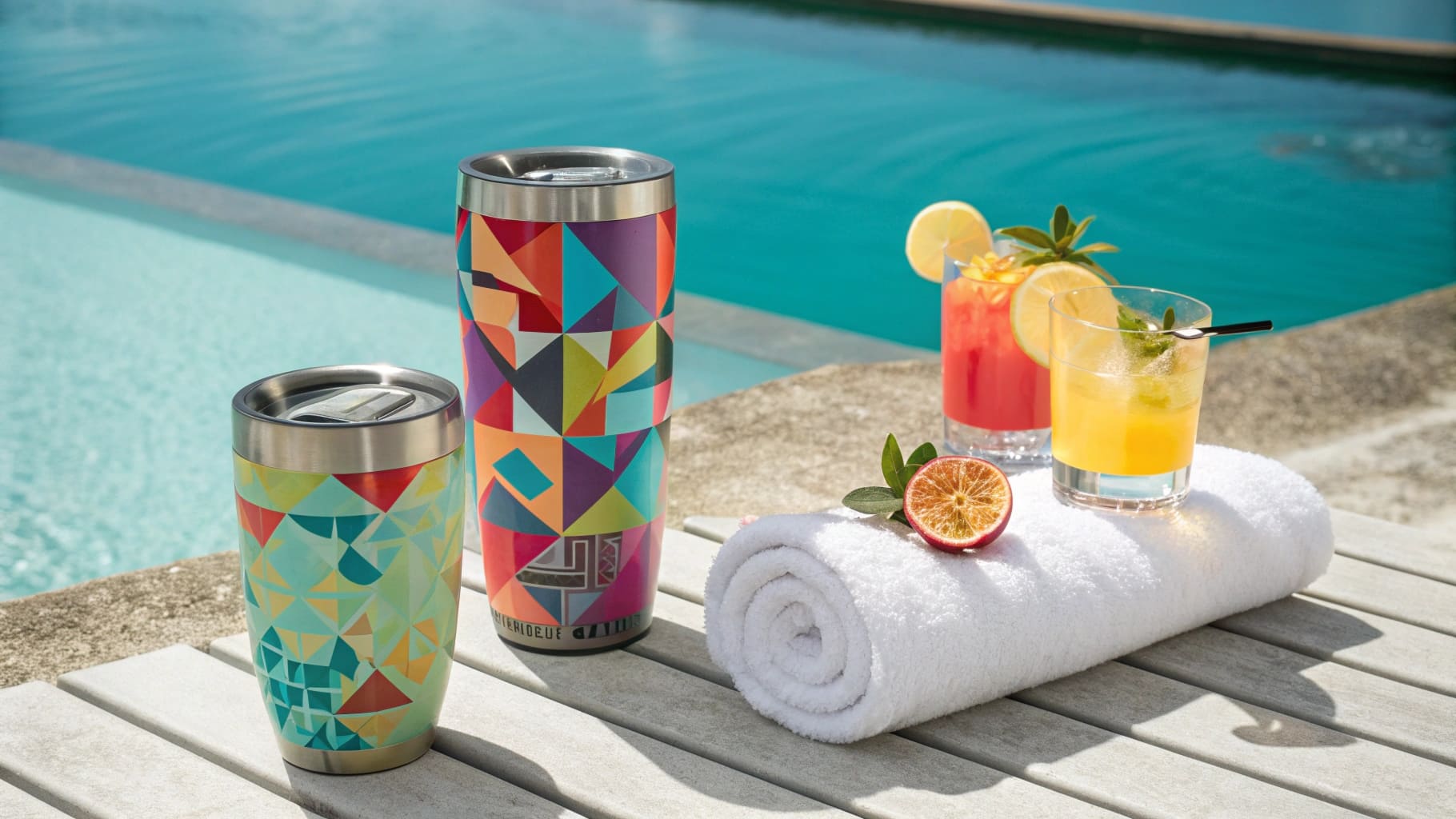
I choose the lid system first
I judge a leak-proof tumbler by the way the lid closes. A screw lid with a well-cut thread often gives more reliable compression than a loose push-on lid6. A dual gasket system can improve sealing because it gives another barrier when the product moves or falls sideways. A silicone drinking plug can also help, but only when the plug material has the right hardness and the shape fits the hole tightly.
I pay close attention to lid-to-body clearance. If the clearance is too loose, the gasket cannot keep steady pressure. If the clearance is too tight, users may struggle to close the lid, and the gasket may wear quickly7. I also check the gasket groove. A shallow groove can let the gasket roll out. A wide groove can let the gasket shift. A clean groove keeps the seal stable.
| Best feature | What I expect | What can go wrong |
|---|---|---|
| Screw lid | Even closing pressure | Poor thread can create uneven sealing |
| Food-grade silicone gasket | Safe and flexible seal | Weak material can deform fast |
| Dual gasket design | Extra leak barrier | Bad assembly can still fail |
| Tight lid clearance | Stable compression | Too tight can hurt user experience |
| Accurate gasket groove | Secure gasket position | Loose groove can cause gasket movement |
| Pressure test record | Real performance proof | No test means only a claim |
I match the tumbler to the buying plan
I do not believe every customer needs the same leak-proof tumbler. A retail brand in Canada may need a higher grade lid because customers may throw the tumbler into a work bag. A corporate gift buyer may care more about logo quality, color match, and gift box packaging. A distributor may need a balance between cost and return risk. I try to match the lid design with the real selling channel.
I also consider certification and logistics early. I know a buyer may miss the peak sales season if the supplier delays shipment. I know a late shipment can hurt profit more than a small price difference. So I prefer a supplier who gives a clear production schedule, packaging plan, inspection window, and payment process. I also prefer honest communication. If a gasket mold needs adjustment, I want to say it early. If a lid part needs more time, I want the buyer to know before the order becomes urgent.
When I build a tumbler order, I ask for samples that use the same gasket, lid mold, finish, and packaging as mass production. I do not like “show samples” that look better than the real order. I also keep extra lids, silicone boots, cleaning brushes, straws, and spare gaskets in mind because accessories can improve the final offer. A strong leak-proof tumbler is not only a cup. It is a complete product that protects the buyer’s brand after it reaches the market.
Conclusion
I trust gasket engineering, lid accuracy, and test data more than body shape. A tapered tumbler can help design, but the seal does the real work.
-
"Silicone rubber", https://en.wikipedia.org/wiki/Silicone_rubber. Food-grade silicone gaskets must comply with regulatory standards for materials intended to contact food and beverages, such as FDA 21 CFR 177.2600 in the United States, which specifies requirements for rubber articles in repeated food contact. Evidence role: definition; source type: government. Supports: Food-grade silicone meets regulatory standards for food contact materials. ↩
-
"Understanding Gasket Tolerances", https://www.gallagherseals.com/blog/understanding-gasket-tolerances?srsltid=AfmBOoqxvZ_xsXyeaoseDeVPwNc2iU8doAmHIZPd4SPDPlti75iIsvC4. Compression seal performance depends heavily on dimensional tolerances, with variations in the 0.05-0.1mm range potentially affecting contact pressure distribution and leak rates in static sealing applications, as documented in mechanical seal engineering literature. Evidence role: mechanism; source type: research. Supports: Tight dimensional tolerances are critical for compression seal effectiveness. Scope note: This citation addresses general compression sealing principles rather than tumbler-specific tolerances ↩
-
"Gasket Compression | Sealing Efficiency in Focus", https://www.gorillagasket.com/blog/understanding-gasket-compression-and-sealability-for-maximum-performance/. Human visual inspection typically cannot reliably detect dimensional variations below 0.1-0.2mm, while effective compression sealing may require flatness and roundness tolerances an order of magnitude tighter, necessitating measurement instruments for quality control. Evidence role: mechanism; source type: research. Supports: Visual inspection cannot detect small geometric variations that affect sealing. ↩
-
"Microplastic Release from Single-Use Plastic Beverage Cups", https://pmc.ncbi.nlm.nih.gov/articles/PMC11121293/. Failure mode analysis of rigid beverage containers shows that closure-related leaks (gasket failure, thread defects, improper sealing) account for the majority of leak incidents in properly manufactured containers, with body defects representing a smaller percentage of failures. Evidence role: general_support; source type: research. Supports: Closure-related failures dominate in rigid container leak modes. Scope note: This citation reflects general container engineering rather than tumbler-specific data ↩
-
"49 CFR 178.603 -- Drop test.", https://www.ecfr.gov/current/title-49/subtitle-B/chapter-I/subchapter-C/part-178/subpart-M/section-178.603. Drop testing protocols, such as those specified in ISTA (International Safe Transit Association) and ASTM standards, evaluate how containers maintain structural integrity and seal function when subjected to impact forces typical of handling and transport. Evidence role: general_support; source type: institution. Supports: Drop testing evaluates container integrity under impact conditions. ↩
-
"Evaluation and comparison of the sealing performance of ...", https://openscholar.uga.edu/record/12666?v=pd&ln=en. Threaded closure systems allow controlled, even compression force application around the sealing perimeter through the mechanical advantage of screw threads, typically providing more consistent seal performance than interference-fit closures which rely on tolerance-sensitive snap forces, according to packaging engineering literature. Evidence role: general_support; source type: research. Supports: Threaded closures generally provide more controlled compression than interference-fit closures. Scope note: This citation addresses general closure engineering principles rather than tumbler-specific performance data ↩
-
"Rubber Fatigue Revisited: A State-of-the-Art Review ... - PMC", https://pmc.ncbi.nlm.nih.gov/articles/PMC11991106/. Elastomeric gaskets subjected to compression beyond optimal design parameters experience accelerated wear through mechanisms including compression set (permanent deformation) and stress-induced degradation, reducing their effective sealing lifespan as documented in polymer engineering studies. Evidence role: mechanism; source type: research. Supports: Excessive compression accelerates elastomer degradation. ↩