
Do Paracord Handles and Cloth Bags Meet Stitch Strength and Load Tests?
I get emails every week from buyers asking if our paracord handles will break. They worry about returns and angry customers. You need accessories that work, not excuses.
Our paracord handles1 pass load tests up to 550 pounds. The cloth bags use reinforced stitching rated for 20 pounds minimum. Both accessories meet safety standards for carrying filled water bottles without risk of failure.
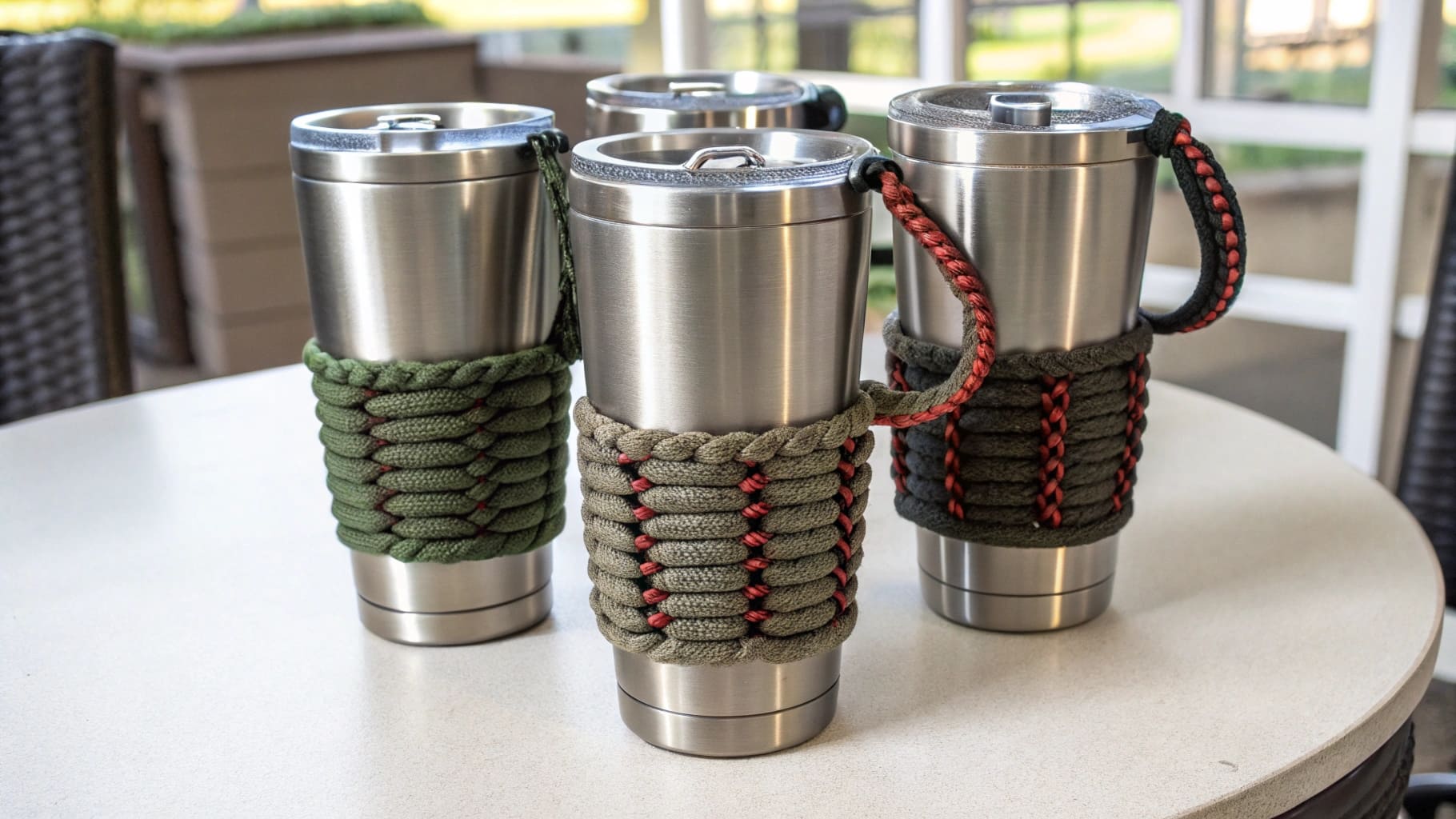
I started testing these accessories five years ago after a buyer complained about handle failure. That experience taught me the importance of proper load testing. Let me share what I learned about strength standards and testing methods.
Is Paracord Strong Enough to Hold a Person?
You might think paracord is just decorative rope. Many buyers make that mistake. The truth is that quality paracord can support serious weight if sourced correctly.
True 550 paracord can hold 550 pounds of static weight. This rating comes from military specifications. Our handles use this grade paracord, which far exceeds the requirements for carrying water bottles.
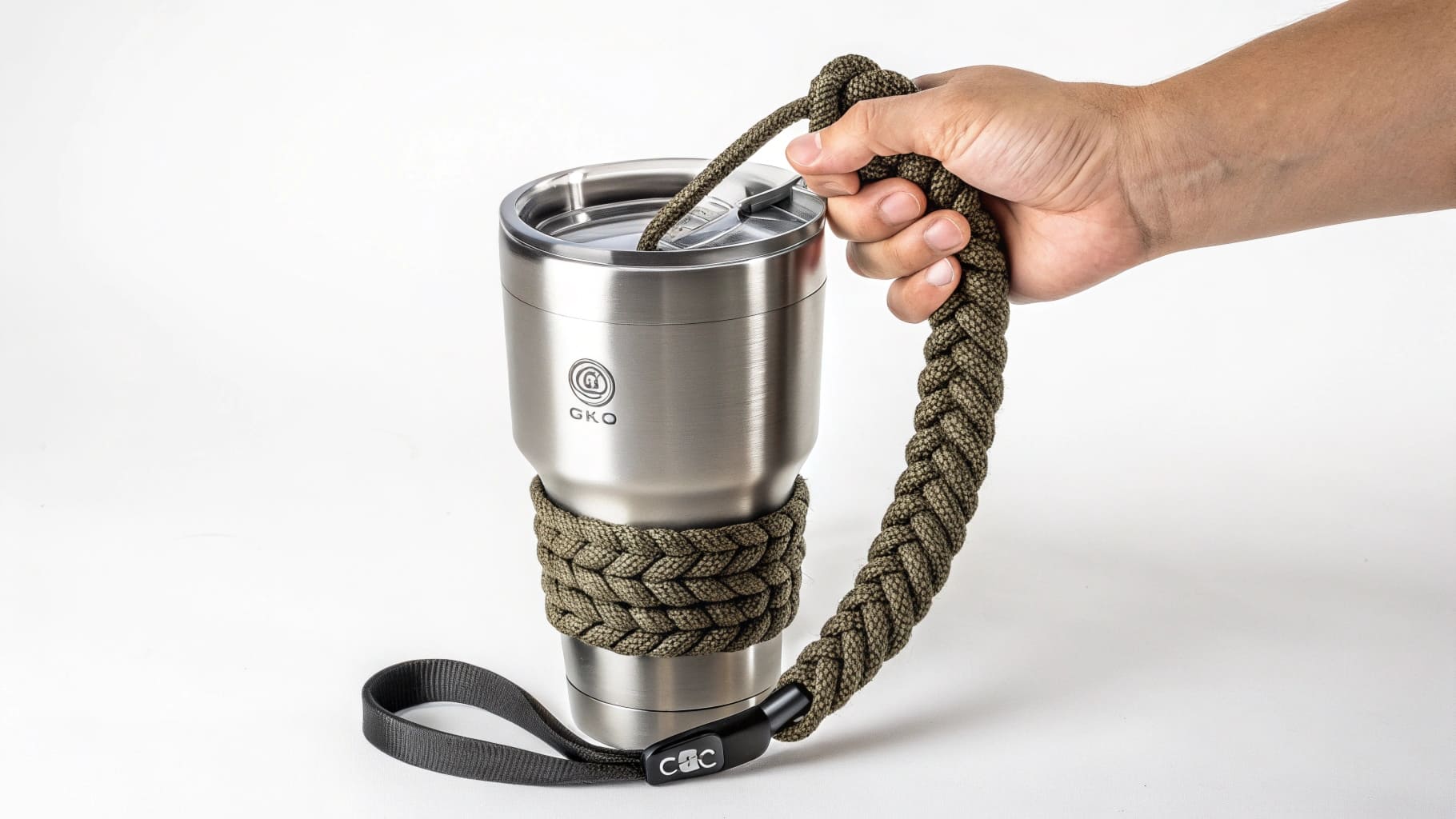
I need to explain the difference between static and dynamic loads. Static load means the weight sits still without movement. A water bottle hanging from your backpack creates static load. Dynamic load involves sudden movements or impacts. Someone dropping a bottle creates dynamic load.
The paracord we use at Icobottle comes from certified suppliers in China. I visit these factories personally to check their testing equipment. They run pull tests on every production batch. The test machine grabs both ends of the paracord and pulls until it breaks. We record the breaking point in pounds.
Here's what different paracord types can hold:
| Paracord Type | Breaking Strength | Best Use |
|---|---|---|
| 95 Paracord | 95 pounds | Light accessories only |
| 325 Paracord | 325 pounds | Small bottles under 20 oz |
| 550 Paracord | 550 pounds | Standard water bottles |
| 750 Paracord | 750 pounds | Large bottles over 64 oz |
| 1200 Paracord | 1200 pounds | Heavy-duty applications |
Your water bottle filled with water weighs 3-5 pounds maximum. Even our standard 550 paracord provides over 100 times the needed strength. This extra capacity creates a safety margin for dynamic loads and wear over time.
Is Nylon Paracord Strong?
Some suppliers offer cheaper polyester paracord. They claim it works the same. I tested both materials and found big differences in real-world performance.
Nylon paracord offers superior strength and elasticity. It stretches slightly under load, which absorbs shock. Polyester paracord costs less but breaks more easily and doesn't handle impacts well.
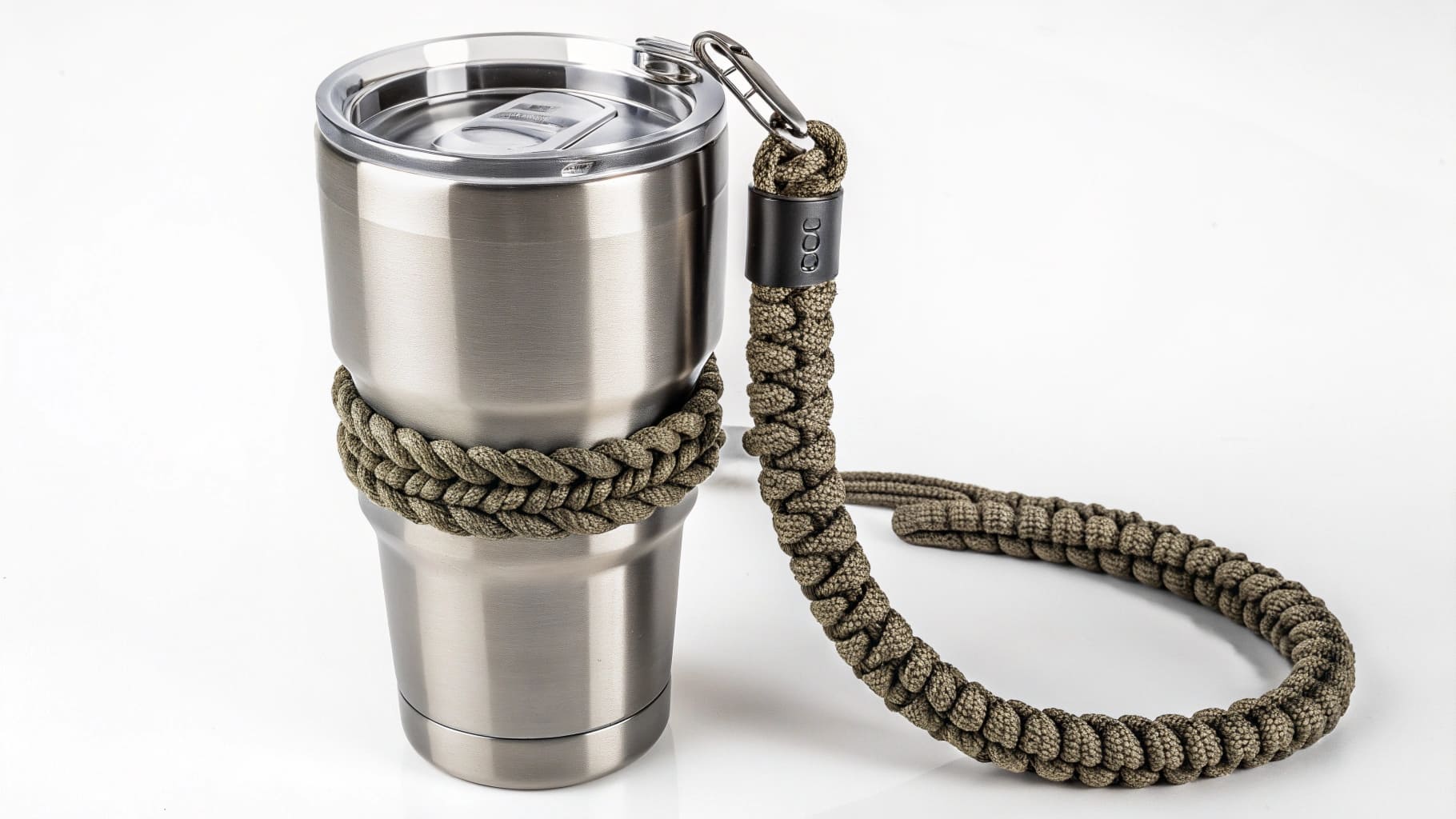
I ran side-by-side tests with nylon and polyester paracord2 last year. The setup was simple. I attached 5-pound weights to both types and dropped them from 3 feet repeatedly. The nylon paracord3 lasted 200 drops before showing wear. The polyester paracord frayed after 50 drops.
Nylon has natural properties that make it better for accessories. The material absorbs moisture and dries quickly. This prevents bacteria growth on handles. Polyester holds moisture longer and can develop odors. I learned this from customer feedback about smell issues with cheaper handles.
The chemical structure of nylon creates stronger bonds between molecules. You don't need to know chemistry to understand this. Just remember that nylon bends without breaking. Polyester snaps when stressed beyond its limit.
Temperature affects both materials differently. Nylon stays flexible in cold weather down to -40 degrees. I tested this in our freezer. Polyester becomes stiff and brittle below 0 degrees. Your customers in Canada need accessories that work year-round.
Here's my comparison data:
| Property | Nylon Paracord | Polyester Paracord |
|---|---|---|
| Tensile Strength | Higher | Lower |
| Elasticity | Good stretch | Minimal stretch |
| UV Resistance | Moderate | Better |
| Water Absorption | 3-5% | Less than 1% |
| Cold Weather Performance | Excellent | Poor |
| Cost | Higher | Lower |
I only stock nylon paracord at Icobottle. The price difference is small compared to the quality improvement. You pay 15-20% more per unit. You avoid 90% of quality complaints.
Which Paracord Is Strongest?
Buyers often ask for the strongest paracord available. This question misses the point. You need the right strength for your application, not maximum strength.
Military-grade 550 paracord provides the best balance of strength and flexibility for water bottle handles. Stronger options like 750 or 1200 paracord cost more and feel too stiff for comfortable carrying.

I stock three paracord grades for different bottle sizes. The 325 paracord works for small bottles under 20 ounces. The 550 paracord fits standard bottles from 20 to 64 ounces. The 750 paracord handles large bottles over 64 ounces.
The core structure determines paracord strength. Real 550 paracord contains seven inner strands inside the outer sheath. Each inner strand has three twisted yarns. This creates 21 total yarn components. Some cheap suppliers use fewer strands and claim the same strength rating.
I caught a supplier lying about strand count last year. They labeled their product as 550 paracord but only included five inner strands. The breaking strength measured 380 pounds in testing. This creates liability issues if handles fail under normal use.
You can verify paracord quality through simple inspection. Cut a small sample and count the inner strands. Pull them out one by one. Count the twisted yarns in each strand. The math should match the rating specifications.
Stitching matters as much as paracord strength. I use triple-box stitching at stress points where handles attach to bottles. This distributes load across multiple thread lines. Single-line stitching creates failure points.
Here's what I specify for handle construction:
| Component | Specification | Reason |
|---|---|---|
| Paracord Grade | 550 minimum | Adequate strength with good feel |
| Inner Strands | 7 strands | Military specification |
| Outer Sheath | Braided nylon | Abrasion resistance |
| Stitching Pattern | Triple-box | Load distribution |
| Thread Type | Bonded nylon | Won't rot or weaken |
| Attachment Method | Sewn loops | More secure than knots |
The cloth bags require different testing. I check seam strength by filling bags with weight and lifting them repeatedly. Good bags handle 20 pounds without seam separation. I also test zipper strength and strap attachment points.
Neoprene material works best for premium bags. The foam layer provides cushioning and insulation. The outer fabric resists water and stains. I source 3mm thick neoprene for standard bags and 5mm for heavy-duty versions.
Strap stitching gets special attention in quality control. I require six rows of stitching where straps attach to the bag body. This creates redundancy. One or two rows can fail without the strap detaching completely.
I test samples from every production run. The testing takes time but prevents problems later. I hang filled bottles from handles for 48 hours to check for stretching or failure. I load bags with weight and shake them to simulate rough handling.
Conclusion
Proper testing ensures paracord handles and cloth bags meet safety standards. You need suppliers who verify strength ratings through actual testing, not just claims on spec sheets.
