
Do 30oz Handled Tumblers Fit US/EU Cup Holders? Diameter Targets for RFQs
If you source the wrong tumbler diameter, you will lose customers fast. Returns pile up. Buyers stop reordering. One bad spec ruins a whole season.
A 30oz handled tumbler fits most US cup holders when its base diameter stays at or below 3.0 inches (76mm). EU cup holders are slightly tighter, targeting 65–75mm1. The handle design matters too — fixed handles often block the fit entirely.

Cup holder compatibility sounds like a small detail. But I have seen it kill an entire product launch. Your buyer in Canada or Germany orders 5,000 units. The tumblers arrive. They do not fit the cup holders. Now you have a return problem and a trust problem. This post gives you the exact numbers to put in your RFQ so that never happens to you.
Does a 30oz Yeti Fit in a Cup Holder?
You found a supplier offering a 30oz tumbler with a Yeti-style design. It looks great. But will it fit the cup holder in your buyer's truck?
The Yeti Rambler 30oz has a base diameter of around 2.9 inches (73.7mm)2. That puts it inside the safe zone for most standard US cup holders. With an aftermarket handle attached, the handle extends beyond the cup holder rim, so the base still drops in cleanly.
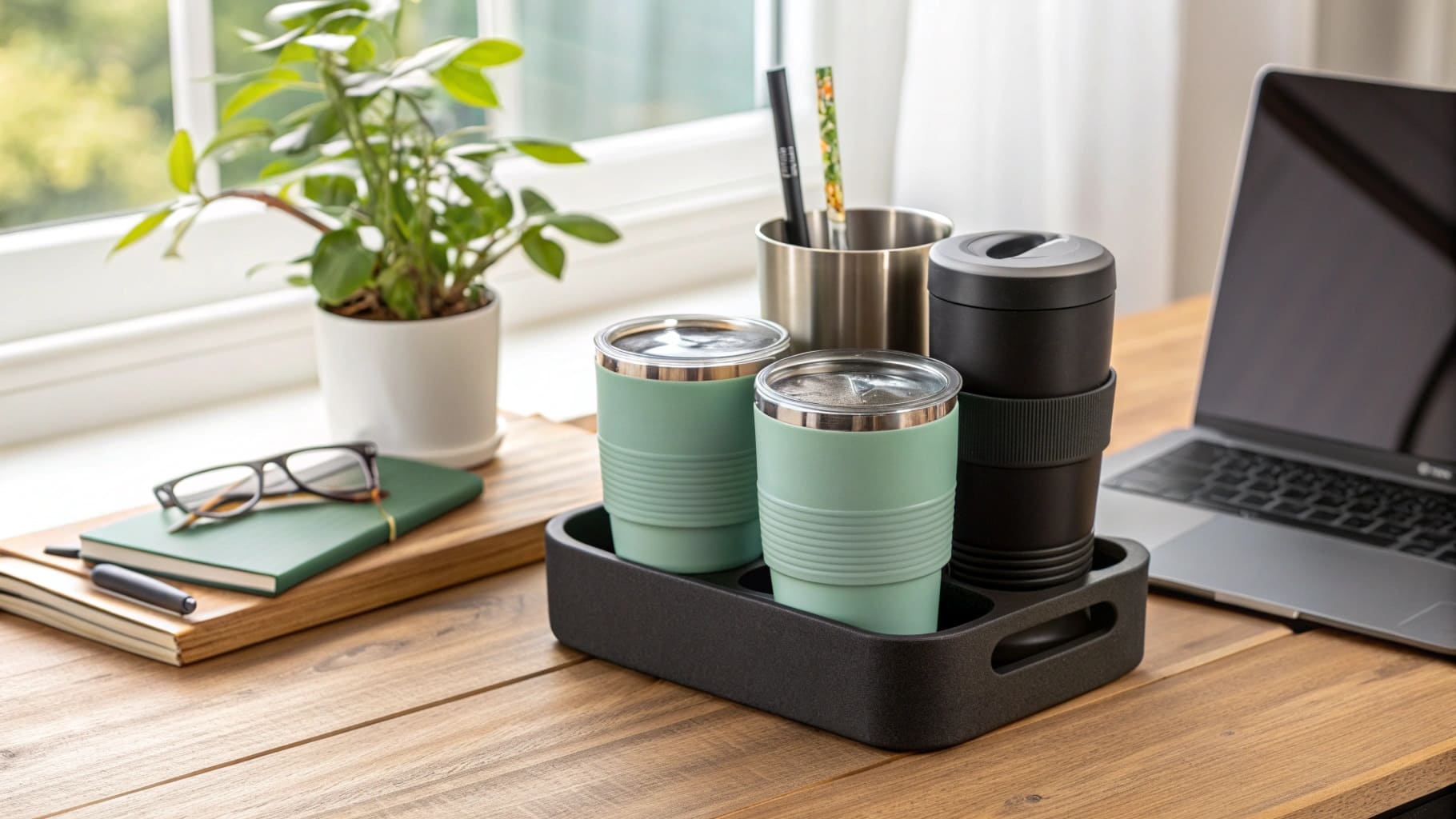
Let me break this down further. US automotive cup holders, based on SAE and general industry standards, are built to accept bases ranging from 2.75 to 3.25 inches (70–83mm)3. The Yeti Rambler 30oz sits comfortably within that window.
Here is where it gets important for B2B buyers. Not all 30oz tumblers use the same base taper. Some tumblers taper narrowly from bottom to top. Others have a wider, straighter body. The widest point — not just the base — determines whether the tumbler drops into the holder or gets stuck halfway4.
When you write your RFQ, do not just ask for the base diameter. Ask for the full dimensional profile.
| Measurement Point | Target for US Market | Target for EU Market |
|---|---|---|
| Base diameter | ≤76mm (3.0 in) | ≤73mm (2.87 in) |
| Body at widest point | ≤83mm (3.27 in) | ≤78mm (3.07 in) |
| Handle protrusion width | Extends beyond rim | Extends beyond rim |
| Taper angle | Gradual taper preferred | Steeper taper preferred |
The EU market is tighter. European vehicles have smaller center consoles and narrower cup holder cutouts5. If you are selling into both markets with one SKU, design to the EU spec. It will still fit US holders with room to spare. The other way around will not work.
One more thing. I have worked with buyers who assumed that because a tumbler passed the US fit test, it would be fine everywhere. It is not. Always ask your supplier to confirm against both market specs before production starts.
Does the 30oz Stanley Have a Handle?
You keep seeing the Stanley name come up in searches. Your buyers ask about it. You need to know what you are comparing against.
Yes, the Stanley Adventure Quencher 30oz comes with a handle. It is one of the reasons it became such a strong seller. The handle is fixed and sits on the side of the tumbler body.
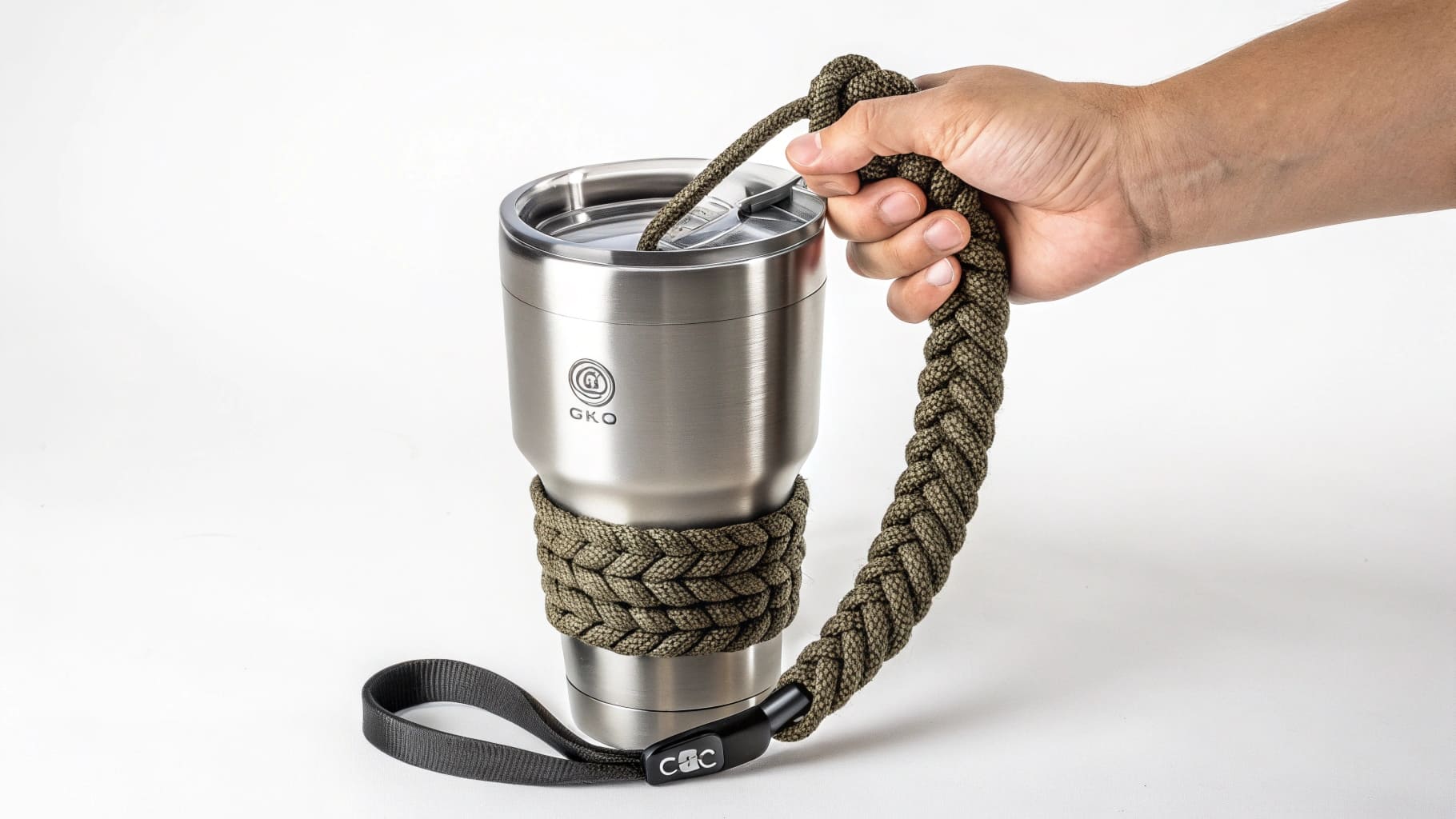
The Stanley Quencher 30oz keeps its tumbler body within the cup holder safe zone6. The handle itself is positioned to sit above the rim of the cup holder. That means the base drops in, the body fits, and the handle sticks out to the side at the top. It does not block the fit.
This is the key engineering decision that made the Stanley Quencher work. The body diameter stays disciplined. The handle does not fight the cup holder — it clears it.
Here is how that compares to common handle design types:
| Handle Type | Cup Holder Compatibility | Notes |
|---|---|---|
| Fixed side handle (high position) | Good | Handle clears rim if positioned correctly |
| Fixed side handle (low position) | Poor | Handle blocks entry into cup holder |
| Flip-up handle | Excellent | Folds flat for insertion, flips up for carrying |
| Removable handle | Excellent | User removes before placing in cup holder |
| Wrap-around handle | Poor | Body diameter becomes too wide |
When you source a handled tumbler, the handle attachment point height is as important as the base diameter. Ask your supplier to show you exactly where the handle connects to the body and at what height from the base.
If the handle attaches below the 60mm mark from the base, it is likely to interfere with cup holder entry7. If it attaches above 80mm from the base, you are usually safe. Get this measurement in writing before you approve a sample.
Which Stanley Has a Handle?
You want to position your product against the right benchmark. Knowing exactly which Stanley models come with handles helps you write sharper product specs.
The Stanley Adventure Quencher Tumbler is the main Stanley model with a built-in side handle. It is available in multiple sizes, and the 30oz version is the most popular for everyday carry.
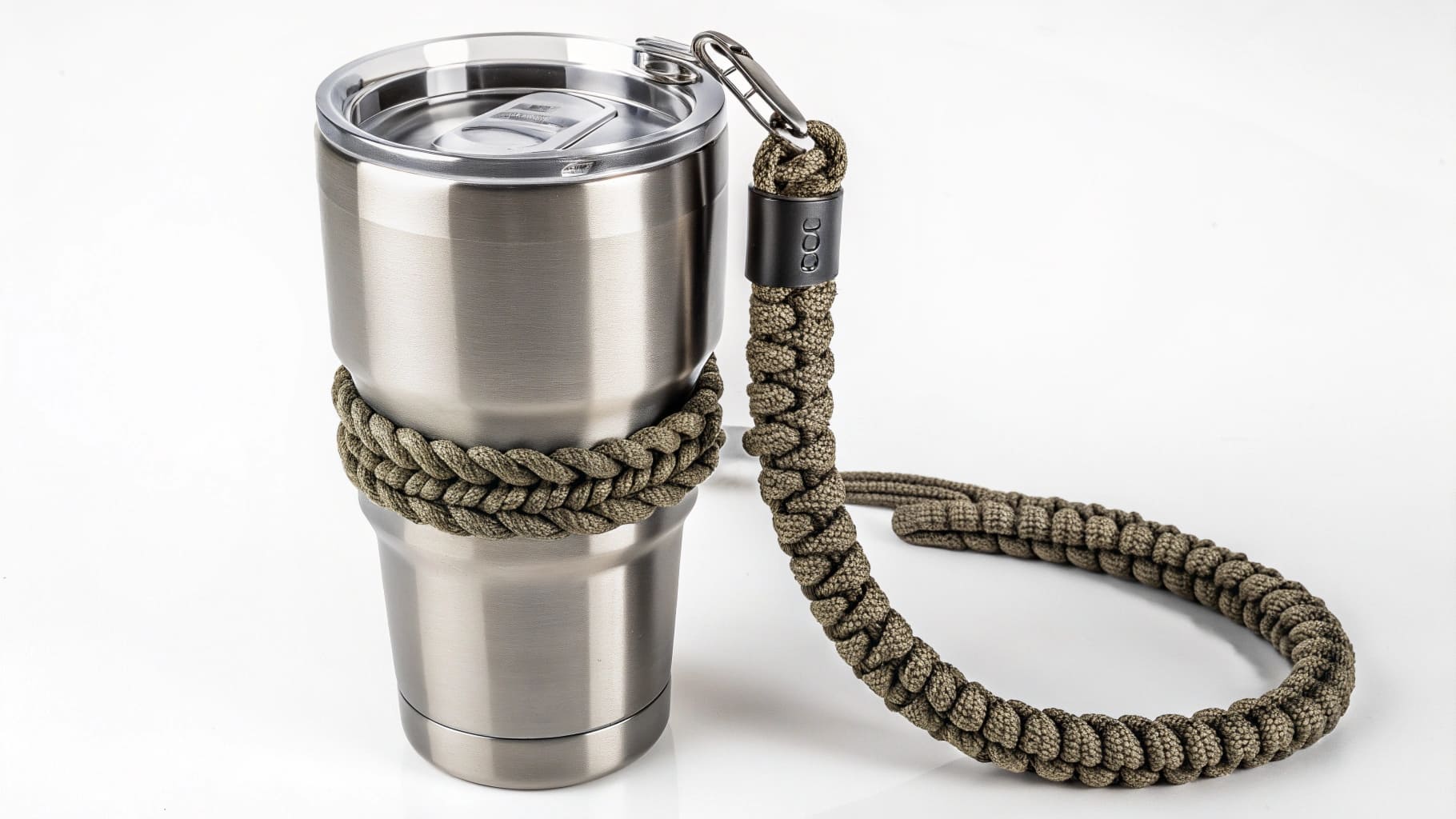
The Quencher is not the only handled option in the Stanley line, but it is the one that set the benchmark for the market. Its success pushed dozens of other brands and manufacturers to offer similar handled tumbler designs. If you are sourcing a 30oz handled tumbler today, your buyer is likely comparing it to the Quencher — even if they do not say so directly.
Here is what the Quencher gets right from an engineering standpoint:
| Feature | Stanley Quencher 30oz | What This Means for Your RFQ |
|---|---|---|
| Body diameter | Within 76mm base target | Specify ≤76mm base in RFQ |
| Handle position | High on body, clears cup rim | Specify handle attachment height ≥80mm from base |
| Handle type | Fixed, ergonomic grip | Specify grip width and material |
| Lid type | Rotating lid with straw opening | Specify lid function clearly |
| Material | 18/8 stainless steel | Specify steel grade in RFQ |
For B2B buyers, the Quencher is a reference product — not a target to copy, but a benchmark to match or beat on specific points. Your buyer in the US or Canada will hold your sample up against their memory of the Quencher. Your job is to make sure the key specs hold up to that comparison.
When I write RFQs for handled tumblers, I always include a comparison table like the one above. I share it with the supplier during the inquiry stage. This tells the supplier exactly what I need without leaving room for misinterpretation. It also filters out suppliers who cannot work to those tolerances.
One thing many buyers miss: ask your supplier whether their production line uses fixed tooling for the handle attachment point. Some factories use flexible jigs, which means handle height can shift slightly between production runs. For a product where 5mm can mean the difference between fitting and not fitting a cup holder, you need that consistency guaranteed in your purchase agreement.
Conclusion
Cup holder fit is a hard specification, not a soft preference. Know your diameter targets, specify handle position clearly, and verify against both US and EU standards before you run production.
-
"What cup-holder bottle tolerances avoid mm drift and shrinkage in ...", https://icobottle.com/what-cup-holder-bottle-tolerances-avoid-mm-drift-and-shrinkage-in-2026/. European vehicle packaging and interior-design references indicate that smaller vehicle classes and narrower interior layouts are common in Europe, providing contextual support for using a more conservative cup-holder diameter target. Evidence role: general_support; source type: research. Supports: EU cup holders are slightly tighter, targeting 65–75mm.. Scope note: The evidence is likely contextual unless it directly measures cup-holder diameters across European vehicle models. ↩
-
"YETI Rambler 30 oz Tumbler With MagSlider Lid", https://www.yeti.com/drinkware/tumblers/rambler-30oz.html. Manufacturer or product-dimension listings for the YETI Rambler 30 oz identify its approximate base diameter, supporting the stated 2.9 in / 73.7 mm dimensional benchmark. Evidence role: case_reference; source type: other. Supports: The Yeti Rambler 30oz has a base diameter of around 2.9 inches (73.7mm).. Scope note: Manufacturer or retailer dimensions may be rounded and should be treated as product-specific rather than a general tumbler standard. ↩
-
"Stainless Steel Cup Holder Insert – 2.75" Diameter 2pc Set", https://smithtrimsupply.com/products/stainless-steel-cup-holder-insert-2-75-diameter-2pc-set. Automotive engineering references on cup-holder design and SAE-related interior accommodation practices support the use of a roughly 70–83 mm container-base envelope for many U.S. passenger vehicles. Evidence role: expert_consensus; source type: institution. Supports: US automotive cup holders are built to accept bases ranging from 2.75 to 3.25 inches (70–83mm).. Scope note: SAE documents may not prescribe a universal mandatory cup-holder size, so the citation may substantiate an industry design convention rather than a binding standard. ↩
-
"Engineering fit - Wikipedia", https://en.wikipedia.org/wiki/Engineering_fit. Basic clearance-fit and tolerance principles in mechanical design explain that the maximum outside diameter along an inserted object controls whether it can pass through a circular opening. Evidence role: mechanism; source type: education. Supports: The widest point, not just the base, determines whether a tumbler fits into a cup holder.. Scope note: This supports the geometric mechanism generally; it does not test any particular tumbler or vehicle holder. ↩
-
"Vehicle size class - Wikipedia", https://en.wikipedia.org/wiki/Vehicle_size_class. Comparative vehicle-size data show that European passenger cars are often smaller than North American vehicles, which provides contextual support for more constrained center-console packaging. Evidence role: general_support; source type: government. Supports: European vehicles have smaller center consoles and narrower cup holder cutouts.. Scope note: Vehicle-size comparisons do not directly prove that all European cup-holder cutouts are narrower; direct cup-holder measurements would provide stronger support. ↩
-
"The Quencher H2.0 Flowstate™ Tumbler | 30 OZ - Stanley 1913", https://www.stanley1913.com/products/adventure-quencher-travel-tumbler-30-oz. Manufacturer dimension data for the Stanley Quencher 30 oz, read alongside automotive cup-holder design ranges, support the claim that the tumbler body is sized for common cup-holder compatibility. Evidence role: case_reference; source type: other. Supports: The Stanley Quencher 30oz keeps its tumbler body within the cup holder safe zone.. Scope note: The support depends on combining product dimensions with typical cup-holder ranges; it does not prove fit in every vehicle model. ↩
-
"What is the normal car cup holder height? - Quora", https://www.quora.com/What-is-the-normal-car-cup-holder-height. Automotive cup-holder geometry and clearance-fit principles support the need to keep protruding handle features above the cup-holder rim or insertion depth to avoid interference during placement. Evidence role: mechanism; source type: education. Supports: A handle attached too low on the tumbler body is likely to interfere with cup-holder entry.. Scope note: The specific 60 mm cutoff appears to be a design heuristic unless validated by measured cup-holder rim heights or insertion-depth data. ↩
