
Can Personalized Insulated Tumblers Scale? Data Merge, Fonts, and QA Plans
You ordered 5,000 personalized tumblers. Each one needs a different name. Your supplier says it will take four months. You panic because your campaign launches in six weeks. This happens more often than you think.
Yes, personalized tumblers can scale when you choose the right customization method1 and work with manufacturers who have proper data systems. Laser engraving and sublimation printing2 are the most scalable options for handling variable data across large orders.
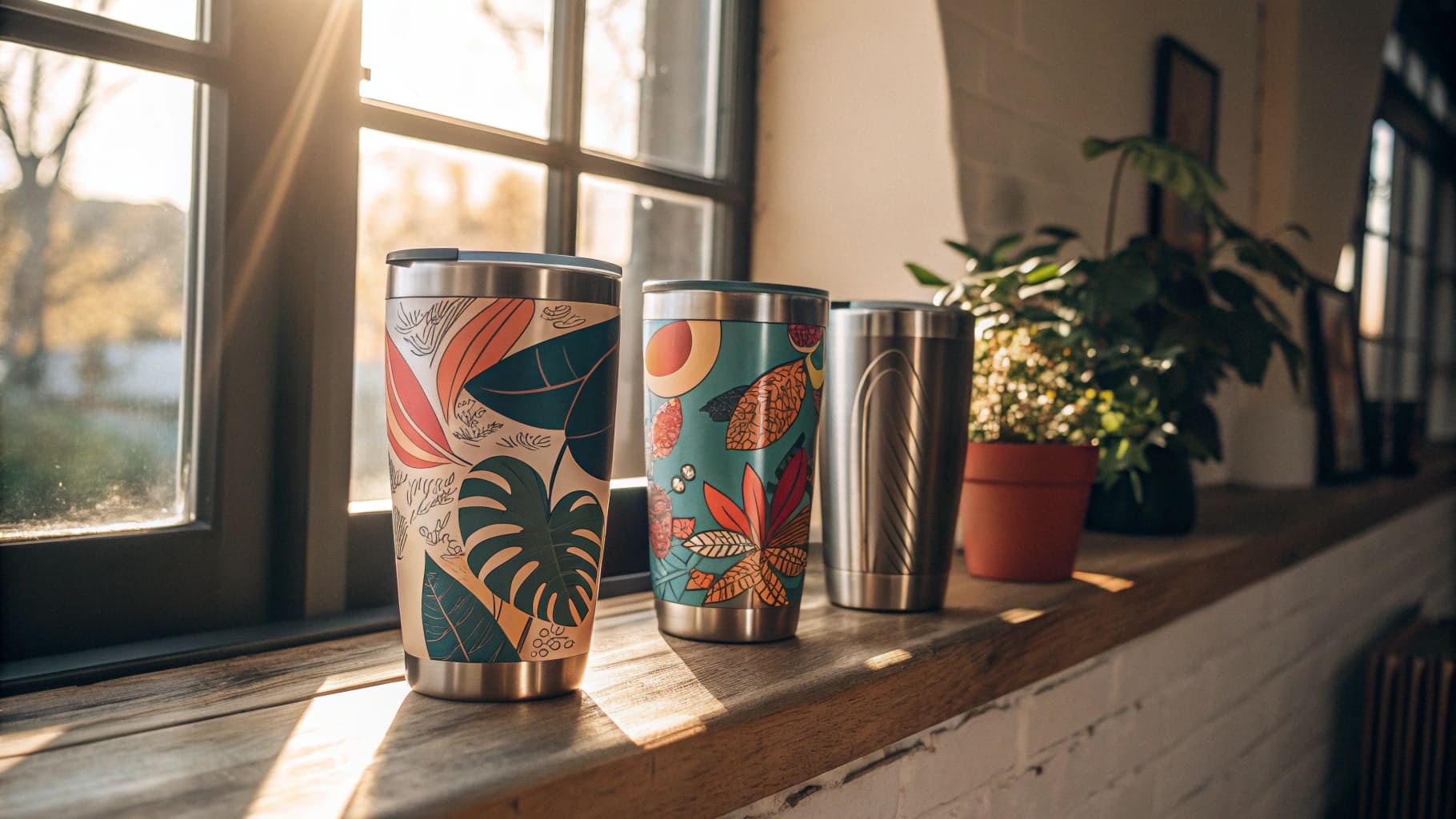
I have seen this problem destroy promotional campaigns. Buyers place massive personalized orders without understanding the technical limits. Some methods handle variable data well. Others create bottlenecks. The difference between success and failure often comes down to choosing the right approach from the start.
What is the best way to personalize tumblers?
Your personalization method determines everything. Pick wrong and you will face delays. Pick right and you can scale to tens of thousands of unique pieces. The pressure feels real when deadlines approach.
The two most scalable methods are laser engraving3 and sublimation printing. Laser engraving works for any stainless steel tumbler and creates permanent results that never fade. Sublimation allows full-color designs but requires special polymer coatings on the tumbler surface.
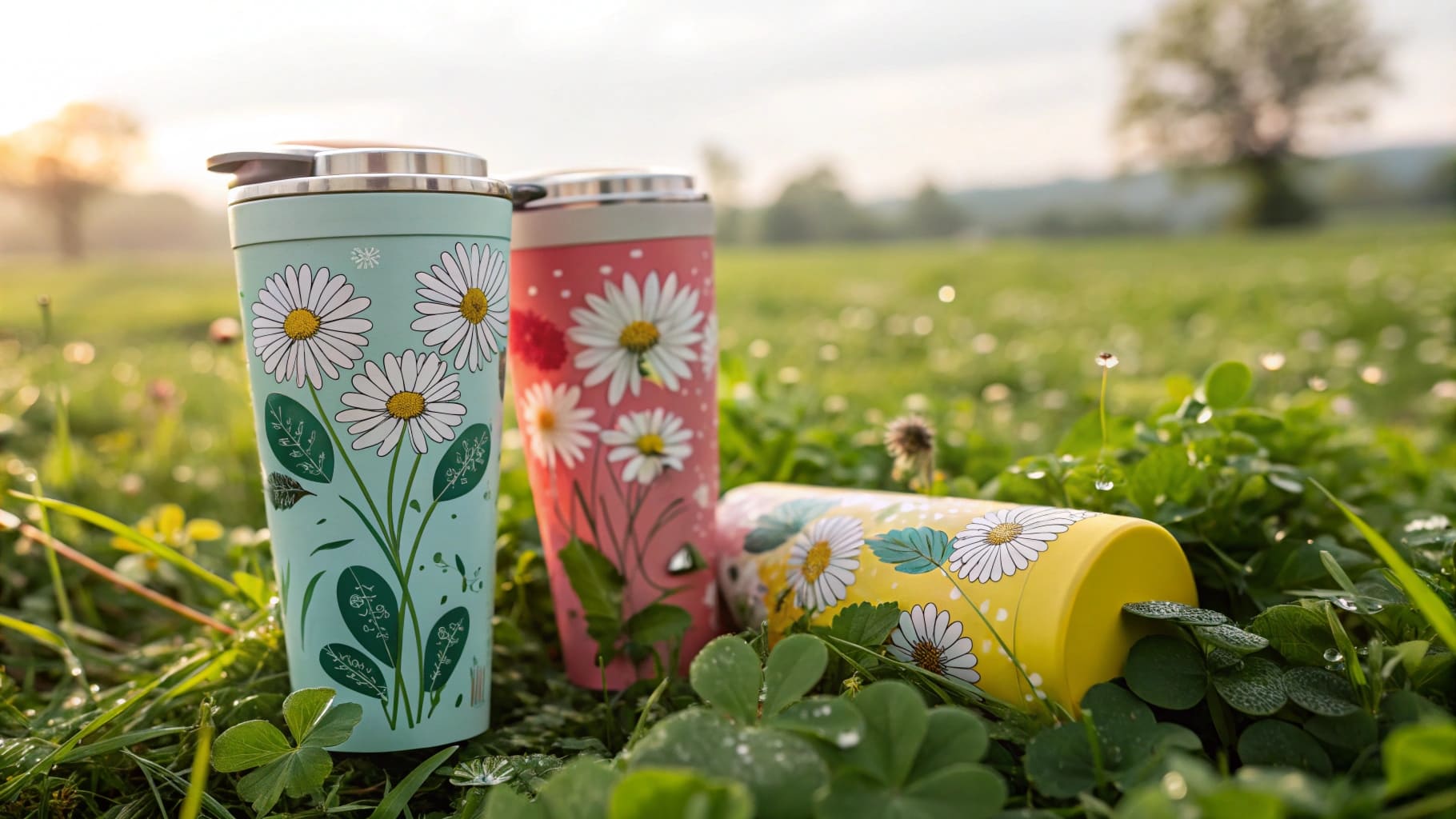
Understanding each method's scalability potential
I work with buyers who need to personalize anywhere from 500 to 50,000 tumblers. The scale matters because different methods have different throughput rates.
Laser engraving can process about 50-80 tumblers per hour on a single machine. You can run multiple machines simultaneously. The method reveals the bare stainless steel beneath any coating. This creates a sleek metallic contrast that looks premium. The process handles variable data easily because modern laser systems connect directly to design software. You upload a spreadsheet with 5,000 different names. The machine engraves each one automatically without manual intervention.
Sublimation printing offers two approaches. The first uses a heat gun to apply printed transfer sheets. This takes about three minutes per tumbler. You will not scale past a few hundred pieces this way. The second approach uses convection ovens. I preheat the oven below 160 degrees Celsius. Then I place 20-30 tumblers inside for exactly 20 minutes. This batch processing changes everything. A facility with three ovens can process 1,800 personalized tumblers per day. The full-color capability means you can print photos, gradients, and complex patterns that laser engraving cannot achieve.
| Method | Units Per Hour | Color Options | Durability | Variable Data Handling |
|---|---|---|---|---|
| Laser Engraving | 50-80 | Metallic only | Permanent | Excellent |
| Sublimation (Heat Gun) | 20 | Full color | Very good | Good |
| Sublimation (Oven) | 60-90 | Full color | Very good | Excellent |
| Screen Printing | 200-300 | Limited (1-4) | Good | Poor |
| Heat Transfer | 40-60 | Full color | Fair | Moderate |
The table shows why screen printing looks attractive initially. The speed seems unbeatable. But screen printing cannot handle variable data efficiently. You would need to create a new screen for each unique design. This makes personalization with thousands of different names completely impractical.
Can you customize tervis tumblers?
You can customize most tumblers including branded ones. But the substrate material determines which methods work. I have rejected orders because buyers did not understand material compatibility4. This wastes time for everyone.
Tervis tumblers and similar double-wall insulated tumblers can be customized through laser engraving or sublimation printing. The key factor is whether the tumbler has the right surface treatment for your chosen method.
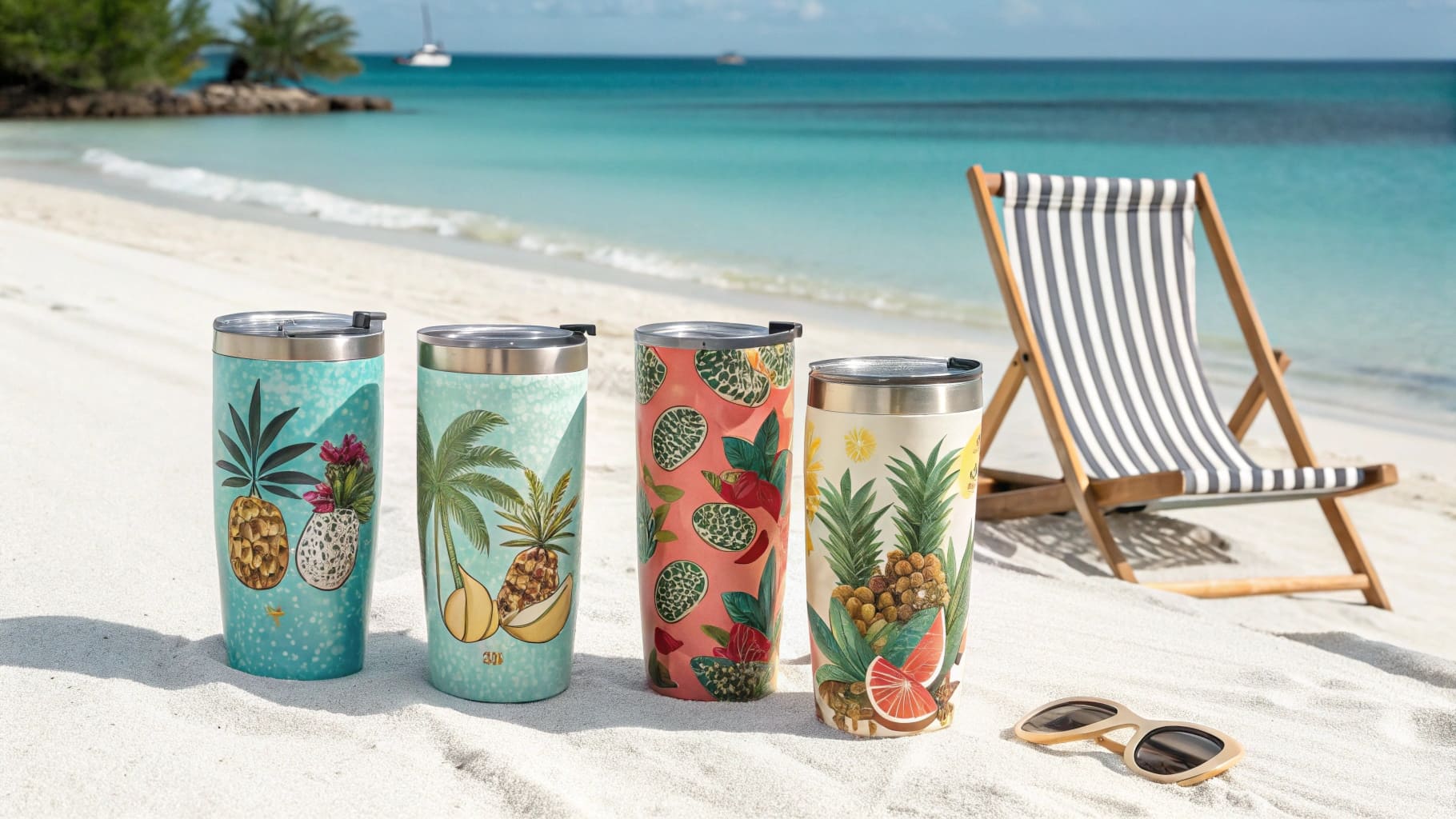
Material compatibility and surface preparation requirements
Stainless steel tumblers come in different finishes. Some have powder coating. Others have polymer coating. Some are bare stainless steel. You need to match the method to the surface.
Laser engraving works on any stainless steel tumbler. The laser burns away surface coatings to reveal the metal underneath. I recommend this for powder-coated tumblers. The contrast between the coating color and silver steel creates striking results. You do not need special preparation. The tumbler comes off our production line. We place it in the laser machine. Done.
Sublimation requires polymer-coated stainless steel. Regular powder coating will not work. The polymer coating contains chemicals that bond with sublimation inks under heat. When you apply heat, the ink turns into gas. The gas penetrates the polymer layer. Then it solidifies as it cools. This creates a design that becomes part of the coating itself.
I had a buyer from Seattle order 3,000 tumblers for a marathon event. He wanted full-color sunset graphics with individual runner names. His existing inventory had powder-coated tumblers. Sublimation would not work. We had three options. First, strip the powder coating and apply polymer coating. This added two weeks and $1.50 per unit. Second, use heat transfer vinyl for the graphics. This limited design complexity and added $2 per unit. Third, order new polymer-coated tumblers. He chose the third option because the math worked better at that volume.
The lesson here is simple. Check your tumbler substrate before finalizing the personalization method. Send a sample to your manufacturer. Ask them to test both methods. This costs you one tumbler and saves you from discovering incompatibility after placing a massive order.
How do I transfer an image to a tumbler?
You want photo-quality results on curved surfaces. The technical challenge is real. I have seen buyers provide low-resolution images and expect perfect prints. Understanding the transfer process helps you prepare better artwork.
Image transfer to tumblers works best through sublimation printing. You print your design onto special transfer paper using sublimation inks. Then you wrap the paper around the tumbler and apply heat to transfer the image permanently.
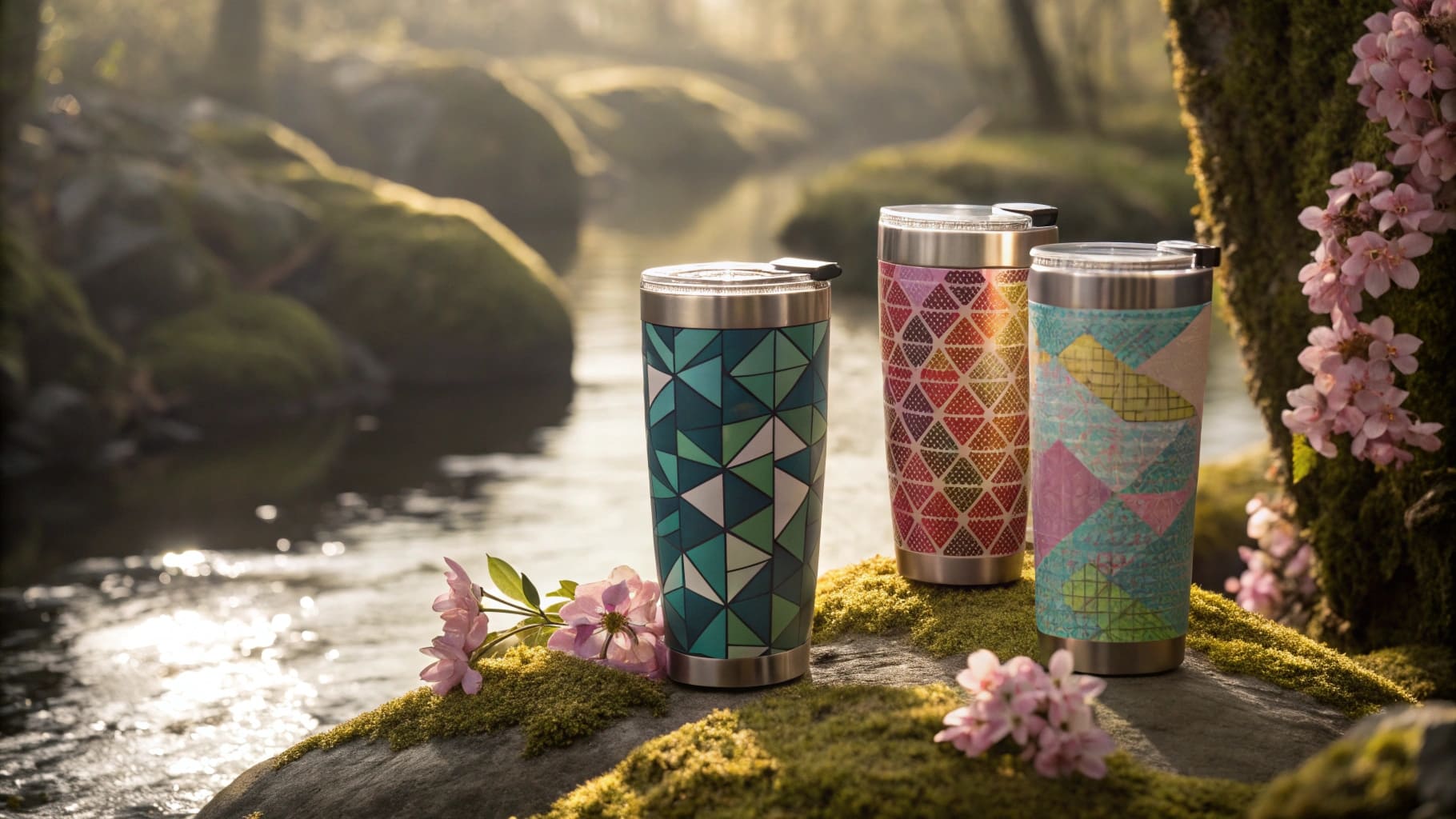
The complete sublimation workflow and file preparation
The process starts with your artwork files. I accept JPG, AI, CDR, or PDF formats. Resolution matters enormously. You need at least 300 DPI at the final print size. A tumbler wrap is typically 8 inches tall and 9-10 inches wide when laid flat. Your image file should be at least 2400 by 2700 pixels. Anything less will look pixelated.
I convert your files to the proper color profile. Sublimation uses CMYK color mode. If you send RGB files, the colors will shift during printing. Blues become purples. Reds become oranges. I have a color calibration5 system that previews how your design will look after sublimation. This prevents surprises.
The printing happens on a wide-format sublimation printer. The special paper costs more than regular paper. The inks are expensive too. But the quality justifies the cost. The printer outputs your design with precise color registration. Each print includes crop marks for alignment.
Next comes the critical step. I wrap the printed transfer paper around your tumbler. The paper must sit tight against the surface without wrinkles. Even small air pockets create white spots in the final design. I use heat-resistant tape to secure the paper. Some manufacturers use silicone wraps or shrink wrap instead. The method matters less than achieving full contact.
For the heat application, I place wrapped tumblers in the convection oven. The temperature stays between 180-200 degrees Celsius. Time depends on tumbler size. Standard 20 oz tumblers need 20 minutes. Larger 30 oz tumblers need 25 minutes. The heat causes sublimation ink to vaporize. The vapor penetrates the polymer coating. As the tumbler cools, the design becomes permanent and scratch-resistant.
I remove the transfer paper while tumblers are still warm. The image quality becomes immediately visible. Colors should be vibrant. Edges should be sharp. The design should wrap seamlessly with no misalignment at the seam.
Font selection impacts the final appearance significantly. Bold sans-serif fonts like Arial, Helvetica, or Montserrat laser engrave with perfect clarity. The simple shapes maintain definition even at small sizes. Script fonts and thin serifs can look beautiful in sublimation prints at larger sizes. But they lose readability when engraved or printed below 12-point size.
I always create a 3D mockup before production. You see exactly how your design wraps around the tumbler's curve. Text that looks straight in your flat artwork file may appear distorted on the cylindrical surface. The mockup catches these issues early. You approve or request adjustments. We make changes before any printing happens.
For orders with variable data, I use mail merge functionality in design software. You send me an Excel spreadsheet. Column A has names. Column B has numbers. Column C has custom messages. The software automatically generates thousands of unique design files. Each file corresponds to one row in your spreadsheet. This automation makes personalization scalable. Manual design work for thousands of unique pieces would be impossible.
Quality assurance checkpoints throughout production
Quality control determines whether your personalized order succeeds or fails. I implement multiple inspection stages. This catches problems before they multiply across thousands of units.
First checkpoint happens during file preparation. I verify that every name in your spreadsheet is spelled correctly. You would be surprised how many errors hide in customer data. Missing names. Duplicate entries. Formatting inconsistencies. I flag these issues immediately. You fix them before we start production.
Second checkpoint occurs during the first print run. I always produce 5-10 sample pieces using your actual data. These samples go through the complete process including oven time and cooling. I inspect for color accuracy, alignment, and durability. You receive photos of these samples. Sometimes I ship physical samples via express courier. You approve or request adjustments.
Third checkpoint monitors each production batch. My quality inspector pulls random samples every 50 units during laser engraving runs. For sublimation, we inspect the first piece from each oven batch. Common defects include air bubbles under the transfer paper, misaligned seams where the design wraps around, or color variations from inconsistent oven temperature.
Fourth checkpoint happens during packaging. Each personalized tumbler gets matched against the order database. For corporate gifts going to specific recipients, I use barcode tracking6. We print a unique barcode label that corresponds to the recipient name. The packer scans the barcode. The system confirms the tumbler matches before it goes into the shipping box. This prevents costly mix-ups where John's tumbler goes to Mary.
I also test random finished samples for durability. Sublimation prints should not fade when scrubbed with abrasive sponges. Laser engravings should maintain depth consistency across the entire batch. The double-wall vacuum insulation should maintain temperature for at least 6 hours for hot liquids and 12 hours for cold liquids.
Temperature testing matters because personalization processes involve heat. Excessive heat can damage the vacuum seal. I have seen manufacturers rush sublimation ovens to 250 degrees to speed up production. The tumblers come out with perfect prints. But the vacuum seal fails within days because the high temperature damaged the internal structure. Proper quality control includes testing thermal retention on samples from each production batch.
Conclusion
Scaling personalized tumblers requires the right method, proper data systems, and rigorous quality checks. Choose laser or sublimation for variable data, verify material compatibility, and implement multi-stage inspections.
-
Learn about various methods to customize tumblers effectively and their impact on production. ↩
-
Understand the sublimation process and its benefits for vibrant, full-color designs. ↩
-
Discover the advantages of laser engraving for creating durable and high-quality designs. ↩
-
Learn how to ensure your tumblers are suitable for the chosen customization method. ↩
-
Learn about the role of color calibration in achieving accurate print colors. ↩
-
Discover how barcode tracking can prevent mix-ups in personalized orders. ↩
