
Are You Overpaying for Paracord Handles on Your Stainless Steel Water Bottles?
Most buyers focus on the bottle itself. Then the paracord snaps at the stitch point, and you lose the whole order's credibility.
Paracord handles on stainless steel water bottles are rated far above what any carrying use demands. The real risk is never the cord breaking. It is the stitching failing at the attachment point. Knowing this one fact saves you money on specs and protects you from returns.
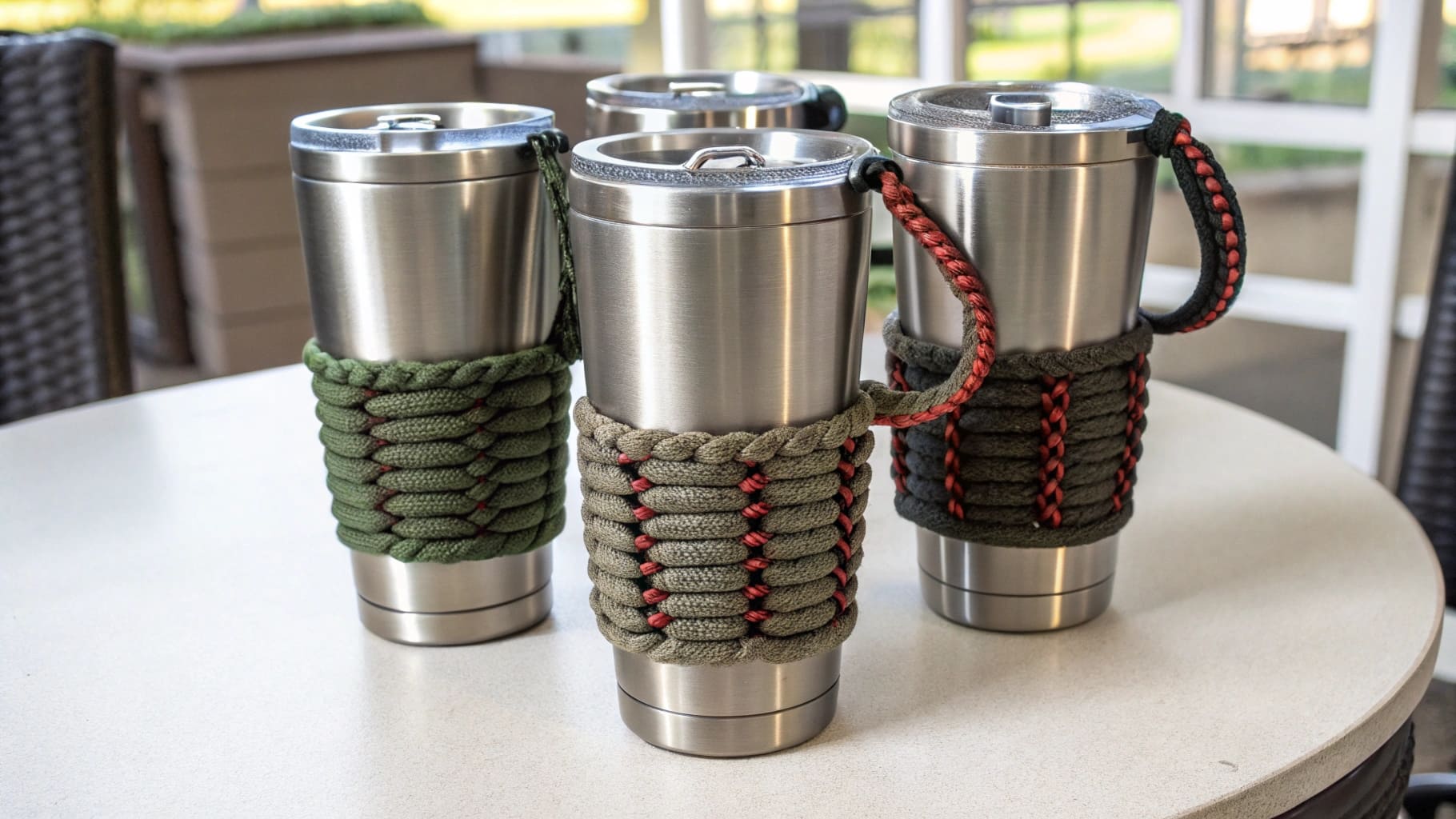
I have seen this happen more than once. A buyer places a large order, receives the goods, and the handles start failing within weeks of use. The cord itself is fine. The stitching let go. This article breaks down what paracord specs actually matter, what is just upselling, and how to check everything before your shipment leaves the factory.
How Much Weight Can Paracord Withstand?
You want to know if the cord is strong enough. But that question alone will not protect your order.
Standard Type III paracord, which is the most common type used in water bottle handle accessories, holds up to 550 pounds of tensile strength. A filled 40oz stainless steel bottle weighs around 3 pounds1. That means the cord gives you over 180 times the strength you actually need.
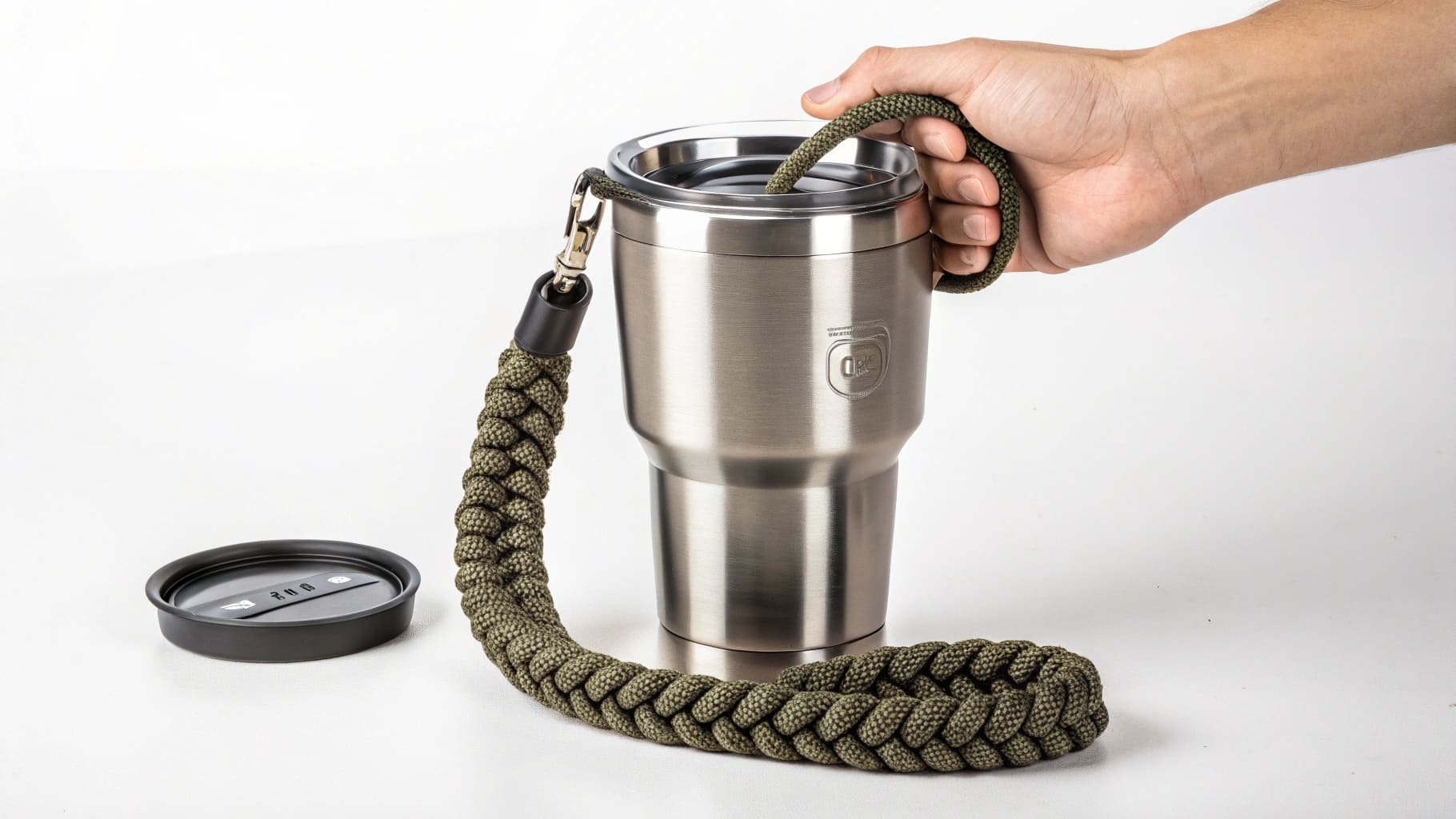
So the cord's raw strength is not your real concern. Here is where most B2B buyers make a mistake: they audit the paracord itself and ignore the attachment. I always tell buyers that the stitch point is where the product lives or dies. The paracord will not break. The thread holding it to the bottle sleeve or carry loop will.
What to check at the attachment point:
| Inspection Point | What to Look For | Why It Matters |
|---|---|---|
| Stitch type | Triple-stitched reinforcement | Prevents thread separation under load |
| Bar-tacking | Present at all stress points | Holds the loop in place during repeated use |
| Thread material | Polyester, not cotton | Resists moisture and wear over time |
| Stitch density | Tight, even spacing | Loose stitching fails faster under tension |
When I receive pre-production samples, I do not just hold up the cord and pull it. I grip the handle and shake the loaded bottle repeatedly. I twist it. I simulate what a person does when they carry a bottle by the handle while walking. That test tells me more than any spec sheet.
Ask your supplier for a sample before production starts. Test it under a simulated load. If they push back on that request, that tells you something important about how they operate.
What Is the Strongest Type of Paracord?
There are several paracord types. Each one has a different strength rating. But stronger does not always mean better for your product.
Type IV military-spec paracord handles up to 750 pounds2. Type III handles up to 550 pounds. Both are far above what a water bottle handle ever needs to perform.
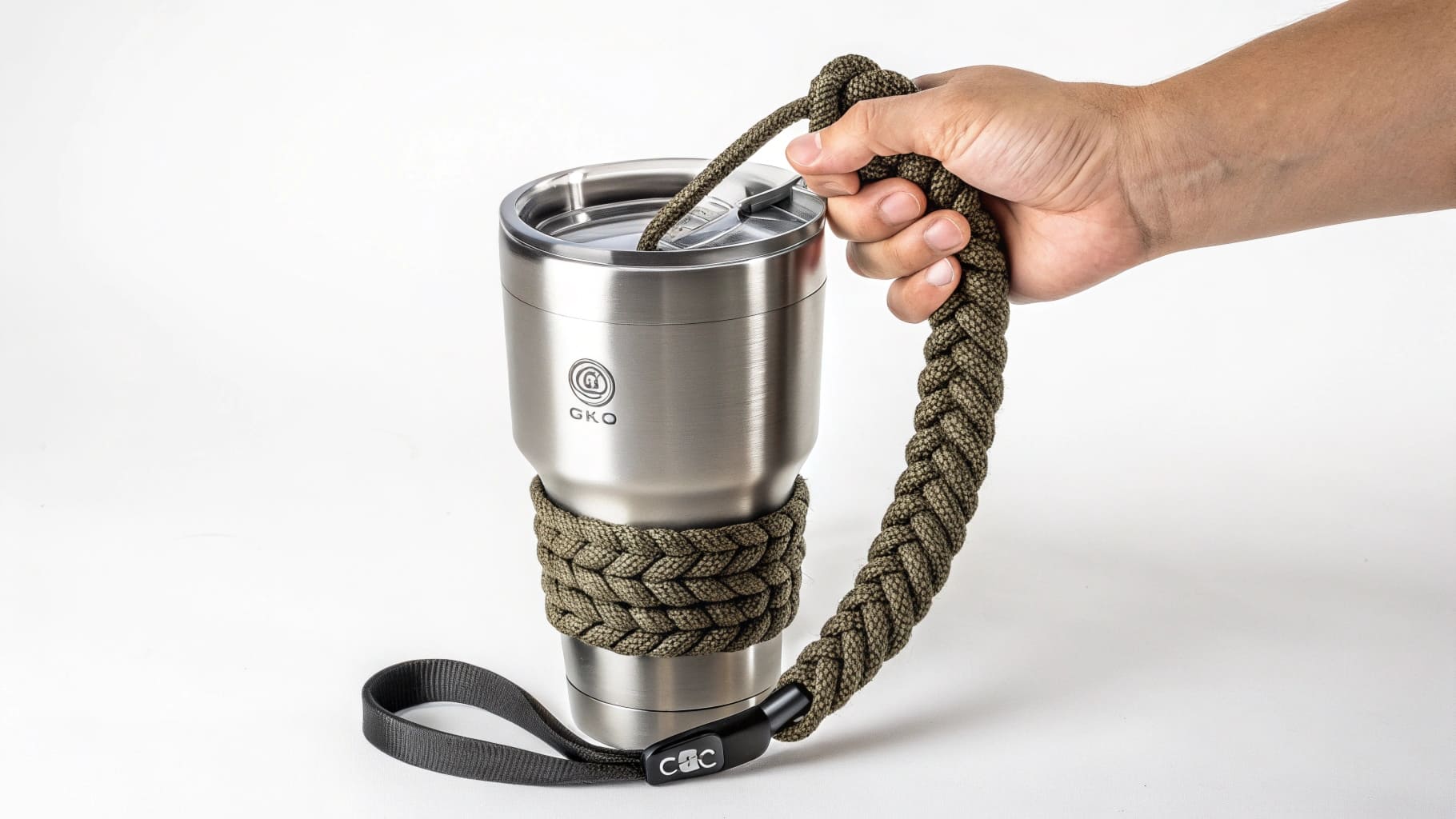
The question you should be asking is not which type is strongest. The question is which type matches your product weight and your brand positioning. These are two different things, and mixing them up costs you money.
Paracord types compared for water bottle use:
| Paracord Type | Tensile Strength | Typical Diameter | Best Use Case for Bottles |
|---|---|---|---|
| Type I | 95 lbs | 1.85mm | Decorative only, no load |
| Type III (550) | 550 lbs | 4mm | Standard bottles up to 40oz |
| Type IV | 750 lbs | 5.5mm | Oversized bottles, outdoor collections |
| Type VII | 4,000 lbs | 9.5mm | Not relevant for bottles |
I have sat across from suppliers who recommend Type IV for a standard 20oz bottle. The pitch sounds good. Military-grade. Premium feel. Better product story. But for a buyer like me, it is just added unit cost with no real performance gain.
Here is my rule: I use Type III for everything in our standard range. I only move to Type IV when the bottle format is oversized, or when the buyer is building a product line targeted at serious outdoor use where the premium spec is part of the brand's story. In that case, the stronger cord has marketing value. Outside of that context, it is waste.
Paracord diameter also matters. A thicker cord wraps differently around a bottle sleeve. It sits differently in the hand. Matching the diameter to the bottle size keeps the proportions right and the handle comfortable. A 4mm cord on a small 12oz bottle looks clunky. A 3mm cord on a large 64oz bottle looks undersized. These details affect how the finished product is received by the end customer.
Can Paracord Tow a Car?
This question comes up in online discussions more than you might expect. The short answer is yes, technically, under specific conditions. But for water bottle procurement, this question is a distraction.
Military-spec Type IV paracord can handle up to 750 pounds. A car weighs several thousand pounds. The cord would fail before the car moved far. But people test this anyway, and videos of it circulate online. The question sticks in buyers' minds.
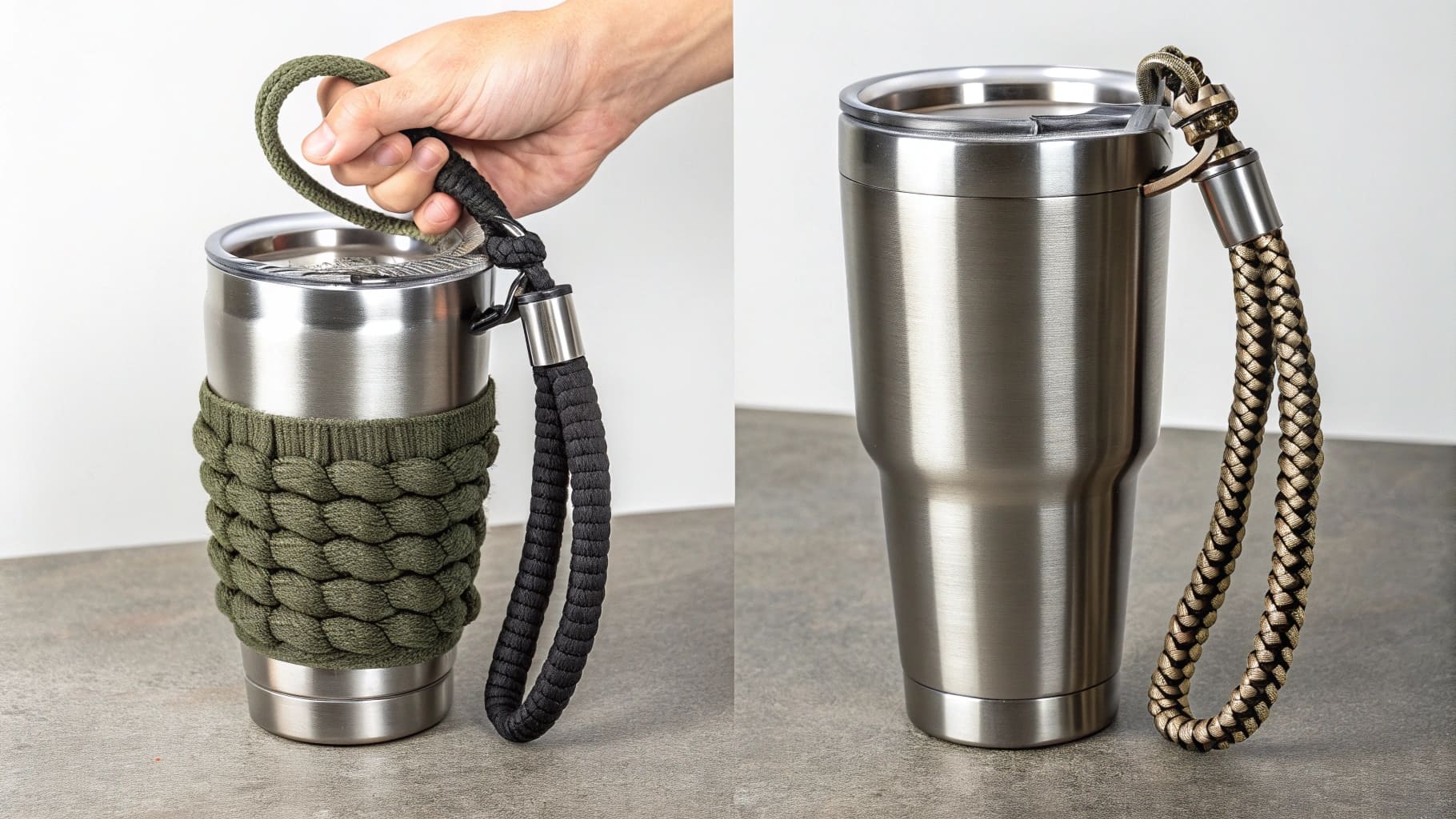
I understand why this matters to some buyers. If you are selling to outdoor retailers or survival gear distributors, the strength narrative around paracord is part of the product's appeal. Customers at those retailers want to know the cord is tough. But towing a car is not the story you want to tell when selling a water bottle accessory.
What actually matters for your purchasing decision:
| Factor | Relevant for Bottles? | Notes |
|---|---|---|
| Towing strength | No | Marketing noise, not a functional need |
| Tensile strength rating | Partially | Only to confirm minimum spec is met |
| Stitching integrity | Yes | Primary failure point in real use |
| Diameter and weave density | Yes | Affects comfort, look, and fit on the bottle |
| Cord type vs. bottle size | Yes | Match spec to weight and brand position |
The reason I bring this up is that I have seen suppliers use the towing strength claim as a selling point to justify upselling Type IV paracord across an entire product range. If a supplier leads with that angle, I take it as a signal that they are pitching past what the product actually needs.
A good supplier helps you match the spec to the use case. A supplier who defaults to the strongest option without understanding your product range is either uninformed or optimizing for their own margin. Either way, you are the one paying for it.
When I review paracord specifications with a new supplier, I bring the conversation back to one question: what is the filled weight of the bottle this handle will carry? From that number, everything else follows. The cord type, the diameter, the stitching standard, and the MOQ all get built around that answer. That is how you keep your accessory costs in line without cutting corners on durability.
Conclusion
Paracord handles rarely fail at the cord. They fail at the stitch. Specify Type III for standard bottles, test attachment points on pre-production samples, and do not pay for strength your product does not need.
-
"Water Density | U.S. Geological Survey - USGS.gov", https://www.usgs.gov/water-science-school/science/water-density. Water-density references show that 40 fluid ounces of water weighs about 2.6 pounds before adding the bottle’s empty weight, which contextually supports an estimated filled-bottle weight of roughly 3 pounds. Evidence role: statistic; source type: government. Supports: A filled 40oz stainless steel bottle weighs around 3 pounds.. Scope note: The exact filled weight varies by bottle construction, cap design, and whether the stated volume is US fluid ounces. ↩
-
"Parachute cord - Wikipedia", https://en.wikipedia.org/wiki/Parachute_cord. MIL-C-5040H specifies Type IV nylon parachute cord with a minimum breaking strength of 750 pounds, supporting the stated rating for military-spec Type IV paracord. Evidence role: definition; source type: government. Supports: Type IV military-spec paracord has a tensile-strength rating of up to or at least 750 pounds.. Scope note: The military specification addresses cord construction and breaking strength, not finished consumer-accessory performance. ↩